Practice Activities
Learning the sign for SAME-OLD-THING in ASL can be both fun and effective when approached through diverse practice methods. Start by standing in front of a mirror to observe your handshape, movement, and facial expressions. This self-check allows you to compare your signs with correct models and fine-tune your form. Another great technique is recording yourself signing. Play the video back to analyze your accuracy and fluency with the sign for SAME-OLD-THING in ASL. Try signing short phrases or full sentences that include this concept, such as, “My job? Same-old-thing,” to practice the sign in real-world context. Engage in partner practice by chatting with a fellow ASL learner or fluent signer. Use the sign for SAME-OLD-THING in ASL during casual conversations or role-play scenarios, like discussing routine days or repeating situations. This builds your confidence and helps reinforce the sign’s meaning through contextual use. For advanced learners, try expressive drills that focus on speed, clarity, and natural flow. Set a timer and sign a list of repetitive activities or describe a typical day using the sign for SAME-OLD-THING in ASL. This helps build signing stamina and expressive fluency.
SEO Cultural Context
The sign for SAME-OLD-THING in ASL is deeply rooted in everyday Deaf conversations and reflects a common human experience—repetition or monotony. Deaf culture values visual storytelling and expressive communication, so this sign is often used to share emotions like boredom, routine, or lack of change. In Deaf communities, this sign is frequently used in casual storytelling or daily check-ins. When someone asks how things are going, a response using the sign for SAME-OLD-THING in ASL conveys that nothing new or exciting has happened. It’s a culturally rich way to express the predictability of life in a concise and meaningful form. Regional variation can occur in how the sign is executed. While the general structure of the sign remains consistent, some signers might add subtle facial expressions or tweak the movement slightly depending on their location or personal signing style. These variations are accepted within the Deaf community and reflect its linguistic diversity. This sign also aligns with the Deaf cultural value of directness and emotional honesty. Rather than elaborating unnecessarily, using the sign for SAME-OLD-THING in ASL communicates a clear and shared understanding of routine or sameness in a visually effective way.
Extended Definition
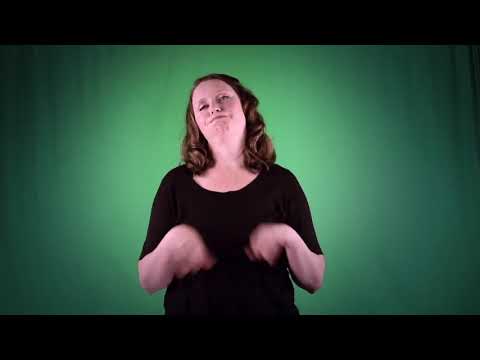
The sign for SAME-OLD-THING in ASL typically combines elements from the signs for SAME and OLD, but is stylized into a unique expression. It is made by forming a ‘Y’ handshape and moving it in a small circular motion in front of the chest. This motion represents the repetitive cycle of events or tasks. The handshape and movement are crucial to the meaning. The circular motion reflects repetition, while the ‘Y’ handshape is derived from informal signs used in conversational ASL. Facial expression plays a key role here—often a neutral or slightly exasperated look helps convey the tone of “nothing new.” This sign is not to be confused with the sign for SAME or the sign for ROUTINE. While they may overlap in meaning, the sign for SAME-OLD-THING in ASL is more expressive and idiomatic, capturing a specific nuance that single-word signs cannot replicate. Common errors include using the wrong handshape, such as a flat hand instead of a ‘Y,’ or making the motion too exaggerated or too small. Another mistake is failing to use appropriate facial expressions, which can make the sign seem vague or confusing. Mastery of the sign relies on the combination of accurate hand movement and expressive visuals.
Tips for Beginners3>
If you’re new to ASL, learning the sign for SAME-OLD-THING in ASL might feel a bit abstract at first. Don’t worry—this is a common experience. Begin by mastering the ‘Y’ handshape and practicing the circular motion slowly and deliberately. Pay close attention to your facial expression. Beginners often focus solely on hand movement and forget that ASL is a fully visual language. The sign for SAME-OLD-THING in ASL needs the right facial cues to convey the idea of repetition or monotony effectively. Record your practice sessions to identify areas for improvement. If you’re unsure about your motion or expression, compare your signing to that of fluent signers through videos or live observation. Don’t be afraid to ask for feedback from more experienced ASL users. One common mistake is overusing the sign without context. Just like in spoken language, the sign for SAME-OLD-THING in ASL should be used where it naturally fits. Practice using it in situations where routine or repetition is being described to help internalize its appropriate usage.
Connections to Other Topics
The sign for SAME-OLD-THING in ASL connects closely with the sign for EVERYDAY. Both signs are used when discussing routines, though EVERYDAY focuses more on frequency while SAME-OLD-THING emphasizes monotony. Another related sign is AGAIN, which signifies repetition or doing something over. It’s often used in similar contexts and can be paired with SAME-OLD-THING to emphasize that something keeps happening the same way. The sign for BORING can also be linked to the sign for SAME-OLD-THING in ASL. When expressing disinterest in repetitive tasks or conversations, these signs often appear together in ASL storytelling or casual dialogue. Also connected is the sign for HABIT. This sign describes actions performed regularly and can provide context for using the sign for SAME-OLD-THING in ASL, especially when discussing personal or cultural routines. Finally, the sign for ROUTINE ties in directly, as both signs often appear in the same semantic field. While ROUTINE emphasizes structure and regularity, SAME-OLD-THING brings out the emotional tone of sameness or lack of variety.
Lengthy Summary
Mastering the sign for SAME-OLD-THING in ASL opens up a valuable expressive tool for describing routine, repetition, and the familiar aspects of daily life. This sign is more than just vocabulary—it’s a cultural expression used to convey a shared understanding of monotony or habitual experiences within the Deaf community. From mirror work to contextual signing, there are many ways to practice and refine your use of this sign. By incorporating facial expressions and understanding when to use the sign for SAME-OLD-THING in ASL, learners can communicate more naturally and effectively. Pairing the sign with related concepts like BORING, HABIT, or EVERYDAY helps deepen comprehension and fluency. Culturally, this sign reflects core values in the Deaf community—emotional honesty, visual clarity, and efficiency in communication. It also demonstrates how ASL uses spatial and kinetic elements to convey complex meanings that go beyond direct translation from English. Beginners should focus on getting the handshape and motion right, while also remembering to include appropriate facial expressions. Avoid common mistakes like misusing the sign or omitting context. Engage with other signers and seek feedback to continue improving. As you expand your ASL vocabulary, the sign for SAME-OLD-THING in ASL will become an essential part of your conversational toolkit. Keep practicing with real-life dialogues and expressive drills. The more you use it, the more natural it will feel. Stay motivated, stay curious, and enjoy the journey of learning ASL—one sign at a time . Synonyms: routine, repetition, monotony, usual thing, status quo Educational resources: Find related learning materials in our course bank! Want more? Check out some of our popular learning activities on the homepage! Need to look up a sign? Use our highly rated dictionary: https://aslinteractive.com/best-asl-dictionary/ Follow us on tiktok: https://www.tiktok.com/@aslinteractive. More social media links at the bottom of this page! Long-tail Keywords: what is the sign for same-old-thing in ASL, how do you sign same-old-thing in ASL, ASL sign for same-old-thing Categories: tags: same old thing in asl, repetitive signs in asl, daily routine in asl, common phrases in asl, asl idioms and expressions
Want more? Check out some of our popular learning activities!
ASL Interactive Resources
ASLInteractive YouTube Channel
Follow us on tiktok: @aslinteractive.com
Follow us on Instagram: aslinteractive
Facebook page: aslinteractive
Facebook group: aslinteractive
LInkedIn: ASL Interactive LLC
Twitter: @ASL_interactive
*Some information on this page is AI-generated. AI can make mistakes. Please check the information.
Responses