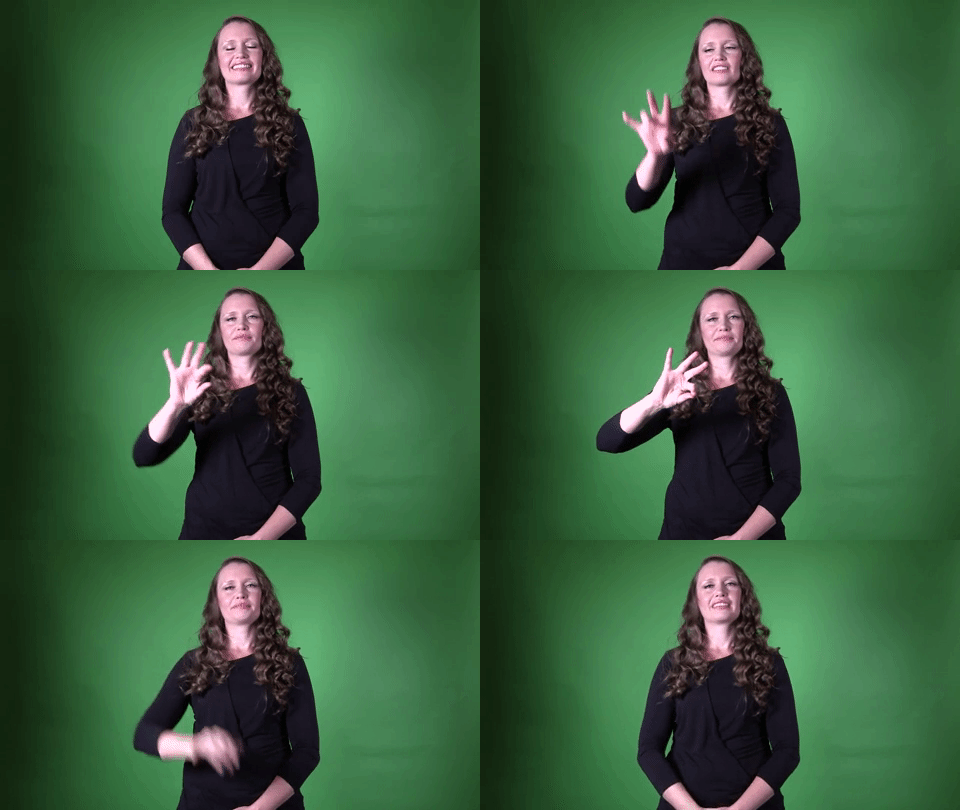
Definition: The number seventy-nine
Sign for SEVENTY-NINE in ASL

Practice Activities:
Practicing the sign for seventy-nine in ASL can help build fluency with numbers and improve overall signing speed. Start by signing seventy-nine repeatedly in front of a mirror to check for accuracy. Pay attention to the movement and configuration of your hand as you transition from seventy to nine.
Incorporate the sign for seventy-nine in ASL into real-world applications by using it in sentences. Practice signing phrases like “My grandmother is seventy-nine years old” or “I saw seventy-nine birds in the park.” Challenge yourself to create at least five original sentences using the number.
Engage in memory-based practice by playing a numbers game with a partner. One person signs a random two-digit number, and the partner must quickly recognize and sign it back. Include the sign for seventy-nine in ASL multiple times in the sequence to reinforce learning.
Use a storytelling approach by incorporating seventy-nine into a short narrative. For example, tell a story about a trip where you counted seventy-nine objects or interacted with seventy-nine people. Try to keep a natural flow while maintaining accuracy in signing numbers.
Test your recall speed by setting a timer and signing numbers ranging from seventy to ninety as quickly and clearly as possible. Focus on making the transition between numbers seamless while avoiding hesitation. Repeat this drill until you can comfortably sign seventy-nine without pausing.
To reinforce learning, mix seventy-nine with other numbers and sign them at random intervals. This prevents predictable patterns and forces you to process each number independently. Practicing in varied contexts will increase confidence and ensure accuracy in everyday conversations.
Cultural Context:
The sign for seventy-nine in ASL is part of the unique numbering system used in American Sign Language. ASL numbers follow a specific pattern, making them efficient and visually clear. The movement and handshape of the sign for seventy-nine in ASL follow a natural flow, making it easy for signers to recognize.
Numbers in ASL often have regional variations, but the sign for seventy-nine in ASL remains relatively consistent. ASL users appreciate the efficiency of the number system, especially when discussing prices, ages, or measurements. Learning the sign for seventy-nine in ASL helps improve fluency and understanding of ASL’s structure.
Deaf culture values clarity and expressiveness in communication. The sign for seventy-nine in ASL, like other numbers, is designed to be quick and visually distinct. Using ASL numbers correctly shows respect for Deaf culture and enhances meaningful conversations.
When learning ASL numbers, practicing handshape transitions is essential. The sign for seventy-nine in ASL requires smooth movement between digits, reflecting ASL’s visual nature. Mastering these transitions helps signers communicate numbers quickly and accurately.
ASL students benefit from repetitive practice when learning new signs. The sign for seventy-nine in ASL can be practiced alongside other numbers to strengthen ASL fluency. Signing numbers confidently ensures clear communication in everyday interactions.
In Deaf communities, ASL numbers are used frequently in daily life. The sign for seventy-nine in ASL is useful when discussing topics like money, distances, and counting. Understanding number signs is key to participating fully in ASL conversations.
ASL relies on handshapes, movements, and facial expressions to convey messages. The sign for seventy-nine in ASL fits into this system by maintaining a structured, logical motion. Consistency in signing numbers helps avoid confusion and enhances understanding.
Mastering ASL numbers builds confidence in signing. The sign for seventy-nine in ASL, when practiced regularly, becomes second nature. Numbers appear in many conversational contexts, making them essential for ASL learners.
Using the sign for seventy-nine in ASL correctly demonstrates a deeper grasp of ASL’s number system. Learning ASL numbers contributes to developing overall fluency. Each number in ASL has a purpose, and proper use helps ensure clear and effective communication.
Extended Definition:
The sign for seventy-nine in ASL is part of the number system in American Sign Language. It follows the standard pattern for signing two-digit numbers in ASL, where both digits are incorporated into a fluid motion. This sign is commonly used in conversations related to age, money, addresses, and other numerical contexts.
To sign seventy-nine in ASL, start with the number seven, formed by extending the index and middle fingers while keeping the rest of the fingers folded. Then smoothly transition into the number nine by forming an “F” handshape, touching the thumb and index finger together while the other fingers remain extended. The movement should be natural and fluid, showcasing the unique structure of ASL numbers.
ASL numbers from seventy to seventy-nine typically follow a clear pattern, allowing fluent communication. Seventy-nine shares a similar formation process with other two-digit numbers in this range. Proper hand placement and motion ensure that the sign is easily understood in conversations.
The sign for seventy-nine in ASL is useful in daily interactions, whether discussing prices, years, or quantities. Being able to sign numbers correctly enhances confidence and improves overall fluency in ASL. Numbers play a crucial role in conversations, and mastering them increases communication efficiency.
Facial expressions and context help reinforce the meaning of the number being signed. In a financial setting, this number might refer to a specific price, while in discussions about age, it could indicate someone’s age. Clarity in signing ensures that the intended message is understood.
The sign for seventy-nine in ASL is part of a dynamic numbering system that maintains consistency throughout American Sign Language. Learning the pattern for two-digit numbers makes it easier to sign numbers quickly and correctly. With practice, signing seventy-nine becomes second nature.
Using ASL numbers effectively requires practice and attention to detail. Watching fluent signers and mimicking their hand movements can enhance understanding and accuracy. The more repetitive exposure to numbers, the easier they become to use in everyday communication.
Seventy-nine is a frequently used number in many contexts, from discussing statistics to sharing personal details. Becoming comfortable with ASL numbers allows for smoother interactions within the Deaf community. Engaging in ASL discussions that involve numbers helps build confidence and precision.
Mastering the sign for seventy-nine in ASL helps with fluency and communication in both formal and informal settings. Whether discussing dates, prices, or measurements, knowing the correct number signs is essential. Practicing ASL numbers regularly contributes to
Synonyms: seventy-nine, number seventy-nine, number 79, the number 79, the number seventy-nine
Educational resources: Find related learning materials in our course bank!
Want more? Check out some of our popular learning activities on the homepage!
Need to look up a sign? Use our highly rated dictionary: https://aslinteractive.com/best-asl-dictionary/
Follow us on tiktok: https://www.tiktok.com/@aslinteractive. More social media links at the bottom of this page!
Long-tail Keywords: what is the sign for seventy-nine in ASL, how do you sign seventy-nine in ASL, ASL sign for seventy-nine
Categories: Numbers – Basics, Numbers 71-80, cardinal numbers
tags: Numbers, Numbers 76-80, Numbers 76 78 79, Rocking Numbers, Language Learning
Parameters
*Handshape*:
The sign for SEVENTY-NINE in ASL uses a shifting handshape to represent the two-digit number. It starts with the hand forming a “7” handshape, where the index and middle fingers extend while the thumb sticks out. Then, the hand transitions smoothly into a “9” handshape, where the index finger and thumb come together in a circle while the other fingers remain extended. This movement helps visually convey the numerical value effectively.
*Palm Orientation*:
The palm orientation for the sign for seventy-nine in ASL starts with the palm facing outward. As the hand transitions from seventy to nine, the palm remains forward, ensuring clear visibility. This movement maintains a steady hand shape throughout, making sure that each numeral is distinctly shown. Proper positioning reduces ambiguity, ensuring the sign for seventy-nine in ASL is understood accurately in conversations.
*Location*:
The sign for seventy-nine in ASL is formed in the neutral space in front of the body, at chest level. The movement happens within this space, transitioning smoothly from the handshape for seventy to the one for nine. The hands remain within a comfortable range, ensuring clarity and visibility. Maintaining a steady position within this area helps keep the sign distinct and recognizable without excessive movement.
*Movement*:
To make the sign for seventy-nine in ASL, begin with the number seven, forming an extended thumb and ring finger while the other fingers remain extended. Then smoothly transition into the number nine by bringing the index finger and thumb together in a circular shape while folding the remaining fingers down. This movement should flow naturally without abrupt stops. Keep your palm facing outward, ensuring clarity in the numerical transition.
*Non-Manual Signals*:
When using the sign for seventy-nine in ASL, the eyebrows remain neutral or slightly lowered if emphasizing accuracy. Facial expression generally remains relaxed unless clarifying or correcting an amount. Mouth movements may reflect the numbers being signed, with a natural formation of “seventy-nine” or a small pursing of the lips. Head position stays steady, but a slight tilt may be used to engage the viewer or ensure clarity in signing the sign for seventy-nine in ASL.
*Prosody, Dominant/Non-Dominant Hand*:
The sign for seventy-nine in ASL is made using the dominant hand. Start with the number 7, where the index and middle fingers extend while the thumb touches the ring finger. Then smoothly transition into the number 9 by bringing the index finger and thumb together in an open “9” shape . This movement typically flows in one smooth motion, demonstrating clarity in numerical signing. Maintaining proper hand positioning ensures clear communication of the number.
Tips for Beginners:
When learning the sign for SEVENTY-NINE in ASL, focus on maintaining smooth transitions between numbers. This sign is part of the series of 70s numbers in ASL, which follow a consistent movement pattern. Practice moving from the initial handshape of “7” to the final handshape of “9” fluidly without unnecessary pauses.
Handshape accuracy is crucial when signing the sign for SEVENTY-NINE in ASL. Ensure that your “7” and “9” handshapes are clearly formed—thumb and ring finger touching for “7” and thumb and middle finger touching for “9.” Avoid sloppy or unclear finger positioning, as it can cause confusion with similar numbers.
Pay close attention to the palm orientation while practicing the sign for SEVENTY-NINE in ASL. Your palm should be facing outward throughout the movement. Some beginners accidentally let their palm turn inward, which can make the sign harder to recognize. Keeping your palm consistent will enhance overall clarity.
A common mistake is rushing through the transition between the digits. The switch from “7” to “9” should be quick but controlled. Overly slow movements can make the sign appear unnatural, while rushing too much may cause fingers to collide or lose shape. Focus on achieving a natural rhythm through repeated slow-to-fast practice.
Use a mirror or record yourself signing to check for accuracy when practicing the sign for SEVENTY-NINE in ASL. Watching yourself can help identify any inconsistencies in movement or finger positioning. If possible, practice with a fluent signer who can provide direct feedback on clarity and execution.
Consistency and repetition are key to building confidence with numbers in ASL. Take time to practice the sign for SEVENTY-NINE in ASL along with other 70s numbers to reinforce the pattern and improve speed. The more you practice, the more fluid and natural your signing will become!
Connections to Other topics:
The sign for seventy-nine in ASL connects to other numbers in the seventy series, such as seventy-one through seventy-eight. These numbers follow a similar pattern, where the hand transitions smoothly between the digits to create a fluid and natural movement. This relates to the number system in ASL, which often exhibits predictable patterns, making it easier for signers to remember and produce numbers efficiently.
Understanding the sign for seventy-nine in ASL also helps in recognizing number incorporation in other contexts, such as calendar dates, addresses, and monetary amounts. Numbers in ASL are commonly integrated into different signs, such as age and time-related expressions. For example, numbers can be modified in directional signs for age by incorporating them within the “old” sign or in time concepts like “two-weeks” or “three-months.”
This sign also plays a role in teaching fluency in counting and numerical transitions, which is crucial for communicating measurements, statistics, and prices. The way seventy-nine is signed reflects how numerical progression works in ASL, reinforcing the importance of quick, clear movements when signing numbers. Mastering these transitions can improve signing speed and comprehension in conversations involving numerical data.
The sign for seventy-nine in ASL is also connected to financial discussions, such as stating a price, salary, or budget. Signers often pair numbers with dollar amounts, such as “79 dollars,” where the number sign smoothly transitions into a dollar sign. Recognizing the flow of number combinations enhances financial literacy in ASL and helps signers engage in everyday transactions more effectively.
This number sign contributes to broader discussions on numerical cohesion in ASL, bridging the gap between sequences and context-based numeric expressions. By practicing seventy-nine alongside other numbers, signers develop confidence in expressing both isolated numbers and sequential numeric patterns in communication.
Summary:
The sign for seventy-nine in ASL is part of the number system, following a logical pattern used in signing two-digit numbers. This sign follows the common number formation used in ASL where the first digit, seventy, is modified into a fluid movement leading directly into nine. This number is typically produced with one continuous motion to maintain fluency and avoid unnecessary separations between digits.
In forming the sign for seventy-nine in ASL, the dominant hand starts by forming the number seven, which is done by extending the index and middle fingers while the thumb touches the tip of the ring finger. The hand then smoothly transitions into the nine handshape, where the thumb and index finger make a circle while the other fingers extend outward. The movement must remain fluid, reinforcing the natural rhythm of ASL’s numerical system.
Numbers in ASL hold significant linguistic importance, as they reflect the language’s preference for efficiency and visual clarity. The sign for seventy-nine in ASL exemplifies this by reducing the need for multiple discrete motions and instead blending the two-digit concept into a single transition. Mastering this number, along with others in the seventy range, can improve overall fluency in conveying numerical data among ASL users.
Consistency in signing two-digit numbers is key in ASL’s numerical grammar. The transition from seventy to nine should maintain a slight flick or turn to carry the number visually from one digit to the next. Learning to control sign transitions enhances signers’ ability to communicate numbers while maintaining ASL’s smooth and natural pace.
The sign for seventy-nine in ASL is used in a variety of contexts, including ages, addresses, and quantities. Proper numerical representation is vital for clarity in communication, ensuring that information is accurately delivered without misunderstanding. Numbers appear frequently in daily conversations, making it crucial to develop proficiency in ASL numbering systems.
ASL number signs are deeply ingrained in Deaf culture and identity. The visual nature of the numerical system allows for rapid communication in academic, social, and professional settings. Understanding the structure of numbers such as seventy-nine helps maintain the authenticity of ASL as a complete and independent language.
Grammatically, ASL numbers follow a structured system but also allow for variations based on regional and generational differences. Some signers may incorporate slight modifications in movement or palm orientation when signing seventy-nine in ASL. Though these variations exist, the fundamental concept of fluid motion remains essential for clarity.
Comparing the ASL number system to other signed languages reveals both similarities and distinct differences. While many signed languages use a structured approach to numbers, the methodology of blending digits can vary. Learning the sign for seventy-nine in ASL while understanding broader numerical variations improves overall multilingual proficiency in sign language contexts.
ASL learners often rely on repetition and muscle memory to master numerical signs. Practicing seventy-nine, along with other numbers in the seventy range, reinforces hand coordination and fluidity. The more frequently these numbers are practiced, the more natural they become in conversation.
Applied linguistics provides insights into the cognitive processing involved in signing numbers. When signing seventy-nine in ASL, the brain engages in pattern recognition, associating the numerical concept with a specific hand movement. This connection highlights ASL’s unique interaction between motor skills and visual language comprehension.
In formal ASL settings, such as interpreting or academic environments, precision and consistency in number signs are essential. A fluent signer ensures that the number seventy-nine is delivered smoothly without hesitation. Clear and accurate number signing reinforces ASL’s credibility and professionalism in various domains.
Deaf education emphasizes number fluency early in language development. Teaching young ASL users the correct sign for seventy-nine in ASL establishes a foundation for later numerical competency. Mastery of ASL numbers supports mathematical comprehension and general bilingual literacy skills.
Technology and digital communication have influenced the way numerical signs are used in virtual ASL conversations. Video calls and recorded ASL content require clear and well-lit signing to ensure numbers like seventy-nine are easily understood. As ASL adapts to modern technology, numerical clarity remains a priority for effective remote communication.
Cultural significance plays a role in how numbers are perceived and used in ASL communities. Certain numbers may carry symbolic meanings or historical relevance within Deaf culture. Although seventy-nine does not have a widely recognized cultural symbolism, it remains a crucial number for everyday interactions and technical discussions.
Numerical signs in ASL contribute to data representation in professional fields such as business, education, and healthcare. When discussing statistics, prices, or measurements, accuracy in signing numbers like seventy-nine is essential. Skilled ASL users ensure numerical data is conveyed efficiently in workplace settings.
Practicing the sign for seventy-nine in ASL with real-world applications enhances retention. Engaging in number-based exercises, such as signing phone numbers, street addresses, or dates, solidifies understanding. Regular exposure to numbers in context strengthens numerical fluency in ASL conversations.
In social interactions, numerical proficiency extends beyond just counting. Games, storytelling, and casual discussions often include
Want more? Check out some of our popular learning activities!
ASL Interactive Resources
ASLInteractive YouTube Channel
Follow us on tiktok: @aslinteractive.com
Follow us on Instagram: aslinteractive
Facebook page: aslinteractive
Facebook group: aslinteractive
LInkedIn: ASL Interactive LLC
Twitter: @ASL_interactive
*Some information on this page is AI-generated. AI can make mistakes. Please check the information.


Responses