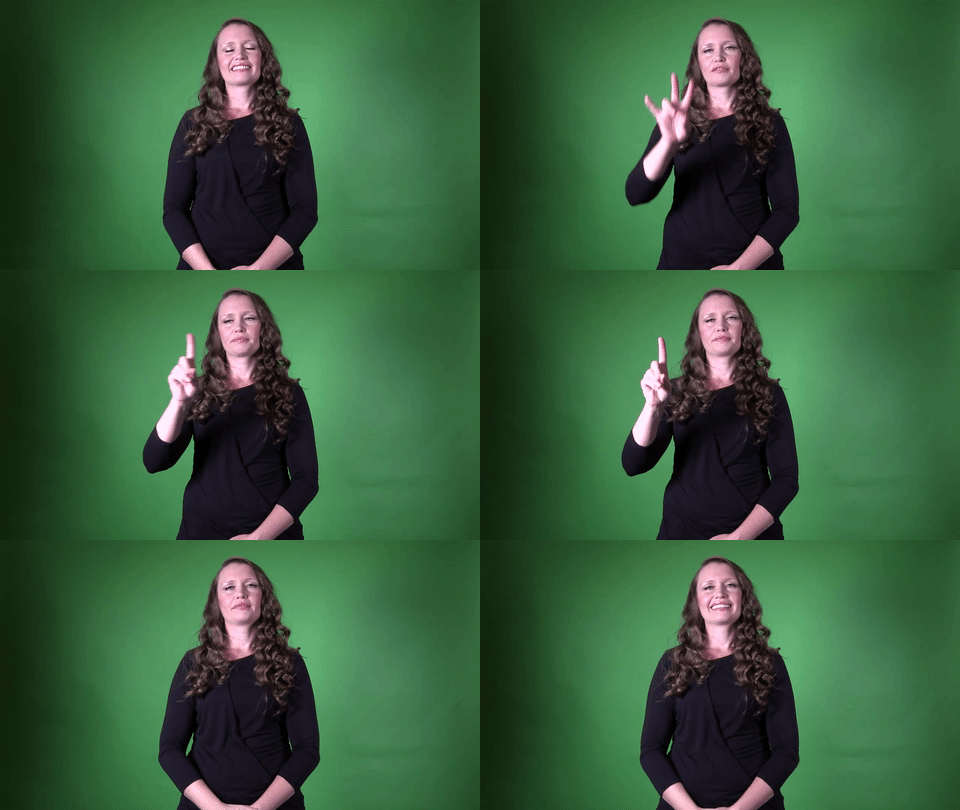
Sign for SEVENTY-ONE in ASL | 🔢 ASL Dictionary

Definition: The number seventy-one

Sign for SEVENTY-ONE in ASL 

YouTube player

Practice Activities:

Practicing the sign for seventy-one in ASL can be fun and engaging with a variety of activities. Begin by signing seventy-one repeatedly in front of a mirror to build muscle memory and ensure accuracy. Try switching hands and testing how quickly you can move between other numbers like seventy and seventy-two to improve speed and fluency.

Use flashcards with different numbers to reinforce recognition. Have a friend or partner show a number card randomly while you sign the correct number in response. Challenge yourself to sign numbers from seventy to eighty in order, focusing on fluid transitions, especially when getting to the sign for seventy-one in ASL.

Incorporate the sign into real-world contexts. Practice signing your age, house number, or random numerical facts that include seventy-one. A great method is to read a newspaper or website and find numbers that you can sign, making sure to include the sign for seventy-one in ASL whenever it appears.

For storytelling practice, create a short scenario where seventy-one is relevant. This could be about a person celebrating their seventy-first birthday or an athlete who won seventy-one races. Sign the story while making sure to maintain clear number distinctions.

Partner activities can enhance fluency. Have one person sign a number while the other writes it down, ensuring comprehension. Reverse roles for added practice. Another variation involves a conversation where numbers frequently come up, such as discussing discounts, lottery numbers, or historical dates.

Engage in speed drills by timing how quickly you can sign from one to one hundred, paying extra attention to clarity at seventy-one. The goal is to develop accuracy and confidence with the sign so that it feels natural and effortless in conversation.

Cultural Context:

The sign for seventy-one in ASL follows the common pattern for signing numbers in the 70s. American Sign Language often combines number signs in a fluid motion, making them distinct but efficient. The sign for seventy-one uses a unique movement that differentiates it from other numbers in the same range.

ASL number signs reflect both visual clarity and ease of movement. The sign for seventy-one in ASL is typically produced with the dominant hand and follows the standard number configuration. Learning this number is essential for clear communication in various contexts, such as dates, addresses, and prices.

In Deaf culture, fingerspelling and number signs are crucial for daily interactions. The sign for seventy-one in ASL allows for fast and accurate exchange of information when discussing numbers. Mastering number signs enhances fluency and improves comprehension for both Deaf and hearing ASL users.

Numbers in ASL, including seventy-one, are integral to personal and professional conversations. Whether discussing ages, scores, or statistics, the sign for seventy-one in ASL is frequently used. Understanding number signs contributes to effective and natural ASL communication.

Using the correct sign for seventy-one in ASL ensures clarity in conversations. Since numbers play a significant role in various settings, knowing them well improves confidence in signing. This contributes to better communication in both casual and formal discussions.

ASL has evolved to make numerical signs more efficient and easy to understand. The sign for seventy-one in ASL is an example of this streamlined system, which supports quick and fluent conversation. These signs are designed to be both practical and visually distinct.

In educational settings, students learning ASL must become proficient in number signs. The sign for seventy-one in ASL is taught alongside other numbers to ensure a comprehensive grasp of numerical communication. Mastering these signs is essential in both academic and real-world scenarios.

Deaf and Hard of Hearing individuals rely on fluent number signing to convey important details. The sign for seventy-one in ASL is frequently used in daily life, from discussing finances to exchanging contact information. This illustrates the practical importance of mastering number signs in ASL.

Technology and digital communication make ASL number signs even more relevant today. When signing during video calls or in-person conversations, the sign for seventy-one in ASL ensures accurate message delivery. Knowing number signs enhances accessibility and strengthens connections between ASL users.

The beauty of ASL lies in its expressive and efficient structure. The sign for seventy-one in ASL

Extended Definition:

The sign for seventy-one in ASL follows the standard pattern for signing two-digit numbers in American Sign Language. It combines the sign for seven and the sign for one in a fluid motion. This number is typically formed with one hand, using distinct finger movements to represent each digit.

In ASL, numbers in the seventy series often follow a specific pattern that is consistent with other numbers in the same group. The sign for seventy-one uses a flicking or sliding motion to transition smoothly between the two digits. This motion helps maintain clarity and fluency when signing numbers above sixty.

Facial expressions and context play a role in conveying numbers like seventy-one in ASL. While the number itself is straightforward, the signer’s facial expressions can indicate emphasis or clarify meaning. This is especially important in fast-paced conversations or when dealing with large sets of numbers.

The handshape for seventy-one in ASL begins with the number seven, with the thumb touching the ring finger. The hand then transitions to the number one, extending the index finger while the other fingers fold down. This quick transition is essential for maintaining visual consistency when signing numbers in succession.

When learning the sign for seventy-one in ASL, practicing smooth hand transitions ensures accuracy and comprehension. Many learners find it helpful to practice the seventy series as a group to build muscle memory. Consistency in finger movement is key to making the number easy for others to recognize.

The sign for seventy-one in ASL is commonly used in everyday conversations, including discussing ages, prices, addresses, and statistics. It is important to sign numbers clearly to avoid confusion, especially when giving precise information. Signing at a steady pace allows the listener to process the number more effectively.

ASL numbers, including seventy-one, follow rules that differ from spoken English but remain consistent within the language. Understanding these variations helps improve fluency and comprehension in conversations involving numbers. The visual nature of ASL makes finger placement and hand positioning essential for clear communication.

When using the sign for seventy-one in ASL, consider the surrounding signs to ensure smooth transitions. Numbers are often used alongside classifiers and descriptive signs to provide context. Adjusting the speed and clarity of the number based on the conversation helps maintain effective communication.

Beginners may find it challenging to transition between numbers smoothly, but regular practice improves speed and confidence. Watching native signers or using online resources can help reinforce proper techniques. Mastering number transitions is an important skill for overall ASL fluency

Synonyms: seventy-one, number seventy-one, number 71, the number 71, the number seventy-one

Educational resources: Find related learning materials in our course bank!

Want more? Check out some of our popular learning activities on the homepage!

Need to look up a sign? Use our highly rated dictionary: https://aslinteractive.com/best-asl-dictionary/

Follow us on tiktok: https://www.tiktok.com/@aslinteractive. More social media links at the bottom of this page!

Long-tail Keywords: what is the sign for seventy-one in ASL, how do you sign seventy-one in ASL, seventy-one in American Sign Language

Categories: Numbers – Basics, Numbers 71-80, cardinal numbers

tags: Numbers 71-75, Numbers, Language Learning, Mathematics, Education

Parameters

*Handshape*:

The sign for seventy-one in ASL uses a transitioning handshape. It begins with the number seven, where the thumb and ring finger touch while the other fingers extend. The hand then shifts smoothly into the number one, where only the index finger remains extended. This movement is fluid and natural, emphasizing the numerical transition. When signing seventy-one in ASL, keep the motion controlled and clear to maintain accuracy.

*Palm Orientation*:

The palm orientation for the sign for SEVENTY-ONE in ASL starts with the palm facing outward. The hand moves slightly as the number transitions from seventy to one, with the fingers changing shape accordingly. Throughout the motion, the palm remains forward, ensuring visibility for clarity. When forming the “one” at the end, the index finger extends while the other fingers close, maintaining the outward palm orientation.

*Location*:

The sign for seventy-one in ASL is produced in the neutral space in front of the body, typically at chest level. The dominant hand forms the number seven, then transitions smoothly into the number one without breaking the motion. Keep the movements fluid and controlled to ensure clarity. The location stays within the signing space, ensuring easy visibility. Eye contact and clear hand positioning are essential for accurate communication.

*Movement*:

To make the sign for seventy-one in ASL, start by forming the number seven with your dominant hand, palm facing out. Then, smoothly transition into the number one without breaking the motion. The hand remains in the same position as the fingers change shape. This movement should be fluid and natural, ensuring clarity and accuracy in signing. Facial expressions are neutral unless context requires emphasis.

*Non-Manual Signals*:

When using the sign for seventy-one in ASL, maintain a neutral or slightly focused facial expression. The eyebrows can stay relaxed, as numbers do not require extreme emotional emphasis unless for clarification. If used in a questioning format, slightly raise your eyebrows and lean forward to signal inquiry. A small head nod or subtle mouthing of “seventy-one” can enhance clarity, especially in fast-paced conversations. Keep eye contact to reinforce engagement.

*Prosody, Dominant/Non-Dominant Hand*:

The sign for SEVENTY-ONE in ASL uses the dominant hand and follows a pattern used for numbers in the seventies. The dominant hand forms a “7” handshape with the palm facing forward, then transitions smoothly into a “1” handshape. This movement should be fluid and natural, maintaining clear handshape distinctions. The non-dominant hand is not used for this sign, leaving the focus on the dominant hand’s transition.

Tips for Beginners:

When learning the sign for seventy-one in ASL, focus on maintaining fluidity in your number transitions. This sign requires a smooth shift from “7” to “1,” so be sure to keep your fingers controlled and precise. Avoid unnecessary pauses between the numbers, as this can make the sign look unclear or hesitant.

A common mistake beginners make with the sign for seventy-one in ASL is blending the numbers too much or skipping key finger movements. Make sure that your “7” is correctly formed with the thumb and ring finger touching, and your “1” is a strong, upright index finger. Keep your hand steady at shoulder level to maintain proper visibility.

Another helpful tip is to practice finger coordination for switching between seven and one effortlessly. Try signing each number separately before transitioning between them to build muscle memory. Practicing in front of a mirror or recording yourself can help you catch any inconsistencies in finger shape or speed.

Hand positioning plays a key role in clarity when signing seventy-one. Keep your palm facing outward and ensure that each digit is distinctly visible. If you angle your hand incorrectly, it may be misread as a different number, so always aim for direct visibility in conversation settings.

Lastly, as with any ASL number, consistency and practice will help you feel more natural using the sign for seventy-one in ASL in everyday communication. Engage in activities that require counting or numerical expression to reinforce your skills. The more comfortable you are with number transitions, the more fluent and confident you will become in ASL conversations.

Connections to Other topics:

The sign for seventy-one in ASL is part of a structured number system that follows specific handshape transitions. This sign is related to other two-digit numbers like seventy-two, seventy-three, and so on, which often follow a pattern in their movements. Understanding the sign for seventy-one in ASL helps in grasping the logic behind number sequences in signing, making it easier to learn other numbers efficiently.

The number seventy-one is used frequently in counting, addresses, and years, helping ASL users communicate numerical information clearly. It also connects to age-related signs and financial concepts like money amounts and prices. Mastery of the sign for seventy-one in ASL aids in conversations where precision with numbers is crucial, such as discussing historical events, personal experiences, or statistics.

This sign relates to numerical expressions in ASL, which are often influenced by regional and stylistic variations. Some signers may shift their hand slightly or modify the movement speed depending on context. Recognizing these variations enhances communication and ensures clarity when discussing numbers beyond seventy-one.

Numbers like seventy-one are often part of larger numerical expressions, such as dates and time references. When combined with other signs like “dollars” or “years old,” the sign for seventy-one in ASL helps create larger numerical concepts. Learning this sign strengthens overall number fluency in ASL and improves accuracy when signing detailed numerical data.

The structure of the sign follows the natural counting progression seen in ASL, making it useful for understanding similar number signs. Mastery of number signs like seventy-one builds confidence in using other numerical expressions, helping signers navigate real-life situations such as prices, measurements, and time-related discussions. Understanding how to sign seventy-one effectively also reinforces general pattern recognition in ASL.

Summary:

The sign for seventy-one in ASL follows a structured numerical pattern seen in other numbers within the seventy series. This number is typically signed using the dominant hand, incorporating both movement and a shift in finger positioning. The motion is fluid, with the signer transitioning smoothly between the necessary numerical configurations.

Numbers in ASL follow a unique visual grammar distinct from spoken language. The sign for seventy-one in ASL emphasizes efficiency through handshape changes rather than separate numeral signs. This allows for a rapid signing style that remains clear and readable within conversations.

Seventy-one is a compound number that combines “seven” and “one.” The sign for seventy-one in ASL follows a well-established numerical pattern where the signer changes from one digit to the next. This is common across most numbers within the seventy series.

In ASL, numbers from sixty to ninety often have a distinct pattern incorporating repeated or modified handshapes. The structure seen in the sign for seventy-one in ASL highlights the linguistic consistency of ASL numeracy. It ensures recognition and ease of use for fluent signers.

The visual clarity of the sign for seventy-one in ASL is crucial for effective communication. Since numbers are used frequently in daily interactions, ensuring accuracy in handshape transitions helps prevent misunderstandings. The movement remains precise, reinforcing the language’s efficiency.

Like other numbers, seventy-one is useful in various contexts, such as counting, listing, or age references. The sign for seventy-one in ASL appears in formal and casual discussions that involve numerical data. Understanding numerical progression in ASL helps signers navigate different settings with confidence.

Numerical fluency is a critical component of ASL for both Deaf and hearing learners. Mastery of numbers like seventy-one ensures communicative competence when discussing dates, prices, or statistics. This number, like others, plays an essential role in everyday exchanges.

Numbers in ASL have undergone historical development, with different schools or regions having slight variations. The sign for seventy-one in ASL aligns with standardized number signing conventions in modern ASL. This consistency allows ASL users across different communities to understand numerical references without confusion.

The ASL number system follows a decimal-based structure similar to spoken languages. However, its expression through hand movements introduces a visual-spatial component. The sign for seventy-one in ASL contributes to the broader framework of ASL numerical representation.

Signers may use the sign for seventy-one in ASL in casual, academic, or professional dialogues. Whether discussing statistics or referencing street addresses, this number maintains its standard hand configuration. Mastery of number signs aids in both receptive and expressive skills.

The handshape transition in the sign for seventy-one in ASL must be executed smoothly for clarity. A jerky or unclear motion could lead to misinterpretation, emphasizing the importance of controlled movements. Finger dexterity plays a key role in signing numbers effectively.

ASL numbers maintain a balance between simplicity and expressiveness. The sign for seventy-one in ASL follows this principle, ensuring quick recognition. Clarity remains a priority in numerical conversations.

Numerical efficiency is particularly valuable in educational settings. Teachers and students frequently use the sign for seventy-one in ASL during lessons, assignments, and discussions. This reinforces the importance of consistent numerical proficiency.

The sign for seventy-one in ASL is part of a base-ten system that complements ASL’s spatial modality. Numbers are essential to conversations about money, time, and dates. The reliance on visual clarity ensures that numbers remain an effective part of ASL’s structure.

Age-related discussions frequently incorporate number signs, including the sign for seventy-one in ASL. When indicating age, signers follow specific grammatical conventions unique to ASL. This use reinforces the practicality of mastering numerical signs.

Context is crucial when using the sign for seventy-one in ASL. Numbers can appear in addresses, prices, or telephone numbers, which may alter their presentation slightly. Understanding these variations allows for enhanced comprehension in real-world situations.

ASL learners benefit greatly from practicing numerical transitions. The sign for seventy-one in ASL provides an opportunity to refine precision when signing multi-digit numbers. Frequent use ensures smoother, more natural execution.

Fluency in ASL includes both everyday vocabulary and numerical comprehension. Knowing the sign for seventy-one in ASL contributes to overall language proficiency. This enables signers to communicate effectively in diverse contexts.

Number incorporation into broader ASL sentences maintains the language’s visual-spatial nature. The sign for seventy-one in ASL, when used correctly, integrates seamlessly into structured ASL discourse. This reinforces the natural flow of sign language conversations.

The history of ASL number usage has been shaped by evolving linguistic structures. The consistency seen in the sign for seventy-one in ASL reflects efforts to standardize numerical expressions. This has helped improve accessibility for ASL users.

Finger control and hand positioning are essential in numerical signing. The sign for seventy-one in ASL demands careful attention to maintain legibility. Proper technique ensures the sign is understood without

Want more? Check out some of our popular learning activities!

ASL Interactive Resources

ASLInteractive YouTube Channel

Follow us on tiktok: @aslinteractive.com

Follow us on Instagram: aslinteractive

Facebook page: aslinteractive

Facebook group: aslinteractive

LInkedIn: ASL Interactive LLC

Twitter: @ASL_interactive

*Some information on this page is AI-generated. AI can make mistakes. Please check the information.

Sign for 71 in ASL, Sign for SEVENTY-ONE in ASL 

Responses