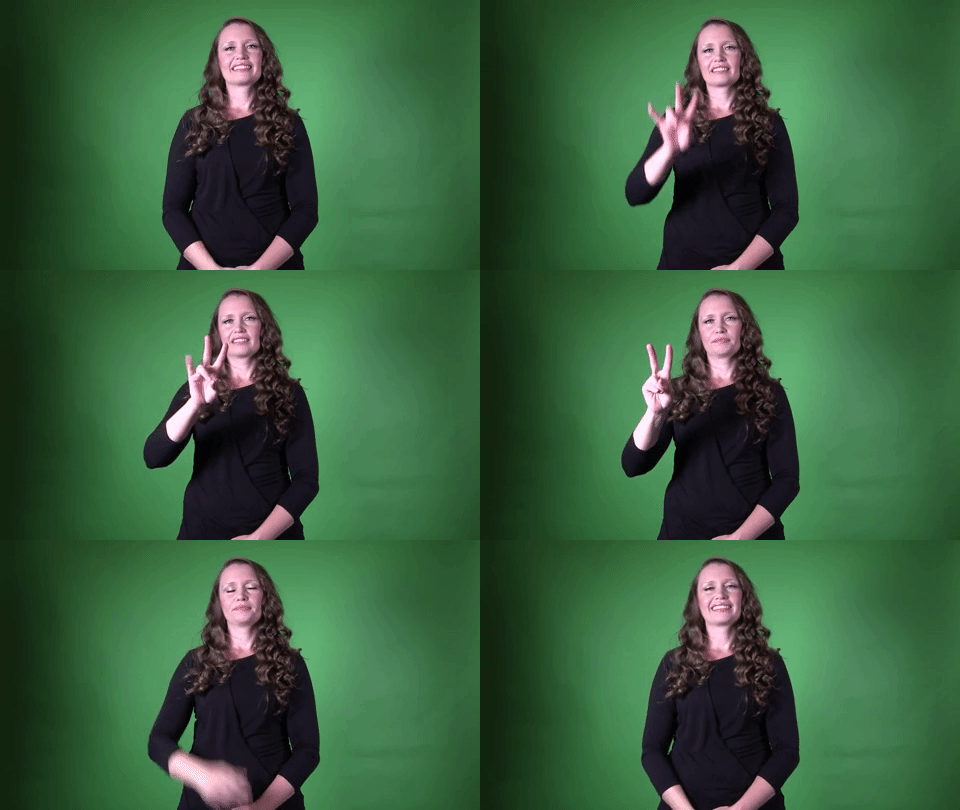
Sign for SEVENTY-TWO in ASL | 🔢 ASL Dictionary

Definition: The number seventy-two

Sign for SEVENTY-TWO in ASL 

YouTube player

Practice Activities:

Practicing the sign for seventy-two in ASL begins with mastering the handshape and movement. Start by forming the number seventy with your dominant hand, transitioning smoothly into the number two. Repeat this motion multiple times until it feels natural, ensuring your fingers move fluidly from seventy to two without hesitation.

Use a mirror to check your handshape and movement accuracy while signing seventy-two in ASL. Record yourself and compare it with examples from ASL resources or videos. Try signing the number slowly at first, then gradually increase your speed while maintaining clarity.

Practice signing seventy-two in a sequence of numbers. For example, sign sixty-nine, seventy, seventy-one, then seventy-two to reinforce number transitions. Another good drill is counting in increments of two: sixty-eight, seventy, seventy-two, seventy-four. This helps you recognize the number in context.

Create simple math problems involving seventy-two and sign both the problem and answer. For example, sign “thirty-six plus thirty-six equals seventy-two” or “eighty minus eight equals seventy-two.” This strengthens both numerical fluency and problem-solving in ASL.

Use seventy-two in practical sentences like “My grandmother is seventy-two years old” or “The hotel has seventy-two rooms.” Challenge yourself to create five original sentences incorporating the number and sign them fluidly.

For a partnered activity, quiz each other by signing random numbers and responding with the correct sign. One person fingerspells a number, while the other signs the corresponding numerical ASL translation, including seventy-two.

Engage in a storytelling exercise where seventy-two is a key number. Create a short story about a person who discovers seventy-two treasure chests or a city with seventy-two famous landmarks. This helps integrate the number naturally into conversation.

Cultural Context:

The sign for seventy-two in ASL follows the standard pattern for numbers in American Sign Language. It is part of the seventy series, which commonly uses a twisting movement between the digits. Learning the sign for seventy-two in ASL is essential for communicating numbers accurately in conversations.

Numbers play a significant role in ASL, especially when discussing addresses, ages, and quantities. The sign for seventy-two in ASL follows a logical pattern that makes it easier to remember. Understanding this number helps improve fluency and comprehension in signed conversations.

Deaf culture values clear and efficient communication, making number signs essential in daily interactions. The sign for seventy-two in ASL is commonly used in discussions about dates, prices, and statistics. Mastering number signs helps build confidence when signing with native users.

ASL has evolved over the years to create a structured system for numbering. The sign for seventy-two in ASL fits into this system, ensuring consistency and clarity. Learning numerical signs is fundamental for both beginners and advanced ASL learners.

Fingerspelling and number signs are key components of ASL fluency. The sign for seventy-two in ASL is part of a broader numerical system that enhances communication. Practicing number signs regularly helps strengthen signing skills and comprehension.

In Deaf education, learning numbers is a crucial part of early instruction. The sign for seventy-two in ASL is often introduced along with other numbers to form a strong foundation in numerical literacy. Knowing this sign allows for better participation in conversations and educational discussions.

Understanding the sign for seventy-two in ASL also helps with interpreting and translating numerical data. Interpreters and ASL students must be proficient in number signs to ensure accuracy. This number sign is frequently used in various settings, including business, education, and everyday interactions.

Many everyday situations require knowledge of numbers in ASL. The sign for seventy-two in ASL is useful when discussing sports scores, measurements, and financial amounts. Learning number signs makes communication smoother and more efficient in the Deaf community.

Technology and digital communication have increased the need to understand numbers in ASL. The sign for seventy-two in ASL is used in video calls, captions, and ASL interpretation online. Knowing this number contributes to more effective communication in virtual and in-person settings.

Mastering the sign for seventy-two in ASL is a small but important step toward ASL fluency. It allows signers to engage more effectively in discussions that involve numbers. Pract

Extended Definition:

The sign for seventy-two in ASL follows the common pattern used for two-digit numbers in American Sign Language. It combines the signs for seventy and two in a smooth, natural transition. This number is typically signed with a quick movement to maintain fluidity in conversation.

American Sign Language has unique number signs that often follow predictable patterns. The sign for seventy-two is part of the “seventy” series, which involves forming the number seventy and then transitioning directly into the number two. Understanding this pattern allows signers to quickly recognize and produce similar numbers.

When signing seventy-two in ASL, the dominant hand forms the number seven first. Then, it shifts into the handshape for the number two in one continuous motion. Proper hand positioning and movement ensure clarity and accuracy when expressing the number.

Numbers in ASL play a crucial role in communication, especially in counting, addresses, and age-related conversations. Mastering numbers like seventy-two helps build fluency and confidence in signing. It also enhances comprehension when watching others sign numbers in everyday situations.

Various regional and stylistic differences exist in ASL number signs. Some signers may modify the speed or positioning of the sign for seventy-two based on their dialect or preference. However, the general structure of the sign remains consistent throughout ASL communities.

For beginners, practicing number sequences often improves accuracy and fluidity. Repeating the sign for seventy-two along with other numbers in the seventy range will help reinforce muscle memory. Watching native signers and practicing with peers can further enhance understanding and signing precision.

American Sign Language continues to evolve, and number signs develop variations over time. However, the core method of signing seventy-two in ASL remains widely recognized. Learning and using it correctly ensures effective and natural communication.

Synonyms: seventy-two, number seventy-two, number 72, the number 72, the number seventy-two

Educational resources: Find related learning materials in our course bank!

Want more? Check out some of our popular learning activities on the homepage!

Need to look up a sign? Use our highly rated dictionary: https://aslinteractive.com/best-asl-dictionary/

Follow us on tiktok: https://www.tiktok.com/@aslinteractive. More social media links at the bottom of this page!

Long-tail Keywords: what is the sign for seventy-two in ASL, how do you sign seventy-two in American Sign Language, ASL sign for seventy-two

Categories: Numbers – Basics, Numbers 71-80, cardinal numbers

tags: Numbers 71-75, Numbers, Language Learning, Mathematics, Education

Parameters

*Handshape*:

The sign for seventy-two in ASL uses a changing number handshape. It starts with the number 7️⃣ handshape—thumb touching the ring finger while the other fingers extend. Then, the hand smoothly transitions into the number 2️⃣ handshape—index and middle fingers extended while the other fingers stay down. The movement between the numbers is fluid, maintaining a forward-facing palm. This method is consistent with other number signs in ASL, ensuring clarity and understanding.

*Palm Orientation*:

The palm orientation for the sign for SEVENTY-TWO in ASL starts with the palm facing outward as the hand forms the number 7. The fingers slightly curve, with the thumb and ring finger touching. As the hand transitions to the number 2, the index and middle fingers extend while the thumb, ring, and pinky fingers fold. The palm remains outward throughout the motion, maintaining clarity in the numerical distinction.

*Location*:

The sign for seventy-two in ASL is produced in a neutral space at chest level. Your dominant hand forms the number seven, then smoothly transitions into the number two while maintaining a steady position. The movement occurs within the signing space in front of your torso, ensuring clarity. The hand stays in a comfortable position without touching the body, making the sign for seventy-two in ASL easily visible to the viewer.

*Movement*:

To make the sign for seventy-two in ASL, start by forming the number 7 with the dominant hand, palm facing outward. Then, smoothly transition into the number 2 by pulling the thumb inward while extending the index and middle fingers. The movement should be fluid and natural, maintaining a steady handshape change. This numerical sign maintains eye contact with the viewer to ensure clarity and proper communication.

*Non-Manual Signals*:

When performing the sign for seventy-two in ASL, maintain a neutral facial expression or a slight focus, depending on the context. If emphasizing the number or clarifying in conversation, slightly raise your eyebrows. Keep your head steady and eyes directed toward the person you are signing with to ensure clear communication. A small nod can be added for emphasis when necessary, especially in instructional or clarifying situations.

*Prosody, Dominant/Non-Dominant Hand*:

The sign for SEVENTY-TWO in ASL uses the dominant hand, forming a “7” handshape with the palm facing outward. The hand transitions smoothly to a “2” handshape in a fluid motion. This number sign follows the common pattern of 70-series numbers in ASL, maintaining clarity and efficiency. Ensure the movement is controlled and precise, with no unnecessary pauses. Facial expressions remain neutral, as numbers typically do not require additional emotive markers.

Tips for Beginners:

Mastering the sign for SEVENTY-TWO in ASL requires fluid hand movements and number transition skills. Since it involves a combination of two numbers, maintaining clarity between seventy and two is essential. Keep your hand steady and fingers properly positioned to ensure legibility.

A common mistake is rushing through the number transition, making it difficult to distinguish between seventy and two. To prevent this, focus on maintaining a smooth yet deliberate movement. Consistency in hand shape between the two numbers helps make the sign for SEVENTY-TWO in ASL more readable.

Finger dexterity plays a crucial role in signing numbers fluently. Regular practice with multiple two-digit numbers will improve your overall signing confidence. Recording yourself can help identify inconsistencies and refine your transitions.

Pay attention to facial expressions and body positioning, as they enhance the clarity of number signs. If signing in conversation, ensure that your signing space remains comfortably visible to your audience. A relaxed but controlled posture will make the sign for SEVENTY-TWO in ASL appear more natural.

When learning numbers in ASL, repetition is key to memorization. Practicing in front of a mirror or with a partner allows you to get feedback on your technique. Try signing numbers in sequences to build speed and accuracy.

If you struggle with number combinations, break them down individually before linking them smoothly. Start by reinforcing your sign for seventy, then shift focus to two before putting them together. Over time, the transition will become second nature.

Engage with fluent signers or watch ASL videos to observe natural number transitions. Imitating experienced signers will refine your technique and boost confidence. The more comfortable you are with numbers, the easier it becomes to sign fluently in real conversations.

Connections to Other topics:

The sign for seventy-two in ASL is part of a pattern used for signing numbers in the seventies. This pattern uses a combination of the numbers seven and two, following a similar structure seen in other two-digit numbers, like sixty-two or eighty-two. Learning the sign for seventy-two in ASL helps reinforce the sequential pattern used in higher numbers, making it easier to sign and recognize related numeric sequences.

Ordinal numbers, such as seventy-second, build on the structure of cardinal numbers by adding a movement that signals order or ranking. Understanding this pattern strengthens comprehension of how ASL expresses rankings, sequences, and placements in a list. This is useful in academic settings when discussing dates, historical events, or competition results.

Another important connection is the influence of numerical patterns in addresses, phone numbers, and years. When signing addresses, for example, clear and consistent number articulation is key to understanding. The sign for seventy-two in ASL follows the same principles used for other multi-digit numbers, reinforcing number fluency.

Numbers also form part of larger mathematical and financial conversations. Counting, measuring, and computing figures in ASL rely on rhythmic number articulation. The repetition of similar number forms, including seventy-two, builds confidence in using ASL for discussing prices, statistics, and calculations.

Seventy-two is also relevant in cultural or historical discussions. Specific years, such as 1972, require understanding number sequencing to sign fluently. Conversations about events from those years use number knowledge alongside vocabulary for time references. By mastering the sign for seventy-two in ASL, learners deepen their ability to communicate about dates and historical contexts more effectively.

Summary:

The sign for seventy-two in ASL follows the common numerical pattern used for signing two-digit numbers in American Sign Language. It typically follows a pattern of signing the number seventy, then transitioning smoothly into the number two. This kind of number sign falls under the category of cardinal numbers, which are used for counting and expressing numerical values in daily communication.

When forming the sign for seventy-two in ASL, the signer generally starts with the handshape for the number seven, which involves extending the thumb and ring finger while keeping the other fingers folded down. The hand then transitions into the handshape for the number two, which involves extending both the index and middle fingers while folding down the remaining fingers. This transition should be fluid, maintaining the movement and positioning necessary for clarity.

Numbers like seventy-two involve a numerical shift, where one number morphs into another in one continuous motion. This is essential for maintaining fluency in signing numbers above sixty. The movement should not be jerky but should instead transition smoothly from the seven handshape into the two handshape without unnecessary pauses.

The sign for seventy-two in ASL is useful in various contexts, including discussing ages, dates, measurements, statistics, and numerical sequences. Depending on the context, the signer may need to slow down or emphasize the transition between seventy and two to ensure clear communication. Numbers are fundamental to many conversations, making it critical for ASL users to master their clarity and articulation.

Cardinal numbers like seventy-two are distinct from ordinal numbers, which indicate order or rank. If one needs to sign “seventy-second,” they might use an ordinal indicator such as twisting the palm slightly or modifying the movement to indicate sequence rather than a standalone number. Differentiating between these uses is an essential aspect of numerical fluency in ASL.

Numbers in ASL do not follow the same word order as English but instead follow a structure based on numerical logic within sign language grammar. When signing seventy-two within a sentence, understanding how ASL structures numbers helps in forming clear and concise communication. This is especially relevant in discussions involving sequence, ranking, or large numerical data.

The sign for seventy-two in ASL shares visual characteristics with other numbers in the seventies. For instance, seventy-three, seventy-four, and seventy-five all follow a similar transition, requiring only minor adjustments in the finger movement. This helps ASL learners recognize patterns in numerical signing that improve speed and efficiency.

Linguistically, ASL numbers follow systematic patterns that reflect efficiency in communication. The movement in numbers like seventy-two demonstrates how sign language minimizes effort by smoothly transitioning between numerical handshapes. This efficiency is a testament to the natural evolution of sign languages to ensure optimal visual communication.

Within applied linguistics, understanding numerical structure in ASL allows for better teaching methods for Deaf students. Numeric fluency in ASL is crucial in educational settings, ensuring accurate comprehension of math, science, and financial literacy. Mastery of numbers like seventy-two supports cognitive processing and reinforces how visual-spatial languages function.

The sign for seventy-two in ASL also plays a role in Deaf culture, especially in contexts involving historical events, years, and community landmarks. For example, numerical signs are essential in discussing significant cultural moments or notable years relevant to ASL history. Recognizing how numbers function within cultural dialogues is vital for deeper community engagement.

Numbers in ASL also have variations based on regional signing preferences. While seventy-two generally follows a consistent format, slight differences may occur in how smoothly the transition between seven and two happens. Some signers might have a sharper transition, while others may lean toward a more fluid, rolling motion.

When studying numbers in ASL, consistency in handshape formation is key to maintaining legibility. The sign for seventy-two in ASL requires precise forming of the seven and two handshapes, as any deviation may lead to miscommunication. Proper finger placement ensures the numbers are distinct and recognizable.

ASL numbers also interact with classifiers when describing grouped objects. If discussing seventy-two books, for instance, the signer may combine the numerical sign with an appropriate classifier to indicate the quantity of books. Understanding this relationship between numbers and classifiers enhances ASL proficiency.

When fingerspelling numbers instead of signing them, clarity and speed play a significant role. While the sign for seventy-two in ASL is preferred in most cases, fingerspelling individual digits may sometimes be used for additional emphasis, such as in formal documents or addresses. Context determines which method is most effective.

The efficiency of numerical signs in ASL highlights the beauty of linguistic evolution in visual languages. Numbers like seventy-two have developed in a way that maximizes both clarity and fluidity for native ASL users. This ensures that large numerical values remain accessible in various conversations.

Being able to quickly and accurately sign numbers like seventy-two is essential for interpreting, teaching, and general communication within the Deaf and signing communities. Whether used in financial discussions

Want more? Check out some of our popular learning activities!

ASL Interactive Resources

ASLInteractive YouTube Channel

Follow us on tiktok: @aslinteractive.com

Follow us on Instagram: aslinteractive

Facebook page: aslinteractive

Facebook group: aslinteractive

LInkedIn: ASL Interactive LLC

Twitter: @ASL_interactive

*Some information on this page is AI-generated. AI can make mistakes. Please check the information.

Sign for 72 in ASL, Sign for SEVENTY-TWO in ASL 

Responses