Practice Activities
Learning the sign for SHOW in ASL can be fun and effective with a variety of practice techniques. Start by using a mirror to monitor your handshape, movement, and facial expression. The sign for SHOW in ASL involves a directional movement, so it’s important to ensure your motion is accurate and intentional. Record yourself signing short phrases or sentences that include the sign for SHOW in ASL. Watching your videos back helps identify subtle errors in movement or palm orientation. Try to mimic fluent signers and adjust your production accordingly. Use the sign for SHOW in ASL in context by incorporating it into storytelling or daily conversation. Practice dialogues like “Can you show me?” or “Let me show you” to reinforce both expressive and receptive skills. Role-play with a partner to simulate real-life situations where the sign naturally fits. For more advanced learners, drills that alternate between directional verbs like GIVE, TELL, and SHOW can refine your grammar and speed. Challenge yourself by switching the direction of the sign for SHOW in ASL mid-conversation based on who is showing something to whom. This builds fluency and grammatical accuracy.
SEO Cultural Context
The sign for SHOW in ASL is deeply connected to the structure and expression of the Deaf community. It’s commonly used in both casual and formal communication, especially in educational, storytelling, and instructional settings. In Deaf culture, the sign for SHOW in ASL often conveys not just the act of revealing or demonstrating something, but also the willingness to share knowledge or experience. This sign is a directional verb, which means its meaning changes based on the signer’s intention and direction of movement. For example, when you move the sign from yourself toward another person, you’re saying “I show you.” If you reverse that, pointing toward yourself, it means “You show me.” Understanding how to use space in this way is an essential part of ASL grammar and cultural fluency. There can be slight regional variations in the sign for SHOW in ASL, especially in how big the movement is or how much facial expression is used. These subtleties are shaped by individual communities and local norms. However, the core structure of the sign remains widely understood across the United States and Canada. In Deaf storytelling and performance, the sign for SHOW in ASL plays a crucial role. It’s used to guide attention, introduce visual elements, or enhance a narrative. This reflects the community’s rich visual language tradition, where showing something is often more powerful than simply telling.
Extended Definition
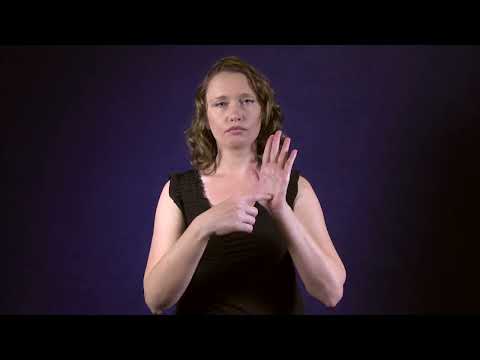
The sign for SHOW in ASL is made by holding your non-dominant hand flat, palm facing up, as if it’s a surface or screen. Your dominant hand forms the number 1 handshape (index finger extended) and is placed on the palm of the non-dominant hand. Then, move the dominant hand forward in the direction of the person you’re addressing. This movement gives the sign its directional quality. Because the sign for SHOW in ASL is a directional verb, it can be modified to indicate who is doing the showing and who is receiving the information. This spatial element is unique to ASL and doesn’t have a direct equivalent in English, making it a fascinating feature for learners to study. A common error is using the wrong handshape or forgetting the directionality. Beginners may also mistakenly use the sign for TELL or GIVE instead. While these signs are related, they each have distinct movements and meanings. TELL uses a single finger moving from the mouth outward, while GIVE involves a handing motion with a flat or curved hand. There are also compound versions of the sign for SHOW in ASL used in more complex sentences. For example, “show up” or “show off” may be expressed with additional facial grammar or modified signs. These nuances are learned with experience and through exposure to native signers.
Tips for Beginners3>
If you’re just starting to learn the sign for SHOW in ASL, don’t worry about getting it perfect right away. Focus first on mastering the handshape and understanding the concept of directionality. Use slow, clear motions and exaggerate your expressions to reinforce meaning. One of the most common beginner mistakes is not anchoring the dominant hand properly on the palm, or moving it without a clear direction. Make sure your movement has purpose—remember that in ASL, meaning often comes from the direction and context of the sign. Practice the sign for SHOW in ASL by using it in simple questions and commands. Try phrases like “Can you show me how?” or “Let me show you something.” This will help you build confidence and integrate the sign into your everyday vocabulary. Another helpful tip is to pair the sign for SHOW in ASL with visual aids. Point to an object and sign SHOW to clarify what you’re demonstrating. This reinforces the concept and helps bridge vocabulary with real-life use.
Connections to Other Topics
The sign for SHOW in ASL is closely linked to several other directional verbs, such as GIVE, TELL, and HELP. All of these signs involve movement that changes depending on who is doing the action and who is receiving it. Practicing them together can improve your grasp of ASL grammar. Another related concept is the idea of classifiers. In ASL, once you’ve signed SHOW, you might use a classifier to describe the object being shown. This enhances your message and adds visual detail that is central to ASL communication. You’ll also find connections between the sign for SHOW in ASL and educational or instructional vocabulary. Signs like TEACH, EXPLAIN, and DEMONSTRATE often appear in similar contexts and can be practiced together in themed lessons. Narrative structure is another key area. In ASL storytelling or presentations, the sign for SHOW in ASL is often used to introduce or highlight visual ideas. Learning how to incorporate it into stories improves your expressive abilities and aligns with Deaf cultural traditions. Finally, the sign for SHOW in ASL connects to the broader category of verbs that require spatial awareness. Understanding how to manipulate space for grammatical accuracy is a foundational skill in ASL, and SHOW is an excellent sign to practice this with.
Lengthy Summary
The sign for SHOW in ASL is more than a simple gesture—it’s a rich, expressive, and grammatically complex part of American Sign Language. It involves both physical precision and conceptual understanding. As a directional verb, it teaches learners how movement and space play a role in ASL grammar. By practicing the sign for SHOW in ASL through mirror work, recordings, contextual use, and advanced drills, learners can build confidence and fluency. Each practice method reinforces different aspects of the sign, from handshape accuracy to facial expression and spatial awareness. Culturally, the sign for SHOW in ASL reflects the Deaf community’s emphasis on visual communication. It’s used frequently in storytelling, education, and everyday conversations. Understanding its usage within these contexts helps learners develop cultural sensitivity and communication effectiveness. The
Extended Definition
of the sign outlines its structure and grammatical role. It also highlights common mistakes, such as mixing it up with similar verbs or neglecting its directional nature. By understanding these nuances, learners can avoid errors and deepen their grasp of ASL. For beginners, learning the sign for SHOW in ASL can be an exciting challenge. With strategic tips like using visual aids, practicing with simple phrases, and focusing on directionality, you can quickly incorporate this sign into your signing vocabulary. Patience and consistent practice are key. The sign also connects to other foundational ASL concepts, including related directional verbs, classifiers, educational vocabulary, and narrative structures. These connections make the sign for SHOW in ASL a gateway to more advanced language skills and deeper cultural understanding. Now that you’ve explored the mechanics, meaning, and cultural context of the sign for SHOW in ASL, it’s time to take your learning further. Practice daily, watch native signers, and challenge yourself to use the sign in real conversations. With dedication and curiosity, your ASL skills will continue to grow Synonyms: display, exhibit, present, reveal, demonstrate Educational resources: Find related learning materials in our course bank! Want more? Check out some of our popular learning activities on the homepage! Need to look up a sign? Use our highly rated dictionary: https://aslinteractive.com/best-asl-dictionary/ Follow us on tiktok: https://www.tiktok.com/@aslinteractive. More social media links at the bottom of this page! Long-tail Keywords: what is the sign for show in ASL, how do you sign show in ASL, ASL sign for show Categories: tags: ASL vocabulary, show-related signs in ASL, performing arts in ASL, entertainment signs in ASL, ASL categories for events
Want more? Check out some of our popular learning activities!
ASL Interactive Resources
ASLInteractive YouTube Channel
Follow us on tiktok: @aslinteractive.com
Follow us on Instagram: aslinteractive
Facebook page: aslinteractive
Facebook group: aslinteractive
LInkedIn: ASL Interactive LLC
Twitter: @ASL_interactive
*Some information on this page is AI-generated. AI can make mistakes. Please check the information.
Responses