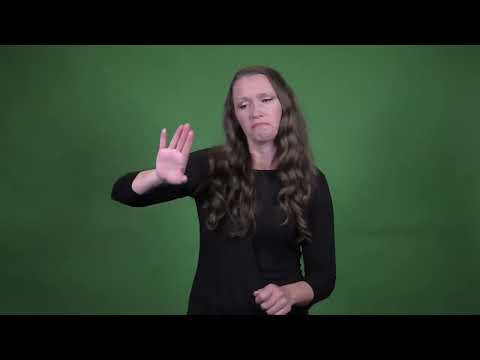
Sign for SLAPPING HORSE’S RUMP WITH HAND in ASL | ASL Dictionary

Definition: The act of hitting a horse’s rump with a hand. Sign for SLAPPING HORSE’S RUMP WITH HAND in ASL
YouTube player

Practice Activities

To master the sign for SLAPPING HORSE’S RUMP WITH HAND in ASL, begin with mirror practice. Stand in front of a mirror to ensure accuracy in handshape, movement, and facial expression. This reflective technique helps build muscle memory and allows you to self-correct in real time. Next, record yourself signing the sign for SLAPPING HORSE’S RUMP WITH HAND in ASL and review the footage. Compare your version to models from trusted ASL dictionaries or video resources to note areas for improvement. Repetition through video analysis strengthens recall and performance. Signing in context is another powerful method. Use the sign in storytelling or while describing scenes involving horses. For example, narrate a cowboy scene or a horse race, integrating the sign naturally. Contextual use will deepen your understanding of when and how to apply this expressive sign. Advanced learners can include the sign for SLAPPING HORSE’S RUMP WITH HAND in ASL in role-play activities or ASL storytelling circles. Try creating short skits that involve horse riding or farm life. This not only sharpens signing fluency but also enhances cultural and environmental relevance. Pair practice with receptive drills. Watch videos of native signers using the sign for SLAPPING HORSE’S RUMP WITH HAND in ASL and try to recognize it in fast-paced conversations. This dual approach of expressive and receptive practice will reinforce both production and comprehension.

SEO Cultural Context

The sign for SLAPPING HORSE’S RUMP WITH HAND in ASL carries vivid imagery and cultural nuance, often used in storytelling, especially in narratives about the American West or farm life. In Deaf culture, visual storytelling is a cherished tradition, and signs like this one help bring stories to life with authenticity and emotion. This sign reflects the strong preference in ASL for iconic and descriptive movement. The motion used to convey slapping a horse’s rear mimics actual gestures seen in real-life scenarios, such as a cowboy encouraging a horse to gallop. In Deaf storytelling, this sign adds drama and realism. Regional variation may affect the speed or intensity of the sign for SLAPPING HORSE’S RUMP WITH HAND in ASL. In some areas, signers might exaggerate the movement for theatrical effect, while others might use a more subtle version in casual conversation. Understanding these differences is essential for authentic communication. Deaf culture values accuracy and clarity in storytelling. When using the sign for SLAPPING HORSE’S RUMP WITH HAND in ASL, make sure the context supports its use. It is not a generic sign for “horse” or “slap” but a specific action used in narrative or descriptive contexts. Misusing it may confuse the message or appear awkward.

Extended Definition

The sign for SLAPPING HORSE’S RUMP WITH HAND in ASL is a compound, descriptive sign that visually represents a person using their hand to slap the backside of a horse. It combines classifiers, directional movements, and facial expressions to convey the action vividly. Typically, it involves using a flat dominant hand to make a backward slapping motion, often paired with a body lean or facial cue to show force or urgency. This sign is not standardized in the same way as signs for everyday vocabulary like “eat” or “walk.” Instead, it falls into the category of constructed action or classifier use, where the signer becomes the actor in the scene. This makes the sign highly expressive and dependent on context, particularly storytelling or role-play. A common mistake is using a generic slap sign without the appropriate directional motion or body shift. The sign for SLAPPING HORSE’S RUMP WITH HAND in ASL requires an intentional backward motion, often toward an invisible horse’s rear, usually shown behind or to the side of the signer. Without this spatial accuracy, the sign may lose its meaning. It is also important to distinguish this sign from similar-looking signs such as “pat,” “hit,” or “ride.” The key difference lies in the intent and context. The sign for SLAPPING HORSE’S RUMP WITH HAND in ASL is situational, used to depict a specific action within a broader narrative or interaction involving a horse.

Tips for Beginners

If you’re new to ASL, the sign for SLAPPING HORSE’S RUMP WITH HAND in ASL might seem complex at first. Don’t be discouraged. Start by breaking it down into parts—understand the classifier for the horse, then learn the slap movement, and finally practice combining them with appropriate facial expressions. Begin with slow, deliberate movements. Rushing through the sign can lead to inaccurate handshapes or unclear meaning. Use a mirror to ensure your slapping motion goes in the correct direction and has the right energy. Remember, this is not a gentle pat but a forceful, purposeful action. Avoid the temptation to overact. While the sign for SLAPPING HORSE’S RUMP WITH HAND in ASL is expressive, exaggerating the motion too much may make it look unnatural. Watch fluent signers to learn how they balance clarity with natural flow. It’s common to mix up the spatial orientation. Make sure your hand moves toward an imaginary horse’s rear, not just in a random direction. Use your non-dominant hand or body position to represent the horse if needed. This anchoring helps ground the sign in space. Finally, be patient with yourself. The sign for SLAPPING HORSE’S RUMP WITH HAND in ASL is a great introduction to using classifiers and constructed action. With consistent practice and observation, you’ll gain confidence and fluency.

Connections to Other Topics

The sign for SLAPPING HORSE’S RUMP WITH HAND in ASL connects closely with the sign for HORSE. Learning the basic sign for HORSE, which involves an “H” handshape near the forehead mimicking horse ears, provides a foundation for more complex signs involving horses. Another related concept is the use of classifiers. Classifiers in ASL are handshapes that represent categories of objects or actions. The classifier for a horse or person riding a horse plays a key role when using the sign for SLAPPING HORSE’S RUMP WITH HAND in ASL. Understanding classifiers will deepen your ability to describe motion and space effectively. Constructed action, or the use of the body and face to show actions or emotions, is another essential connection. When using the sign for SLAPPING HORSE’S RUMP WITH HAND in ASL, you often become the character in the scene. This technique is widely used in storytelling and theatrical ASL. Directional verbs are also relevant. While the slap itself isn’t a verb in the traditional sense, the movement direction shows who is doing what to whom. The same principle applies in signs like GIVE or SHOW, where directionality changes the meaning. Lastly, animal-related signs such as COW, DOG, or PIG can help build a thematic vocabulary. By learning these, you can create richer narratives involving farm life or nature, making the sign for SLAPPING HORSE’S RUMP WITH HAND in ASL part of a broader visual lexicon.

Lengthy Summary

The sign for SLAPPING HORSE’S RUMP WITH HAND in ASL is a vivid, descriptive expression rooted in the visual richness of American Sign Language. It encapsulates not just an action, but a moment—often one of urgency, motion, or encouragement involving a horse. From its use in storytelling to its representation in farm-related narratives, this sign plays a unique role in ASL communication. Practicing this sign requires attention to detail, especially in direction, handshape, and expression. By using mirror work, video feedback, and contextual storytelling, learners can internalize the movement and meaning. Advanced drills and role-play help bring the sign to life and prepare signers to use it fluidly. Culturally, the sign for SLAPPING HORSE’S RUMP WITH HAND in ASL showcases the Deaf community’s emphasis on visual and spatial language. It also reflects the importance of expressive storytelling in Deaf culture. Understanding how and when to use this sign requires cultural sensitivity and situational awareness. For beginners, mastering this sign is an exciting challenge that opens the door to more advanced ASL concepts like classifiers, constructed action, and spatial grammar. Mistakes are part of the journey, but with consistent practice and observation, fluency will follow. This sign also connects you to a broader network of related signs and themes—animals, directional verbs, classifiers, and storytelling techniques. It’s a great example of how one sign can reveal the depth and versatility of ASL. By learning the sign for SLAPPING HORSE’S RUMP WITH HAND in ASL, you’re not just adding vocabulary; you’re gaining insight into how ASL conveys life, action, and emotion. Keep practicing, stay curious, and continue signing. Each new sign you learn brings you closer to fluency and deeper into the beauty of American Sign Language. Synonyms: patting horse’s rump, swatting horse’s rump, tapping horse’s rump, hitting horse’s rump, spanking horse’s rump Educational resources: Find related learning materials in our course bank! Want more? Check out some of our popular learning activities on the homepage! Need to look up a sign? Use our highly rated dictionary: https://aslinteractive.com/best-asl-dictionary/ Follow us on tiktok: https://www.tiktok.com/@aslinteractive. More social media links at the bottom of this page! Long-tail Keywords: What is the sign for slapping horse’s rump with hand in ASL, How do you sign slapping horse’s rump with hand in ASL, ASL sign for slapping horse’s rump with hand Categories: tags: animal signs, horse signs, ASL verbs, action signs, farm-related ASL

Want more? Check out some of our popular learning activities!

ASL Interactive Resources

ASLInteractive YouTube Channel

Follow us on tiktok: @aslinteractive.com

Follow us on Instagram: aslinteractive

Facebook page: aslinteractive

Facebook group: aslinteractive

LInkedIn: ASL Interactive LLC

Twitter: @ASL_interactive

*Some information on this page is AI-generated. AI can make mistakes. Please check the information.  

Responses