Practice Activities
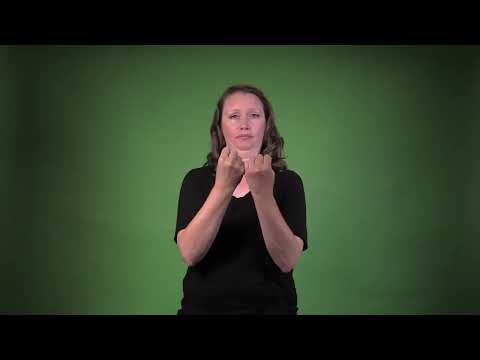
To master the sign for SOCIOLOGY in ASL, start with mirror work. Practicing in front of a mirror allows you to see your handshape, movement, and facial expressions clearly. This helps ensure that your form is accurate and consistent with how the sign is typically produced. Another effective method is recording yourself while signing. Play back your videos to observe areas needing improvement, especially hand placement and movement. Comparing your video to fluent signers demonstrating the sign for SOCIOLOGY in ASL can help you fine-tune your technique. Practice the sign in real-life contexts. For example, use the sign when discussing college majors, social sciences, or classroom discussions. Integrating the sign into full sentences helps reinforce its meaning and grammatical function in American Sign Language. Try advanced drills like alternating between SOCIOLOGY and related academic signs such as PSYCHOLOGY, ANTHROPOLOGY, and HISTORY. This builds fluency and helps you transition smoothly between similar vocabulary. Challenge yourself by practicing finger-spelling “sociology” followed by the actual sign to strengthen your recognition and production skills. Join online ASL study groups or attend Deaf events where you can use the sign for SOCIOLOGY in ASL in conversation. Interacting with others in a signing environment helps solidify your understanding and comfort with the sign.
SEO Cultural Context
In Deaf culture, education is a valued topic, and academic subjects like sociology carry deep cultural relevance. The sign for SOCIOLOGY in ASL represents more than just a school subject—it embodies the exchange of ideas about human interaction, society, and cultural systems, which are vital themes in the Deaf community. The sign for SOCIOLOGY in ASL is typically a compound of the signs for SOCIAL and STUDY, often stylized into a single, fluid motion by native signers. This compound reflects the analytical and human-centered focus of the discipline. It’s commonly used in academic discussions, Deaf education settings, and professional environments involving social research. Regional variation is minimal with this sign, but some signers may use slight differences in the movement or handshape depending on their local community or educational background. It’s important to observe how native signers in your area use the sign and adjust your signing accordingly. In real-life situations, this sign appears when discussing college majors, career paths, or societal issues. For example, Deaf professionals in the field of sociology use this sign when explaining their work, and Deaf students use it to describe their area of study. Understanding the cultural context of the sign for SOCIOLOGY in ASL helps deepen your overall ASL fluency and respect for how language reflects identity.
Extended Definition
The sign for SOCIOLOGY in ASL is a compound sign that combines elements of the signs for SOCIAL and STUDY. The dominant hand loosely forms an “S” handshape, tapping or circling near the non-dominant hand, which may also form an “S” or a flat base. The movement is usually circular, indicating the interactive nature of society and human behavior, followed by the sign for STUDY, which involves fluttering fingers toward the palm of the non-dominant hand. This sign captures the concept of studying society and social systems. It is not a literal translation of the English word but rather a conceptual representation in ASL. It’s important to understand that ASL is not a signed form of English; each sign conveys an idea, not just a word-for-word translation. Common errors include incorrect handshapes or movement direction. For example, using a “C” handshape instead of an “S” can confuse the meaning. Another mistake is omitting the second part of the compound sign, which may result in ambiguity. Always observe native signers and practice the full motion to ensure clarity. Some learners confuse the sign for SOCIOLOGY in ASL with the signs for PSYCHOLOGY or ANTHROPOLOGY due to similar themes and movements. Pay attention to the specific handshapes and the context in which the sign is used to differentiate them clearly.
Tips for Beginners3>
If you’re just starting to learn the sign for SOCIOLOGY in ASL, take your time with each component of the sign. Begin by mastering the individual signs for SOCIAL and STUDY. Once you’re comfortable with these, practice combining them smoothly. Don’t be discouraged if your movements feel awkward at first. ASL is a visual-spatial language, and fluency develops with consistent, mindful practice. Watch videos of native signers and mimic their facial expressions and body language. One common mistake is using stiff or overly mechanical movements. Remember, ASL is fluid and expressive. Practice with a relaxed posture and focus on the rhythm of your signing. Over time, your sign for SOCIOLOGY in ASL will become more natural and expressive. Another pitfall is neglecting facial grammar, which is essential in ASL. Show your engagement with the topic by raising your eyebrows or nodding slightly when appropriate. These non-manual markers add depth and clarity to your signing. Be patient with yourself. Everyone makes mistakes when learning a new sign. The key is to keep practicing, seek feedback from fluent signers, and immerse yourself in ASL as much as possible.
Connections to Other Topics
The sign for SOCIOLOGY in ASL connects closely with other academic and social science signs. One related sign is PSYCHOLOGY, which also explores human behavior but focuses more on individual mental processes rather than societal systems. This sign uses a specific handshape and movement near the head to indicate thought or cognition. Another relevant sign is COMMUNITY, which is often used when discussing groups of people, a central theme in sociology. This sign involves showing people connected in a shared space, emphasizing the social aspect of the discipline. The sign for CULTURE is also tied to the sign for SOCIOLOGY in ASL. Since sociology often involves examining cultural norms and practices, being able to sign CULTURE effectively adds depth to your discussions. This sign typically uses a “C” handshape that moves around the non-dominant hand, representing the shaping of a group. ANTHROPOLOGY is another closely related sign. While it shares thematic overlap with sociology, its sign includes different handshapes and focuses more on human origins and evolution. Knowing both signs allows for more precise academic conversations. Finally, the sign for EDUCATION is often used in conjunction with the sign for SOCIOLOGY in ASL, particularly in classroom or curriculum discussions. Mastery of these related signs helps build a strong academic vocabulary in ASL, allowing for more nuanced communication.
Lengthy Summary
The sign for SOCIOLOGY in ASL is a critical academic term that reflects the study of human society, social behavior, and cultural systems. It is a compound sign, typically formed by combining elements of SOCIAL and STUDY into one fluid motion. This sign is commonly used in educational, professional, and everyday settings when discussing the field of sociology or related topics. Practicing the sign involves several effective strategies, including mirror work, video recording, and real-world usage. These methods help reinforce accuracy, improve body and spatial awareness, and build confidence. Advanced drills and group interactions add further depth to your learning process. Understanding the cultural context of the sign for SOCIOLOGY in ASL deepens your appreciation of how Deaf culture values education and intellectual discussion. This sign is not only a linguistic tool but also a reflection of community identity and shared learning. Common beginner challenges include incorrect handshapes, rigid movements, and neglecting facial expressions. With patience and consistent practice, these obstacles can be overcome. Watching fluent signers and engaging in ASL-rich environments are crucial steps on the path to fluency. The sign for SOCIOLOGY in ASL connects seamlessly with other social science signs like PSYCHOLOGY, COMMUNITY, CULTURE, and ANTHROPOLOGY. These connections enhance your ability to communicate complex ideas and participate in academic discussions in ASL. Keep practicing the sign for SOCIOLOGY in ASL every day. Use it in conversations, teaching, or even casual discussions about society. The more you use it, the more natural it will feel. Learning this sign opens the door to broader conversations within both the Deaf and hearing communities. Stay motivated, stay curious, and continue expanding your ASL vocabulary . Synonyms: socks, footwear, hosiery, stockings, foot coverings Educational resources: Find related learning materials in our course bank! Want more? Check out some of our popular learning activities on the homepage! Need to look up a sign? Use our highly rated dictionary: https://aslinteractive.com/best-asl-dictionary/ Follow us on tiktok: https://www.tiktok.com/@aslinteractive. More social media links at the bottom of this page! Long-tail Keywords: what is the sign for sociology in ASL, how do you sign sociology in ASL, sociology sign language explanation Categories: tags: sociology-related ASL signs, social science ASL vocabulary, ASL signs for social concepts, studying sociology in ASL, societal terms in American Sign Language
Want more? Check out some of our popular learning activities!
ASL Interactive Resources
ASLInteractive YouTube Channel
Follow us on tiktok: @aslinteractive.com
Follow us on Instagram: aslinteractive
Facebook page: aslinteractive
Facebook group: aslinteractive
LInkedIn: ASL Interactive LLC
Twitter: @ASL_interactive
*Some information on this page is AI-generated. AI can make mistakes. Please check the information.
Responses