Practice Activities
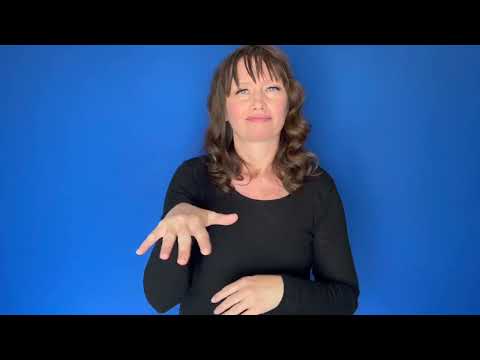
To master the sign for SUBURB RESIDENTIAL AREA in ASL, start by practicing in front of a mirror. This helps you check your handshape, palm orientation, and movement accuracy. Pay attention to facial expressions, which are an important part of conveying meaning in American Sign Language. Another effective method is recording yourself signing. Watch your recordings to see if your non-manual signals match the intended tone. This feedback loop allows you to fine-tune your signing and identify areas where your sign for SUBURB RESIDENTIAL AREA in ASL might need improvement. Use contextual practice by incorporating the sign into real or simulated conversations. If you’re talking about where you live, describe your area using the sign for SUBURB RESIDENTIAL AREA in ASL. This helps reinforce the vocabulary in meaningful ways and builds fluency. Advanced learners can create role-play scenarios. For example, pretend you’re giving directions or comparing urban and suburban lifestyles. This adds complexity to your practice and helps deepen your understanding of how and when to use the sign for SUBURB RESIDENTIAL AREA in ASL. Group practice is also powerful. Join a local Deaf event or an ASL study group to practice the sign in natural conversations. Feedback from fluent or native signers can help correct subtle errors and improve clarity.
SEO Cultural Context
The sign for SUBURB RESIDENTIAL AREA in ASL carries cultural context that reflects how the Deaf community discusses geography, housing, and community living. In Deaf culture, describing where someone lives often includes spatial orientation and classifiers to paint a clear visual picture. Deaf signers often describe areas based on layout, noise level, and proximity to the city. The sign for SUBURB RESIDENTIAL AREA in ASL is commonly used when comparing urban and suburban lifestyles. It comes up often in conversations about moving, housing preferences, or describing where family members live. There may be regional variations in how this sign is produced. Some signers may use a combination of signs like NEIGHBORHOOD, HOUSE, and OUTSIDE-CITY to express the concept. Others might use initialized signs or classifiers to create a more visual and spatial representation of a suburb. In Deaf communities, clarity and visual mapping are essential. When using the sign for SUBURB RESIDENTIAL AREA in ASL, signers often incorporate directional classifiers or space to indicate the suburb’s location relative to a central city. This practice aligns with the visual and spatial nature of ASL.
Extended Definition
The sign for SUBURB RESIDENTIAL AREA in ASL typically combines several concepts to convey the full meaning. It often involves signing CITY or TOWN, followed by a sign indicating OUTSIDE or NEAR, then using RESIDENTIAL or NEIGHBORHOOD. These signs together create a compound visual that represents a suburban location. One common method is to sign CITY, then move your hand outward to indicate distance, followed by the sign for HOUSE or NEIGHBORHOOD. This shows that the residential area is outside the main urban center. Some signers use classifiers like CL:3 for houses or CL:1 for streets to provide additional context. A related sign is URBAN, which contrasts with the meaning of SUBURB. Be cautious not to confuse the two, as using the wrong sign can shift the entire meaning of your sentence. Likewise, don’t overuse initialized signs unless they are standard in your region, as this can come across as overly English-influenced. Common errors include omitting the spatial component or using the sign for CITY alone, which doesn’t accurately convey the idea of a suburb. Another frequent mistake is signing HOUSE repeatedly without indicating that the area is outside the city, which can lead to confusion.
Tips for Beginners3>
If you’re just starting out, learning the sign for SUBURB RESIDENTIAL AREA in ASL can feel intimidating due to the multiple components. Take it step by step. First, learn and master the individual signs such as CITY, HOUSE, and OUTSIDE. Then practice combining them smoothly. Use visual storytelling as a guide. Imagine describing a map and where a suburban neighborhood might sit in relation to a city. This visualization helps you use space effectively when signing the sign for SUBURB RESIDENTIAL AREA in ASL. Avoid relying too much on fingerspelling. While it might be tempting to spell out “suburb,” this is not fluent or culturally appropriate in most cases. Instead, focus on using established signs and classifiers that reflect the meaning accurately. One common mistake is using a flat or robotic expression. Remember, facial expressions in ASL carry grammar and emotion. When describing a peaceful suburb, your face should reflect that calmness. Practicing with expressive signing will help your message come across clearly. Another helpful strategy is to observe native signers. Watch videos or attend events where people naturally use the sign for SUBURB RESIDENTIAL AREA in ASL. Mimic their flow, rhythm, and use of space to internalize the sign more effectively.
Connections to Other Topics
The sign for SUBURB RESIDENTIAL AREA in ASL connects closely with the sign for CITY. When describing locations, signers often contrast CITY and SUBURB to highlight differences in lifestyle, noise, and layout. Another related sign is NEIGHBORHOOD. This sign often appears alongside SUBURB to describe the specific characteristics of the residential area, such as quiet streets or family-friendly communities. The sign for HOUSE is also essential. Since suburbs are largely made up of houses rather than apartment complexes or skyscrapers, this sign appears frequently in descriptions of suburban life. You may also explore the sign for COMMUNITY. This sign ties into the social aspect of living in a suburb, where people often know their neighbors or participate in local events. Finally, the use of classifiers, such as CL:3 to represent houses or vehicles, is highly relevant. Classifiers allow signers to visually map out the layout of a suburb, including houses, roads, and parks. This enhances the clarity and richness of the sign for SUBURB RESIDENTIAL AREA in ASL.
Lengthy Summary
The sign for SUBURB RESIDENTIAL AREA in ASL is a multi-layered concept that draws on several core signs and spatial arrangements. It typically involves combining signs like CITY, OUTSIDE, and HOUSE or NEIGHBORHOOD to convey that the location is a residential area situated outside a main urban center. Some signers may also use classifiers to visually represent the layout of houses and streets. Understanding the sign for SUBURB RESIDENTIAL AREA in ASL also brings you closer to the values and visual nature of Deaf culture. Accurate use of space, directionality, and facial expressions are all key components. Regional variations may exist, so exposure to native signers and different dialects of ASL will help you refine your usage. Beginners should start by learning the individual signs, then gradually combine them in fluid and expressive ways. Avoid common pitfalls like omitting spatial references or relying on fingerspelling. Instead, embrace the visual storytelling aspect of ASL to clearly communicate the concept of a suburb. This sign is deeply interconnected with other vocabulary like CITY, HOUSE, and COMMUNITY. Exploring these connections helps you contextualize the sign and use it more naturally in conversation. Practicing with activities like mirror work, recorded signing, and group interaction will strengthen your fluency and confidence. Keep practicing the sign for SUBURB RESIDENTIAL AREA in ASL in real-life scenarios. Describe your own living situation, or pretend to give directions to a suburban friend’s house. The more you use the sign in context, the more naturally it will become part of your ASL vocabulary. Happy signing! Synonyms: neighborhood, subdivision, residential district, housing area, residential suburb Educational resources: Find related learning materials in our course bank! Want more? Check out some of our popular learning activities on the homepage! Need to look up a sign? Use our highly rated dictionary: https://aslinteractive.com/best-asl-dictionary/ Follow us on tiktok: https://www.tiktok.com/@aslinteractive. More social media links at the bottom of this page! Long-tail Keywords: what is the sign for suburb residential area in ASL, how do you sign suburb residential area in ASL, ASL sign for suburb residential area Categories: tags: suburbs in ASL, residential areas in ASL, neighborhood signs in ASL, city and town vocabulary in ASL, location signs in ASL
Want more? Check out some of our popular learning activities!
ASL Interactive Resources
ASLInteractive YouTube Channel
Follow us on tiktok: @aslinteractive.com
Follow us on Instagram: aslinteractive
Facebook page: aslinteractive
Facebook group: aslinteractive
LInkedIn: ASL Interactive LLC
Twitter: @ASL_interactive
*Some information on this page is AI-generated. AI can make mistakes. Please check the information.
Responses