Practice Activities
Learning the sign for SURFACE in ASL requires both visual observation and kinesthetic practice. One of the most effective ways to begin is by using a mirror. Stand in front of a mirror and sign while watching your handshape and movement. This helps ensure your palm orientation and trajectory match native usage of the sign for SURFACE in ASL. Video recording your practice is another powerful method. Record yourself signing the word in isolation and then in full sentences. When you watch the recordings, pay attention to facial expressions and hand placement. Compare your sign to native signers in ASL dictionaries or video resources to refine accuracy. This is particularly helpful when working to master the spatial direction associated with the sign for SURFACE in ASL. Contextual signing plays a critical role in retaining vocabulary. Incorporate the sign into real-life scenarios such as describing a table, the ground, or the top of an object. Practice with phrases like “The SURFACE is smooth” or “Place the book on the SURFACE.” Engaging in role play with peers or tutors can provide interactive ways to solidify the sign for SURFACE in ASL naturally. Advanced drills can include receptive exercises, where someone signs a sentence and you identify or respond using the correct sign. You can also try alternating between similar signs to strengthen muscle memory and reduce confusion. Drill transitions between SURFACE and signs like TABLE, FLAT, or LEVEL to build fluidity and comfort in conversation.
SEO Cultural Context
In Deaf culture, specificity and visual clarity are key. The sign for SURFACE in ASL reflects this by visually representing the top layer or flat boundary of an object. It is meaningful in contexts where physical description matters—a common feature of ASL conversations. Discussions may include describing the SURFACE of furniture, terrain, or even metaphorical surfaces like emotional barriers. Cultural norms in the Deaf community highly value accurate depiction and spatial reasoning. When using the sign for SURFACE in ASL, it’s important to match the direction and location of the sign with the actual surface being referenced. For example, if you’re describing a surface above eye level, your sign should reflect that elevation. Regional variation is limited for this sign, as it tends to retain a consistent form across different areas. However, slight stylistic differences may appear in speed, motion, or accompanying facial expressions. Engaging with diverse signers through Deaf events or online platforms can help expose learners to these subtle variations and enrich understanding of how the sign for SURFACE in ASL is used in everyday life.
Extended Definition
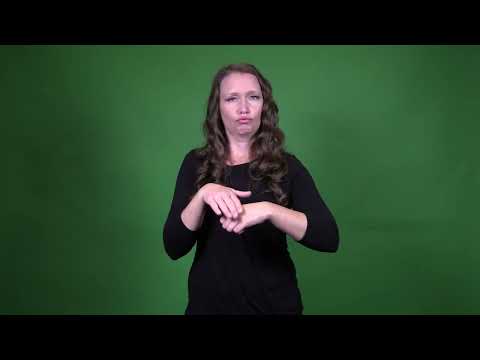
The sign for SURFACE in ASL typically involves a flat B-handshape (fingers together, thumb tucked) that moves horizontally above the base of another flat B-handshape. The dominant hand often brushes slightly or hovers over the top of the non-dominant hand, creating an image of a flat plane or top layer. This visual metaphor effectively communicates the concept of a surface. It’s crucial not to confuse this sign with similar signs like TABLE or FLOOR. While they may share some handshapes, the motion and spatial orientation differ. TABLE usually involves both hands moving outward in a flat motion, while FLOOR uses a dual-hand side-to-side sweep. The sign for SURFACE in ASL specifically emphasizes the top layer of an object, not the object as a whole. Common errors include incorrect handshape, such as using a curved or open hand instead of a flat B-hand. Another frequent mistake is misplacing the sign in space—signing it too low or too high, which can change the meaning or confuse the viewer. Beginners must also watch for palm orientation; the dominant hand should hover palm-down over the non-dominant hand.
Tips for Beginners3>
If you’re just starting to learn the sign for SURFACE in ASL, take your time with handshape and movement. Practice slowly and build muscle memory by repeating the sign in front of a mirror. Focus on making your hands flat and parallel, as this reflects the true nature of a surface. Don’t worry if the sign feels awkward at first. Consistency is key. Many learners rush the motion or bend their fingers slightly, which can distort the meaning. Keep your fingers straight and your wrist flexible, allowing for a smooth glide across the imaginary surface. It’s also helpful to associate the sign with real-world examples. When you see a table, countertop, or road, visualize the sign and then perform it. This mental connection can speed up recall and comprehension when signing in conversation. The more you immerse yourself in visual thinking, the more natural the sign for SURFACE in ASL will become.
Connections to Other Topics
The sign for SURFACE in ASL connects directly to several other commonly used signs. For example, the sign for TABLE shares a similar visual metaphor but involves a wider arm motion. Understanding both helps distinguish between describing an object versus its top area. Another related sign is FLAT. While SURFACE refers to the top layer of an object, FLAT describes the evenness or plane quality. These can be used together in descriptive phrases, such as “The surface is flat.” Having both in your vocabulary enhances your descriptive ability in ASL. You can also link the sign for SURFACE in ASL with the sign for LEVEL. LEVEL refers to elevation or height in context, which can be important when discussing the position of surfaces in space. Learning how these signs interact builds better spatial awareness in communication. TOUCH is another relevant sign. In some contexts, you might describe something touching a surface. The combination of these signs allows for expressive detail when narrating physical interactions or describing settings. Lastly, the sign for TEXTURE often pairs with SURFACE when discussing tactile qualities. You may sign SURFACE first and then describe it as ROUGH, SMOOTH, or BUMPY. These pairings are common in conversations about materials, environments, or sensory experiences.
Lengthy Summary
Mastering the sign for SURFACE in ASL is an essential step in building a rich, descriptive vocabulary. It enables learners to clearly communicate physical details, spatial relationships, and visual characteristics—core components of ASL’s visual-spatial grammar. The sign is iconic and intuitive, representing a flat plane or top layer by using flat B-handshapes and directional movement. Culturally, the use of this sign demonstrates an understanding of Deaf norms, where visual precision and spatial awareness are highly valued. Accurate use of the sign for SURFACE in ASL shows respect for the language and enhances effective communication. Whether you’re talking about setting a book down, describing terrain, or explaining the top of a container, this sign is highly functional and frequently used. Beginners often face challenges with handshape and orientation, but these can be overcome through consistent practice. Mirror work, video feedback, and contextual usage all help reinforce correct form. By connecting the sign for SURFACE in ASL to related concepts like FLAT, LEVEL, and TEXTURE, learners gain a deeper grasp of how signs interact to convey meaning. To solidify your learning, keep practicing the sign daily. Use it in real situations, describe objects around you, and challenge yourself with advanced drills. The more you use the sign for SURFACE in ASL, the more natural and fluent it will become. Keep signing, stay curious, and enjoy the journey of learning ASL ! Synonyms: exterior, top layer, facade, outer layer, outside Educational resources: Find related learning materials in our course bank! Want more? Check out some of our popular learning activities on the homepage! Need to look up a sign? Use our highly rated dictionary: https://aslinteractive.com/best-asl-dictionary/ Follow us on tiktok: https://www.tiktok.com/@aslinteractive. More social media links at the bottom of this page! Long-tail Keywords: what is the sign for surface in ASL, how do you sign surface in ASL, ASL sign for surface Categories: tags: surface, ASL vocabulary, ASL for objects, learning ASL signs, ASL dictionary
Want more? Check out some of our popular learning activities!
ASL Interactive Resources
ASLInteractive YouTube Channel
Follow us on tiktok: @aslinteractive.com
Follow us on Instagram: aslinteractive
Facebook page: aslinteractive
Facebook group: aslinteractive
LInkedIn: ASL Interactive LLC
Twitter: @ASL_interactive
*Some information on this page is AI-generated. AI can make mistakes. Please check the information.
Responses