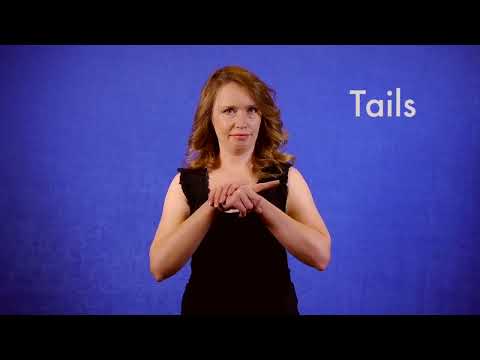
Sign for TAILS in ASL | ASL Dictionary

Definition: The hindmost part of an animal. Sign for TAILS in ASL
YouTube player

Practice Activities

To master the sign for TAILS in ASL, start with mirror work. Stand in front of a mirror and practice the sign slowly, focusing on handshape, palm orientation, and movement. Watching yourself helps you become aware of small errors and builds muscle memory. Recorded signing is another effective method. Record yourself signing full sentences using the sign for TAILS in ASL. Then play it back to evaluate your fluency and accuracy. Compare your sign to trusted video dictionaries or native signers. Try signing in context. Describe animals, cartoons, or costumes to include the sign naturally. For example, practice describing a dog wagging its tail or a cat flicking its tail. The more authentic the context, the more likely the sign will stick. Advanced learners can challenge themselves with drills. Alternate between similar signs like FUR, WHISKERS, and EARS, then mix those into short stories. This helps reinforce vocabulary and challenges your brain to switch between signs quickly. Group activities like signing games or storytelling circles can also enhance your retention. Use the sign for TAILS in ASL during charades or animal-themed games to make learning more interactive and fun.

SEO Cultural Context

In Deaf culture, visual clarity and context are key. The sign for TAILS in ASL reflects this because it often depends on what kind of tail you’re referring to. For example, an animal’s tail may be signed differently than the tail of a comet or a line of people. Understanding the right context is crucial to using the sign accurately. This sign is commonly used in conversations about pets, wildlife, stories, or visual descriptions. In American Sign Language, storytelling is a vibrant cultural tradition, and animal characters are popular. Knowing how to sign something like a tail helps enrich those narratives. Regional variations exist. Some signers may use a general sign for TAILS, while others might use classifiers or specific handshapes to indicate size, type, or movement. For example, a horse’s tail may be signed with a different motion than a fish’s tail. Always observe how native Deaf signers in your region use the sign. When using the sign for TAILS in ASL in a classroom or cultural setting, be sure to match your facial expressions and classifiers to the context. This shows respect for Deaf norms around expression and clarity.

Extended Definition

The sign for TAILS in ASL typically uses a classifier approach, especially when referring to animals. A common method is to use the dominant hand in a bent “V” or “U” handshape behind the body, mimicking the location and movement of a tail. The motion can vary depending on the type of tail—curled, wagging, swishing, or stiff. Some signers may use a more initialized sign, especially in educational settings, though this is less common in native Deaf communities. Always prioritize natural, descriptive classifiers when possible. A common related sign is ANIMAL or PET, which often appears in the same sentence. WHISKERS, EARS, and FUR are also visually descriptive and may occur in the same context. Be cautious not to confuse the sign for TAILS in ASL with signs for LINE (as in people lining up) or TRAIL. Though similar in English, these concepts use different signs in ASL. Another key point is to use appropriate facial expressions and body placement. Since tails are typically behind animals, the sign should reflect that spatial orientation. Misplacing the sign or using a flat expression can confuse your meaning.

Tips for Beginners

For beginners, learning the sign for TAILS in ASL can be a fun and expressive experience. Start by watching videos of native signers. Notice how their hands move, but also pay attention to their facial expressions and body shifts. A common beginner mistake is using the wrong handshape or placing the sign in front of the body instead of behind. Remember, tails are usually behind animals, so your hand should reflect that placement. Practice slowly at first to get the motion right. Another helpful tip is to associate the sign with a visual image. Imagine a dog wagging its tail or a fish swishing its tail. Use those images to help guide your hand movement. Don’t be afraid to exaggerate your expressions when practicing. In ASL, emotions and physical actions go hand in hand. The more expressive you are, the clearer your meaning will be. If you’re learning with others, take turns describing animals using the sign for TAILS in ASL. Peer feedback can be incredibly helpful, and working together builds confidence.

Connections to Other Topics

The sign for TAILS in ASL connects closely with the sign for ANIMAL. When describing animals, both signs often appear in the same sentence. This helps learners build thematic vocabulary around pets and wildlife. Another related sign is FUR. When describing an animal like a cat or dog, you may use both the sign for TAILS in ASL and FUR to give a richer visual image. This is especially useful in storytelling or educational contexts. WHISKERS is another sign that pairs well with TAILS. These features help describe animals more vividly and are often taught together in ASL classrooms or children’s books. The use of classifiers is a shared grammatical structure. Classifiers are handshapes that represent types of objects, and they are essential when signing about tails. Learning classifiers will deepen your understanding of ASL grammar and improve your fluency. Lastly, the sign for BACK or BEHIND is useful when learning the sign for TAILS in ASL. Since tails are located behind the body, this spatial understanding helps with accurate placement of the sign.

Lengthy Summary

The sign for TAILS in ASL is a visually rich and context-driven sign with deep roots in Deaf storytelling and communication. It is most commonly used when describing animals but can also apply to visual metaphors or imaginative stories. This sign uses classifier handshapes and spatial orientation to represent the shape, movement, and location of a tail. Understanding the sign for TAILS in ASL requires more than just memorizing a handshape. It demands attention to context, movement, and visual space. Whether you’re describing a dog wagging its tail or a fish darting through water, your hand must reflect the type of tail and its behavior. This makes the sign dynamic and expressive. Culturally, the sign is significant in Deaf storytelling, education, and conversation. It offers learners a chance to participate in vivid visual narratives that are central to ASL communication. Embracing regional variation and respecting Deaf norms will help you use the sign appropriately and naturally. Beginners should focus on mirror work, video study, and context-based practice. Avoid common pitfalls like incorrect hand placement or flat expressions. Use visual imagery to guide your signing, and don’t hesitate to exaggerate your facial expressions for clarity. The sign for TAILS in ASL also links to a broader network of vocabulary, including signs like ANIMAL, FUR, WHISKERS, and classifiers. Understanding these connections enhances your fluency and gives you tools to describe the world in more detail. Keep practicing, whether through storytelling, conversation, or playful games. The more you use the sign for TAILS in ASL in context, the more natural it becomes. Let the language come alive in your hands and continue your journey toward ASL mastery with enthusiasm and curiosity! Synonyms: tails, ends, rear, hind, backside Educational resources: Find related learning materials in our course bank! Want more? Check out some of our popular learning activities on the homepage! Need to look up a sign? Use our highly rated dictionary: https://aslinteractive.com/best-asl-dictionary/ Follow us on tiktok: https://www.tiktok.com/@aslinteractive. More social media links at the bottom of this page! Long-tail Keywords: what is the sign for Tails in ASL, how do you sign Tails in ASL, ASL sign for Tails Categories: tags: animal signs, ASL vocabulary, descriptive signs, ASL for kids, American Sign Language basics

Want more? Check out some of our popular learning activities!

ASL Interactive Resources

ASLInteractive YouTube Channel

Follow us on tiktok: @aslinteractive.com

Follow us on Instagram: aslinteractive

Facebook page: aslinteractive

Facebook group: aslinteractive

LInkedIn: ASL Interactive LLC

Twitter: @ASL_interactive

*Some information on this page is AI-generated. AI can make mistakes. Please check the information.  

Responses