Practice Activities
To master the sign for TAPPING THE FLOOR in ASL, learners can begin with simple mirror work. Stand in front of a mirror and practice the motion to ensure your handshape, movement, and facial expressions match what native signers use. This self-check method helps build confidence and accuracy. Recording yourself signing is another effective tool. Use your phone or webcam to capture your progress. Play back the video to identify areas of improvement in your execution of the sign for TAPPING THE FLOOR in ASL. Compare your video with fluent signers to refine your technique. Contextual signing is key to fluency. Try using the sign for TAPPING THE FLOOR in ASL in different situations—at home, in a classroom setting, or while telling a story. Create short skits or dialogues where this sign is naturally embedded, helping you internalize its use. For more advanced learners, structured drills can fine-tune your signing. Alternate between related signs and the sign for TAPPING THE FLOOR in ASL to strengthen muscle memory and quick recall. Practice with a partner who can give feedback or quiz you randomly to enhance real-time usage.
SEO Cultural Context
Understanding the cultural context of the sign for TAPPING THE FLOOR in ASL is essential for respectful and fluent communication. In Deaf culture, tapping the floor can signal attention, especially when visual cues aren’t effective. This might occur in larger spaces or when someone is sitting on the floor and outside your visual field. The sign mimics this real-world action. The sign for TAPPING THE FLOOR in ASL is often used in storytelling, classroom instructions, or theatrical performances within the Deaf community. It captures a moment of physical interaction with space, making it a vivid and expressive sign. It can also symbolize urgency or the need to alert someone subtly without vocalizing. Regional variation in the sign for TAPPING THE FLOOR in ASL is minimal, but some signers may add facial expressions or slight modifications depending on context. In a classroom, for instance, the sign may be more exaggerated to ensure visibility. In a casual setting, it might be more relaxed and quick. Deaf space and environmental awareness are crucial in understanding why this sign exists. Since Deaf individuals rely heavily on visual and tactile cues, tapping the floor becomes a natural way to get someone’s attention. The sign for TAPPING THE FLOOR in ASL reflects this cultural and practical behavior, making it a meaningful part of visual language.
Extended Definition
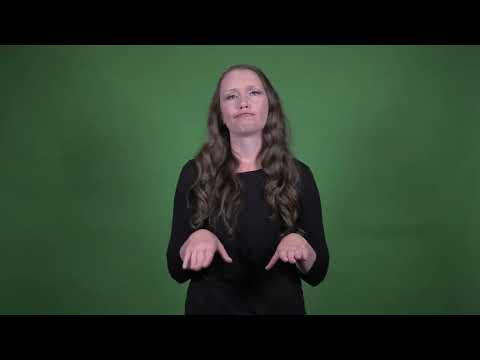
The sign for TAPPING THE FLOOR in ASL is a descriptive sign that combines a flat handshape (usually dominant hand in a B-handshape) and a downward tapping motion. The movement mimics the act of physically tapping the floor, making it an iconic or representational sign. This sign is directional and spatial. The signer typically extends one arm downward, taps lightly with a flat palm, and may repeat the motion for emphasis. The number of taps and the speed can change based on context—urgency, attention-seeking, or narrative tone all influence the delivery. It’s important not to confuse the sign for TAPPING THE FLOOR in ASL with signs for concepts like “knock” (as in knocking on a door) or “hit.” The key difference lies in placement and motion. “Knock” involves a handshape and motion similar to knocking on a vertical surface, while the floor-tap involves a horizontal motion aimed downward. Common errors include tapping with the wrong handshape, such as using a fist instead of a flat palm, or tapping too high or too low, which can change the meaning or confuse the message. Always ensure the tapping motion is directed toward the lower visual field to maintain clarity.
Tips for Beginners3>
If you’re new to ASL, learning the sign for TAPPING THE FLOOR in ASL might seem unusual at first because it involves spatial awareness and directional movement. Start slowly, and break down each part of the sign—handshape, motion, and facial expression. Many beginners forget to use the correct palm orientation. Make sure your palm is facing downward and your arm moves with a natural tap toward the floor space. Practicing in front of a mirror or with a teacher can help you refine this. Another common mistake is overusing the sign or using it out of context. Remember that the sign for TAPPING THE FLOOR in ASL is usually used when you’re referencing an actual physical action or when narrating a story. Don’t use it interchangeably with general attention-getting signs unless the context supports it. Stay patient with yourself. This sign may involve some body movement beyond your comfort zone if you’re used to more static signs. Embrace the full-body aspect of ASL, and allow yourself time to become comfortable with the space around you.
Connections to Other Topics
The sign for TAPPING THE FLOOR in ASL connects closely with the sign for FLOOR. While the latter is more of a noun, the tapping variation adds an action component, making it useful in storytelling or giving directions. Another related sign is ATTENTION. Both signs may be used in similar contexts, such as trying to alert someone. However, ATTENTION focuses more on a general calling of focus, while TAPPING THE FLOOR carries a physical, spatial element. The sign for VIBRATION is also thematically linked. Since floor tapping can generate vibrations, especially on wooden floors or stages, this sign often appears in similar discussions. VIBRATION is important in Deaf culture as a sensory cue. TAP (as a general verb) and the sign for KNOCK may also be confused with the sign for TAPPING THE FLOOR in ASL. Understanding the directionality and context helps distinguish between them. TAP could refer to touching lightly on a person or object, while TAPPING THE FLOOR requires a downward motion. Finally, the sign for GET ATTENTION can be paired with TAPPING THE FLOOR in more elaborate visual narratives. For example, tapping the floor could be one step in a sequence to get someone’s attention in an indirect but effective way.
Lengthy Summary
The sign for TAPPING THE FLOOR in ASL is a nuanced and culturally rich gesture that represents both a literal action and a contextual cue. By using a flat handshape and a downward tapping motion, signers can portray the specific act of tapping the floor as a way to get someone’s attention or create emphasis in storytelling. Practicing this sign through mirror work, recordings, and contextual drills helps learners develop fluency and accuracy. Understanding the cultural backdrop, including Deaf space and tactile communication, deepens respect and comprehension. The sign for TAPPING THE FLOOR in ASL is not just a vocabulary word—it’s a reflection of how communication adapts in visual-spatial language. Beginners should be mindful of handshape, palm orientation, and placement to avoid common mistakes. With patience and consistent practice, you’ll find that this sign becomes a natural part of your expressive toolkit. Its connections to signs like FLOOR, ATTENTION, VIBRATION, and KNOCK help expand your signing vocabulary and deepen your understanding of ASL grammar and storytelling techniques. Whether you’re learning through structured lessons or immersive practice, the sign for TAPPING THE FLOOR in ASL offers a great opportunity to explore how physical space and sensory experience shape language. Keep practicing, stay curious, and use every chance to sign in real-life contexts. Your journey in ASL fluency grows with every sign you master! Synonyms: patting the floor, tapping the ground, knocking on the floor, striking the floor, pounding the floor Educational resources: Find related learning materials in our course bank! Want more? Check out some of our popular learning activities on the homepage! Need to look up a sign? Use our highly rated dictionary: https://aslinteractive.com/best-asl-dictionary/ Follow us on tiktok: https://www.tiktok.com/@aslinteractive. More social media links at the bottom of this page! Long-tail Keywords: what is the ASL sign for tapping the floor, how to sign tapping the floor in American Sign Language, tapping the floor sign meaning in ASL Categories: tags: ASL movement signs, floor-tapping sign, expressive ASL gestures, ASL communication techniques, movement-related ASL vocabulary
Want more? Check out some of our popular learning activities!
ASL Interactive Resources
ASLInteractive YouTube Channel
Follow us on tiktok: @aslinteractive.com
Follow us on Instagram: aslinteractive
Facebook page: aslinteractive
Facebook group: aslinteractive
LInkedIn: ASL Interactive LLC
Twitter: @ASL_interactive
*Some information on this page is AI-generated. AI can make mistakes. Please check the information.
Responses