Practice Activities
Learning the sign for TEST in ASL requires consistent and varied practice. One of the simplest yet most effective techniques is using a mirror to observe your handshape, movement, and facial expressions. Standing in front of a mirror while practicing the sign helps reinforce muscle memory and build confidence in your signing accuracy. Recording yourself is another excellent way to sharpen your skills. Use your phone or computer to film short clips of yourself signing sentences that include the sign for TEST in ASL. Watch the recordings to spot errors and track your progress over time. Signing in context is crucial. Try to incorporate the sign for TEST in ASL into real conversations or role-plays. For example, you can practice asking mock questions like “Did you pass the math test?” or “When is your driving test?” This will help you see how the sign fits into everyday ASL usage. For more advanced learners, drills focusing on speed and accuracy can be beneficial. One effective drill is to alternate between signs with similar handshapes but different meanings, such as TEST, EXAM, and QUESTION. This helps develop clarity and reduces the chance of mixing up signs that look alike.
SEO Cultural Context
Understanding the cultural background behind the sign for TEST in ASL enriches your appreciation of its use in the Deaf community. In Deaf culture, education and access to information are highly valued. The concept of testing as part of school, medical evaluations, or even driving exams is familiar and frequently discussed. The sign for TEST in ASL visually conveys the idea of questioning or evaluating something, which reflects the linguistic richness of ASL. It often mimics the motion of drawing out information, symbolizing inquiry or assessment. This sign may vary slightly by region, but the core elements remain widely understood across the Deaf community. In classroom settings within Deaf schools or mainstream programs with interpreters, the sign for TEST in ASL is commonly used by both students and teachers. It may also appear in professional or vocational contexts, such as discussing certification exams or skills assessments. Understanding when and how to use this sign appropriately shows cultural competency and respect.
Extended Definition
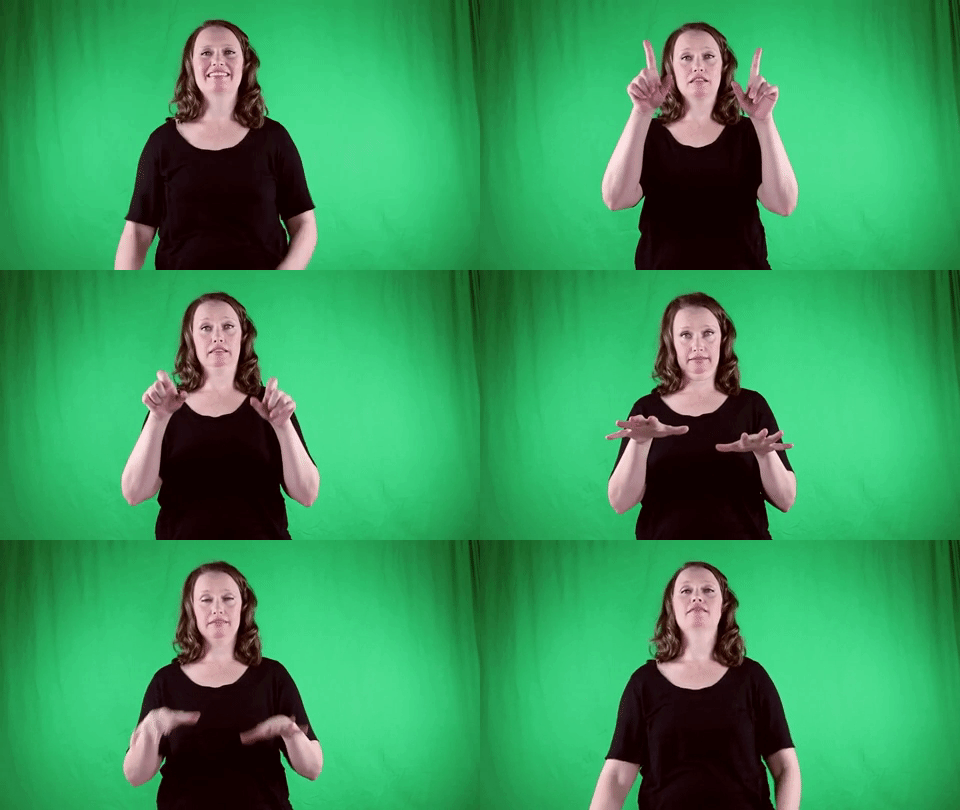
The sign for TEST in ASL is made by forming both hands into the “X” handshape (index fingers bent), then starting with the fingertips pointing up and drawing them downward into a “1” handshape (straight index fingers pointing down). This motion symbolizes the idea of extracting answers or evaluating knowledge. It is important to distinguish this sign from similar ones. For example, the sign for QUESTION also uses bent index fingers but involves a different movement pattern. Confusing these can lead to misunderstandings, especially in academic or formal settings. Some people mistakenly use fingerspelling for the word TEST instead of using the established sign. While fingerspelling is acceptable in some contexts, using the correct sign is more fluent and culturally appropriate. Also, avoid over-exaggerating the motion, which can distort the meaning or appear unnatural. The sign for TEST in ASL can also be modified slightly to reflect different types of tests. For example, combining it with signs like BLOOD or MATH helps provide clarity in conversation. These combinations are useful for discussing specific scenarios like medical tests or school exams.
Tips for Beginners3>
If you’re just starting to learn the sign for TEST in ASL, be patient with yourself. It may feel awkward at first to form the correct handshapes and execute the motion smoothly. Practice slowly and deliberately, focusing on your fingers and wrist movement. A common mistake beginners make is using the wrong handshape or reversing the motion. Double-check that you are starting with the bent “X” fingers pointing up and moving downward into the “1” shape. Practicing in front of a mirror can help correct these errors early on. Another useful tip is to watch fluent signers use the sign for TEST in ASL in real conversations. This gives you a sense of natural rhythm, pacing, and facial expressions that accompany the sign. Don’t worry about perfection—focus on clarity and consistency first. Finally, try to make learning fun. Set small goals such as using the sign correctly in five different sentences or using it in conversation with a peer. Celebrate your small wins to stay motivated.
Connections to Other Topics
The sign for EXAM is often used interchangeably with the sign for TEST in ASL, depending on the context. Both signs share similar handshapes and meanings, making them closely related in vocabulary. The sign for QUESTION is another related concept. While it is not the same as TEST, both involve inquiry and are frequently used together in academic and conversation settings. Understanding the difference is key to expressing yourself clearly. The concept of LEARN connects directly to the sign for TEST in ASL. Since tests are designed to evaluate what someone has learned, these signs often appear in educational discussions. Practice combining these signs to build fluid sentences. Another useful connection is the sign for SCHOOL. Educational vocabulary often revolves around institutions, assessments, and student experiences, so TEST and SCHOOL frequently appear in the same context. Lastly, the sign for PASS or FAIL often follows the sign for TEST in ASL. These outcome-based signs complete the narrative of taking a test, providing full context in conversations about performance or results.
Lengthy Summary
Mastering the sign for TEST in ASL opens the door to a wide range of conversations in both academic and everyday contexts. From school settings to medical appointments, the ability to express the concept of a test is essential. With its unique handshape transition from bent “X” fingers to straight “1” fingers, the sign is both visually intuitive and linguistically rich. Practicing the sign using mirrors, recordings, and contextual role-plays helps build fluency and confidence. For more advanced learners, speed drills and contrastive practice with similar signs like QUESTION or EXAM can sharpen accuracy and comprehension. Understanding the cultural background enhances your ability to use the sign respectfully and effectively in real-life settings. The sign for TEST in ASL is more than just a vocabulary term—it represents an entire category of evaluative and educational experiences in the Deaf community. Beginners should focus on mastering the correct handshape and movement, avoiding common mistakes, and using the sign in meaningful ways. Watching native signers and engaging in real conversation will help reinforce your learning. Connections to related signs such as LEARN, PASS, FAIL, and SCHOOL expand your expressive range and help you communicate more complex ideas. Grasping these connections also deepens your understanding of how ASL structures information and relates concepts visually. As you continue your ASL journey, keep incorporating the sign for TEST in ASL into your daily practice. Use it in full sentences, sign with friends or classmates, and challenge yourself with new scenarios. The more you use it, the more natural it will become. Keep signing, stay curious, and enjoy the process of becoming more fluent in ASL . Synonyms: exam, trial, assessment, evaluation, quiz Educational resources: Find related learning materials in our course bank! Want more? Check out some of our popular learning activities on the homepage! Need to look up a sign? Use our highly rated dictionary: https://aslinteractive.com/best-asl-dictionary/ Follow us on tiktok: https://www.tiktok.com/@aslinteractive. More social media links at the bottom of this page! Long-tail Keywords: Categories: tags: ASL education, test-related signs, academic signs in ASL, school vocabulary in ASL, learning ASL terminology
Want more? Check out some of our popular learning activities!
ASL Interactive Resources
ASLInteractive YouTube Channel
Follow us on tiktok: @aslinteractive.com
Follow us on Instagram: aslinteractive
Facebook page: aslinteractive
Facebook group: aslinteractive
LInkedIn: ASL Interactive LLC
Twitter: @ASL_interactive
*Some information on this page is AI-generated. AI can make mistakes. Please check the information.
Responses