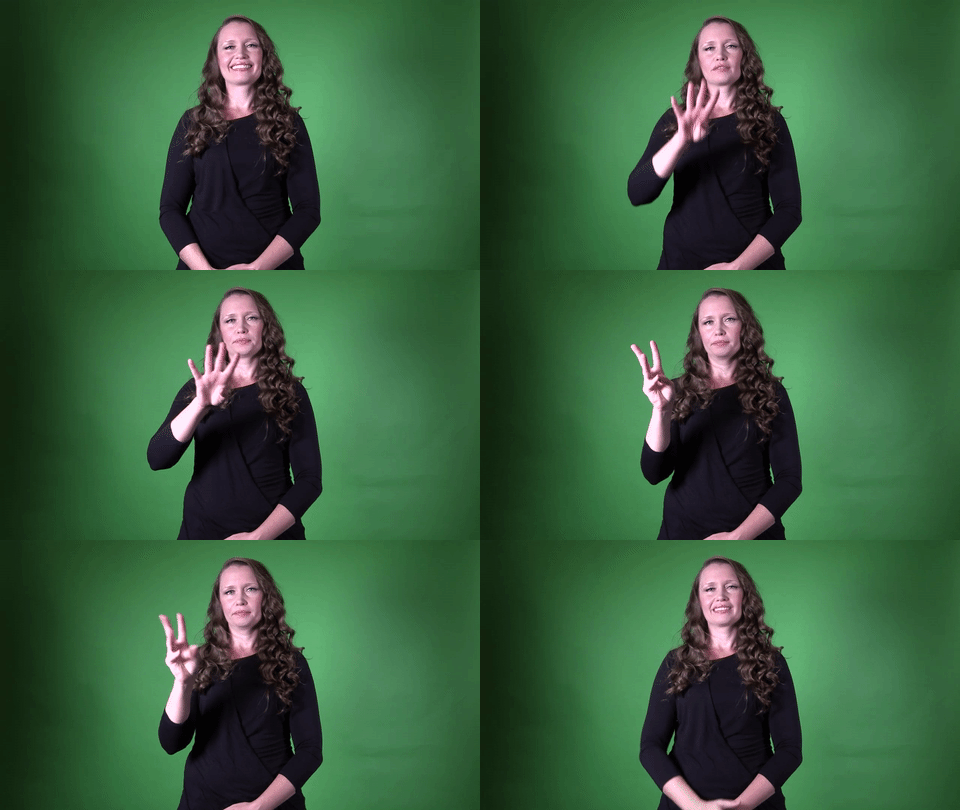
Sign for THE NUMBER 46 in ASL | 🔢 ASL Dictionary

Definition: Refers to the number forty-six

Sign for THE NUMBER 46 in ASL 

YouTube player

Practice Activities:

To practice the sign for the number 46 in ASL, begin by isolating the movement. Hold up your dominant hand in a “4” shape, then smoothly transition into a “6” shape by folding your ring finger down while extending your thumb and pinky. Repeat this motion multiple times to build muscle memory and ensure fluidity.

Once comfortable, practice signing the number 46 in sequences with other numbers. Try counting aloud while signing from 40 to 50, emphasizing a clear transition from 45 to 46 to 47. You can also mix in random numbers, signing numbers like 32, 46, and 59 to improve recall and accuracy.

Use the sign for the number 46 in ASL in real-world contexts. Pretend you are giving a phone number, an address, or listing a price. For example, sign “$46 for the jacket” or “Apartment 46 is on the third floor.” Practice frontloading the number in different phrases to vary how it’s used.

Engage in a partner activity by playing a number-guessing game. One person signs a number between 40 and 50, and the other must recognize and say it out loud. Switch roles and time yourself to increase speed and fluency in recognizing signs.

Create a personal story that incorporates 46. For instance, “I ran for 46 minutes today” or “My grandfather retired at 46.” If possible, share this story with a partner or record yourself signing it to review accuracy. Using numbers in storytelling enhances fluency in ASL.

Finally, integrate the sign for the number 46 in ASL into daily practice. Use it while discussing schedules, math problems, or describing statistics. The more you use it, the more natural it will become in conversation.

Cultural Context:

The sign for the number 46 in ASL is an important part of American Sign Language number systems. ASL numbers are commonly used in everyday conversations, including counting, addresses, and phone numbers. Learning the number signs helps improve communication skills in ASL.

The number 46 in ASL follows the standard numerical pattern used in signing two-digit numbers. It combines the digits 4 and 6 in a fluid motion, making it clear and easy to understand. Proper handshape and movement ensure accuracy when signing numbers.

Numbers are critical in ASL because they are used in many aspects of daily life. From telling time to discussing prices, knowing how to sign the number 46 in ASL is essential. It allows signers to clearly express numerical values in conversations.

For Deaf and hard-of-hearing individuals, the ASL number system provides an efficient way to convey numeric information. Whether discussing a sports score or giving personal details, ASL numbers are a natural part of communication. The number 46 in ASL is just one of many numbers that help structure meaningful discussions.

ASL uses a unique numerical system that differs from spoken languages. Unlike spoken words, the sign for the number 46 in ASL relies on visual hand movements. This system ensures clarity and avoids confusion in signed conversations.

Numbers in ASL also have cultural significance within the Deaf community. Various events, historical references, and personal stories may include numbers. Knowing the number 46 in ASL can be relevant in classroom settings, storytelling, and daily exchanges.

Many ASL learners practice signing numbers to improve fluency. The sign for the number 46 in ASL is an essential part of mastering numerical expressions. Practicing regularly helps build confidence in using ASL numbers smoothly.

Technology and education have made ASL number learning more accessible. Videos, apps, and online tutorials demonstrate how to sign numbers correctly. Watching demonstrations of the number 46 in ASL can enhance comprehension and accuracy.

Whether in casual conversations or formal discussions, numbers are an integral part of ASL. Understanding how to sign the number 46 in ASL ensures effective communication. Numbers bridge gaps between spoken and signed languages, fostering greater inclusivity.

Extended Definition:

The sign for the number 46 in ASL is formed using one hand and follows a numerical pattern common in American Sign Language. When signing, the dominant hand moves to transition from 4 to 6 in a fluid motion. This ensures clarity and makes it easily recognizable by other signers.

Numbers in ASL follow specific handshapes and movements to prevent confusion. The sign for the number 46 in ASL begins with the hand in the number 4 position, then shifts to the number 6 position. This smooth transition is essential for maintaining a natural and accurate flow in signed communication.

When using the sign for the number 46 in ASL, hand orientation and finger placement are crucial. Proper execution ensures that the number is clearly understood in conversations, whether discussing quantities, addresses, or mathematical concepts. Small variations in hand movement can alter the number, so precision is key.

Numbers in ASL are commonly used in daily communication, from telling time to giving phone numbers. The sign for the number 46 in ASL might appear in various contexts, such as sports scores, prices, or classroom settings. Mastering ASL numbers enhances fluency and boosts confidence in signing.

For beginners, practicing the sign for the number 46 in ASL alongside other numbers helps with retention. Comparing it to similar numbers, like 36 or 56, highlights the subtle differences in finger movement. Repeated practice will make signing numbers feel natural and automatic.

ASL numbers are influenced by grammar rules that differ from spoken English. While the sign for the number 46 in ASL stands alone in certain cases, it may be incorporated into sentences differently than in written or spoken English. Understanding these patterns improves overall ASL proficiency.

When fingerspelling or using numbers in ASL, facial expressions and context support clarity. If the sign for the number 46 in ASL is used in a conversation about money, adding a dollar sign or a clarifying gesture may be necessary. These details ensure smooth communication in diverse situations.

American Sign Language evolves with usage, and numerical signs remain a vital part of conversations. Learning signs like the sign for the number 46 in ASL is essential for effective communication in various fields, from business to education. Keeping up with standard signing practices ensures clarity and accuracy.

Using ASL numbers fluently provides a strong foundation for learning more complex sign language concepts. The sign for the number 46 in ASL is just one of

Synonyms: forty-six, number forty-six, number 46, the number 46, the number forty-six

Educational resources: Find related learning materials in our course bank!

Want more? Check out some of our popular learning activities on the homepage!

Need to look up a sign? Use our highly rated dictionary: https://aslinteractive.com/best-asl-dictionary/

Follow us on tiktok: https://www.tiktok.com/@aslinteractive. More social media links at the bottom of this page!

Long-tail Keywords: what is the sign for the number 46 in ASL, how do you sign the number 46 in American Sign Language, learn to sign the number 46 in ASL

Categories: Numbers – Basics, Numbers 41-50, cardinal numbers

tags: Numbers 41-50, Numbers, Math, Educational, Language Learning

Parameters

*Handshape*:

The sign for the number 46 in ASL uses a sequential number formation. First, form the number 4 with your dominant hand—extend the four fingers while keeping the thumb tucked in. Then, transition smoothly into the number 6 by touching the tip of the pinky to the thumb while the other three fingers remain extended.

When signing the number 46 in ASL, make the transition fluid to maintain clarity. Keep your palm facing forward, ensuring visibility for the viewer. The handshape change should be precise and deliberate for accurate communication.

*Palm Orientation*:

The palm orientation for the sign for the number 46 in ASL starts with the palm facing outward while forming the number four with the dominant hand. The fingers should be extended and slightly spread apart. Then, the hand transitions to form the number six by closing the ring finger and pinky together while the other fingers remain extended. Throughout the motion, the palm remains facing forward to maintain clarity and visibility of the sign for the number 46 in ASL.

*Location*:

The sign for the number 46 in ASL is produced in the neutral space in front of the body, typically at chest level. The movement involves transitioning from the handshape for 4 to the handshape for 6 in a fluid motion. This sign is performed with the dominant hand, ensuring clear visibility. Keep the palm facing forward to maintain clarity while signing the number 46 in ASL.

*Movement*:

To produce the sign for the number 46 in ASL, begin with your dominant hand forming the number 4. Hold your palm outward with fingers spread apart. Then, smoothly transition into the number 6 by bringing the pinky and thumb together while extending the other three fingers.

The movement should be fluid, ensuring there’s no abrupt stop between the two numbers. Keep your hand steady at chest level with a slight bounce as you change from 4 to 6. Maintain clear finger positions to ensure the sign for the number 46 in ASL is understood correctly.

*Non-Manual Signals*:

Facial expression remains neutral or slightly focused when signing the number. Eyebrows may be slightly raised if clarifying or checking understanding of the sign for the number 46 in ASL. Mouth may stay closed or slightly open, but there is no exaggerated mouthing required. Head movement is generally still, though a small nod may occur for emphasis or confirmation. Eye contact remains steady and directed toward the conversation partner, reinforcing engagement.

*Prosody, Dominant/Non-Dominant Hand*:

For the sign for the number 46 in ASL, use your dominant hand to form the number 4 with your palm facing outward. Then, smoothly transition into the number 6 by touching your pinky to your thumb while keeping the other three fingers extended. The movement should be fluid to maintain clarity and accuracy. This numerical sign is typically displayed near the center of your signing space for easy visibility.

When signing the number 46 in ASL, ensure each number formation is distinct yet seamlessly connected. Your non-dominant hand remains inactive while the dominant hand moves through the sequence. Keep a steady hand shape transition to prevent confusion with other numbers. Proper finger positioning and clear motions help make the sign visually legible in various communication settings.

Tips for Beginners:

When learning the sign for the number 46 in ASL, focus on maintaining smooth and fluid transitions between each digit. The number 46 is formed by signing “4” and then moving seamlessly into “6” without unnecessary pauses. Your hand should remain in a consistent position, ensuring that both numbers are clearly visible to the viewer.

A common mistake beginners make when signing the number 46 in ASL is hesitating between the two digits. Practice shifting between “4” and “6” efficiently so it feels natural. Keep your fingers steady and avoid repositioning your hand too much, as excessive movement can make the sign unclear.

Finger placement is very important when forming “4” and “6.” Make sure that “4” has an extended index, middle, ring, and pinky finger, while the thumb stays tucked down. For “6,” bring your pinky and thumb together while keeping the other fingers raised. Practicing in front of a mirror or recording yourself can help ensure accuracy.

Another common pitfall is improper palm orientation. Your palm should face outward while signing both numbers. If your palm orientation changes or your fingers bend too much, it can cause confusion, especially for someone reading the sign quickly in conversation.

Repetitive drills can help with developing muscle memory. Try alternating between signing 40 through 49 to enhance fluidity. Watching native signers demonstrate the sign for the number 46 in ASL will also help in perfecting the movement.

Lastly, remember that numbers in ASL should be signed at a comfortable, natural speed. Avoid rushing through the motions, and instead, aim for controlled, clear hand shapes. Mastering numbers correctly will improve overall clarity in ASL communication. Keep practicing, and you’ll build confidence signing numbers effortlessly!

Connections to Other topics:

The sign for the number 46 in ASL follows the logical structure of ASL numbering, where numbers in the forties use a transition between digits. Understanding this sign helps reinforce the pattern used for numbers 40-49, which often involve a shift in handshape while maintaining a fluid motion. This concept is useful when learning other number transitions in ASL, such as those for ages, addresses, or phone numbers, where clarity in signing is essential.

The sign for the number 46 in ASL can be compared to other numerical sequences, particularly those using repeated digit patterns or alternating handshapes. For example, the signs for the numbers 36, 56, and 76 share similarities in how the digits transition smoothly. Recognizing these patterns helps learners understand the broader system of ASL numeration and how different numbers are formed through minor but consistent variations.

Numbers in ASL often appear in a variety of contexts beyond counting, such as indicating scores, prices, percentages, or ranking positions. The sign for the number 46 in ASL could be used in discussions about age, historical events, or statistics. When used in conversation, it’s important to execute the movement clearly so that the viewer can easily distinguish it from similar numbers.

A strong grasp of ASL numbers like the sign for the number 46 in ASL also aids in understanding numerical incorporation within calendar signs, such as years and dates. Learning how ASL integrates numbers into other signs, such as time expressions, gives signers greater fluency. This connection between numbers and broader signing conventions strengthens overall ASL comprehension and communication skills.

Summary:

The sign for the number 46 in ASL follows a pattern commonly used for numbers in the forties. It combines the handshapes for four and six in a smooth transition. The movement is fluid and requires a clear distinction between the two numbers.

To sign for the number 46 in ASL, start with the number four, which is made by extending the four fingers while keeping the thumb tucked in. Then transition into the six, where the pinky and thumb touch while the other fingers stay extended. This shift needs to be seamless and natural to ensure clarity.

Numbers in ASL follow specific grammatical and regional variations. Some signers may slightly modify the movement based on preference or teaching. The sign for the number 46 in ASL remains consistent in formal signing spaces but can have minor styling shifts in casual conversations.

ASL numbers rely on a logical numerical progression. The number 46 follows the same structure as other numbers in the forties. Learning the flow of these numeric transitions helps build automaticity in signing numbers.

Cardinal numbers in ASL are essential for daily communication. The sign for the number 46 in ASL is frequently used in stating addresses, prices, or ages. Mastering number signs is crucial for fluency in ASL.

Cultural context also influences how numbers are signed. In ASL communities, clarity in number signs is crucial to avoid misinterpretation. The sign for the number 46 in ASL maintains its distinct visual contrast to prevent confusion with similar numbers.

When fingerspelling numbers, hand orientation and positioning matter. The number transition must be made at a comfortable speed. Rushing or over-exaggerating can disrupt clarity in signing for the number 46 in ASL.

ASL has a deep linguistic structure, and numbers are integral to its syntax. The structure of numbers like the sign for the number 46 in ASL follows predictable rules. This regularity supports easier recognition for ASL learners.

Numerical fluidity in ASL contributes to conversational efficiency. Being able to quickly and accurately sign for the number 46 in ASL is an essential skill. Signers who build confidence in numbers avoid hesitation in conversations.

Regional influences in ASL can sometimes slightly affect how numbers are signed. Some signers may prefer a subtle variation in movement. However, the sign for the number 46 in ASL remains generally consistent across regions.

ASL number signs contribute to the broader theme of visual linguistic representation. Numbers must be visually distinct for clarity. The progression seen in the sign for the number 46 in ASL highlights this unique aspect of ASL grammar.

Number incorporation in ASL also connects with broader themes of Deaf culture. The need for precise signing extends to all areas of communication. The sign for the number 46 in ASL exemplifies how ASL prioritizes visual distinction.

ASL linguistics emphasizes the importance of handshape transitions. The switch from four to six in the sign for the number 46 in ASL shows this aspect of sign language structure. Mastering these transitions reinforces fluency.

Every number in ASL follows a predictable pattern. Learning consistent number rules makes recalling signs easier. The sign for the number 46 in ASL is part of this structured numerical system.

Applied linguistics in ASL considers how numerical fluency affects comprehension. Fast and clear signing improves conversations. The sign for the number 46 in ASL showcases why numerical precision is vital in ASL communication.

The handshapes in ASL often relate to broader linguistic themes. Numerical handshapes must be distinct yet easy to flow into one another. The sign for the number 46 in ASL demonstrates this principle in action.

Numbers in ASL are commonly used in multiple situational contexts. Whether discussing dates, ages, or measurements, number signs are crucial. The sign for the number 46 in ASL exemplifies the necessity of numerical clarity.

Cognitive processing in ASL learners influences number recall. Numbers like the sign for the number 46 in ASL become easier to remember with repetition. Practice enhances muscle memory in signing.

ASL is a highly efficient language that integrates numbers seamlessly. Understanding number structures helps signers improve fluency. The sign for the number 46 in ASL is a small yet essential part of this system.

When teaching ASL numbers, gradual exposure to patterns is effective. Learning the 40s as a whole aids in mastery. The sign for the number 46 in ASL fits into this scaffolded learning approach.

ASL learners must familiarize themselves with number sequencing. Practicing number progressions sharpens accuracy. Becoming comfortable with the sign for the number 46 in ASL contributes to number fluency.

Mathematical concepts in ASL rely on accurate numbering. Establishing clear numeracy in ASL supports discussions on finance, time, and measurements. The sign for the

Want more? Check out some of our popular learning activities!

ASL Interactive Resources

ASLInteractive YouTube Channel

Follow us on tiktok: @aslinteractive.com

Follow us on Instagram: aslinteractive

Facebook page: aslinteractive

Facebook group: aslinteractive

LInkedIn: ASL Interactive LLC

Twitter: @ASL_interactive

*Some information on this page is AI-generated. AI can make mistakes. Please check the information.

Sign for 46 in ASL, Sign for NUMBER 46 in ASL, Sign for THE NUMBER 46 in ASL 

Responses