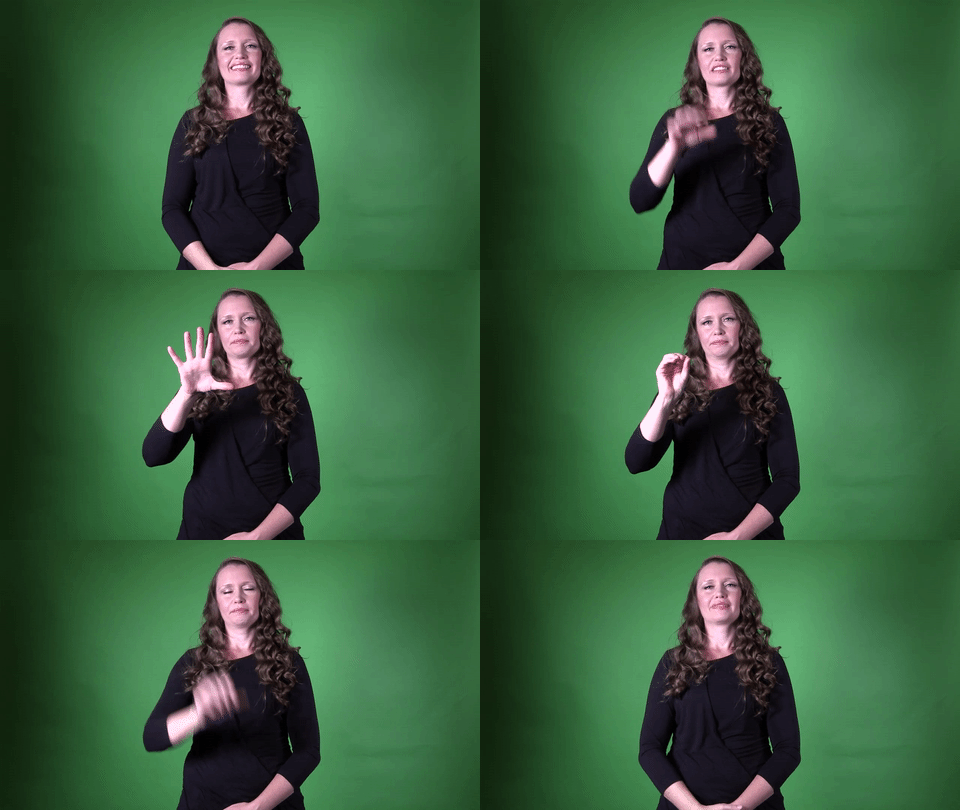
Sign for THE NUMBER 50 in ASL | 🔢 ASL Dictionary

Definition: Refers to the number fifty

Sign for THE NUMBER 50 in ASL 

YouTube player

Practice Activities:

To practice the sign for the number 50 in ASL, start by signing it repeatedly in front of a mirror. Focus on maintaining smooth transitions between the digits and keeping your handshape consistent. Try saying the number aloud as you sign to reinforce the connection between the visual and spoken form.

Use flashcards with different numbers and mix them up. Sign each number as you flip the cards, making sure to include the sign for the number 50 in ASL frequently. For an extra challenge, set a timer and see how many numbers you can sign correctly in one minute.

Incorporate the sign for the number 50 in ASL into real-life scenarios. Pretend you are ordering something at a café and signing the cost, such as 50 cents or 50 dollars. Try signing common phrases like “I have 50 books” or “There are 50 chairs in the room” to solidify the sign in different contexts.

Practice with a partner by quizzing each other on numbers. One person signs a number while the other guesses it. Play a counting game where you take turns signing numbers up to 50, reinforcing familiarity with the sequence.

Create a short story where the number 50 appears multiple times. For example, describe a celebration with 50 balloons, 50 guests, or a 50-year-old birthday honoree. Signing the story helps develop fluency and confidence with number incorporation.

Watch a video of someone signing numbers and try to recognize the sign for the number 50 in ASL. Pause and imitate each sign, focusing on fluid motion and accuracy. Gradually build confidence by increasing speed while maintaining clarity.

Engage in real-world practice by looking for the number 50 in addresses, prices, and dates. Sign the number whenever you see it in daily life to strengthen muscle memory. Keep practicing in different contexts to ensure accuracy and fluency.

Cultural Context:

In American Sign Language, the sign for the number 50 in ASL is an essential part of numerical communication ️. Numbers play a vital role in daily conversations, allowing deaf and hard-of-hearing individuals to express ages, addresses, and other numeric values. Knowing the sign for the number 50 in ASL enhances fluency and ensures precise communication.

The sign for the number 50 in ASL follows a logical pattern similar to other numbers in the fifties series. Numbers in ASL often reflect a combination of handshapes, making them easy to recognize and recall. Mastering the pattern helps signers quickly adapt and use the sign for the number 50 in ASL in various contexts.

Numbers like 50 are commonly used in both formal and informal settings, from discussing prices to sports scores . The sign for the number 50 in ASL is particularly useful when talking about years, birthdays, and milestones. Fluency with number signs allows for clearer storytelling and accurate information exchange.

Deaf culture values precision in communication, and numbers are no exception. Using the correct sign for the number 50 in ASL ensures that messages remain clear and understandable. Proper numerical signing also helps avoid misunderstandings and promotes effective visual language skills.

When signing large numbers, it’s helpful to understand the structure of ASL numerals. The sign for the number 50 in ASL fits into a broader system of counting, making it an essential part of an ASL user’s vocabulary. Learning numbers in ASL enhances overall signing ability and builds confidence in communication.

ASL number signs often follow patterns that make them easier to remember . The sign for the number 50 in ASL is a great example of how numerical consistency simplifies learning. Practicing numbers regularly helps signers establish fluency and become more comfortable using them in conversation.

Age, time, and quantity are just a few areas where numbers are frequently signed. The sign for the number 50 in ASL is useful in discussing half-centuries, financial figures, and numerical data. Accurate number signing makes interactions more efficient and engaging.

Many ASL learners focus on basic signs before moving on to numbers. However, mastering the sign for the number 50 in ASL early on can be a great step toward fluency. Learning number signs builds a strong foundation for more advanced ASL conversations.

By understanding ASL numbers, signers can participate in discussions involving math

Extended Definition:

The sign for the number 50 in ASL is an important part of learning American Sign Language numbers. Whether you’re counting, discussing quantities, or giving phone numbers, knowing how to correctly sign numbers enhances communication. The number system in ASL is visually expressive and follows distinct patterns.

To sign the number 50 in ASL, start by forming the number 5 with your dominant hand, fingers spread apart. Then, transition into a 0 by bringing all fingertips together. This movement captures the essence of the number 50 and is consistent with other number signs in ASL.

Proper handshape and motion are essential for signing numbers clearly. The fluid movement from 5 to 0 ensures that the sign for the number 50 in ASL is easily understood. Practicing this transition will improve fluency and accuracy in signing numbers.

Numbers play a key role in everyday ASL conversations. Whether discussing age, money, or counting objects, signing the number 50 correctly avoids misunderstandings. Mastering ASL numbers enhances both expressive and receptive signing skills.

If you’re learning ASL, consistently practicing numbers helps with speed and clarity. The sign for the number 50 in ASL follows a pattern similar to other round numbers like 40 and 60. Recognizing these patterns makes learning new numbers easier.

ASL numbers also vary slightly based on regional and stylistic differences. Some signers may adjust how they sign the number 50, but the general structure remains the same. Observing fluent signers can help reinforce correct technique.

When teaching ASL numbers, integrating handshape drills can improve retention. The sign for the number 50 in ASL is best learned through repetition and real-world use, such as counting aloud while signing. This helps build muscle memory and confidence.

Number signs are frequently used in everyday life, making them essential for effective ASL communication. Whether you’re discussing prices, addresses, or measurements, knowing how to sign the number 50 accurately is valuable. Becoming comfortable with number signs improves overall signing fluency.

By practicing the sign for the number 50 in ASL regularly, learners can incorporate it naturally into conversations. Watching videos and engaging with native signers will further reinforce proper technique. The more exposure to signed numbers, the more automatic they become.

Mastering numbers in ASL opens the door to more advanced conversations. After learning the number 50, learners can build on this knowledge to understand large numbers and numerical patterns.

Synonyms: fifty, number fifty, number 50, the number 50, the number fifty

Educational resources: Find related learning materials in our course bank!

Want more? Check out some of our popular learning activities on the homepage!

Need to look up a sign? Use our highly rated dictionary: https://aslinteractive.com/best-asl-dictionary/

Follow us on tiktok: https://www.tiktok.com/@aslinteractive. More social media links at the bottom of this page!

Long-tail Keywords: what is the sign for the number 50 in ASL, how do you sign the number 50 in American Sign Language, step-by-step guide to signing the number 50 in ASL

Categories: Numbers – Basics, Numbers 41-50, cardinal numbers

tags: Numbers 41-50, Numbers, Math, Educational, Language Learning

Parameters

*Handshape*:

The sign for the number 50 in ASL uses a shifting handshape. Start with the number 5 handshape—an open palm with fingers extended and spread apart. Then, transition smoothly into the number 0 handshape by bringing the fingertips together, forming an “O” shape. This movement alternates once or twice to clarify the number. The sign for the number 50 in ASL is typically done at chest level with a fluid motion, maintaining a natural wrist position.

*Palm Orientation*:

The palm orientation for the sign for the number 50 in ASL starts with the palm facing forward. The fingers form the number 5 initially, then transition to a quick closing motion where the index, middle, ring, and pinky fingers touch the thumb, creating a 0 shape. Throughout the motion, the palm remains directed outward. The sign for the number 50 in ASL emphasizes clarity in handshape transitions for easy recognition.

*Location*:

The sign for the number 50 in ASL is formed in the neutral space in front of the body, at about chest level. The movement is fluid and clear, ensuring visibility. Proper positioning allows the sign for the number 50 in ASL to be easily recognized without obstruction. Maintaining a relaxed hand posture helps with natural movement and correct expression of the number.

*Movement*:

To make the sign for the number 50 in ASL, start by forming the number 5 handshape, with all five fingers extended. Then, smoothly transition to a 0 handshape by bringing the fingertips together while the thumb touches them, forming an “O” shape. This motion is fluid and should be repeated if emphasizing the number. The sign for the number 50 in ASL should be performed at a moderate speed with a natural hand movement.

*Non-Manual Signals*:

When signing the sign for the number 50 in ASL, maintain a neutral or slightly focused facial expression. Your eyebrows should remain relaxed unless emphasizing or questioning the number. If clarifying or reiterating, a slight head tilt or raised eyebrows can indicate confirmation. Keep your mouth neutral, though slight lip rounding may accompany the number for emphasis. Proper non-manual signals help ensure the sign for the number 50 in ASL is clearly understood in context.

*Prosody, Dominant/Non-Dominant Hand*:

The sign for the number 50 in ASL uses the dominant hand, forming the number 5 handshape ️ with the palm facing outward. The fingers and thumb then close together into the number 0 handshape, creating a smooth transition. This motion repeats once or twice in a fluid manner to clearly indicate 50. The non-dominant hand is not used in this sign, and the movement should be natural and consistent.

Tips for Beginners:

When learning the sign for the number 50 in ASL, focus on mastering the fluid motion of the hand. The sign involves forming the number 5 with your palm facing outward, followed by a quick transition to the number 0, where your fingers come together to form an “O” shape. Practicing this transition smoothly will help ensure that the movement looks natural and is easily recognized by signers.

A common mistake beginners make when signing the number 50 in ASL is stiff or choppy hand movements. The shift from 5 to 0 should be effortless, without excessive tension in your fingers. Keeping a relaxed hand and practicing the motion slowly at first can enhance clarity and accuracy. Repetition will help build muscle memory, making the sign feel more natural over time.

Hand positioning is critical when signing the number 50 in ASL, as incorrect angles can lead to confusion with similar number signs. Make sure your palm remains outward and the 0 shape is clear, rather than fingers slightly open or curled. Watching yourself in a mirror or recording your signing can help you refine the shape and positioning.

Beginners should also be mindful of finger placement to avoid signs that resemble different numbers. If the 0 formation is weak or unclear, it might look like a variation of another number. Consistently checking your fingers and making precise adjustments will improve your accuracy.

Practicing alongside fluent signers or watching videos of ASL numbers can reinforce the correct motion. The sign for the number 50 in ASL is commonly used in daily life, so mastering it will be valuable for counting, addresses, and numerical references. By staying patient and practicing frequently, you’ll develop confidence in using the sign smoothly in communication.

Connections to Other topics:

The sign for the number 50 in ASL connects to broader number patterns in ASL, particularly with multiples of ten. Numbers like 40, 60, and 70 follow a similar pattern where the fingers form a number 5 at the start and then transition to a 0 shape. This general consistency makes it easier for learners to recognize number families and apply the same movement principles when counting higher numbers.

Understanding the sign for the number 50 in ASL also helps in discussing ages, measurements, and financial amounts. For example, when talking about someone being 50 years old, this sign can be combined with the age sign. Similarly, discussing 50 dollars or 50 percent involves integrating this number sign with specific classifiers or the standard signs for money and percentage.

This sign also plays a role in larger numerical expressions, such as the sign for 150 or 500, where the base number 50 can appear within a sequence. It aligns with how ASL treats numerical inflections, allowing for smooth transitions between digits without needing to break the visual flow of signing. In rapid conversation, ASL users often streamline multiple-digit numbers by modifying the movement slightly to keep up with natural pacing.

Since the sign for the number 50 in ASL involves a change in handshape, it is an example of how ASL utilizes shifting forms to represent numerical concepts. The same principles apply to other number combinations, such as 25 or 75, creating consistency in how numbers are signed from 1 to 100. Mastering these frequent shifts builds fluency and helps signers move comfortably between counting and quantitative discussions in ASL.

Summary:

The sign for the number 50 in ASL is a combination of two hand shapes. It starts with the number 5 hand shape and transitions smoothly into the number 0 hand shape. This movement represents the numeral 50 in a clear and visually distinct way.

Handshape plays a key role in distinguishing numbers in ASL. The number 50 uses an open hand with all five fingers extended before changing into a compact O shape. This transformation is fluid and helps maintain clarity between different number signs.

The motion used in the sign for the number 50 in ASL ensures that the transition between 5 and 0 is perceptible. This sliding or closing motion prevents the sign from being confused with similar-looking numbers. The change must be executed with precision to maintain its meaning.

Number signs in ASL are deeply rooted in visual clarity to maintain accurate interpretation. The sign for the number 50 in ASL follows a structured pattern that aligns with other number signs ending in zero. These patterns create consistency within ASL numeracy.

Numbers in ASL often follow a logical sequence, making them easier to learn and recognize. The number 50 falls into the category of round numbers, making it commonly used in various contexts. Whether discussing age, price, or quantity, this sign has a broad range of applications.

ASL numbers rely on handshape memory and fluid transitions. The sign for the number 50 in ASL benefits from a simple, yet structured movement, helping users recall it quickly in conversation. This efficiency makes it a useful building block in numerical discussions.

The grammatical use of numbers in ASL differs from spoken English. Numbers like 50 can be incorporated into sentences with specific facial expressions or accompanying classifiers. The way it is used in conversation determines its meaning beyond just a standalone numeral.

Cultural significance also plays a role when considering round numbers such as 50. In many contexts, 50 represents milestones, such as a 50th anniversary or a 50-dollar bill. When signed in ASL, emphasis may be placed on it through repetition or facial markers.

Linguistically, ASL numbers reflect the signed language’s structure and economy of movement. The sign for the number 50 in ASL follows a natural pattern seen in other double-digit numbers ending in zero. This pattern allows for smoother comprehension within ASL’s numerical system.

When paired with time signs, the number 50 can reflect durations, age, or measurements. For example, signing “50 minutes” or “50 dollars” in ASL requires integrating the number sign naturally into a sentence. This showcases ASL’s grammatical adaptability.

The visual component of ASL numbers is critical to ensuring meaning is transmitted correctly. The sign for the number 50 in ASL maintains contrast from similar signs by emphasizing shape and movement. Skilled signers ensure distinctions remain clear in quick conversations.

Learning number signs in ASL is as important as learning vocabulary words. The sign for the number 50 in ASL is useful in practical settings such as banking, shopping, and storytelling. Mastering it helps expand a signer’s fluency in everyday discussions.

ASL numbers also carry broader mathematical and educational significance. Teachers use the sign for the number 50 in ASL when instructing deaf students in arithmetic and counting. This ensures accessibility to numerical concepts in visually structured ways.

In sports and measurements, 50 frequently appears as an important value. Whether marking halftime in a game or discussing a 50-yard distance, this sign has versatile applications. Its clarity ensures effective communication in settings requiring numeric precision.

The rhythm of numerical signing in ASL follows a fluid, natural flow. The sign for the number 50 in ASL maintains this visual rhythm, allowing seamless transitions between numbers. Practicing this flow helps signers become more fluent in signing numerical sequences.

ASL involves non-manual markers to enhance meaning. When signing the number 50, facial expressions or movements may emphasize its importance. This can clarify whether the number represents an estimate, an exact quantity, or an emphasis on significance.

Some numbers in ASL have alternate variations depending on regional or stylistic factors. The sign for the number 50 in ASL generally follows a standard format, but some variations may exist in signing communities. Understanding these variations enhances language flexibility.

Applied linguistics highlights how number signs facilitate efficient communication. The sign for the number 50 in ASL serves as an example of a structured, intuitive numeric system. Its design prioritizes visual ease while maintaining distinctness across numerical values.

ASL numbers help bridge communication gaps in multilingual environments. The sign for the number 50 in ASL allows deaf and hard-of-hearing individuals to participate in numerical discussions seamlessly. This fosters accessibility in business, education, and daily interactions.

Mastering ASL numbers, including the sign for the number 50 in ASL, contributes to overall fluency. Signers who

Want more? Check out some of our popular learning activities!

ASL Interactive Resources

ASLInteractive YouTube Channel

Follow us on tiktok: @aslinteractive.com

Follow us on Instagram: aslinteractive

Facebook page: aslinteractive

Facebook group: aslinteractive

LInkedIn: ASL Interactive LLC

Twitter: @ASL_interactive

*Some information on this page is AI-generated. AI can make mistakes. Please check the information.

Sign for 50 in ASL, Sign for FIFTY in ASL, Sign for NUMBER FIFTY in ASL, Sign for THE NUMBER FIFTY in ASL, Sign for THE NUMBER 50 in ASL 

Responses