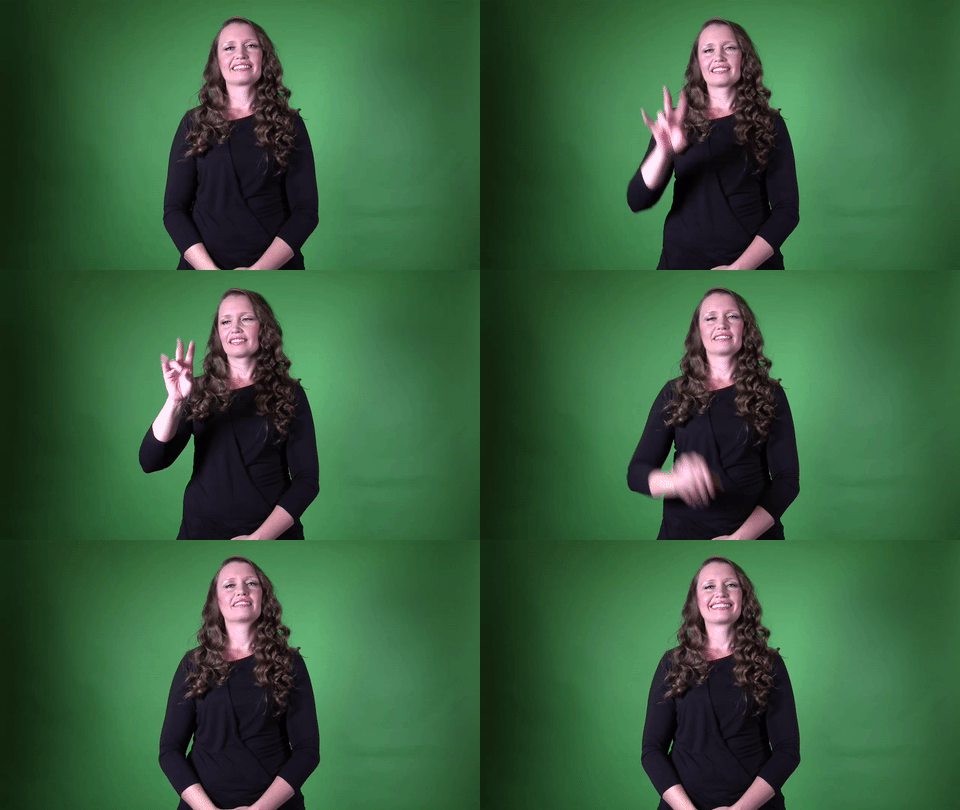
Definition: Refers to the number seventy
Sign for THE NUMBER 70 in ASL

Practice Activities:
To practice the sign for the number 70 in ASL, start by isolating the movement. Slowly and deliberately sign 70 multiple times, focusing on accuracy and smooth transitions. Use a mirror or record yourself to check the clarity of your motions.
Next, incorporate the sign for the number 70 in ASL into number sequences. Count by tens, signing 10 through 100 to build fluency. Have a partner randomly call out a number and quickly sign it to strengthen recall.
Try signing real-life applications of 70. Sign phrases like “70 people attended the meeting” or “70 dollars is the total” to practice using the number in full sentences. Use your fingers to spell out objects associated with 70, like “70TH birthday” or “70 degrees outside.”
Engage in a storytelling exercise incorporating the sign for the number 70 in ASL. Create a short story involving 70 items, people, or actions. A sample prompt could be: “Imagine you found 70 coins on the ground. What did you do?” Sign your story and share it with a learning partner.
Play a number guessing game with others. One person signs a number between 60 and 80 while the rest guess what it is. This improves receptive skills and speed in recognizing signed numbers.
Practice signing numerical comparisons. Say “This store has 70 apples, but the other has 65” or “Gas used to be 70 cents per gallon.” These sentences reinforce context usage while improving comprehension.
Use a timer to sign numbers quickly, including 70, in a random sequence. This helps improve speed and comfort with number transitions. Engage in real-world situations like discussing prices, ages, or statistics to further reinforce fluency.
Cultural Context:
American Sign Language is a visual language that represents numbers in a unique and expressive way. The sign for the number 70 in ASL follows a structured pattern used for multiple-digit numbers. Understanding how to sign numbers correctly is important for effective communication in ASL.
The sign for the number 70 in ASL is part of the seventy series, following the same pattern as other numbers in this range. Each number in this series maintains a consistent handshape with a movement that distinguishes it from similar numbers. Learning these number signs increases fluency and clarity in conversations.
In Deaf culture, numbers play a crucial role in daily interactions, from giving addresses to discussing ages and dates. The sign for the number 70 in ASL is used in contexts like sports scores, prices, and historical dates. Mastering number signs helps Deaf and hearing signers communicate smoothly.
The numbering system in ASL relies heavily on handshapes and movement to convey meaning accurately. The sign for the number 70 in ASL requires attention to detail to avoid confusion with visually similar numbers. Practicing consistently helps signers become more confident in using number signs effectively.
Using correct facial expressions while signing numbers can reinforce meaning and enhance understanding. The sign for the number 70 in ASL, like other numerical signs, benefits from clear hand positioning and fluid motion. Precision in signing numbers ensures clear and accurate communication.
ASL numbers are frequently used in educational settings, workplaces, and casual conversations. The sign for the number 70 in ASL may appear when discussing statistics, budgets, or school lessons. Becoming familiar with ASL number signs benefits both Deaf and hearing individuals learning the language.
Mastering number signs is key to developing language proficiency in ASL. The sign for the number 70 in ASL is one of many numbers that follow a predictable pattern. Fluency in signing numbers supports effective conversations in a variety of social and professional settings.
Teaching number signs is a fundamental part of ASL instruction for learners of all ages. The sign for the number 70 in ASL is included in lessons covering counting and numerical concepts. Learning and practicing number signs strengthens overall ASL communication skills.
ASL is a dynamic language that evolves over time, but number signs remain consistent for clarity. The sign for the number 70 in ASL is standard across most ASL users, ensuring mutual understanding. Knowing how to correctly sign numbers fosters better communication within the signing community.
Engaging in daily
Extended Definition:
The sign for the number 70 in ASL follows a consistent pattern seen with other numbers in the 70s. It is formed using the dominant hand, starting with the number 7 and transitioning smoothly into the number 0. This movement is fluid and important for maintaining clarity in communication.
Numbers in ASL are signed using specific handshapes and movements that differ from spoken languages. The sign for the number 70 in ASL is a combination of two distinct handshapes, making it essential to practice the transition. Proper finger positioning ensures the number is easily understood by other signers.
When signing the number 70 in ASL, hand orientation and movement play a key role. The palm should face outward, and the fingers must move naturally between the number 7 and number 0. Practicing this transition helps develop fluency in signing numbers accurately.
Consistent finger placement is crucial when signing numerical values in ASL. The sign for the number 70 in ASL ensures that the number is easily distinguished from similar values, preventing miscommunication. This is particularly useful when discussing age, dates, measurements, or other numerical data.
ASL numbers often follow a structured pattern that makes learning them more intuitive. The sign for the number 70 in ASL adheres to this pattern, making it recognizable and predictable for fluent signers. New learners benefit from practicing similar number transitions to build confidence.
The clarity of numerical signs is essential in both casual and formal ASL communication. When using the sign for the number 70 in ASL, accuracy in handshape and motion ensures that the intended number is conveyed. Misarticulating the movement may lead to confusion, so proper practice is recommended.
Numbers are frequently used in daily conversations, making mastery of numerical signs important. The sign for the number 70 in ASL appears in contexts such as financial transactions, addresses, statistics, and storytelling. Learning numbers fluently enhances overall signing skills and comprehension.
When teaching ASL numbers, repetition and visual reinforcement help solidify learning. The sign for the number 70 in ASL can be practiced alongside other numbers in the 70s, such as 71, 72, and 73, to establish pattern recognition. This approach improves overall numerical fluency in ASL communication.
Using facial expressions can sometimes provide additional context when signing numbers. Although the sign for the number 70 in ASL remains consistent, expressions may indicate emphasis or clarify meaning. This is particularly useful in educational
Synonyms: seventy, number seventy, number 70, the number 70, the number seventy
Educational resources: Find related learning materials in our course bank!
Want more? Check out some of our popular learning activities on the homepage!
Need to look up a sign? Use our highly rated dictionary: https://aslinteractive.com/best-asl-dictionary/
Follow us on tiktok: https://www.tiktok.com/@aslinteractive. More social media links at the bottom of this page!
Long-tail Keywords: What is the sign for the number 70 in ASL, How do you sign the number 70 in American Sign Language, Learn how to sign the number 70 in ASL
Categories: Numbers – Basics, Numbers 61-70, cardinal numbers
tags: Numbers, Numbers 61-70, Language Learning, counting by 10s
Parameters
*Handshape*:
The sign for the number 70 in ASL uses a combination of two distinct handshapes. Start by forming the number 7 handshape, with the thumb and ring finger touching while the other fingers remain extended. Then, smoothly transition into the number 0 handshape by bringing your fingers together into a rounded shape. This motion should be fluid to clearly represent the sign for the number 70 in ASL. Keep a relaxed hand posture for natural movement.
*Palm Orientation*:
The palm orientation for the sign for the number 70 in ASL starts with the palm facing outward. The hand forms the number 7, with the index and middle fingers extended while the thumb sticks out. Then, the hand transitions into a 0 shape with the fingers coming together. Throughout the sign for the number 70 in ASL, the palm remains forward to maintain visibility and clarity for the viewer.
*Location*:
The sign for the number 70 in ASL is produced in the neutral signing space in front of the body. The dominant hand starts in the “7” handshape, with the index and middle fingers extended and separated, while the thumb is also extended. The fingers then transition smoothly into a “0” handshape by bringing the fingertips together. The movement is small and fluid, ensuring clear communication of the sign for the number 70 in ASL.
*Movement*:
To produce the sign for the number 70 in ASL, start with the number 7 handshape—thumb and ring finger touching while the other fingers are extended. Then, smoothly transition to the number 0 handshape by bringing all fingers together to form an “O” shape. The movement is fluid, with a slight bounce or shift between the two handshapes, ensuring clarity. Facial expressions and a steady hand motion help convey the sign for the number 70 in ASL accurately.
*Non-Manual Signals*:
When signing the sign for the number 70 in ASL, maintain a neutral or slightly focused facial expression. Your eyebrows should remain relaxed unless emphasizing or questioning the number. Slight mouth movements reflecting the number’s rhythm can naturally occur. Keep eye contact with your conversation partner to ensure clarity. A slight nod may accompany the sign for emphasis, especially when confirming or clarifying numerical information.
*Prosody, Dominant/Non-Dominant Hand*:
The sign for the number 70 in ASL uses the dominant hand in a “7” handshape, with the palm facing outward. The thumb and ring finger touch as the fingers transition smoothly from a “7” to a “0” handshape. This movement should be fluid, maintaining a relaxed posture. The non-dominant hand is not typically used. Maintaining a natural rhythm when signing the number 70 in ASL helps ensure clarity.
Tips for Beginners:
Mastering the sign for the number 70 in ASL requires precision in handshape and movement. Begin by forming the number 7 with your dominant hand, thumb and ring finger touching while the remaining fingers are extended. Quickly transition into a 0 shape by forming an “O” with your fingers and thumb, creating a smooth, fluid movement.
One common mistake with the sign for the number 70 in ASL is making the transition too slow or rigid. The movement should feel natural, not overly mechanical. Keep your fingers relaxed to avoid stiffness, which can make the sign look choppy or unclear.
Hand orientation is crucial for clarity. Your palm should primarily face outward while signing to make the number 7 and 0 clearly visible. If the orientation shifts too much, it can be misunderstood as a different number.
Practice switching between 7 and 0 fluidly to build muscle memory. Repeating the movement consistently will help reinforce correct form. Incorporating a mirror or video recording can assist in checking clarity and accuracy.
Avoid unnecessary finger movement, as it may distort the sign for the number 70 in ASL. Keep your fingers steady and controlled, ensuring a clean transition. Over-exaggerating the motion can make the sign harder to recognize.
Engaging in real conversations or structured number drills can help reinforce learning. Try incorporating 70 into sequences, such as counting by tens, to ensure you can recall and sign it smoothly in various contexts.
Confidence is key to fluency. Keeping a steady rhythm and practicing with other numbers will help the sign feel more natural over time. Stay patient and persistent to develop a clear, understandable sign for the number 70 in ASL.
Connections to Other topics:
The sign for the number 70 in ASL is part of the broader system of number signs, specifically the sequential tens series. This pattern connects to numbers such as 60, 80, and 90, which follow a similar structure of transitioning between handshapes. Understanding this shared pattern helps signers recognize the logical progression of numbers and improves fluency when signing numerical sequences.
Ordinal forms of numbers, such as 70th, may include a slight twisting or movement when representing rankings, like “70th place” in a competition. This principle applies to other ordinal numbers as well, making it an essential concept for learning numerical order in ASL. Additionally, when incorporating the sign for the number 70 in ASL into larger numerical values, such as 1,070 or 70,000, the base sign remains consistent, but other numerical elements adjust accordingly.
The sign for the number 70 in ASL also connects to concepts of time and age. For instance, when discussing decades, such as “the 1970s,” specific context and structure are required to clarify meaning. Similarly, signing an age like “70 years old” follows conventions that help differentiate between simply stating a number and indicating a person’s age. These subtle differences highlight the precision of ASL in conveying numerical meanings.
Money-related discussions frequently incorporate the sign for the number 70 in ASL, especially in currency amounts such as $70. In these cases, the number sign often appears alongside the sign for “dollar” or other currency indicators. The ability to fluently integrate number signs with financial vocabulary is crucial for discussing prices, transactions, and budgets in ASL conversations.
Summary:
The sign for the number 70 in ASL follows a common numerical pattern in American Sign Language. It is formed using the dominant hand, which begins in the shape of the number 7. This means the index and middle fingers extend outward while the other fingers remain curled down.
To sign for the number 70 in ASL, the signer transitions from the number 7 handshape to a 0 handshape. The motion involves a simple, fluid shift from the initial 7 formation into the 0 shape. This transition happens smoothly to maintain clarity and efficiency in numerical communication.
Like many two-digit numbers in ASL, the sign for the number 70 in ASL is based on a common pattern for tens numbers. The numbers 60 through 90 generally involve shifting from the starting digit to a 0 handshape. This consistency makes it easier for signers to recognize and produce these numbers without confusion.
The structure of the sign for the number 70 in ASL is highly visual, reinforcing ASL’s reliance on handshape shifts for meaning. Because fingerspelling is not typically used for numbers, numerical signs must be distinct and efficient. The motion involved in signing 70 helps keep numbers clear in rapid conversation.
Numbers in ASL have a rhythmic flow that helps native signers quickly recognize values. The number 70 follows a natural hand movement that mirrors how other tens numbers are signed. This technique creates a systematic approach to number signs, reinforcing ASL’s grammatical efficiency.
Numerical concepts in ASL rely on spatial awareness, movement, and consistency. The sign for the number 70 in ASL follows the linguistic principles of economy of movement and clarity. These principles ensure that numbers are visible and easily understood in various settings.
Signers use the sign for the number 70 in ASL in mathematical discussions, financial transactions, and general conversations that involve numbers. Because numerical communication is essential for daily interactions, mastering these signs ensures fluency in different contexts. This allows signers to effectively relay ages, prices, and data points when necessary.
The sign for the number 70 in ASL, like other numerical signs, plays an important role in educational settings. Deaf students learn to recognize and produce these signs in school as part of their numeracy skills. Teachers use structured methods to ensure students understand number sequencing.
In Deaf culture, the use of numerical signs contributes to clear communication in personal and professional settings. The sign for the number 70 in ASL is particularly important for discussing significant historical dates, monetary values, and measurements. Precision in numerical production helps maintain accuracy in information exchange.
The visual nature of ASL numbers allows for quick and effective communication between signers. The sign for the number 70 in ASL, along with similar number signs, simplifies numerical discussions without the need for fingerspelling. This efficiency makes number signs an essential part of daily ASL use.
One of the challenges for ASL learners is maintaining fluidity in numbers, especially when signing quickly. The sign for the number 70 in ASL should be practiced with a smooth transition to avoid hesitation. Developing muscle memory ensures that the number is signed quickly and correctly in conversations.
ASL numbers are integral to discussing time, dates, and quantities. The sign for the number 70 in ASL may often appear in discussions about historical events, personal milestones, and counting exercises. Recognizing these contexts helps signers become comfortable using numerical signs in a variety of conversations.
The linguistic structure of numerical signs in ASL reflects its visual-spatial grammar. The sign for the number 70 in ASL exemplifies this structure by using distinct handshapes and a clear transition. Understanding these linguistic patterns contributes to overall fluency in ASL.
In applied linguistics, ASL numbers demonstrate how signed languages efficiently encode numerical information. The sign for the number 70 in ASL highlights the economy of movement that ASL employs for numerical communication. This efficiency ensures that numbers are understood even in fast-paced conversations.
The grammatical structure of ASL numbers is distinct yet systematic, ensuring ease of comprehension for both new and experienced signers. The sign for the number 70 in ASL follows the same sequential numerical logic as other tens numbers. This predictability helps learners grasp number structures quickly.
The sign for the number 70 in ASL is commonly used in discussions about finance, sports, and measurements. Whether stating a dollar amount, reporting a score, or noting a temperature, this number plays a functional role in everyday life. Mastering number signs helps signers navigate these topics with ease.
Numbers in ASL are an important foundation for mathematical conversations and professional communication. The sign for the number 70 in ASL ensures that signers can efficiently express numerical values without confusion. This reinforces ASL’s effectiveness for quantitative discussions in education and professional settings.
Finger dexterity is key when signing numbers, and practicing numerical transitions
Want more? Check out some of our popular learning activities!
ASL Interactive Resources
ASLInteractive YouTube Channel
Follow us on tiktok: @aslinteractive.com
Follow us on Instagram: aslinteractive
Facebook page: aslinteractive
Facebook group: aslinteractive
LInkedIn: ASL Interactive LLC
Twitter: @ASL_interactive
*Some information on this page is AI-generated. AI can make mistakes. Please check the information.


Responses