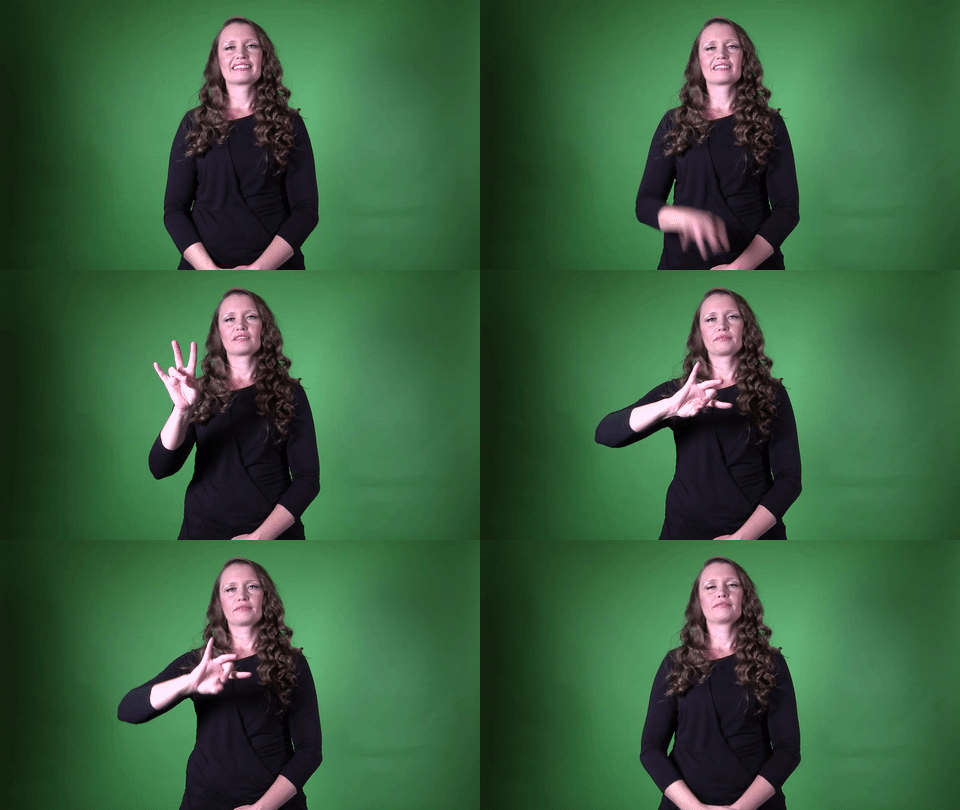
Sign for THE NUMBER 78 in ASL | 🔢 ASL Dictionary

Definition: Refers to the number seventy-eight

Sign for THE NUMBER 78 in ASL

YouTube player

Practice Activities:

To practice the sign for the number 78 in ASL, begin by signing the number in isolation repeatedly. Focus on handshape accuracy and smooth transitions between digits. Try signing the number slowly at first, then increase your speed while maintaining clarity.

Incorporate the sign for the number 78 in ASL into number sequences. Count aloud in ASL, signing numbers from 70 to 80 to reinforce correct positioning and movement. Mix random numbers with 78 in a set, such as 75, 78, and 82, to challenge your ability to recall and shift between numbers smoothly.

Practice using the sign for the number 78 in ASL within real-world contexts. Imagine you are telling someone an address that contains 78, stating a financial amount, or sharing someone’s age. For example, sign phrases like “My grandfather is 78 years old” or “The house number is 78 on Maple Street.”

Work with a partner to quiz each other by signing various two-digit numbers while the other person identifies them. Take turns listing numbers aloud in ASL, then verifying accuracy by repeating the sign back. You can also create a game where one person fingerspells a random number, and the other responds by signing it correctly.

Use storytelling exercises to reinforce the sign for the number 78 in ASL. Create a short narrative that incorporates the number, such as a story about someone born in 1978 or a trip lasting 78 days. Retell the story to a friend or record yourself to check accuracy.

Engage in real-life applications by reading out numbers from books, price tags, or calendars, then signing them in ASL. By integrating the sign for the number 78 in ASL into daily activities, you will build confidence and fluency in using numbers effortlessly.

Cultural Context:

The sign for the number 78 in ASL follows a natural flow that reflects how native signers express numbers efficiently. In American Sign Language, numbers are an essential part of communication, used in everyday contexts such as counting, dates, addresses, and measurements. Understanding the sign for the number 78 in ASL helps learners develop fluency and confidence in signing numbers correctly.

Numbers in ASL are visually dynamic, with movement and handshape playing a crucial role in accuracy. The sign for the number 78 in ASL uses a smooth transition between the digit signs, making it clear and easy to recognize. Mastering this number helps in understanding sequences and numerical patterns in sign language.

Deaf culture values clarity in signed numbers, as precision is key to effective communication. The sign for the number 78 in ASL is commonly used in topics like sports scores, money transactions, and historical years. Learning this sign allows for seamless conversations in social, academic, and professional settings.

When signing numbers, facial expressions and slight hand movements can add additional meaning. The sign for the number 78 in ASL must be performed with consistency to avoid confusion with similar numbers. Practicing regularly ensures that signing remains natural and easily understood by the Deaf community.

Technology and social media have increased the visibility of ASL, making number signs more accessible to learners worldwide. The sign for the number 78 in ASL appears in online ASL classes, instructional videos, and dictionary resources for better learning. Engaging with authentic ASL content helps reinforce correct sign usage.

In educational settings, knowing the sign for the number 78 in ASL enables students to participate in discussions involving numerical data. Math concepts, statistical analysis, and even phone numbers become more accessible with a strong grasp of number signs. Fluency in ASL numbers enhances overall communication skills within the Deaf and signing communities.

Parents and teachers introducing ASL to children often start with numbers as they are easy to practice daily. The sign for the number 78 in ASL can be incorporated into learning routines, helping children build a solid foundation in sign language. Repetition and real-world usage make number signs an essential part of a child’s language development.

Within Deaf culture, numbers play an important role in storytelling, history, and personal identification. The sign for the number 78 in ASL might appear in narratives related to events from history or personal milestones. Learning to sign numbers accurately makes conversations more engaging and authentic.

Using

Extended Definition:

The sign for the number 78 in ASL follows the standard pattern of forming number signs in American Sign Language. This number is signed using a combination of handshapes, transitioning smoothly from one digit to the next. It is an essential part of learning ASL number signs, especially for conversations involving money, age, or quantities.

To sign the number 78 in ASL, start by forming the handshape for 7, with the thumb touching the ring finger. Then, transition smoothly to the handshape for 8, where the middle finger touches the thumb. This movement should be fluid and natural for clear communication.

ASL numbers like 78 are used frequently in daily conversations. You may use this sign when discussing addresses, phone numbers, or listing numbers in a sequence. Understanding the sign for the number 78 in ASL can help improve overall fluency in numerical communication.

Numbers play a crucial role in ASL grammar and sentence structure. When signing numbers such as 78, context matters; certain situations may require a slower or more deliberate signing style for clarity. Practicing number sequences helps build confidence in using ASL numbers quickly and correctly.

Some variations of the sign for the number 78 in ASL exist depending on speed and region. While the basic handshape transitions remain consistent, small differences in movement may occur among different signers. Watching native ASL users sign numbers can help learners recognize these subtle variations.

Using ASL numbers correctly enhances communication and ensures accuracy in numerical information. Whether signing the number 78 in ASL in educational settings, business transactions, or daily conversations, clear and precise hand movements are key. Consistent practice allows for greater fluency and confidence in signing numbers.

To reinforce learning the sign for the number 78 in ASL, try practicing with a partner or using ASL videos. Observing native signers and mimicking their movements will help with accuracy. Repetition and real-world application will make signing this number feel effortless.

Mastering the sign for the number 78 in ASL is an important step in becoming proficient at ASL numbers. Along with other double-digit numbers, it helps build a solid foundation for numerical communication. Developing fluency in ASL numbers allows for smoother interactions and a stronger understanding of American Sign Language as a whole.

Synonyms: seventy-eight, number seventy-eight, number 78, the number 78, the number seventy-eight

Educational resources: Find related learning materials in our course bank!

Want more? Check out some of our popular learning activities on the homepage!

Need to look up a sign? Use our highly rated dictionary: https://aslinteractive.com/best-asl-dictionary/

Follow us on tiktok: https://www.tiktok.com/@aslinteractive. More social media links at the bottom of this page!

Long-tail Keywords: what is the sign for the number 78 in ASL, how do you sign the number 78 in ASL, how to learn the ASL sign for the number 78

Categories: Numbers – Basics, Numbers 71-80, cardinal numbers

tags: Numbers, Numbers 76-80, Numbers 76 78 79, Rocking Numbers, Language Learning

Parameters

*Handshape*:

The sign for the number 78 in ASL uses a two-part movement. First, the dominant hand forms the number 7️⃣, with the index finger and thumb extended while the other fingers remain folded. Then, the hand smoothly transitions into the number 8️⃣, where the middle finger and thumb touch while the other fingers extend. The sign for the number 78 in ASL is performed with a fluid motion, keeping the palm facing outward.

*Palm Orientation*:

For the sign for the number 78 in ASL, start with the palm facing outward while forming the number 7. The thumb and index finger create an “L” shape, and the other fingers remain extended. Then transition smoothly into the number 8 by curling the middle finger to touch the thumb while keeping the other fingers extended. The palm remains forward throughout the motion to maintain clarity. This fluid movement ensures proper number formation in ASL. ✋

*Location*:

The sign for the number 78 in ASL is produced in the neutral signing space in front of the body. It begins with the palm facing outward, forming the number 7 with the index and middle fingers extended while the ring and pinky fingers stay folded. The hand then transitions smoothly into the number 8 by curling the middle finger to touch the thumb while the index finger remains extended. The movement should be fluid and clear.

*Movement*:

To sign for the number 78 in ASL, start with the number 7, forming the “L” handshape with the thumb and ring finger touching. Then, smoothly transition to the number 8 by keeping the hand in place and shifting the ring finger to meet the thumb while extending the other fingers. Maintain a steady flow without abrupt pauses, ensuring a fluid movement between the two numbers for clarity.

*Non-Manual Signals*:

When signing the sign for the number 78 in ASL, keep a neutral or slightly focused facial expression to emphasize clarity. Slight eye contact with the listener helps maintain engagement while signing the sign for the number 78 in ASL. If emphasizing or clarifying, a slight nod may support understanding, but avoid excessive movement or exaggerated facial expressions to maintain the natural flow of the number sequence.

*Prosody, Dominant/Non-Dominant Hand*:

For the sign for the number 78 in ASL, the dominant hand forms the number 7 with the index and middle fingers extended while the ring and pinky fingers stay down with the thumb touching the ring finger. The hand then transitions smoothly to form the number 8, where the thumb touches the middle finger while the index, ring, and pinky fingers remain extended. The movement is fluid, ensuring a clear numerical transition.

Tips for Beginners:

When learning the sign for the number 78 in ASL, start by forming the number 7 with your dominant hand. Your palm should face out, and your thumb and ring finger should touch. Then smoothly transition into the number 8 by making a slight bounce or shift, bringing your thumb and middle finger together while keeping the other fingers extended. Aim for a fluid motion between the numbers to ensure clarity.

A common mistake when signing the number 78 is hesitating between the two numbers, which can make the transition appear choppy. Practice switching between 7 and 8 multiple times, focusing on keeping your hand steady and movements natural. Another issue to watch for is incorrect finger positioning—be sure your thumb touches the correct fingers for each number. Using a mirror or recording yourself can help you spot mistakes.

Finger strength and flexibility play a key role in forming the correct shapes while signing the number 78 in ASL. If you struggle with forming the numbers, try stretching and warming up your fingers before practicing. Additionally, maintaining consistent palm orientation (facing forward) throughout the motion will ensure readability for others. Keep your hand relaxed to avoid stiffness, which can lead to awkward signs.

Context is important when using the sign for the number 78 in ASL in conversation. Depending on the situation, emphasize the transition between the numbers to prevent misinterpretation as separate numbers. If signing in rapid sequence with other numbers, maintain a steady rhythm so the numbers remain distinct but connected. Watching fluent signers and mimicking their hand movements can improve your technique over time.

Connections to Other topics:

The sign for the number 78 in ASL connects to broader concepts of numerical representation in American Sign Language. Numbers in ASL follow consistent handshape changes, and 78 follows the standard pattern of transitioning smoothly between the number 7 and the number 8. Understanding this transition helps with signing other two-digit numbers efficiently, improving fluency in numerical communication.

Number signs are commonly incorporated in counting, age, time, money, and measurement contexts. The sign for the number 78 in ASL may appear when discussing a price, a year, or someone’s age. Recognizing how numbers are integrated into daily conversations helps learners connect them with real-world applications, such as describing historical events or providing precise numerical details.

Ordinal numbers and large numerical modifications also relate to this sign. When discussing sequences, someone might modify 78 by adding a movement to indicate “78th” place in a ranking. Learning this pattern allows signers to expand their numerical vocabulary beyond simple counting and adapt the number 78 to fit different grammatical structures.

The handshapes used in the sign for the number 78 in ASL are part of broader patterns in ASL. The numbers 6-9 use the same base handshapes as certain letter signs, such as “G” and “H,” so mastering smooth number transitions aids in general handshape fluency. Identifying these connections supports greater comfort with ASL fingerspelling and manual dexterity.

Understanding numerical sequences in ASL can lead to better handling of math-related signs and financial terms in the language. Whether discussing “78 dollars” or “page 78,” numbers serve as a foundation for many technical and casual conversations. Mastering numerical fluency ensures smoother signing in both everyday and academic contexts.

Summary:

The sign for the number 78 in ASL follows a clear and sequential movement that combines the numbers 7 and 8. It begins with the hand forming the number 7, where the index and middle fingers extend while the thumb makes contact with the ring finger. After displaying 7 for a brief moment, the hand smoothly transitions to the shape of 8 by keeping the thumb and middle finger in contact while the index finger folds down.

Like all ASL numbers, the sign for the number 78 in ASL follows a fluid transition, ensuring that both numbers are visually distinct but remain part of a single natural motion. The movement should be quick but deliberate to avoid confusion with similar numbers, such as 79 or 87. Precision in finger placement is essential for clarity, especially in rapid signing contexts like finance, math, or sports.

Numbers in ASL, including the sign for the number 78 in ASL, have unique rhythm and pacing based on context. When listing numerical sequences, such as addresses or statistics, the signer may slow down for clarity, while interactions involving fluent use tend to be quicker. This flexibility ensures comprehension while maintaining the efficiency of ASL’s numerical system.

Historically, ASL numbers have evolved alongside Deaf education and sign language standardization. The system we recognize today, including the sign for the number 78 in ASL, has roots in French Sign Language (LSF) but underwent changes to fit the needs of ASL users. ASL number signs maintain a structured approach, influencing their use worldwide in signed languages that have borrowed or adapted from ASL.

Culturally, numbers hold significance in the Deaf community, appearing in storytelling, math education, and daily interactions. The sign for the number 78 in ASL may be used in discussions about years, addresses, or specific sums of money. In sports and competition settings, numbers are crucial for tracking scores or identifying players, reinforcing their daily importance.

Grammatically, ASL numbers function similarly to adjectives, modifying nouns like “years,” “dollars,” or “players.” The sign for the number 78 in ASL often appears before or after a noun, depending on the specific sentence structure. When signing phone numbers or zip codes, the pacing of number signs shifts to maintain natural breaks and readability.

Numerical literacy in ASL is vital for education, commerce, and everyday life. Learning the sign for the number 78 in ASL reinforces a signer’s ability to navigate various numerical systems, from arithmetic to scheduling. Deaf children in schools are introduced to ASL numbers early, ensuring fluency in both counting and numerical concepts.

The morphology of ASL number signs demonstrates an efficient system where finger configurations are systematically arranged. The sign for the number 78 in ASL exemplifies this structured approach, where each number shares common traits with related signs. The transition between 7 and 8 is part of a logical numerical sequence, making it easy to learn once the base numbers are understood.

In applied linguistics, number signs are crucial for conversations requiring precision, such as banking, engineering, or measurements. The sign for the number 78 in ASL may appear in contexts like contracts or technical discussions where accuracy is essential. Fluent signers often develop rapid number articulation, ensuring seamless communication in professional and academic settings.

Signers must also be aware of regional and personal variations that might subtly affect the execution of numbers. Although the sign for the number 78 in ASL follows a standard format, slight changes in hand tension or movement speed can personalize the sign. Experienced signers develop a natural rhythm that enhances fluency while remaining clear to various audiences.

ASL storytelling frequently incorporates numbers, adding specificity and enhancing detail. In narratives, the sign for the number 78 in ASL might reference a historical detail, such as a specific year or event. Number incorporation in ASL poetry and creative expression further showcases the aesthetic and rhythmic potential of numerical signs.

Technology has also influenced number usage in ASL, particularly in video relay services (VRS) and online communication. The sign for the number 78 in ASL might appear in video conferences, ensuring clear numerical data transmission. With digital tools enhancing accessibility, ASL users now engage with numbers in broader contexts such as online education, finance, and social media discussions.

Signed numbers also reflect cognitive processing differences compared to spoken numerical articulation. The visual-spatial nature of the sign for the number 78 in ASL allows for rapid comprehension without relying on auditory memory. Research suggests that ASL users develop enhanced spatial awareness, benefiting mathematical reasoning and problem-solving.

Educators and interpreters emphasize teaching number fluency to ensure effective communication across various domains. When introducing the sign for the number 78 in ASL, teachers often use repetition and contextual examples to reinforce meaning. Mastery of number signs enables Deaf individuals and interpreters to navigate diverse topics, from economics to medical consultations

Want more? Check out some of our popular learning activities!

ASL Interactive Resources

ASLInteractive YouTube Channel

Follow us on tiktok: @aslinteractive.com

Follow us on Instagram: aslinteractive

Facebook page: aslinteractive

Facebook group: aslinteractive

LInkedIn: ASL Interactive LLC

Twitter: @ASL_interactive

*Some information on this page is AI-generated. AI can make mistakes. Please check the information.

Sign for THE NUMBER 78 in ASL

Responses