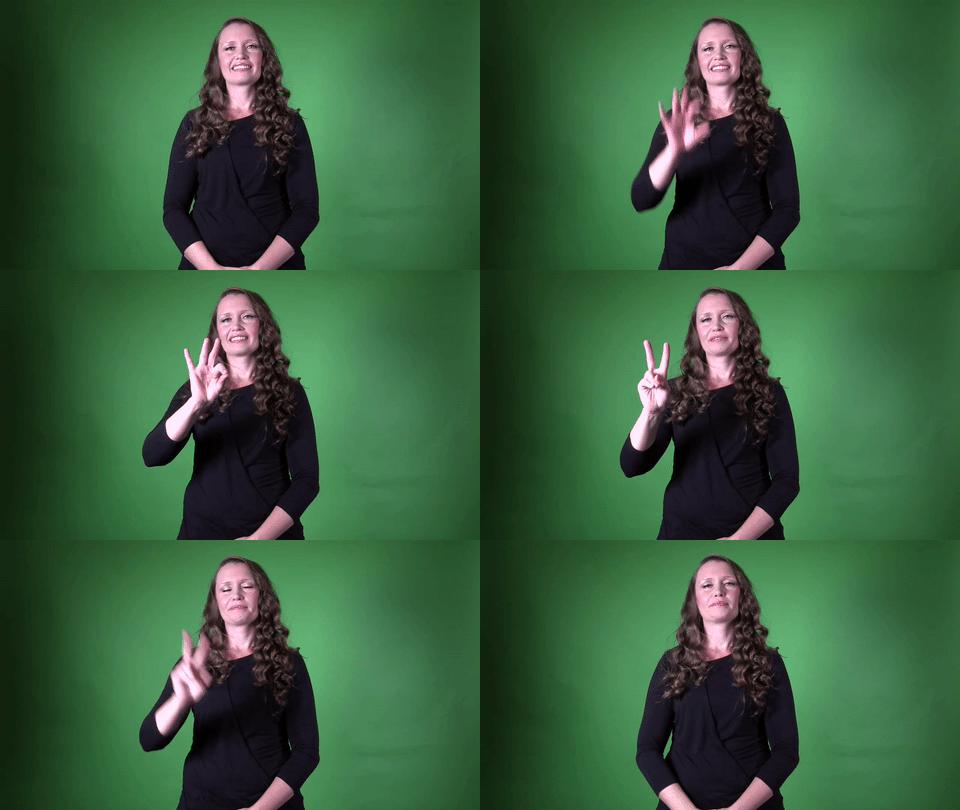
Definition: Refers to the number ninety-two
Sign for THE NUMBER 92 in ASL
Practice Activities:
Practicing the sign for the number 92 in ASL begins with repetition. Start by forming the number 9 with your dominant hand, then transition smoothly to the number 2. Repeat this movement multiple times, focusing on accuracy and fluidity. Try signing the number slowly at first, then gradually speed up while maintaining precision.
Use the sign for the number 92 in ASL in different counting sequences. Count from 90 to 95, ensuring a smooth transition between numbers. Practice counting backward from 95 to 90, emphasizing the shift from 92 to adjacent numbers. Try saying the numbers aloud while signing to reinforce recognition.
Incorporate the sign for the number 92 in ASL into real-world contexts. Imagine you’re discussing someone’s age or referring to a historical event from 1992. Practice signing full sentences like “My grandfather is 92 years old” or “The year 1992 was important to me.” This will help integrate the number into natural conversation.
Work with a partner or in a group to reinforce learning. One person can sign different numbers while the other identifies them. Challenge each other by mixing numbers like 91, 92, and 93 to develop quick recognition. Try quizzes where one person signs a number and the other writes down what they see.
Create a short story incorporating the sign for the number 92 in ASL. For example, tell a story about a grandparent, a collection of 92 coins, or a significant event in 1992. Signing numbers within storytelling helps build fluency and confidence.
Use online resources or number flashcards to drill the sign for the number 92 in ASL. Sign random numbers and check your accuracy against a mirror or a recorded video. Regular practice will ensure the sign becomes second nature in conversations.
Cultural Context:
American Sign Language is deeply rooted in Deaf culture, and every sign carries meaning beyond just its visual representation. The sign for the number 92 in ASL follows the standard numerical pattern used in American Sign Language, making it easy for signers to communicate large numbers efficiently. Understanding how to sign the number 92 in ASL helps connect users to the broader linguistic structure of ASL and promotes fluency.
Numbers play an important role in daily communication, making them essential in both casual and formal conversations. The sign for the number 92 in ASL is used in various contexts, such as discussing ages, addresses, prices, and years. Knowing how to correctly sign the number 92 in ASL ensures clear and effective communication within the Deaf and signing community.
ASL has a unique system for expressing numbers, blending handshapes and movement for clarity. The sign for the number 92 in ASL follows a pattern similar to other two-digit numbers, transitioning smoothly from nine to two. This consistency in number signs allows ASL users to quickly understand numerical information without confusion.
Learning numbers in ASL is an essential part of mastering the language, as they are used in many aspects of life. Whether talking about historical events, sports scores, or personal milestones, the sign for the number 92 in ASL makes these conversations accessible. Fluency in number signs helps signers engage fully in discussions without missing key details.
Deaf culture values precision in sign language, and numbers are no exception. The sign for the number 92 in ASL must be performed correctly to avoid misunderstandings. Since similar handshapes represent different numbers, accuracy in forming the number 92 in ASL is crucial to maintaining clear communication.
In education and professional settings, numbers are frequently used, making numerical literacy in ASL important. The sign for the number 92 in ASL might appear in math classes, business reports, or instructions. ASL users who are comfortable signing numbers can more confidently participate in discussions and presentations.
Technology has made learning ASL numbers easier, with resources available online to help new learners. The sign for the number 92 in ASL is just one of many numbers that learners must master. Videos, tutorials, and dictionary entries make it simple to practice and perfect the number 92 in ASL.
Many number signs are used in social situations, from sharing birthdays to discussing travel plans. The sign for the number 92 in ASL is useful in
Extended Definition:
The sign for the number 92 in ASL follows a two-part movement that combines the signs for 9 and 2. American Sign Language uses a unique numerical system that visually represents each number with distinct hand shapes and movements. The number 92 is signed by forming a “9” with your dominant hand, then transitioning smoothly into a “2.”
Numbers in ASL are essential for communication, especially in situations involving age, money, time, and addresses. The sign for the number 92 in ASL is fluid, with the hand maintaining a consistent orientation. Learning these number signs helps improve fluency and ease in ASL conversations.
ASL numbers can be signed with one or two hands, depending on the context. For the number 92, it is generally signed using only the dominant hand. The movement should be natural, and the transition between 9 and 2 should feel seamless.
The sign for the number 92 in ASL is part of the counting system used in deaf culture and ASL-based conversations. Mastering number signs allows for clear communication in daily interactions. This system is widely used in schools, workplaces, and casual conversations among ASL users.
When practicing the sign for the number 92 in ASL, it is important to maintain proper hand shape and movement. Finger placement and transition speed contribute to accurate signing. Watching ASL videos or working with fluent signers can help develop better signing skills.
Learning the sign for the number 92 in ASL can be beneficial for students, interpreters, and anyone communicating with the deaf and hard-of-hearing community. Numbers are frequently used in storytelling, discussions, and detailed explanations. Accuracy in signing numbers ensures that messages are clearly understood.
ASL is a visual language, and each number sign reflects a specific motion and configuration. The sign for the number 92 in ASL follows a logical pattern that builds off basic number hand shapes. Understanding this system makes it easier to sign other two-digit numbers with confidence.
Consistency is important when signing numbers in ASL. The sign for the number 92 in ASL should be done with the same hand dominance used in all number signs to maintain fluidity. Following standard ASL rules helps avoid confusion and misinterpretation.
Using facial expressions while signing numbers can help convey meaning, especially when expressing large quantities. The sign for the number 92 in ASL is straightforward, but body language and context can add emphasis. Effective communication
Synonyms: ninety-two, number ninety-two, number 92, the number 92, the number ninety-two
Educational resources: Find related learning materials in our course bank!
Want more? Check out some of our popular learning activities on the homepage!
Need to look up a sign? Use our highly rated dictionary: https://aslinteractive.com/best-asl-dictionary/
Follow us on tiktok: https://www.tiktok.com/@aslinteractive. More social media links at the bottom of this page!
Long-tail Keywords: what is the sign for the number 92 in ASL, how do you sign the number 92 in ASL, learn how to sign the number 92 in American Sign Language
Categories: Numbers – Basics, Numbers 91-100, cardinal numbers
tags: Numbers, Numbers 91-100, Math, Language Learning, Educational Content
Parameters
*Handshape*:
The sign for the number 92 in ASL is formed using a combination of two distinct handshapes. First, the number 9 is represented by touching the tip of the thumb to the tip of the index finger, forming an “O” shape, while the remaining fingers stay extended. Then, the number 2 is shown by extending the index and middle fingers while keeping the remaining fingers folded down. The transition between these two numbers is done smoothly in a downward movement, ensuring clarity when signing the number.
*Palm Orientation*:
The palm orientation for the sign for the number 92 in ASL starts with the palm facing outward while forming the number 9. The fingers are slightly curved, with the index finger and thumb creating a circular shape. Then, the hand transitions smoothly into the number 2 with the palm maintaining an outward direction. Throughout the motion, the hand remains in a natural and relaxed position, ensuring clarity when signing the number sequence.
*Location*:
The sign for the number 92 in ASL is produced in the neutral space in front of the signer. It starts with the hand forming the number 9, with the thumb and index finger touching to create a circular shape while the remaining fingers extend. The hand then transitions smoothly into the number 2, with the index and middle fingers extended while the other fingers remain closed. The motion typically moves slightly from one side to another for clarity.
*Movement*:
To sign for the number 92 in ASL, start by forming the number 9 with your dominant hand, extending the index finger and thumb while the other fingers are curled inward. Then, smoothly transition into the number 2 by extending just the index and middle fingers while the thumb and other fingers rest against the palm. The movement should be fluid, with a slight bounce or shift between the two numbers to indicate the transition clearly.
*Non-Manual Signals*:
When using the sign for the number 92 in ASL, maintain a neutral or slightly focused facial expression to indicate clarity. Your eyebrows should remain in a natural position unless emphasizing the number in a question or statement. Eye contact is important to ensure effective communication. A slight head nod may be used when confirming or emphasizing the sign for the number 92 in ASL, particularly in educational or instructional settings.
*Prosody, Dominant/Non-Dominant Hand*:
The sign for the number 92 in ASL is a combination of the numbers 9 and 2. Start with the dominant hand in the shape of the number 9 ( ), with the index finger and thumb touching while the other fingers remain extended. Then, smoothly transition to the number 2 (✌️), extending the index and middle fingers while the thumb, ring, and pinky fingers are folded. The movement should be fluid, slightly bouncing between the two handshapes.
Tips for Beginners:
When learning the sign for the number 92 in ASL, start by mastering the individual numbers 9 and 2. The transition between the numbers should be smooth but distinct. Ensure that your palm orientation remains forward so that the sign is easily recognizable.
A common mistake beginners make with the sign for the number 92 in ASL is twisting the wrist unnecessarily when moving from 9 to 2. Keep your wrist stable and focus on finger positioning to maintain clarity. Quick but controlled movement ensures accuracy and fluency.
Finger flexibility is important when forming the number 9, where the thumb and index finger create an “O” shape while the remaining fingers are extended. When transitioning to 2, make sure only the index and middle fingers remain up, and the rest of the fingers are tucked. This clear distinction prevents confusion with similar numbers like 29.
Consistently practicing the sign for the number 92 in ASL in front of a mirror can help with self-correction. Recording yourself signing numbers in sequence can also improve fluidity and confidence. Watching native signers demonstrate number sequences can reinforce muscle memory.
Make sure your movements remain in a controlled area of space in front of your chest. Exaggerated movements can make the sign look unnatural or unclear. Keeping your hand steady and fingers properly positioned minimizes misunderstandings.
Engaging in number exercises, including signing random two-digit numbers, can build confidence. If you’re struggling, slow down and focus on each number separately before combining them in fluid motion. Accuracy is always more important than speed, and with regular practice, signing numbers will become second nature.
Connections to Other topics:
The sign for the number 92 in ASL is part of a broader pattern of signing numbers that switch between two distinct number signs. This pattern is commonly used for numbers in the 90s and follows similar movements seen in 21-29 and other two-digit numbers. Learning this structure helps signers recognize the consistency in ASL number modifications, which aids in improving fluency when signing numbers above 20. Understanding this format prepares signers to express other numerical concepts such as addresses, sports scores, and years.
Since numbers are essential across different contexts in ASL, the structure of the sign for the number 92 in ASL connects to signs for age, money, and time. When discussing a person who is 92 years old, signers typically include the age sign before transitioning into the number. Similarly, for monetary values like $92, the dollar sign often appears before or after the number depending on the signing preference. Recognizing these patterns helps signers smoothly describe quantities in everyday ASL communication.
The concept behind the sign for the number 92 in ASL can also be linked to classifiers in ASL. Classifiers that include numbers, such as vehicle classifiers or personal pronouns, sometimes incorporate numerals to indicate quantity. For example, when discussing a group of 92 people, a classifier for multiple individuals may follow the number in a structured ASL sentence. This connection between numbers and classifiers enhances signers’ ability to communicate precise amounts efficiently.
By understanding the sign for the number 92 in ASL, learners reinforce their grasp of number transitions and handshape consistency. This knowledge supports signing numbers in related contexts like dates, measurements, and mathematical concepts. Additionally, recognizing how these numbers fit into everyday ASL expressions strengthens fluency and promotes natural communication.
Summary:
The sign for the number 92 in ASL follows a common pattern seen in two-digit numbers. It combines the sign for 9 and the sign for 2 but transitions smoothly between them. This makes it part of the broad category of numbers in ASL that involve movement shifts.
To produce the number 92, first form the number 9 by making an “ok” shape with your dominant hand. The tip of your thumb and index finger connect in a circle while the other fingers extend upward. Then, smoothly transition into the number 2 by separating the index and middle fingers into a “V” shape while the other fingers close into the palm.
The hand moves slightly from one spot to another as it shifts from 9 to 2. This motion helps emphasize the two-digit nature of the number, distinguishing it from single-digit numbers. Maintaining the movement and clarity of handshapes is crucial to avoid confusion with similar number signs.
Numbers in ASL rely heavily on visibility and clarity, making handshape transitions important. The sign for the number 92 in ASL must be fluid and precise to ensure accurate communication. Practicing the smooth shift from 9 to 2 helps signers develop confidence in their number signing.
ASL numbers follow logical patterns, making it easier to recognize them in sequences. Many two-digit numbers use this shifting motion, which is why learning the sign for the number 92 in ASL also helps with understanding other similar numeric signs. Consistency in execution ensures clarity for both beginning and advanced signers.
Culturally, ASL numbers play a significant role in daily life, from indicating prices to recounting events. Numbers appear frequently in financial transactions, sports scores, and addresses, making learning them essential. Clear number production improves overall fluency and strengthens comprehension.
In the linguistic structure of ASL, numbers function as both standalone signs and part of larger expressions. The sign for the number 92 in ASL can be used in countdowns, lists, and expressions of age or quantity. Numbers also integrate seamlessly into narratives to add specificity.
Applying the number 92 within a signed sentence requires knowledge of ASL sentence structures. Numbers typically follow standard word order rules unless used with classifiers or special constructions. Context determines the exact positioning of a number in a sentence.
The sign for the number 92 in ASL reflects ASL’s spatial and patterned linguistic nature. Since ASL is a visual language, numerical transitions involve more than just handshapes—they require precise movement. The dynamic quality of number signs aids in making ASL a fluid and expressive language.
ASL users often rely on fingerspelling and signed numbers in tandem to clarify meanings, especially with unfamiliar terms. Numeric precision becomes crucial in education, business settings, and daily conversations. Engaging with numerical signs enhances overall ASL proficiency and communication skills.
Mastering the sign for the number 92 in ASL demonstrates understanding of numerical sequencing. Recognizing number signs in rapid succession strengthens both receptive and expressive signing skills. Numbers remain a foundational aspect of ASL vocabulary, used in both casual and formal interactions.
Numbers in ASL connect closely to Deaf culture, especially in community organization and storytelling. Historic dates, statistics, and countdowns often appear in ASL narratives. The ability to sign numbers accurately improves engagement with a wide range of cultural and linguistic discussions.
Fluency in ASL numbers contributes to a deeper understanding of ASL structure and linguistic principles. The sign for the number 92 in ASL offers a practical application of number progression within a visually oriented system. Repetition and practice help ensure fluid transitions between handshapes.
Signed numbers differ across languages, reinforcing ASL’s unique structure. While international sign languages may have different numerical signs, many use similar patterns for comprehending two-digit numbers. Understanding these differences emphasizes ASL’s distinctiveness as a visual-spatial language.
Errors in signing numbers can lead to miscommunication, particularly when discussing important numeric details. Ensuring clarity when signing the number 92 in ASL prevents confusion with similar-looking numbers such as 62 or 72. Proper handshape formation and movement direction help distinguish numbers.
Numbers carry symbolic and practical meaning in many contexts. The number 92 might appear in historical references, addresses, or event descriptions. Learning numbers in ASL builds mathematical and cognitive skills, enhancing overall communication proficiency in signed discourse.
Technology has adapted to include numerical signs within digital resources. ASL learners can access videos and animations showcasing the transition between 9 and 2 in signing the number 92. Digital advancements make learning ASL numbers a more interactive and accessible experience.
Educators emphasize numerical fluency within ASL instruction from early learning stages. The ability to sign numbers accurately enables engagement with educational materials and real-world applications. Fluency in signing the number 92 in ASL reflects broader ASL learning progress.
ASL often incorporates directional movements when
Want more? Check out some of our popular learning activities!
ASL Interactive Resources
ASLInteractive YouTube Channel
Follow us on tiktok: @aslinteractive.com
Follow us on Instagram: aslinteractive
Facebook page: aslinteractive
Facebook group: aslinteractive
LInkedIn: ASL Interactive LLC
Twitter: @ASL_interactive
*Some information on this page is AI-generated. AI can make mistakes. Please check the information.


Responses