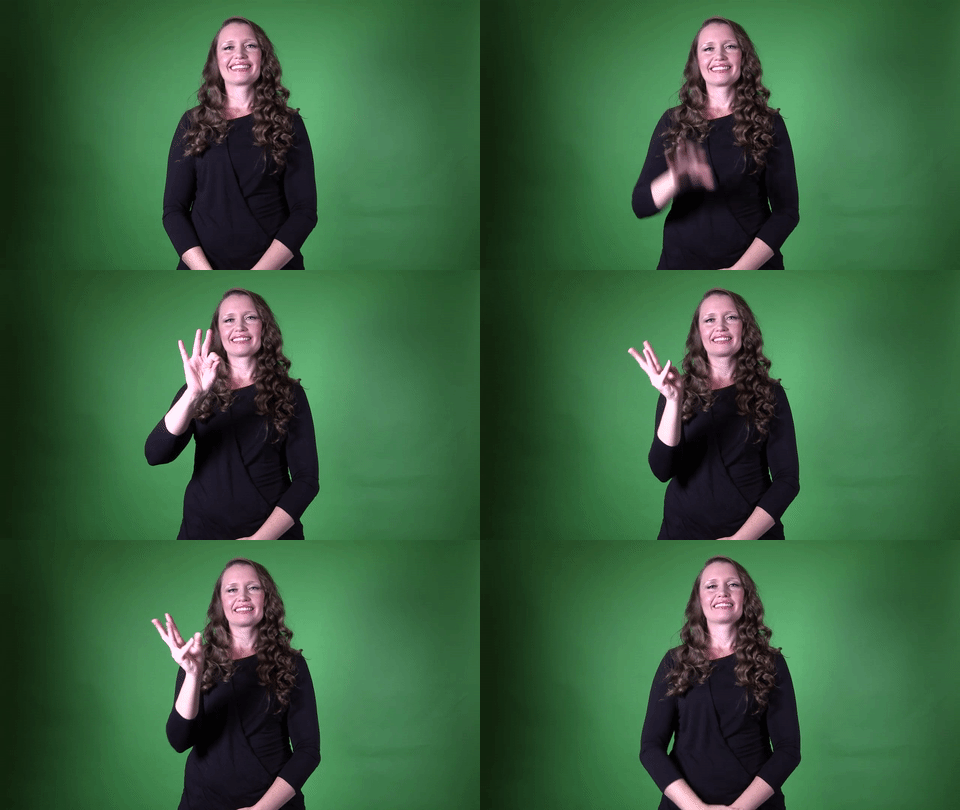
Sign for THE NUMBER 96 in ASL | 🔢 ASL Dictionary

Definition: Refers to the number ninety-six

Sign for THE NUMBER 96 in ASL 

YouTube player

Practice Activities:

To practice the sign for the number 96 in ASL, start by forming each digit separately. Sign 9, then transition smoothly into 6. Repeat this slowly, then increase speed as you become more comfortable. Try signing it while looking in a mirror to check your accuracy. Focus on maintaining a natural hand movement between the numbers.

Use the sign for the number 96 in ASL in different numerical contexts. Count by tens up to 100 and pause at 96 to reinforce recognition. Practice signing it after hearing someone say the number aloud. Write numbers down randomly, point to one, and sign it correctly. Mix up numbers in a practice session to challenge quick recall.

Create real-life scenarios where you’d use the sign for the number 96 in ASL. Think of a sports game where a player might score 96 points or an item that costs $96. Practice signing sentences like “She ran 96 miles last year” or “There are 96 students in the school.” Say the sentence aloud, then sign it in ASL without voicing.

Pair up with a friend for a number challenge. One person fingerspells a number, and the other responds by signing it. Take turns quizzing and correcting each other if needed. Try incorporating numbers with age-related or measurement questions: “How old is she?” or “How many inches is the table?” If 96 is the answer, sign it clearly.

Use storytelling to reinforce the sign for the number 96 in ASL. Create a short story that involves counting, measurements, or distances using this number. Record yourself signing to evaluate fluency and accuracy. Keep practicing daily to build confidence and improve recall when signing numbers naturally in conversation.

Cultural Context:

Knowing the sign for the number 96 in ASL is essential for anyone learning American Sign Language. Numbers are a fundamental part of communication, and understanding how to sign them correctly ensures clear and effective conversations. Whether discussing quantities, math problems, or addresses, signing numbers accurately is important in ASL.

The sign for the number 96 in ASL follows a pattern similar to other two-digit numbers. ASL numbers from 67 to 98 incorporate a unique twisting movement that distinguishes them from single digits. Mastering this movement helps improve fluency when signing numbers in everyday conversations.

Numbers play a significant role in Deaf culture, appearing in phone numbers, addresses, and prices. The sign for the number 96 in ASL may come up when discussing years or important historical events. Using the correct handshape and motion ensures proper communication within the ASL community.

In ASL storytelling and jokes, numbers often add meaning or humor to the narrative. The sign for the number 96 in ASL might be used when telling a personal story or sharing an experience. Numbers help provide context and details, enhancing the depth of ASL communication.

Learning the sign for the number 96 in ASL also supports better comprehension when watching signed conversations. Recognizing signed numbers quickly helps with understanding prices, measurements, and dates. Fluency with numerical signs makes communication smoother in real-world situations.

ASL learners often practice fingerspelling and numbers simultaneously to build confidence. The sign for the number 96 in ASL is great practice for improving dexterity and finger strength. Regular practice with numbered signs helps learners develop accuracy and speed.

Using numbers correctly in ASL is as important as using proper grammar in spoken languages. The sign for the number 96 in ASL contributes to overall fluency and precision in signing. Developing numerical signing skills enhances interaction with native ASL users.

Many ASL users rely on sign language interpreters in educational and professional settings. The sign for the number 96 in ASL may appear in classroom lessons, financial discussions, or medical appointments. Accuracy in signing numbers ensures clear and effective communication in all areas of life.

ASL students often practice signs by watching videos or attending Deaf community events. Seeing the sign for the number 96 in ASL used naturally in conversation reinforces learning. Engaging with native signers improves confidence and mastery of ASL numbers.

Mastering ASL numbers, including the sign for the number 96 in ASL

Extended Definition:

The sign for the number 96 in ASL is a simple yet important number sign in American Sign Language. It follows the standard pattern for signing two-digit numbers in ASL, making it easy to recognize and use. Knowing how to correctly form this sign is essential for counting, math, and everyday communication.

To sign for the number 96 in ASL, you start with the number 9 handshape, then smoothly transition into the number 6 handshape. This movement should be fluid and natural, maintaining palm orientation for clarity. Practicing this transition will help improve your ASL number fluency.

Number signs in ASL are an important part of signing accurately. The sign for the number 96 in ASL is used in various situations, such as discussing ages, prices, dates, and measurements. Understanding number signs helps enhance overall communication skills in ASL.

ASL relies on clear movements and proper handshapes to convey meaning accurately. The handshape for 9 involves the thumb and index finger touching, while the handshape for 6 includes the pinky and thumb making contact. Switching between these handshapes smoothly ensures that the sign for the number 96 in ASL is easily understood.

Fingerspelling is typically used for words and names, but numbers have their own signs in ASL. The sign for the number 96 in ASL is part of this numbering system, which allows signers to communicate numbers quickly and efficiently. Mastering number signs makes signing easier and more natural in conversations.

Numbers in ASL, including the sign for the number 96 in ASL, follow specific guidelines for signing clearly. Proper placement, palm orientation, and movement all contribute to understandable communication. Consistently practicing number signs strengthens ASL skills and builds confidence.

The number 96 might come up in everyday conversations, whether discussing a year, an amount, or a specific count. Being able to quickly sign for the number 96 in ASL ensures smooth and effective communication. Numbers are an essential part of ASL conversations, and fluency improves overall communication ability.

ASL learners and interpreters benefit from regularly practicing number sequences. The sign for the number 96 in ASL fits into a larger system of numerical signs that must be learned and memorized. Regular practice helps in recalling and signing numbers accurately without hesitation.

ASL is a visual language, and number signs must be done clearly for proper understanding. The correct way

Synonyms: ninety-six, number ninety-six, number 96, the number 96, the number ninety-six

Educational resources: Find related learning materials in our course bank!

Want more? Check out some of our popular learning activities on the homepage!

Need to look up a sign? Use our highly rated dictionary: https://aslinteractive.com/best-asl-dictionary/

Follow us on tiktok: https://www.tiktok.com/@aslinteractive. More social media links at the bottom of this page!

Long-tail Keywords: what is the sign for the number 96 in ASL, how do you sign the number 96 in American Sign Language, ASL sign for the number 96

Categories: Numbers – Basics, Numbers 91-100, cardinal numbers

tags: Numbers, Numbers 91-100, Math, Language Learning, Educational Content, 96 97 98 rocking numbers, rocking numbers

Parameters

*Handshape*:

The sign for the number 96 in ASL uses a transitioning handshape. Begin with the number 9️⃣ handshape, where the thumb and index finger form a small circle while the other fingers remain extended. Then, smoothly transition to the number 6️⃣ handshape by touching the tip of the pinky finger to the thumb while keeping the middle and ring fingers extended. This fluid motion maintains clarity, ensuring the sign for the number 96 in ASL is easily distinguishable.

*Palm Orientation*:

For the sign for the number 96 in ASL, the palm faces outward with the fingers extended. The number 9 is formed first, with the index finger and thumb touching while the other fingers stay extended. Then, the number 6 is made by touching the pinky and thumb together while keeping the middle three fingers raised. The movement transitions smoothly from 9 to 6 while maintaining palm orientation facing forward.

*Location*:

The sign for the number 96 in ASL is made in the neutral signing space in front of the chest. The dominant hand forms a nine with the palm facing outward, then smoothly transitions into a six by shifting the thumb and pinky into contact. This fluid motion maintains clarity in differentiation from similar numbers while keeping the hand in a comfortable, natural position.

*Movement*:

To produce the sign for the number 96 in ASL, start with the dominant hand in a “9” handshape, with the thumb and index finger touching to form a circle while the other fingers remain extended. Then, smoothly transition to a “6” handshape by shifting the contact to the pinky and thumb while the other fingers stay extended. This movement should be fluid and natural, ensuring a clear distinction between the two numbers.

*Non-Manual Signals*:

When signing the sign for the number 96 in ASL, maintain a neutral or slightly focused facial expression to emphasize clarity. Eyebrows remain relaxed, and eye contact should be steady to ensure effective communication. If emphasizing or clarifying, slightly raise the eyebrows and widen the eyes for engagement. Subtle head nods can provide confirmation, but excessive movement may distract from the accuracy of the sign for the number 96 in ASL.

*Prosody, Dominant/Non-Dominant Hand*:

For the sign for the number 96 in ASL, use the dominant hand in a neutral space. Start with the number 9, where the index finger and thumb form a circle while the other fingers extend. Then smoothly transition to the number 6 by touching the pinky to the thumb while the remaining fingers stay extended. The movement should be fluid to maintain clarity. Keep the palm facing outward for both numbers.

Tips for Beginners:

When learning the sign for the number 96 in ASL, focus on finger positioning and wrist movement. The number 96 is formed by signing 9 and then 6 in a fluid motion. Keep your dominant hand steady and practice transitioning smoothly between the two numbers to maintain clarity.

One common mistake beginners make when signing the number 96 in ASL is dropping their fingers too quickly or letting their hand drift. Ensure that both the 9 and the 6 are clearly distinguishable. Keep the palm facing outward and the movement controlled to avoid confusion with similar numbers.

Another useful tip for mastering the sign for the number 96 in ASL is to practice with a mirror. Watching your own hand can help correct any awkward movements. Consistency in forming the numbers will make it easier for others to recognize them quickly.

Hand fatigue can sometimes make number signing feel awkward at first. To avoid stiffness, loosen your fingers and relax your hand before practicing the sign for the number 96 in ASL. If your fingers feel tense, take a short break and stretch them out before continuing.

Context is also important when signing numbers. When using the sign for the number 96 in ASL within a sentence, keep natural pacing and avoid rushing. If signing in a sequence, make sure each number is distinct to prevent misunderstandings.

Practicing with a partner can be beneficial when learning numbers. Ask someone fluent in ASL to watch your sign for the number 96 in ASL and provide feedback. They can help correct hand positioning, speed, and clarity to ensure accuracy in communication.

By consistently practicing these techniques, you will become more confident in signing numbers. Incorporate the sign for the number 96 in ASL into everyday practice sessions to reinforce muscle memory and fluency.

Connections to Other topics:

The sign for the number 96 in ASL follows the standard number formation pattern used in American Sign Language for numbers in the 90s. Understanding this sign helps reinforce how number patterns progress in ASL, particularly in the 90s series, which follows a movement pattern similar to other two-digit numbers. Like other numbers in this range, it maintains a palm orientation that shifts slightly between digits, connecting it to the general structure of two-digit numbers in ASL.

Numbers in ASL often appear in larger contexts, such as addresses, prices, or sports scores. The sign for the number 96 in ASL could show up in financial transactions, historical dates, or distances. Being comfortable with numbers allows signers to engage in conversations about various topics, including math, science, and age-related discussions.

This number relates to similar numerical signs such as 69 or 99, which use the same manual structure with reversed or slightly modified movements. Practicing these numbers together can reinforce hand dexterity and accuracy in finger placements. Since ASL relies on movement and hand orientation, making small shifts in number signs is essential to distinguish between them correctly.

Ordinal numbers also build on cardinal signs like the sign for the number 96 in ASL. In contexts such as rankings or sports statistics, a signer might modify the number with a twisting movement or additional classifiers to indicate placement or sequence. Mastering numerical sequences also enhances fluency in using dates and years in historical discussions, personal milestones, and storytelling.

Summary:

The sign for the number 96 in ASL follows the pattern of signing two-digit numbers by transitioning smoothly from one numeral to the next. It begins with the hand forming the number 9, where the thumb and index finger touch to create a circular shape while the remaining fingers extend upward. Then, the hand transitions to the number 6 by touching the pinky and thumb while the index, middle, and ring fingers remain extended.

This transition should be fluid, ensuring clarity in communication. The palm orientation typically remains outward, though some signers may slightly adjust positioning for comfort or visibility. Proper execution of the sign for the number 96 in ASL enhances numerical fluency, especially when discussing large quantities, statistics, or years.

Using the sign for the number 96 in ASL accurately helps maintain the integrity of numerical discussions. This number may be utilized in various contexts, such as discussing historical events, measurements, or monetary values. Precision in handshape and movement ensures that there is no confusion with other similar numerical signs.

Numerical fluency in ASL is crucial for effective communication, particularly in academic, financial, or sports-related discussions. The sign for the number 96 in ASL is part of the larger numerical system, which follows consistent morphological rules in the language. Understanding these patterns helps signers apply the same structured approach when learning other numbers.

The number system in ASL follows clear handshape transformations, reducing ambiguity and allowing signers to convey numerical ideas quickly. Learning the sign for the number 96 in ASL reinforces the pattern of transitioning between digits, a skill that is essential for counting beyond double digits. This consistency allows new learners to grasp larger numerical sequences effortlessly.

Historical and cultural contexts also influence ASL number signs. The sign for the number 96 in ASL might be used to reference years, historical events, or birth dates. Having a strong grasp of these number signs allows Deaf individuals to engage in conversations about history, personal milestones, and societal moments.

The number 96 can carry significance in different contexts, including sports statistics, addresses, and even pop culture references. Knowing how to sign the number correctly ensures seamless communication in these areas. The sign for the number 96 in ASL strengthens a signer’s ability to engage in detailed conversations without needing to revert to fingerspelling.

In ASL grammar, numbers often function as quantifiers, time markers, or set identifiers. The sign for the number 96 in ASL can function in any of these roles, depending on the signing context. Keeping numerical signs accurate allows fluent discussions in business, mathematics, and other technical subjects.

When signing numbers in ASL, hand positioning and facial expressions may adjust to match the meaning. The sign for the number 96 in ASL is usually neutral but could be emphasized if part of an important phrase, such as an age or financial figure. Advanced signers often modify their numerical expressions for emphasis or contextual clarity.

ASL number signs are linguistically unique when compared to numerical expressions in other signed languages. The handshape transition in the sign for the number 96 in ASL follows ASL-specific rules, distinct from how other sign languages may present the same number. Learning ASL numbering structures helps signers appreciate the syntax and formation of the language.

Number fluency in ASL is often a key marker of overall language proficiency. The sign for the number 96 in ASL is part of the broader category of double-digit numbers that require smooth transitions. Practicing signed numbers regularly improves reception and production skills in numerical communication.

Number incorporation in ASL sometimes allows numerals to blend with classifiers or specific movements. While the sign for the number 96 in ASL primarily follows the standard number rule, understanding number incorporation can help signers engage in more complex descriptions. ASL uses numbers dynamically, making numerical communication as expressive as any other aspect of the language.

The neurological processing of numerical signs in ASL is an area of study in cognitive linguistics. The sign for the number 96 in ASL, like other numbers, activates specialized regions of the brain, particularly those associated with spatial cognition and language. Research suggests that ASL users process numerical signs differently than spoken language users process spoken numbers.

In everyday life, numbers play an essential role, from price negotiations to addresses and event dates. The sign for the number 96 in ASL ensures accurate communication in all these scenarios, preventing misunderstandings. Mastery of numerical signing improves overall ASL fluency, particularly in discussions involving math or finance.

Teaching the sign for the number 96 in ASL to new learners requires emphasizing a smooth numeral transition. Instructors often guide students through slow, exaggerated hand movements before promoting speed and fluency. Strengthening muscle memory ensures natural and effortless representation of numerals in conversations.

Sign language interpreters must be particularly adept at numerical precision. When interpreting, the sign for the number 96

Want more? Check out some of our popular learning activities!

ASL Interactive Resources

ASLInteractive YouTube Channel

Follow us on tiktok: @aslinteractive.com

Follow us on Instagram: aslinteractive

Facebook page: aslinteractive

Facebook group: aslinteractive

LInkedIn: ASL Interactive LLC

Twitter: @ASL_interactive

*Some information on this page is AI-generated. AI can make mistakes. Please check the information.

Sign for 96 in ASL, Sign for NINETY-SIX in ASL, Sign for NINETY-SIX in ASL, Sign for NUMBER NINETY-SIX in ASL, Sign for THE NUMBER NINETY-SIX in ASL, Sign for THE NUMBER 96 in ASL 

Responses