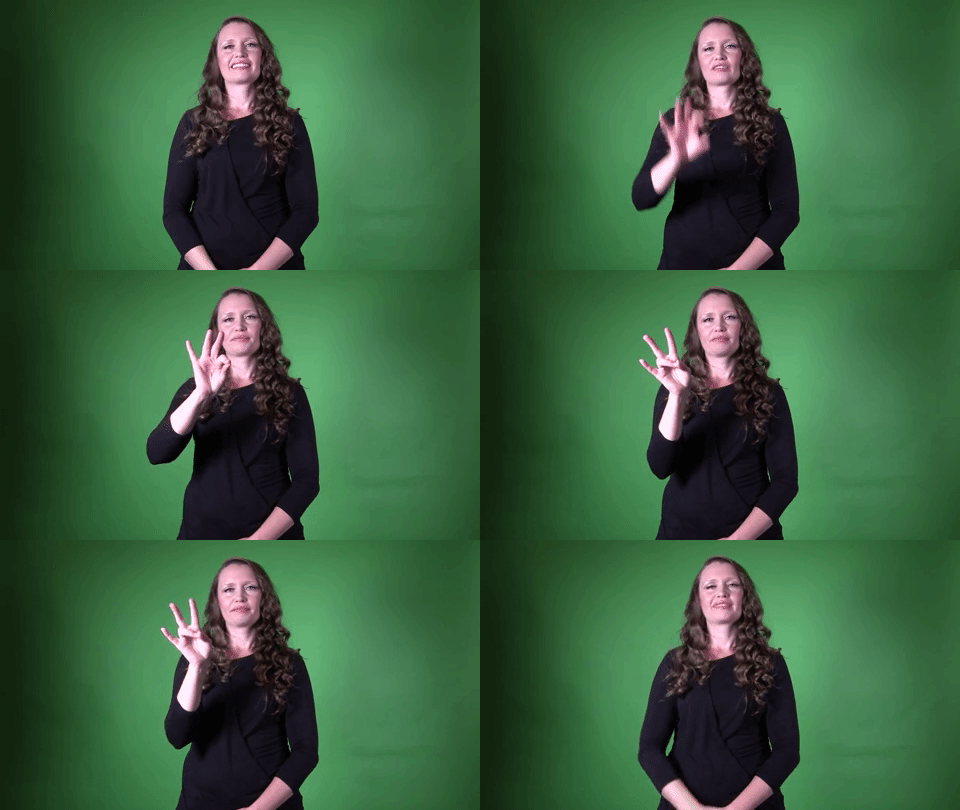
Definition: Refers to the number ninety-seven
Sign for THE NUMBER 97 in ASL
Practice Activities:
To practice the sign for the number 97 in ASL, start by signing the numbers 90 through 99 in sequence. This helps reinforce the handshape for 9 and the transition to the digit 7. Focus on the slight wrist twist that occurs when forming the 97 sign, ensuring smooth movement. Repeat several times until it feels natural.
Use flashcards with different numbers and practice recognizing and signing them quickly. Mix the sign for the number 97 in ASL with other numbers like 95, 96, and 98 to challenge accuracy. Ask a partner to sign random numbers while you identify and sign them back. This enhances speed and recognition.
Try using the sign for the number 97 in ASL in sentences. Sign phrases like “My grandmother is 97 years old” or “There are 97 students in total.” Create a story that includes different numbers, ensuring you incorporate 97 at least twice. Recording yourself signing and reviewing your accuracy can be a helpful tool for improvement.
Engage in real-life number practice by signing prices, addresses, or quantities that include 97. Look for examples in daily life where this number appears and sign it correctly on the spot. Setting a timer and seeing how many times you can sign the number in one minute builds muscle memory.
For partner practice, play a number-guessing game. One person signs a two-digit number, and the other person identifies it. Incorporate the sign for the number 97 in ASL frequently to reinforce recognition. Adding expressive facial cues when using the sign in conversation improves fluency and confidence.
Cultural Context:
The sign for the number 97 in ASL is an essential part of learning American Sign Language numbers. Numbers in ASL are commonly used in everyday conversation, from discussing age to sharing addresses or phone numbers. The number 97 follows standard number patterns in ASL, making it easy to remember once you understand the system.
Numbers play a crucial role in ASL communication, and signing them accurately ensures clarity. The sign for the number 97 in ASL incorporates the fluid motion of ASL number signs, helping signers convey numerical information efficiently. Understanding numbers in ASL enhances fluency and improves overall communication skills.
In Deaf culture, numbers are often used for storytelling, sports scores, and time-related discussions. The sign for the number 97 in ASL might come up when discussing historical events, prices, or years. Knowing how to sign numbers correctly allows signers to participate fully in conversations.
Many ASL learners struggle with higher numbers, but consistent practice with numbers like 97 helps with fluency. The handshape and movement patterns in the sign for the number 97 in ASL align with the logical structure of ASL numbers. Mastering this number makes it easier to learn other numerical signs.
ASL numbers are also frequently used in education, business, and social settings. When discussing math, money, or measurements, the sign for the number 97 in ASL might be necessary. Knowing how to sign this number correctly ensures effective communication in various scenarios.
Technology and social media have made ASL more accessible, encouraging more people to learn numbers and basic signs. Seeing the sign for the number 97 in ASL used in videos or online resources can help reinforce learning. The increasing visibility of ASL has made numerical fluency more important than ever.
ASL number signs reflect the importance of visual language in Deaf culture. The sign for the number 97 in ASL is just one example of how handshapes and movement convey meaning. Learning ASL numbers provides valuable insights into a vibrant linguistic community.
Practicing ASL numbers can help signers communicate smoothly and naturally. The sign for the number 97 in ASL, like other numbers, contributes to greater confidence in signing. As proficiency grows, so does the ability to engage in meaningful conversations.
Extended Definition:
The sign for the number 97 in ASL follows the standard pattern for signing two-digit numbers in American Sign Language. It combines the signs for the digits 9 and 7 in a fluid motion. This sign is commonly used when expressing numerical concepts in ASL conversations.
To sign the number 97 in ASL, start with the handshape for 9, where the thumb and index finger form an open circle while the other fingers remain extended. Then smoothly transition to the handshape for 7, where the thumb and ring finger make contact. The movement between the two digits should be clear and precise to ensure proper understanding.
Numbers play an essential role in ASL communication, whether discussing age, dates, or quantities. The sign for the number 97 in ASL might be used in a variety of situations, such as sharing a street address, listing a score, or referencing a historical date. Mastering number signs will expand your ability to communicate effectively in ASL.
When fingerspelling large numbers, ASL users often rely on fluid movements to maintain clarity. The sign for the number 97 in ASL is part of this larger system, which emphasizes smooth transitions while keeping each digit distinct. Practicing regularly will help improve speed and accuracy.
Learning ASL numbers is especially useful in educational and professional settings. Whether interpreting mathematics, telling a phone number, or discussing financial amounts, knowing how to sign the number 97 in ASL ensures effective communication. It is a fundamental skill for both new learners and fluent signers.
Using correct facial expressions and body language also helps convey numerical concepts clearly. While signing the number 97 in ASL, keeping a neutral facial expression is typical, unless emphasizing or questioning a number. Non-manual signals can add context to signed messages, making them more engaging.
For those new to ASL, it is helpful to learn number signs in sequence. Practicing from 90 through 99 will make recognizing patterns in ASL numbers easier. The sign for the number 97 in ASL follows the same rule as other two-digit numbers, using a steady hand transition to enhance clarity.
Online resources, books, and instructional videos provide additional learning opportunities for ASL numbers. Watching skilled signers demonstrate the sign for the number 97 in ASL will reinforce muscle memory and accuracy. Repetition and real-life practice will build confidence in using ASL numbers fluently.
American Sign Language continues to evolve, but
Synonyms: ninety-seven, number ninety-seven, number 97, the number 97, the number ninety-seven
Educational resources: Find related learning materials in our course bank!
Want more? Check out some of our popular learning activities on the homepage!
Need to look up a sign? Use our highly rated dictionary: https://aslinteractive.com/best-asl-dictionary/
Follow us on tiktok: https://www.tiktok.com/@aslinteractive. More social media links at the bottom of this page!
Long-tail Keywords: What is the sign for the number 97 in ASL, How do you sign the number 97 in ASL, ASL sign for the number 97
Categories: Numbers – Basics, Numbers 91-100, cardinal numbers
tags: Numbers, Numbers 91-100, Math, Language Learning, Educational Content, 96 97 98 rocking numbers, rocking numbers
Parameters
*Handshape*:
The sign for the number 97 in ASL uses a two-part movement. First, the number 9 is formed with the dominant hand, creating an “F” handshape with the index finger and thumb touching in a circular shape while the other fingers remain extended. Then, the hand smoothly transitions into the number 7 by extending the index and middle fingers while folding the ring finger against the thumb.
When signing the number 97 in ASL, the hand maintains a steady position in front of the body with the palm facing outward. The motion should be fluid, ensuring a clear transition between the two digits. This technique follows the general rule for signing two-digit numbers in ASL, where each digit is represented sequentially to maintain accuracy and clarity. ✋
*Palm Orientation*:
The palm orientation for the sign for the number 97 in ASL starts with the palm facing outward. Begin by forming the number 9 with the dominant hand, where the index finger and thumb create a circular shape while the remaining fingers extend upward. Transition smoothly into the number 7 by tucking the ring finger down while keeping the index and middle fingers extended. Throughout the motion, the palm remains forward to maintain clarity.
*Location*:
The sign for the number 97 in ASL is formed in the neutral space in front of the signer’s torso. The dominant hand is extended with the palm facing outward. The number 9 is shown first, with the thumb and index finger forming a circle while the remaining three fingers stay extended. Then, the number 7 is formed by touching the thumb to the ring finger while the other fingers remain extended. The motion transitions smoothly between the two numbers.
*Movement*:
To sign for the number 97 in ASL, start with the palm facing outward. Form the number 9 by extending the thumb and index finger in a circular shape, while the remaining fingers stay curled. Then, smoothly transition into the number 7 by touching the tip of the ring finger to the tip of the thumb while the other fingers extend. Keep the motion fluid to maintain clarity when signing for the number 97 in ASL.
*Non-Manual Signals*:
When signing the sign for the number 97 in ASL, your facial expression remains neutral or slightly focused, depending on the context. If emphasizing or confirming the number, slightly raise your eyebrows while maintaining eye contact. If correcting a mistake, a slight head tilt or shake may accompany the sign for the number 97 in ASL to clarify intent. Keep a relaxed posture to avoid adding unintended meaning.
*Prosody, Dominant/Non-Dominant Hand*:
The sign for the number 97 in ASL uses the dominant hand in a palm-forward orientation. Start with the number 9 handshape, with the thumb and index finger touching while the remaining fingers are extended. Then smoothly transition into the number 7 handshape, where the thumb and ring finger make contact while the other fingers are extended. ✋ This motion should be fluid, maintaining a steady hand position without abrupt movements.
Tips for Beginners:
When learning the sign for the number 97 in ASL, start by ensuring that your dominant hand is in the correct number formation. Begin with the number 9 handshape, where the thumb and index finger touch to form a circle while the remaining fingers stay extended. Then, smoothly transition to the number 7 handshape by shifting the thumb to touch the ring finger while the other fingers remain extended.
A common mistake is rushing the movement, which can make the numbers unclear. Instead, practice fluidly transitioning from 9 to 7 with control so that each digit is clearly recognizable. It helps to practice in front of a mirror or record yourself to check for accuracy.
Another helpful tip is to maintain consistent palm orientation. For the sign for the number 97 in ASL, the palm should face forward throughout the movement. Avoid twisting or turning your hand too much, as this can cause confusion.
Finger dexterity is key when signing larger numbers. Stretch and warm up your fingers before practicing to make movements smoother. If your transition from 9 to 7 feels stiff, try loosening up your hands by shaking them out or flexing your fingers.
Clarity is essential when signing numbers, especially when communicating in fast-paced conversations. Overemphasizing the movement slightly while learning can help ensure it is easily understood. Ask a fluent signer or teacher for feedback to refine your accuracy.
Consistent practice will help you master the sign for the number 97 in ASL. Try incorporating it into daily number sequences to strengthen muscle memory. The more comfortable you become with fingerspelling and number transitions, the more fluent and natural your signing will be.
Connections to Other topics:
The sign for the number 97 in ASL follows the standard structure for signing numbers in the 90s series. It connects to other number signs by using a movement pattern that is consistent with ASL’s numerical system. Learning this sign helps reinforce the understanding of how numbers transition smoothly from one form to another, particularly with the flicking or rocking motion that occurs in the 90s.
As part of number incorporation, the sign for the number 97 in ASL connects to concepts like age, money, and measurements. When discussing years, for example, signing 97 in the context of 1997 follows the standard format for years in ASL. Additionally, this number can appear in listing sequences, measurements in inches or dollars, or even addresses, reinforcing its importance in everyday conversations.
Advanced signers can relate the sign for the number 97 in ASL to classifiers when describing a large quantity or a set number of objects. For instance, listing 97 items may involve using a classifier indicating arrangement alongside the number. Additionally, when discussing temperatures or percentages, the sign integrates naturally with descriptive numeral incorporation.
This number sign is also relevant in sports, particularly when identifying player jersey numbers, scores in a game, or historical statistics. Similar patterns appear when signing other two-digit numbers, making learning them as a group more efficient. The repetition and consistency of these motions in numerical sequences help language learners build fluency in number usage.
Understanding the sign for the number 97 in ASL strengthens a signer’s ability to count and describe sequences quickly. Whether discussing past events, numerical data, or mathematical equations, this number plays a vital role in ASL communication. Mastering this numerical pattern connects to broader ASL skills such as signing dates, durations, and large numerical values with confidence.
Summary:
The sign for the number 97 in ASL is a combination of two distinct handshapes that transition seamlessly in one movement. The sign begins with the number 9 handshape, where the thumb and index finger touch to form a circle while the remaining fingers extend. It then shifts into the number 7 handshape, with the thumb and ring finger coming together while the other fingers extend.
In ASL, numerical concepts are expressed with precision, and the sign for the number 97 in ASL follows a structured number system. This system ensures clarity when relaying numerical data, whether in everyday conversations or formal contexts. Expressing numbers fluently is an important skill for ASL users, helping with exchanging addresses, prices, and measurements.
When signing the number 97, the movement should be smooth and controlled, with a visible transition between the two digits. The palm orientation is often outward, facing the viewer, although minor variations can occur depending on context. Ensuring a clean and distinct shift between the 9 and 7 handshapes is essential for clear communication.
The sign for the number 97 in ASL belongs to the broader category of cardinal numbers, which represent quantities. It contrasts with ordinal numbers, which indicate position or order, such as first, second, or third. Knowing how to differentiate between the two is fundamental in ASL grammar and structure.
Numerical fluency in ASL enhances interactions in fields such as education, business, and scientific communication. The sign for the number 97 in ASL may appear in scenarios like discussing test scores, prices, or historical years. Properly articulating numbers ensures accurate information exchange and reduces the risk of confusion.
ASL has specific rules for incorporating numbers into broader sentences and signed discourse. When signing longer numbers like the number 97, the handshape transition must be clear but not exaggerated. Fluent signers develop a natural rhythm when signing multi-digit numbers, making number communication efficient.
Culturally, Deaf individuals rely heavily on ASL numbers in daily life, making numerical articulation an essential skill. The sign for the number 97 in ASL might be used when discussing special dates, statistical data, or even sports scores. Understanding how numbers are signed in ASL provides insights into the language’s logical structure.
Numbers in ASL have unique linguistic features, including palm orientation, assimilation, and movement. When transitioning between the digits in the sign for the number 97 in ASL, assimilation occurs as the hand prepares for the next shape. This process ensures fluidity in signed conversations.
The ASL numbering system follows a logical pattern, and numbers in the 90s maintain a consistent handshape transition. Learning the sign for the number 97 in ASL also reinforces broader number-related signs, including those for addition, subtraction, and quantity expressions. Numerical literacy in ASL supports mathematical discussions and everyday calculations.
Applied linguistics in ASL examines how numerical signs function within signed discourse and educational settings. Fluency with numbers like 97 allows Deaf individuals to navigate systems that rely on numerical identifiers, such as phone numbers and addresses. Efficient usage of numerical signs improves accessibility in various communication settings.
The history of ASL numbers reveals influences from early sign-language communities and adaptations over time. The sign for the number 97 in ASL reflects the structured system created to accommodate larger numerals efficiently. The clear transition between handshapes highlights ASL’s spatial efficiency in conveying information.
Linguists studying ASL recognize the importance of numerical structure in language acquisition. Mastering numbers like 97 enhances a signer’s ability to engage with financial transactions, mathematical problem-solving, and data sharing. Fluent numerical communication is key in professional and personal interactions.
The sign for the number 97 in ASL can also be connected to fingerspelling principles, as some numbers incorporate elements of common letter handshapes. Teaching ASL numbers effectively involves ensuring learners understand the shifts between formations while maintaining clarity. Practicing numerical transitions repeatedly helps improve fluency.
Context plays a significant role in how numbers are understood in ASL. In discussing ages or measurements, the sign for the number 97 in ASL might be altered slightly within signing space. Adjusting placement and pacing ensures the number is perceived correctly by the audience.
Some ASL users incorporate facial expressions when signing numbers for emphasis or clarification. Signers might use a slight nod or a raised eyebrow when presenting the sign for the number 97 in ASL to confirm accuracy. Non-manual markers assist in reinforcing numerical signs and their intended meanings.
When incorporated into mathematical discussions, ASL numbers follow a systematic pattern that mirrors spoken-language calculations. The sign for the number 97 in ASL may appear in classroom settings, making numerical competency essential for Deaf students. Using numbers correctly in ASL ensures clear problem-solving and instructional comprehension.
ASL number signs facilitate interactions in business transactions, where precise numerical communication is necessary. The sign for the number 97 in ASL could be used when agreeing
Want more? Check out some of our popular learning activities!
ASL Interactive Resources
ASLInteractive YouTube Channel
Follow us on tiktok: @aslinteractive.com
Follow us on Instagram: aslinteractive
Facebook page: aslinteractive
Facebook group: aslinteractive
LInkedIn: ASL Interactive LLC
Twitter: @ASL_interactive
*Some information on this page is AI-generated. AI can make mistakes. Please check the information.


Responses