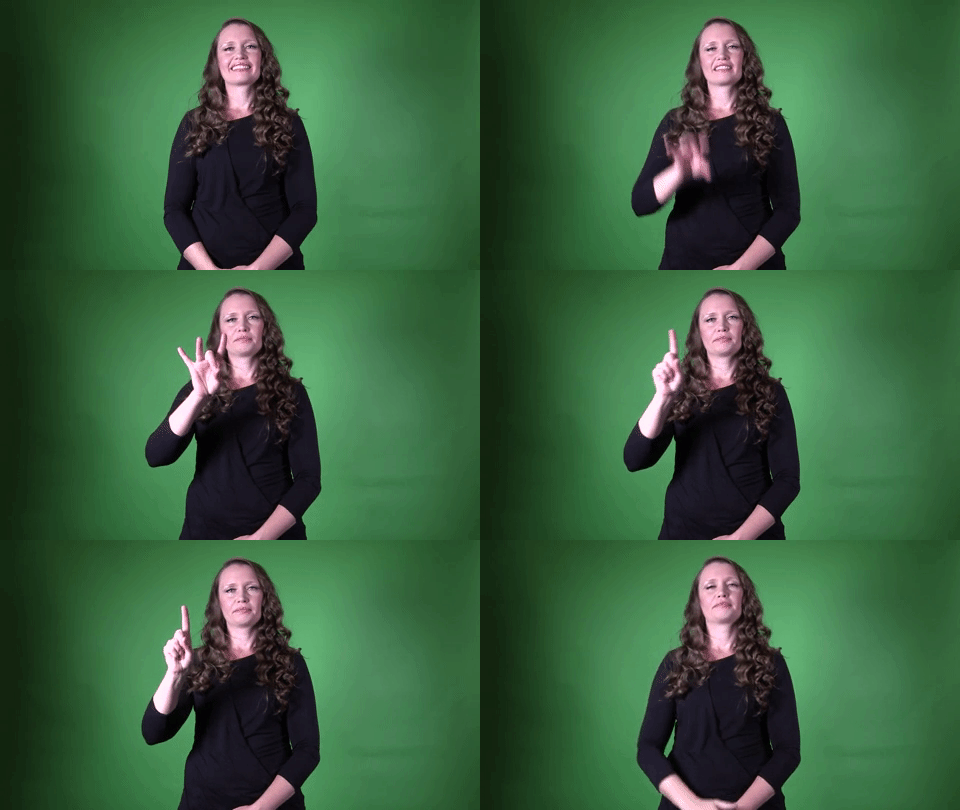
Definition: Refers to the number eighty-one
Sign for THE NUMBER EIGHTY-ONE in ASL

Practice Activities:
Practicing the sign for the number eighty-one in ASL can be done through repetition and number sequences. Start by signing the number slowly while watching your hand shape and movement in a mirror. Then, speed up gradually while maintaining accuracy. Try alternating between signing eighty, then eighty-one, and then other numbers in the eighties to build fluency.
Use the sign for the number eighty-one in ASL in real-life contexts by practicing with a partner. One person can sign a number, and the other can sign the next number in sequence. Try saying a price like eighty-one dollars and then signing the number. Another helpful activity is counting out loud while signing each number in a sequence from seventy-five to eighty-five.
Create a short math problem using the sign for the number eighty-one in ASL. For example, sign forty plus forty-one and then complete the answer. You can also practice guessing games where one person signs a number between eighty and ninety, and the other has to identify it. A fun challenge is to time yourself to sign all numbers from eighty to ninety as quickly and clearly as possible.
Include the sign for the number eighty-one in ASL in storytelling or daily conversations. For example, tell a story about finding eighty-one dollars or seeing eighty-one birds in a park. Use the number in discussions about sports jerseys, school grades, or house numbers. The more you integrate the sign naturally into your communication, the more confident you’ll become in recognizing and using it fluently.
Cultural Context:
American Sign Language has a unique way of expressing numbers, including the number eighty-one. In ASL, signing numbers requires specific handshapes and movements that align with ASL grammar and structure. Learning the sign for the number eighty-one in ASL helps improve number comprehension and fluency in everyday conversations.
Numbers play a crucial role in ASL communication, from discussing prices to sharing addresses or ages. The sign for the number eighty-one in ASL follows the general pattern for numbers in the 80s, combining elements for eight and one. Mastering this sign ensures clarity when relaying numerical information in different contexts.
The Deaf community frequently uses the sign for the number eighty-one in ASL in various situations. Whether discussing statistics, sports scores, or time-related matters, numbers are an essential part of ASL discourse. Understanding numerical signs enhances communication and ensures precision in signed conversations.
When learning the sign for the number eighty-one in ASL, it’s essential to practice handshape consistency. Accurate finger positioning ensures that your sign is clear and easily understood by native signers. Regular practice helps build confidence in using numbers fluently within ASL conversations.
The visual nature of ASL makes numbers easy to recognize when expressed correctly. The sign for the number eighty-one in ASL follows a logical numerical structure, making it easier for learners to grasp. Recognizing patterns in ASL numbers allows signers to form higher numbers with ease.
Deaf culture values clear and accurate signing, especially when it comes to numbers. The sign for the number eighty-one in ASL reflects ASL’s efficient numerical system, which eliminates confusion in everyday exchanges. Consistent signing across the Deaf community ensures smooth communication in various settings.
Teaching children the sign for the number eighty-one in ASL can boost their early math skills. ASL numbers provide a visual and kinesthetic learning experience that strengthens number recognition. Learning numbers in ASL supports bilingual development for both Deaf and hearing children.
When signing numbers, speed and fluency develop over time with continuous use. The sign for the number eighty-one in ASL becomes more natural as signers become comfortable with number patterns. Practicing with others helps reinforce learning and improves accuracy in ASL numerical expressions.
Technology and media have made it easier to learn and share signs like the sign for the number eighty-one in ASL. Online resources, ASL dictionaries, and video tutorials provide accessible ways to practice numbers in ASL. Engaging with the
Extended Definition:
the sign for the number eighty-one in ASL is a combination of numerical handshapes that represent the digits 8 and 1. In American Sign Language, numbers are formed using specific hand configurations that are easily recognizable. This particular number follows the standard pattern for signing double-digit numbers in ASL.
to sign the number eighty-one in ASL, start with the handshape for 8, then transition smoothly into the handshape for 1. The movement should be fluid to ensure clarity and natural flow. Proper positioning of the hand and fingers is essential for accurate communication.
ASL numbers are an essential part of conversation, especially when sharing addresses, phone numbers, or discussing quantities. The sign for the number eighty-one in ASL follows the structure used for other two-digit numbers. Familiarity with numerical signs improves overall fluency and comprehension in ASL.
many learners find that practicing in front of a mirror or with a partner helps improve their confidence. It’s important to pay attention to finger placement when signing the number eighty-one in ASL to avoid confusion with similar-looking numbers. Consistency in movement and shape ensures clear communication in both casual and formal settings.
the number system in ASL reflects visual linguistics and precise handshapes. Each number has a unique configuration that aligns with ASL grammar and structure. Learning the sign for the number eighty-one in ASL enhances numerical literacy and communication skills in the Deaf community.
numbers in ASL are widely used in everyday interactions, from telling time to discussing prices. The sign for the number eighty-one in ASL is often seen in contexts such as sports scores, monetary values, and counting exercises. Mastering ASL numbers opens up more opportunities to engage in meaningful conversations.
ASL numbers are integral to storytelling, education, and daily communication. When signing the number eighty-one in ASL, maintaining proper hand orientation and movement is key. Precision ensures clarity, especially when signing rapidly in conversations.
learning ASL numbers helps build a strong foundation for understanding the language. The sign for the number eighty-one in ASL is a fundamental part of numerical fluency. Practicing regularly will enhance confidence and accuracy over time.
numerical signs in ASL are different from spoken languages because they rely entirely on visual representation. The sign for the number eighty-one in ASL follows the same principles as other numbers in the language. Developing a strong grasp of ASL numbers helps improve communication within the Deaf and Hard-of
Synonyms: eighty-one, number eighty-one, number 81, the number 81, the number eighty-one
Educational resources: Find related learning materials in our course bank!
Want more? Check out some of our popular learning activities on the homepage!
Need to look up a sign? Use our highly rated dictionary: https://aslinteractive.com/best-asl-dictionary/
Follow us on tiktok: https://www.tiktok.com/@aslinteractive. More social media links at the bottom of this page!
Long-tail Keywords: what is the sign for the number eighty-one in ASL, how do you sign the number eighty-one in American Sign Language, ASL sign for the number eighty-one
Categories: Numbers – Basics, Numbers 81-90, cardinal numbers
tags: Numbers, Numbers 81-90, Math, Language Learning, Educational Content
Parameters
*Handshape*:
The sign for the number eighty-one in ASL uses a changing handshape. Start with the hand in the “8” handshape, where the thumb touches the middle finger while the other fingers remain extended. Then, smoothly transition into the “1” handshape by extending the index finger while closing the rest. This quick shift forms the number. The sign for the number eighty-one in ASL is performed with a slight movement, keeping the palm facing forward.
*Palm Orientation*:
The palm orientation for the sign for the number eighty-one in ASL typically faces outward, ensuring visibility. The hand starts with the number eight, where the thumb touches the middle fingertip, followed by a smooth transition into the number one with the index finger extended. Keeping the palm facing forward throughout the movement ensures clarity and accurate representation of the sign for the number eighty-one in ASL.
*Location*:
The sign for the number eighty-one in ASL is formed in the signing space in front of the body, usually at chest level. The dominant hand displays the number eight, with the thumb touching the middle fingertip, and then transitions smoothly to the number one by extending the index finger. This movement happens in a fluid manner without exaggerated motion, keeping the hands comfortably within the standard neutral space.
*Movement*:
To make the sign for the number eighty-one in ASL, form the number eight by touching the tip of the thumb to the tip of the middle finger while keeping the other fingers extended. Then, transition smoothly into the number one by extending the index finger while closing the rest of the fingers into a fist. This movement should be fluid, shifting seamlessly from eight to one without hesitation.
*Non-Manual Signals*:
When signing the number, keep a neutral or slightly focused facial expression to ensure clarity. Eyebrows may remain neutral unless emphasizing or clarifying the number in conversation. The head remains steady, but slight nodding can help emphasize accuracy. Eye gaze should be directed toward the listener or slightly downward if signing in a formal setting. Subtle mouth movements may occur naturally, but exaggeration is unnecessary when forming the sign for the number eighty-one in ASL.
*Prosody, Dominant/Non-Dominant Hand*:
For the sign for the number eighty-one in ASL, use your dominant hand. Begin with the number eight, forming an open “8” handshape where the thumb and middle finger tap together. Then smoothly transition into the number one by extending just the index finger. The motion should be fluid to maintain clarity. Keep your palm facing outward, ensuring visibility. This sign effectively combines two numbers into one seamless expression.
Tips for Beginners:
When learning the sign for the number eighty-one in ASL, focus on maintaining clear handshape transitions. The number eighty-one requires a fluid movement between the digits 8 and 1. Start with the 8-handshape, with your thumb touching the middle finger, and then smoothly transition to the 1-handshape with just your index finger extended. Keep your fingers steady, and ensure the motion is deliberate to avoid confusion with similar numbers.
A common mistake when signing the number eighty-one in ASL is rushing the transition, which can make the numbers unclear. Beginners often struggle with handshape positioning, especially when switching from the 8 to the 1. To avoid this, practice making the transition slowly in front of a mirror to monitor accuracy. Repetition will help build muscle memory for a confident and natural presentation.
Finger placement is key to making the sign for the number eighty-one in ASL easy to understand. Keep your fingers relaxed yet controlled to maintain the right formation for each numeral. Holding your hand at a comfortable angle will help visibility and ensure clarity for the person receiving the sign. If you are unsure about your fluidity, recording yourself signing can help pinpoint areas for improvement.
When signing larger numbers like eighty-one, consistency matters. Pay attention to the way native signers produce two-digit numbers to match their rhythm and flow. Watching ASL videos or working with a signing partner can be helpful in refining your execution. Over time, integrating this number naturally into signed conversation will allow for smoother communication in real-world situations.
Connections to Other topics:
The sign for the number eighty-one in ASL connects to several number-related concepts in American Sign Language. Numbers in ASL follow specific patterns, and learning them systematically helps with fluency. The sign for the number eighty-one in ASL uses a common number formation pattern, where the hand transitions smoothly from “8” to “1.” This pattern is consistent with other similar numbers, such as seventy-one or ninety-one, showing a broader system of counting in ASL.
This sign also relates to number incorporation in ASL, where certain number signs blend into other concepts like time, money, or ranking. For example, if discussing “eighty-one dollars,” the number is signed first, followed by the sign for “dollar.” Understanding patterns in number signs makes it easier to discuss other numerical concepts, such as measurements and statistics, helping with conversations in math, finances, and scheduling.
The sign for the number eighty-one in ASL also highlights handshape changes, which are essential in ASL phonology. Transitioning between handshapes smoothly is a fundamental skill for signing numbers efficiently. This skill carries over to other areas of ASL, such as fingerspelling, classifiers, and non-manual markers used for emphasis. Mastering number transitions improves overall sign production and clarity in communication.
Eighty-one is also useful in discussing sports scores, ages, and historical dates. Someone might sign “eighty-one” when mentioning a birth year (1981) or a sports record. Since ASL relies on numerical accuracy for precise communication, mastering number signs ensures clear discussions about important details. The sign for the number eighty-one in ASL, like other number signs, reflects how numerical concepts create a foundation for broader communication in mathematics, time, and everyday conversations.
Summary:
The sign for the number eighty-one in ASL is a numerical gesture that follows a structured pattern in American Sign Language. It is formed using a combination of handshapes that efficiently convey both digits in a streamlined movement. Like other numbers in the 80s, it incorporates a transition between two numerical handshapes in a fluid manner.
Numbers are critical in ASL for communication involving counting, addresses, and various forms of numerical data. The sign for the number eighty-one in ASL is commonly used in everyday situations, including discussing quantities, measurement, and financial transactions. When signing numbers in ASL, clarity and precision are important to avoid confusion between similar-looking handshapes.
ASL follows a systematic approach to numbering, with numbers above ten using modifications in movement or hand orientation. The sign for the number eighty-one in ASL aligns with this rule, making it easy for fluent signers to recognize and produce. This consistency in numerical signing supports the clarity and efficiency of communication in ASL.
The sign for the number eighty-one in ASL consists of the handshape for eight transitioning into the handshape for one. The signer typically starts with the number eight, which is formed by touching the tip of the thumb to the tip of the middle finger while other fingers remain extended. Then, the signer moves into the number one by extending only the index finger while closing the other fingers into a fist.
Hand placement and movement play a critical role in producing numbers clearly in ASL. The sign for the number eighty-one in ASL should be performed at a comfortable height in the signing space, avoiding excessive motion that could lead to misinterpretation. A steady, controlled transition between the two digits enhances clarity for the viewer.
Cultural and linguistic aspects influence the use of numbers in ASL, as the Deaf community frequently uses numerical signs in formal and informal settings. The sign for the number eighty-one in ASL is often incorporated into discussions about personal data such as birth years, phone numbers, and addresses. Understanding the structure of numerical signs helps Deaf and hearing individuals engage more effectively in conversations involving numerical values.
ASL numbers are unique compared to the numerical systems of other signed languages around the world. The sign for the number eighty-one in ASL follows a logical pattern in American Sign Language, but the same number may have a different representation in other sign languages. This highlights the distinct yet systematic evolution of ASL as a visual-spatial language.
Linguistically, numerical signs in ASL demonstrate the economy of movement that characterizes the language. The sign for the number eighty-one in ASL is a perfect example of how numerical information can be conveyed concisely with minimal movement. This efficiency enhances communication speed and accuracy within the ASL user community.
The sign for the number eighty-one in ASL is part of a broader numerical system that requires practice to master. New signers often struggle with transitions between digits, but repeated use improves fluency. Learning numerical sequences in ASL also strengthens muscle memory and enhances a signer’s ability to recall numbers quickly.
Applied linguistics reveals intriguing insights about the cognitive processing of numerical signs. The sign for the number eighty-one in ASL demonstrates how visually represented numbers activate different cognitive pathways compared to spoken or written numbers. This signifies the unique neurological processing of ASL users when dealing with numerical information.
The sign for the number eighty-one in ASL also connects to the broader theme of number incorporation in different aspects of life. Numbers play a crucial role in education, business, and social settings, making numerical fluency vital for accessibility and inclusion. The use of numbers in ASL highlights the language’s adaptability to different communicative needs.
Numerical literacy in ASL extends beyond simple counting, as numbers are often involved in complex mathematical concepts and financial discussions. The sign for the number eighty-one in ASL may appear in conversations related to pricing, salaries, or budgeting. Mastering numbers in ASL allows signers to engage in transactions and financial matters with confidence.
Numbers contribute to storytelling in ASL by providing necessary details about dates, measurements, and statistics. The sign for the number eighty-one in ASL may be used in historical contexts, such as discussing events from the year 1981 or referencing numerical data in narratives. This further illustrates how numerical signing enriches communication in diverse settings.
The sign for the number eighty-one in ASL demonstrates how ASL accommodates numbers through standardized handshapes and movements. Different sign languages use different conventions for numbers, but ASL maintains consistency, allowing for effective comprehension. This makes signed numbers universally recognizable within ASL communities.
Understanding the sign for the number eighty-one in ASL reinforces the importance of visual clarity in signed numerical systems. Precise handshape transitions help avoid errors, such as confusing numbers that share similar formations. Clear signing ensures that numerical values are accurately conveyed in conversations and formal presentations.
ASL number signs also exhibit
Want more? Check out some of our popular learning activities!
ASL Interactive Resources
ASLInteractive YouTube Channel
Follow us on tiktok: @aslinteractive.com
Follow us on Instagram: aslinteractive
Facebook page: aslinteractive
Facebook group: aslinteractive
LInkedIn: ASL Interactive LLC
Twitter: @ASL_interactive
*Some information on this page is AI-generated. AI can make mistakes. Please check the information.


Responses