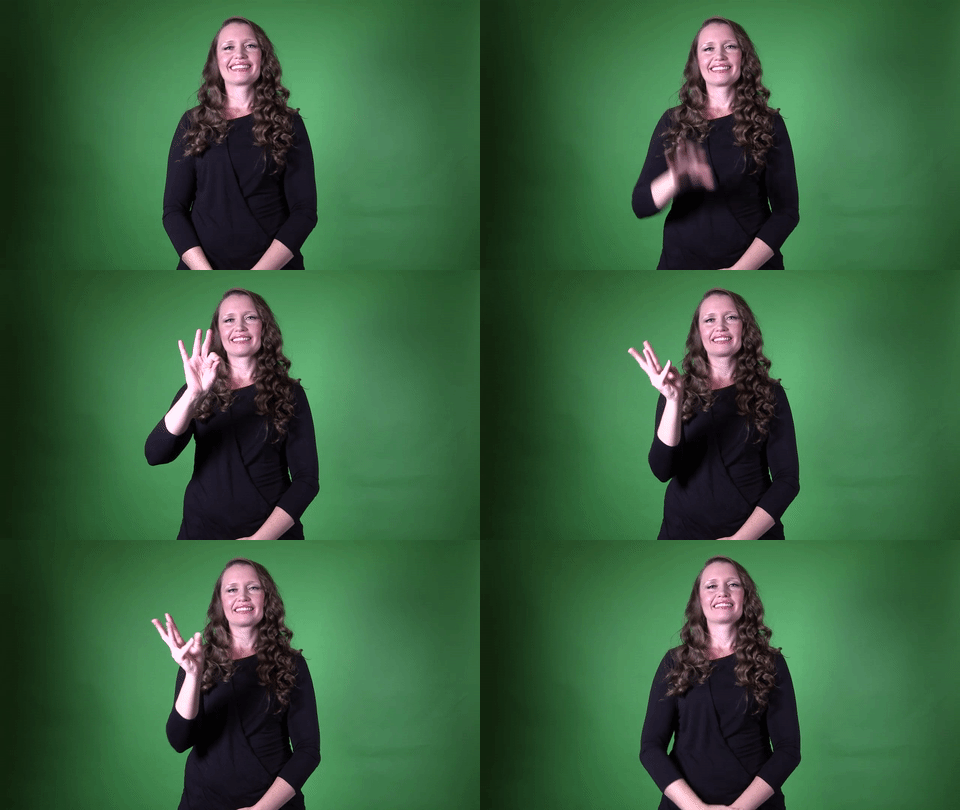
Sign for THE NUMBER NINETY-SIX in ASL | 🔢 ASL Dictionary

Definition: Refers to the number ninety-six

Sign for THE NUMBER NINETY-SIX in ASL 

YouTube player

Practice Activities:

To practice the sign for the number ninety-six in ASL, start by signing it multiple times in front of a mirror. Focus on handshape and movement, ensuring accuracy. Say the number aloud simultaneously to reinforce memory through multiple senses.

Try signing a sequence of numbers, incorporating the sign for the number ninety-six in ASL along with other numbers like ninety-five and ninety-seven. This will help with fluidity when counting or discussing numerical values. Challenge yourself by increasing speed while maintaining clarity.

Use the sign for the number ninety-six in ASL in real-world scenarios. Pretend you are reading a large price tag and include ninety-six dollars in your signing. Practice signing addresses, sports scores, or ages that contain the number ninety-six to improve contextual usage.

Work with a partner to test recognition and recall. One person signs random numbers while the other identifies them. Take turns incorporating the number ninety-six into dates, phone numbers, or measurements. This will enhance comprehension and production skills.

Create a short story that involves the number ninety-six. For example, describe a situation where someone finds ninety-six coins or sells ninety-six items in a day. Practicing numbers in storytelling helps solidify retention and build comfort with natural use.

Engage in fingerspelling and number drills. Alternate between spelling out short words and signing numbers, making sure to include the sign for the number ninety-six in ASL at least a few times. This helps reinforce transitions between fingerspelling and number signing.

Record yourself signing the number and reviewing your performance. Watching playback can reveal areas for improvement. Over time, your fluency and confidence will grow, making numerical communication in ASL effortless.

Cultural Context:

The sign for the number ninety-six in ASL is an essential part of learning American Sign Language numbers. ASL numbers play a crucial role in daily communication, helping signers express age, dates, and quantities. Understanding the number signs enhances fluency and comprehension in ASL conversations.

When signing the number ninety-six in ASL, handshape accuracy is important to ensure clear communication. Misplacing fingers or altering movements can change the meaning of the sign. Precision in hand formation helps avoid confusion and maintains proper ASL grammar.

ASL numbers, including the sign for the number ninety-six in ASL, are frequently used in various settings. Conversations about money, sports scores, addresses, and phone numbers often require strong number sign skills. Recognizing and correctly signing numbers supports effective interaction in both everyday and professional environments.

Numbers are deeply embedded in Deaf culture, making them vital for storytelling, discussions, and education. The sign for the number ninety-six in ASL may appear in academic settings, business transactions, or friendly chats. Knowing ASL numbers allows for smoother interaction within the Deaf and Hard of Hearing community.

Deaf culture values clear and accurate signing, making number fluency essential. People learning ASL should practice signing the number ninety-six in ASL along with other numbers. Repetition helps develop muscle memory and increases confidence in signing numbers fluidly.

Finger dexterity and hand positioning contribute to mastering numbers in ASL. The sign for the number ninety-six in ASL, like other numbers, involves smooth and controlled motions. Practicing transitions between numbers ensures that signing remains natural and efficient over time.

ASL learners often encounter numbers early in their studies since they are fundamental to many conversations. The sign for the number ninety-six in ASL is part of a comprehensive numbering system that follows specific rules. Understanding ASL numbers strengthens overall language skills and promotes effective communication.

Signing numbers correctly is essential for relaying accurate information. The sign for the number ninety-six in ASL is used in various discussions, from casual chats to formal presentations. Mastery of ASL numbers supports meaningful interaction and enhances language proficiency.

Technology plays a role in learning ASL numbers with online resources, videos, and digital tools available. Watching tutorials on the sign for the number ninety-six in ASL can reinforce learning and improve retention. Practicing with native signers or fluent users strengthens skills through real-world application.

Numbers remain a key aspect of ASL, helping bridge language gaps

Extended Definition:

The sign for the number ninety-six in ASL is an important part of learning American Sign Language numbers. This sign follows the standard pattern used for other numbers in the ninety series, making it easy to recognize and use in everyday communication. Understanding how to sign numbers correctly in ASL is essential for discussions about age, money, math, and other numerical topics.

To form the sign for the number ninety-six in ASL, start by signing ninety, then smoothly transition to six. The movement should be fluid, maintaining a consistent handshape change. ASL numbers above twenty often involve subtle shifts in finger positions, so practicing these signs will help improve fluency and accuracy.

Hand orientation and finger positioning are key when signing the number ninety-six in ASL. The palm should generally face outward, and the fingers must be positioned correctly to convey the intended number. A minor mistake in finger placement could result in signing an entirely different number.

Learning the sign for the number ninety-six in ASL is useful in many real-life situations. It can be used to describe ages in the nineties, large quantities, or specific numerical references. Whether discussing measurements, prices, or statistics, knowing this number sign helps improve precise communication.

Like all ASL numbers, the sign for the number ninety-six in ASL is best learned through repetition and practice. Watching native signers or using ASL learning resources will help reinforce the correct movement and handshape. Becoming comfortable with numerical signs will make signing conversations smoother and more efficient.

Understanding number signs like the sign for the number ninety-six in ASL also helps with counting sequences. Learning them in order can make it easier to recall and use them accurately in fast-paced conversations. Signing numbers confidently shows fluency and helps with clear communication in ASL.

ASL numbers follow a structured pattern, making it easier to learn variations like the sign for the number ninety-six in ASL. By practicing the numerical system regularly, signers can quickly recall and use numbers without hesitation. Consistency is key to mastering ASL number signs effectively.

Mastering the sign for the number ninety-six in ASL will build confidence in using large numbers in conversations. Whether discussing statistics, addresses, or mathematics, signing numbers correctly ensures accuracy. Communicating numbers properly is essential for various aspects of life, from education to daily interactions.

For those learning ASL, focusing on number signs like the sign for the number ninety-six in ASL will strengthen overall signing

Synonyms: ninety-six, number ninety-six, number 96, the number 96, the number ninety-six

Educational resources: Find related learning materials in our course bank!

Want more? Check out some of our popular learning activities on the homepage!

Need to look up a sign? Use our highly rated dictionary: https://aslinteractive.com/best-asl-dictionary/

Follow us on tiktok: https://www.tiktok.com/@aslinteractive. More social media links at the bottom of this page!

Long-tail Keywords: what is the sign for the number ninety-six in ASL, how do you sign the number ninety-six in ASL, learn to sign the number ninety-six in American Sign Language

Categories: Numbers – Basics, Numbers 91-100, cardinal numbers

tags: Numbers, Numbers 91-100, Math, Language Learning, Educational Content, 96 97 98 rocking numbers, rocking numbers

Parameters

*Handshape*:

The sign for the number ninety-six in ASL uses a shifting handshape. Start with the number nine handshape, where the thumb and index finger touch to form a circle, while the remaining fingers extend upward. Then, transition smoothly to the number six handshape by connecting the thumb and pinky while the other fingers stay extended. This fluid motion distinguishes the sign for the number ninety-six in ASL from similar numbers and enhances clarity. ✋

*Palm Orientation*:

The palm orientation for the sign for the number ninety-six in ASL starts with the palm facing outward. The movement involves shifting between the “9” handshape and the “6” handshape while maintaining consistent palm orientation. The fingers remain slightly bent, and the transition is smooth as the sign for the number ninety-six in ASL is performed.

*Location*:

The sign for the number ninety-six in ASL is located in the neutral space in front of the body. The dominant hand starts in the ninety handshape, with the index finger and thumb forming an “O” while the other fingers remain extended. The hand then transitions smoothly into the six handshape by bringing the pinky finger to touch the thumb. This movement keeps the sign for the number ninety-six in ASL clear and visually distinct.

*Movement*:

To produce the sign for the number ninety-six in ASL, begin with the number nine handshape, where the thumb and index finger form a circle while the remaining fingers stay extended. Then, smoothly transition to the number six handshape by bringing the pinky and thumb together while the other fingers remain extended. The movement is fluid, ensuring a seamless shift between the handshapes to clearly represent the sign for the number ninety-six in ASL.

*Non-Manual Signals*:

When signing the sign for the number ninety-six in ASL, maintain a neutral yet engaged facial expression. Your eyebrows should remain relaxed, and your mouth may be slightly open for natural emphasis. If you’re emphasizing the number, a slight head nod or a raised eyebrow can add clarity. Keep good eye contact to reinforce communication and ensure the sign for the number ninety-six in ASL is clearly understood.

*Prosody, Dominant/Non-Dominant Hand*:

The sign for the number ninety-six in ASL uses the dominant hand in a fluid, twisting motion. Start with the number nine handshape, where the thumb and index finger touch to form an “O” shape, while the other fingers extend. Then, smoothly rotate the wrist to transition into the number six handshape, where the pinky and thumb touch while the rest of the fingers extend. This movement is repeated slightly to indicate the transformation between numbers.

Tips for Beginners:

When learning the sign for the number ninety-six in ASL, focus on the fluidity of the movement. This sign involves a shift between two specific handshapes: the “9” handshape and the “6” handshape. Transitioning smoothly between these numbers ensures that the sign is clear and easy to read for ASL users.

A common mistake when signing the number ninety-six in ASL is tensing the hand too much. Relax your fingers and wrist so that the movement between the two handshapes is natural. If your movements are stiff or jerky, it can make it harder for others to recognize the number.

Pay close attention to the orientation of your palm while signing the number ninety-six in ASL. Typically, the palm faces outward, and the fingers change shapes with minimal movement of the wrist. Keeping proper orientation ensures the sign is accurate and easily understood.

Finger dexterity is essential for signing numbers smoothly. If transitioning between the “9” and “6” feels awkward, practice forming both handshapes separately before linking them together. Repetition will build muscle memory, helping you execute the sign for the number ninety-six in ASL with ease.

To reinforce your learning, try practicing the entire sequence of numbers in the nineties range. By doing this, you will gain confidence in recognizing patterns and improve your overall number fluency in ASL. Watching native signers or using ASL learning resources can also help refine your technique.

Finally, consistency is key. Try practicing in front of a mirror or recording yourself to check if your movement is smooth. Engaging with fluent signers can also provide valuable feedback and ensure that your sign for the number ninety-six in ASL is clear and correctly formed.

Connections to Other topics:

The sign for the number ninety-six in ASL connects to broader numbering principles used in ASL. Numbers in ASL follow distinct patterns, particularly when transitioning from cardinal to ordinal numbers or incorporating numerical classifiers. The sign for the number ninety-six in ASL follows a pattern similar to other two-digit numbers in the nineties, using a flicking or alternating movement between the two digits. Understanding this sign reinforces knowledge of ASL number structures and handshape changes used for quick numerical communication.

This sign is also relevant when discussing time, measurements, and percentages. The sign for the number ninety-six in ASL can be used in contexts such as discussing statistics, finances, or age. In ASL narratives, numbers often incorporate non-manual markers to give emphasis or indicate scale, making fluency in number signs essential for clear communication. Recognizing how numbers modify in different contexts enhances comprehension and expressive skills.

Another related concept is numerical incorporation, where numbers are smoothly included within certain sign categories, such as money or time. For example, in monetary discussions, a dollar sign can combine with a number to indicate an amount like ninety-six dollars. Additionally, sports scores or rankings frequently rely on clear number signs, making the sign for the number ninety-six in ASL beneficial in competitive discussions. Expanding numerical knowledge in ASL helps make conversations more precise and efficient.

Numbers like ninety-six also appear when referring to years, addresses, and codes. When signing years, digits may be separated or signed in pairs, depending on the style used. Learning number variations in ASL provides a foundation for discussing historical dates, events, and other numerical data. Mastering number signs like the sign for the number ninety-six in ASL builds confidence in using ASL for everyday discussions.

Summary:

The sign for the number ninety-six in ASL follows a specific movement pattern commonly used for numbers in the ninety series. This is a dynamic sign that blends two number forms into a single fluid motion. The efficiency of transitioning between these numbers reflects ASL’s visually oriented numerical system.

To form the sign for the number ninety-six in ASL, begin with the handshape for nine. The thumb and index finger touch, creating a small circular space while the remaining fingers are extended. This is the typical handshape for the number nine in ASL.

The next part involves a smooth transition from nine to six. Without breaking the motion, shift the handshape to display six by bringing the pinky and thumb into contact while the other three fingers remain extended. This shift should be fluid, ensuring clarity in the number sequence.

Movement is essential in signing multi-digit numbers efficiently. The transition between the two handshapes should be done in a single motion to maintain visual clarity. A signer should avoid pausing too much between numbers to keep the flow natural.

ASL numbers follow a logical structure, where certain patterns stay consistent across larger number sets. In the case of numbers in the ninety series, the initial digit is always dominant until the transition happens. Understanding this consistency helps new learners quickly grasp how numbers are formed in ASL.

The sign for the number ninety-six in ASL is often used in contexts that involve monetary amounts, measurements, or ages. Whether discussing pricing, sports statistics, or historical references, this number will frequently appear in conversations. ASL users must be comfortable transitioning between numerical handshapes smoothly.

Numbers in ASL serve important grammatical functions beyond mere counting. They are often incorporated into classifiers, ranking systems, or even embedded into other signs. A skilled signer will use facial expressions and context to ensure accurate communication of numerical concepts.

The sign for the number ninety-six in ASL is part of the broader numerical system, which prioritizes efficiency and visual clarity. Many numbers in ASL take advantage of handshape transitions to reduce unnecessary complexity. This principle is especially noticeable in double-digit numbers.

Cultural significance around numbers varies within Deaf communities and general ASL-using populations. While some numbers may have superstitions or symbolic meanings, ninety-six itself holds no specific cultural weight. However, the ability to fluently sign numbers is integral to active participation in daily communication.

When teaching the sign for the number ninety-six in ASL, it’s beneficial to practice related numbers. Learning the entire ninety series together reinforces the movement connection between digits. This approach strengthens muscle memory and builds confidence in numerical accuracy.

One of the common mistakes in signing ninety-six is stiffness in the handshape transition. Beginners often struggle to shift from nine to six smoothly, sometimes pausing or incorrectly angling their hands. Practicing in front of a mirror can help improve fluidity.

The numerical system in ASL operates with a different structure compared to spoken English. Instead of vocalizing the individual digits, ASL signers visually present them using distinct handshapes. This visual efficiency is one of the strengths of ASL as a language.

Numbers in ASL can be modified through movement and facial expression to indicate different meanings. Repetition, for example, can sometimes signify intensity or emphasize an amount. Although the sign for the number ninety-six in ASL does not carry alternate meanings, understanding ASL numerical modifications is essential.

In sports, statistics, and historical events, the number ninety-six may appear frequently. Whether referring to the year 1996 or a sports player’s jersey number, ASL users must be adept at rapid number recognition. Practicing numbers alongside real-world references can enhance recall and comprehension.

Numbers are integral to daily interactions, from discussing time to making financial transactions. An ASL user navigating a store, discussing a bill, or reviewing statistics will rely on clear numerical signs. Practicing speed and accuracy with numbers bolsters overall ASL fluency.

Teaching children or new learners how to sign numbers should incorporate repetition and visual reinforcement. The sign for the number ninety-six in ASL can be introduced alongside counting exercises and pattern recognition activities. Engaging learning approaches help reinforce retention.

Within ASL linguistics, numbers demonstrate the complexity of handshape transitions and movement economy. The sign for the number ninety-six in ASL exemplifies the way two numbers fluidly combine into one gesture. This process showcases ASL’s efficiency as a spatial language.

Finger dexterity and hand flexibility play an important role when signing numbers. Practicing different numerical sequences helps develop muscle control necessary for rapid transitions. Over time, this leads to more natural and automatic number signing.

Standard ASL grammar does not require numbers to be signed in a specific position unless clarifying a sequence. However, certain contexts, such as lists or rankings, may require added spatial markers when signing numbers. This allows for greater organization within conversations.

ASL number signs follow standardized norms but may exhibit slight variations based on regional or individual preferences. While the

Want more? Check out some of our popular learning activities!

ASL Interactive Resources

ASLInteractive YouTube Channel

Follow us on tiktok: @aslinteractive.com

Follow us on Instagram: aslinteractive

Facebook page: aslinteractive

Facebook group: aslinteractive

LInkedIn: ASL Interactive LLC

Twitter: @ASL_interactive

*Some information on this page is AI-generated. AI can make mistakes. Please check the information.

Sign for 96 in ASL, Sign for NINETY-SIX in ASL, Sign for NINETY-SIX in ASL, Sign for NUMBER NINETY-SIX in ASL, Sign for THE NUMBER NINETY-SIX in ASL 

Responses