Sign for THE NUMBER NINETY-THREE in ASL | 🔢 ASL Dictionary

Definition: Refers to the number ninety-three

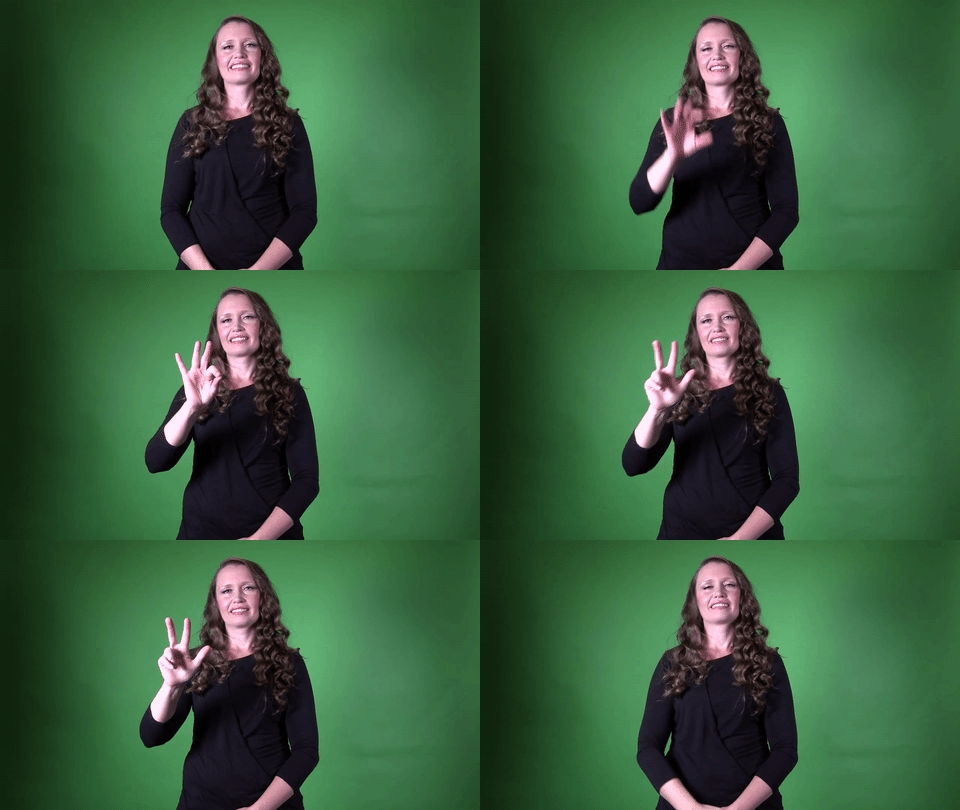
Sign for THE NUMBER NINETY-THREE in ASL  

YouTube player

Practice Activities:

To practice the sign for the number ninety-three in ASL, start by repeatedly signing it in front of a mirror to check for accuracy. Focus on the correct handshape and movement to ensure clarity. Repeat the motion slowly at first, then gradually build speed while maintaining precision.

Try counting from ninety to one hundred, stopping to emphasize the sign for the number ninety-three in ASL. This will help reinforce the sequence and improve fluency. Mix up the order of numbers to challenge yourself and strengthen recognition.

Use the sign for the number ninety-three in ASL while practicing everyday scenarios. For example, pretend to state a year or a price involving ninety-three dollars. Incorporate it when discussing ages, addresses, or other real-life contexts.

Partner with a friend and take turns signing different numbers while the other person says them aloud. This helps with both signing accuracy and number recognition in ASL. For an extra challenge, have your partner sign quickly while you interpret what they are expressing.

Create a short story that includes the number ninety-three in a meaningful way, such as talking about someone’s ninety-third birthday or purchasing an item for ninety-three cents. Sign the story fluidly, focusing on clear numbers and smooth transitions between signs.

Play a number game with a group where one person signs a number randomly, and the next must continue from that point. When someone reaches the sign for the number ninety-three in ASL, have them emphasize it before passing it along. This reinforces number familiarity and keeps practice engaging.

Watch videos of fluent ASL users signing numbers, paying close attention to movement and expression. Try mirroring their signs while keeping pace, ensuring the accuracy of handshapes and motion.

Cultural Context:

American Sign Language is a rich, visual language used by the Deaf community for communication. When signing the number ninety-three in ASL, it’s important to follow the standard number-signing conventions used in ASL. Numbers play a crucial role in expressing ages, addresses, prices, and more in daily conversations.

The sign for the number ninety-three in ASL follows the standard format of counting in ASL. It uses specific handshapes and movements that are universally recognized within the Deaf community. Understanding the number system in ASL allows for clear and effective communication.

Numbers in ASL are used frequently in various social and cultural contexts. The sign for the number ninety-three in ASL may appear when discussing history, addresses, or even years in important events. Becoming familiar with ASL number signs helps with fluency and comprehension.

Learning the correct way to sign the number ninety-three in ASL helps maintain clarity in conversations. Whether signing for math, sports scores, or statistics, accuracy is essential. Practicing number signs regularly improves confidence in signing.

The Deaf community values clear and accurate signing, especially when using numbers. Signing the number ninety-three in ASL properly ensures smooth conversations without confusion. ASL numbers are commonly used in education, business, and everyday life.

Mastering ASL number signs, including the sign for the number ninety-three in ASL, allows for greater engagement in conversations. Numbers are frequently signed when making appointments, giving directions, or discussing money. Correct number signing enhances both understanding and communication skills.

ASL is a visual language that relies on precise handshapes and movement. The sign for the number ninety-three in ASL follows a consistent pattern based on ASL numerical rules. Learning number signs efficiently can help enhance overall ASL proficiency.

Counting in ASL is an important part of daily interactions. The sign for the number ninety-three in ASL is used in various situations, from discussing time to expressing quantities. Practicing numbers ensures that signing is both natural and accurate.

When using number signs, proper hand positioning and movement are essential. The sign for the number ninety-three in ASL must be clear to avoid misunderstandings. Fluency in ASL numbers improves overall communication and comprehension skills.

ASL users rely on number signs daily for everyday interactions. Whether buying items, telling time, or giving phone numbers, the sign for the number ninety-three in ASL is part of a broader numerical system. Learning ASL numbers

Extended Definition:

The sign for the number ninety-three in ASL is a combination of two handshapes that represent the numbers nine and three. American Sign Language uses a numerical system based on hand configurations and movement, making it a highly visual and efficient way to communicate numbers. Learning how to properly form and use this sign is essential for counting, providing numerical information, and engaging in everyday conversations.

To sign the number ninety-three in ASL, start with the number nine handshape, where the thumb and index finger create a small circle while the other fingers remain extended. Then, smoothly transition into the number three handshape by extending the index, middle, and thumb, with the ring and pinky fingers folded down. This movement visually represents ninety-three, and maintaining clear hand positioning helps ensure accuracy in signing.

Numbers in ASL follow a structured pattern, making it easy to sign large values like ninety-three. When signing numbers in succession, fluid transitions between handshapes are important for clarity. Precise finger articulation also plays a key role in making numbers comprehensible to both fluent signers and beginners.

The sign for the number ninety-three in ASL is frequently used in daily communication. It can appear in contexts like discussing prices, giving addresses, stating ages, or counting large quantities. Mastering number signs is crucial for effective communication within the Deaf community and in ASL-based interactions.

When fingerspelling is not an option, knowing how to sign numerical values enhances fluency in ASL. The sign for the number ninety-three in ASL follows standard numerical patterns, making it easier to learn once a signer understands the base numbers. Practicing numerical signs regularly helps improve speed and proficiency in conversation.

ASL numbers have a unique rhythmic flow, and the sign for the number ninety-three in ASL should be executed with confidence and accuracy. This ensures that others can easily recognize and interpret the number without confusion. Many learners find it helpful to practice signing numbers in sequence to build muscle memory and enhance recall.

Number signs in ASL are commonly used in classrooms, workplaces, and everyday transactions. The sign for the number ninety-three in ASL may come up when discussing measurements, financial figures, or numerical data. Developing a strong understanding of ASL numbers allows signers to engage more fully in various discussions.

Fluency in numerical signs contributes to overall proficiency in ASL. The sign for the number ninety-three in ASL is one of many numerical handshapes that aid

Synonyms: ninety-three, number ninety-three, number 93, the number 93, the number ninety-three

Educational resources: Find related learning materials in our course bank!

Want more? Check out some of our popular learning activities on the homepage!

Need to look up a sign? Use our highly rated dictionary: https://aslinteractive.com/best-asl-dictionary/

Follow us on tiktok: https://www.tiktok.com/@aslinteractive. More social media links at the bottom of this page!

Long-tail Keywords: what is the sign for the number ninety-three in ASL, how do you sign the number ninety-three in ASL, learn how to sign the number ninety-three in American Sign Language

Categories: Numbers – Basics, Numbers 91-100, cardinal numbers

tags: Numbers, Numbers 91-100, Math, Language Learning, Educational Content

Parameters

*Handshape*:

The sign for the number ninety-three in ASL uses a transitioning handshape. It begins with the “9” handshape, where the thumb and index finger touch to form a circle while the remaining fingers extend. The hand then smoothly transitions to the “3” handshape, with the thumb, index, and middle fingers extended and the ring and pinky fingers folded down. This movement maintains clarity and fluidity for quick numerical communication. ✋

*Palm Orientation*:

The palm orientation for the sign for the number ninety-three in ASL begins with the palm facing outward. As you transition between the digits, keep your fingers steady to maintain clarity in the movement. The palm remains forward throughout the number sequence to ensure visibility and accurate communication. Keeping the palm in this orientation helps differentiate it from other similar numbers in American Sign Language.

*Location*:

The sign for the number ninety-three in ASL takes place in the neutral signing space in front of the body. The dominant hand forms the number nine, then transitions smoothly into the number three without breaking the movement. The wrist remains steady while the fingers change positions in one fluid motion. The sign for the number ninety-three in ASL is clear and concise, making it easy to recognize within numerical sequences.

*Movement*:

To sign for the number ninety-three in ASL, start with the number nine by forming an “F” handshape , where the thumb and index finger touch while the other fingers remain extended. Then, smoothly transition to the number three by extending the index, middle, and thumb while folding in the ring and pinky fingers. The movement should be fluid, ensuring a natural shift between the two handshapes without pausing.

*Non-Manual Signals*:

Facial expression remains neutral or slightly affirmative when signing the sign for the number ninety-three in ASL, unless emphasis or emotion modifies it. Eyebrows may be slightly raised if asking for clarification, while a nod can reinforce understanding. Proper mouth posture should be relaxed and natural, without exaggeration. Head movement remains steady, though a slight tilt can indicate engagement. Eye contact should be maintained for clarity while signing the sign for the number ninety-three in ASL.

*Prosody, Dominant/Non-Dominant Hand*:

The sign for the number ninety-three in ASL is produced using the dominant hand. Start with the number nine handshape, where the thumb and index finger form a circle while the remaining fingers stay extended. Then, smoothly transition into the number three handshape by extending the thumb, index, and middle fingers while tucking in the ring and pinky fingers. The movement between these handshapes should be fluid to maintain clarity.

Tips for Beginners:

When learning the sign for the number ninety-three in ASL, practice transitioning smoothly between the two digits. This number is signed as “9” followed by “3,” using the dominant hand. Ensure your hand remains steady and fingers are clearly positioned to avoid confusion with similar numbers.

One common mistake beginners make is rushing the transition between the digits, which can cause the sign to look unclear. Focus on forming each number distinctly while allowing a natural, controlled flow between them. Over time, muscle memory will help the movement become more fluid.

Finger positioning is crucial when signing the number ninety-three in ASL. Make sure your index finger and thumb form a distinct “9,” followed by extending three fingers for “3.” Keep your palm orientation consistent to maintain readability. If needed, practice in front of a mirror or with a partner to check for accuracy.

Pay attention to hand placement while signing. Keep your dominant hand in a comfortable signing space, usually near the upper chest or shoulder area. Avoid placing your hand too low or too close to your body, as this can make the sign harder to see.

Practicing with other numbers will help improve fluency when signing sequences like the number ninety-three in ASL. Work on signing other similar numbers, such as ninety-two or ninety-four, to build confidence. This will reduce hesitation and increase accuracy when communicating larger numbers.

When using this sign in conversation, facial expressions can help clarify intent, especially if emphasizing quantity. If unsure about your accuracy, ask a fluent signer to provide feedback or use video resources for reference. Regular, slow practice will lead to smooth and precise signing ability.

Connections to Other topics:

The sign for the number ninety-three in ASL connects to broader topics, such as numerical patterns, counting principles, and handshape consistency. ASL numbers follow standardized patterns that often involve similar movements for numbers in the same tens group. The transition from ninety to three in one fluid motion helps reinforce how ASL utilizes compact expressions for efficiency.

Numbers in ASL are used in many contexts, such as age, money, and addresses. The sign for the number ninety-three in ASL can appear in number sequences, like phone numbers or street addresses, where clarity is essential. Recognizing numerical handshape patterns allows signers to quickly differentiate between similar numbers, such as ninety-three versus ninety-eight, by paying attention to finger positioning and movement.

Ordinal numbers also stem from their cardinal counterparts, meaning ninety-third would build off the sign for the number ninety-three in ASL. In ranking systems like competition placements or historical events, ordinal signs add a movement shift to indicate sequence. This extends to sporting events, academic rankings, or dates in history where numerical precision is required.

ASL math concepts also incorporate numerical signs, making them fundamental in discussing arithmetic, percentages, and decimals. The sign for the number ninety-three in ASL can be combined with other number signs to form larger figures or mathematical expressions. Learning numerical sequences supports discussions of age, percentages, statistics, and pricing in everyday conversations.

Beyond math, numbers in ASL appear in time-related signs like years and decades. The sign for the number ninety-three in ASL might be used when referring to the year 1993 or a specific quantity. Recognizing numerical handshapes strengthens both receptive and expressive skills, enhancing fluency when signing dates, statistics, or significant events.

Summary:

The sign for the number ninety-three in ASL is a combination of two distinct handshapes that represent the digits nine and three. To sign it, you first form the number nine by extending the thumb and index finger into a circular shape while the other fingers remain extended. Then, you transition smoothly into the number three by extending the thumb, index, and middle fingers while closing the ring and pinky fingers.

When producing the sign for the number ninety-three in ASL, ensure the movement is fluid and natural. The hand does not change position significantly, staying in a neutral space in front of the body. The shift from nine to three should be seamless, with no unnecessary hesitation.

Numbers in ASL follow specific morphological rules that apply to cardinal and ordinal numbers differently. The sign for the number ninety-three in ASL falls under non-repeating cardinal numbers, meaning the motion consists only of the number transitions rather than repetition. This structure makes number signs visually distinct from other categories of signs.

The cultural importance of numbers in ASL cannot be overstated, as they are essential in daily communication, mathematics, and even storytelling. The sign for the number ninety-three in ASL is used in contexts such as counting, referencing historical years, or discussing specific numerical data. It also finds relevance in sports, prices, addresses, and phone numbers.

Numerical fluency in ASL is important for effective communication, requiring consistent practice to ensure speed and clarity. The sign for the number ninety-three in ASL follows a logical sequence, and mastering it contributes to overall numerical comprehension within signing communities. Accuracy matters because numerical mistakes can lead to misinterpretation, especially in financial or educational settings.

Hand dominance plays a crucial role when signing numbers. The sign for the number ninety-three in ASL should be performed with the dominant hand, typically the right hand for right-handed signers and the left hand for left-handed signers. Consistency in hand use ensures clarity and avoids confusion in communication.

ASL numbers exhibit rich linguistic features, including phonological components such as handshape, movement, palm orientation, and location. The sign for the number ninety-three in ASL exemplifies the role of sequential handshapes in number articulation. These features contribute to the overall structure of ASL as a visual-spatial language.

Some signs incorporate distinctive movements, but the sign for the number ninety-three in ASL remains straightforward. The transition between the two digits follows a clear numerical pattern without additional gesture-based modifications. This consistency helps in both casual and formal ASL settings where numerical precision is necessary.

ASL has several variations based on regional and generational differences. However, the sign for the number ninety-three in ASL remains standard across most dialects of ASL. Unlike lexical signs, which may have multiple acceptable variations, number signs remain relatively uniform.

When fingerspelling or integrating number signs into larger expressions, maintaining rhythm and pacing is key. The sign for the number ninety-three in ASL should match the pacing of surrounding numbers, ensuring clarity when counting or listing figures. Smooth transitions contribute to overall fluency, making communication more efficient.

ASL grammar incorporates numbers flexibly, allowing them to function within numerical lists, time-related expressions, and quantifications. The sign for the number ninety-three in ASL may appear in expressions such as “ninety-three dollars” or “ninety-three years old,” where number signs integrate seamlessly with contextual signs. Recognizing these patterns reinforces ASL’s grammatical framework.

Linguists studying ASL examine the relationship between hand movements and cognitive processing. The sequential transition in the sign for the number ninety-three in ASL showcases the brain’s ability to conceptualize discrete numerical units in a visual format. This aspect of signed numerical cognition provides insight into how signers perceive and produce numbers.

In ASL education, number acquisition follows a structured learning progression. Beginners typically master single digits first before advancing to higher numerals like the sign for the number ninety-three in ASL. This step-by-step build-up supports signers in developing greater numerical confidence and fluency.

The usage of numbers extends into Deaf culture, where number signs appear in poetry, storytelling, and signed performances. The sign for the number ninety-three in ASL may be featured in narratives that incorporate numerical sequences for poetic rhythm. Understanding numbers also enhances participation in shared cultural events.

When interacting with Deaf individuals, numeric accuracy is key to maintaining clear and effective communication. The sign for the number ninety-three in ASL is an example of precise numerical articulation, which is critical in situations like making financial transactions or discussing dates. Numbers in ASL require careful attention to handshape clarity and transition speed.

Comparison with other sign languages shows that ASL number signs are distinct from those in other sign languages. While some similarities exist, the sign for the number ninety-three in ASL is unique to ASL conventions. Such variations highlight linguistic diversity within the global Deaf community.

ASL number incorporation in STEM fields is vital for numeric

Want more? Check out some of our popular learning activities!

ASL Interactive Resources

ASLInteractive YouTube Channel

Follow us on tiktok: @aslinteractive.com

Follow us on Instagram: aslinteractive

Facebook page: aslinteractive

Facebook group: aslinteractive

LInkedIn: ASL Interactive LLC

Twitter: @ASL_interactive

*Some information on this page is AI-generated. AI can make mistakes. Please check the information.

Sign for 93 in ASL, Sign for NINETY-THREE in ASL, Sign for NUMBER NINETY-THREE in ASL, Sign for THE NUMBER NINETY-THREE in ASL  

Responses