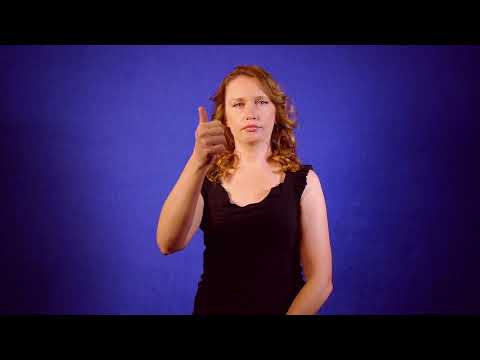
Definition: Refers to the number ten thousand
Sign for THE NUMBER TEN THOUSAND in ASL
Practice Activities:
To practice the sign for the number ten thousand in ASL, start by signing it in isolation. Slowly form the number ten and then transition smoothly into the sign for thousand. Repeat this motion multiple times, making sure your handshape and movement are consistent each time. Use a mirror to check for accuracy or record yourself to see if your transitions are smooth.
Practice counting in increments leading up to the number. Begin with one thousand, five thousand, then sign the number ten thousand. Increase fluency by signing different large numbers quickly and correctly. Try alternating between ten thousand and similar numbers like twenty thousand, thirty thousand, and so on to reinforce the correct motion.
Use the sign in real-world contexts to build confidence. Imagine shopping for an expensive car and signing the price of ten thousand dollars. You can also practice talking about population sizes, sports stadium capacities, or even large sums of money in a budgeting discussion. Creating realistic scenarios makes the number feel more natural to sign.
Try a storytelling activity where you describe a lottery win. Start by stating you won ten thousand dollars and explain how you would spend it using ASL. Include other numbers in your story so you naturally integrate the sign. Practicing in a narrative format helps with recall and fluency while making it fun.
Partner with a friend to quiz each other on large numbers. One person signs a number while the other reads it aloud, then switch roles. Focus on improving speed and accuracy. Gradually add higher numbers so that signing feels automatic. By using the sign for the number ten thousand in ASL in natural conversations and structured activities, you’ll develop both confidence and proficiency in using it.
Cultural Context:
The sign for the number ten thousand in ASL is an essential part of number fluency in American Sign Language. Large numbers like ten thousand are commonly used in everyday conversations, whether discussing prices, population sizes, or large quantities. Understanding how to sign ten thousand correctly helps improve communication and comprehension in ASL.
When signing the number ten thousand in ASL, it follows the numeric system specific to ASL structure. ASL numbers beyond one thousand often use a combination of number signs and hand movements to show place value. Mastery of these large numbers allows for clearer discussions in business, math, and storytelling.
Large numbers like ten thousand are frequently seen in financial discussions. Whether talking about a salary, lottery winnings, or a fundraising goal, the ability to sign ten thousand in ASL is practical. Deaf professionals and students benefit from knowing these number signs to engage in conversations about economic and mathematical topics.
In history and culture, figures like ten thousand come up in statistics, historical events, and census data. Many reports, surveys, and studies refer to populations and measurements in the range of ten thousand. Being able to sign ten thousand in ASL helps ensure access to important numerical information in both academic and casual conversations.
Learning how to sign the number ten thousand in ASL also supports mathematical literacy in Deaf education. ASL users working in STEM fields or studying math need to sign large numbers fluently. Understanding ten thousand within the ASL numerical system enhances the ability to discuss calculations, equations, and data interpretation.
Deaf-owned businesses and entrepreneurs often deal with large quantities, including amounts over ten thousand. Whether it’s counting inventory, reporting annual revenue, or setting financial targets, the sign for the number ten thousand in ASL plays a role in professional settings. Fluency in large numbers helps with accuracy in record-keeping and communication in business contexts.
Sports and entertainment frequently involve large numbers, including ten thousand. Stadium capacities, ticket sales, and social media followers often reach figures in the ten thousand range. Signing ten thousand in ASL allows for clear and precise discussions about milestones in sports, concerts, and online communities.
ASL storytelling sometimes incorporates large numerical values for dramatic effect. Stories about ten thousand warriors, ten thousand stars, or ten thousand years add richness to narratives. Knowing how to sign the number ten thousand in ASL enhances fluency in creative and rhetorical expression.
The use of the number ten thousand in ASL extends to sciences like astronomy and physics.
Extended Definition:
The sign for the number ten thousand in ASL follows a structured approach based on number signing principles. American Sign Language uses a combination of handshapes and movements to represent large numbers clearly and efficiently. This ensures that numbers like ten thousand are communicated accurately in conversations.
To sign the number ten thousand in ASL, you typically start with the sign for ten, which involves forming an “A” handshape with the thumb extended and twisting it slightly. Then, to indicate the concept of thousand, the dominant hand in a bent “B” shape contacts the stationary nondominant palm. Combining these two elements effectively conveys ten thousand in ASL during numerical discussions.
Numbers in ASL rely on clear handshapes, orientation, and movement to maintain accuracy. The sign for the number ten thousand in ASL follows a logical structure, making it simple to understand if you’re familiar with signing numbers. Practicing the individual components first helps improve fluency when signing large numbers.
When using the sign for ten thousand in ASL, facial expressions and context play an important role. ASL is a visual language, meaning emphasis and understanding are often enhanced through facial expressions and body language. Ensuring smooth transitions between the components of ten thousand will make your signing more natural and comprehensible.
In educational settings, the sign for the number ten thousand in ASL is commonly used in math lessons and discussions involving large values. Teaching students how to sign numbers correctly helps build strong communication skills in ASL. By incorporating numerical signs like ten thousand into regular practice, learners become more comfortable with large numbers.
When fingerspelling large numbers, it’s generally not necessary to spell out “ten thousand” letter by letter. Instead, using the structured ASL number signs avoids confusion and improves clarity. The structured approach to signing ten thousand in ASL ensures that numbers remain easy to follow in conversations.
ASL users benefit from memorizing number signs like ten thousand, as they frequently appear in discussions about money, measurements, and statistics. Numbers play a crucial role in daily interactions, so understanding how to sign them gives ASL users confidence in conversations. The sign for the number ten thousand in ASL is an essential part of numerical fluency.
When signing ten thousand, pay attention to hand positioning and movement to avoid miscommunication. Practicing with a mirror or recording your signing can help refine your accuracy. Watching fluent ASL users sign the number ten thousand can also reinforce proper techniques.
Technology has made
Synonyms: ten thousand, 10K, 10 thousand, 10,000, ten K
Educational resources: Find related learning materials in our course bank!
Want more? Check out some of our popular learning activities on the homepage!
Need to look up a sign? Use our highly rated dictionary: https://aslinteractive.com/best-asl-dictionary/
Follow us on tiktok: https://www.tiktok.com/@aslinteractive. More social media links at the bottom of this page!
Long-tail Keywords: What is the sign for the number ten thousand in ASL, How do you sign the number ten thousand in ASL, Learn how to sign the number ten thousand in American Sign Language
Categories: Numbers – Basics, thousands, cardinal numbers
tags: Numbers, Counting, Mathematics, Educational, Language Learning
Parameters
*Handshape*:
The sign for the number ten thousand in ASL uses a combination of numerical and movement components. It starts with the number ten, represented by an extended “thumbs-up” gesture where the thumb moves slightly in a twisting motion. Then, the palm transitions into an open “B-hand” shape, tapping the fingertips against the opposite palm. This sequential movement visually represents the numerical value. The sign for the number ten thousand in ASL effectively combines numerical clarity and hand positioning for accuracy.
*Palm Orientation*:
The palm orientation for the sign for the number ten thousand in ASL starts with the dominant hand in a flat “B” handshape, palm facing outward. The fingertips touch the base of the non-dominant hand, which is also in a flat position with the palm facing up. This movement emphasizes the numerical value in ASL, making it clear and accessible in communication.
*Location*:
The sign for the number ten thousand in ASL is produced in the neutral space in front of the body. The dominant hand moves slightly outward from the chest while forming the number ten handshape (a fist with the thumb extended and flicking). Then, the fingertips of the dominant hand tap the non-dominant palm, which is held flat and facing up. This action clearly conveys the numerical value in American Sign Language.
*Movement*:
To sign for the number ten thousand in ASL, start by forming the number 10 with your dominant hand—extend the thumb and wiggle it slightly. Then, transition directly into the sign for thousand by forming a flat “B” handshape with your non-dominant hand, palm facing upward. Touch the fingertips of your dominant hand, now in a bent shape, to the upward palm. This movement visually represents numerical quantity in ASL.
*Non-Manual Signals*:
Facial expressions should be neutral or slightly focused when demonstrating the sign for the number ten thousand in ASL. Eyebrows remain relaxed, and the mouth stays closed or slightly pursed to maintain clarity. Head movement should be minimal, but a slight nod may naturally accompany the sign if emphasizing the quantity. Keep the gaze directed forward, ensuring clear communication of the sign for the number ten thousand in ASL without unnecessary exaggeration.
*Prosody, Dominant/Non-Dominant Hand*:
The sign for the number ten thousand in ASL uses the dominant hand forming the number “10” (thumb extended, fist closed) and then transitions into “THOUSAND.” The dominant hand, now in a flat “B” shape, taps the fingertips against the upward-facing non-dominant palm. This movement emphasizes the large numerical value while keeping the flow natural. Facial expressions may reinforce the magnitude of ten thousand.
Tips for Beginners:
When learning the sign for the number ten thousand in ASL, start by ensuring your handshape and movements are clear. This number is built using a combination of signs, so maintaining clean transitions is essential. Practicing in front of a mirror can help you check for accuracy and eliminate unnecessary hand movement.
A common mistake when signing the number ten thousand in ASL is not fully forming each number clearly. Some learners rush through the sign, making it difficult to distinguish. To avoid this, be mindful of the palm orientation and ensure each number is articulated distinctly before transitioning to the next part of the sign.
Hand positioning is crucial for clarity. If your fingers are not correctly placed, the sign may be misinterpreted as a completely different number. Relax your fingers, and don’t tense your hand too much, as excessive stiffness can make the sign look unnatural. Smooth and controlled movements will result in a more readable and fluid sign.
Another tip is to practice signing large numbers slowly at first. When learning the sign for the number ten thousand in ASL, focus on muscle memory and gradually speed up as you gain confidence. This prevents confusion and ensures you’re conveying the number accurately in real-life situations.
For better retention, incorporate the sign into daily practice. Try signing different large numbers and use ten thousand in various contexts, such as discussing prices or distances. Repetition will strengthen your ability to recall the sign quickly when needed. Watching native signers can also help you refine your movements.
If you struggle with number sequences, break them down into smaller components. Practicing each part separately before combining them helps improve fluency. The more you practice, the easier it will become to sign the number ten thousand in ASL naturally and confidently.
Connections to Other topics:
The sign for the number ten thousand in ASL connects with other large numerical signs, reinforcing ASL’s structured approach to expressing big numbers. ASL uses a combination of base numbers and grouping movements to efficiently communicate larger values. Understanding how to sign the number ten thousand builds a foundation for expressing even larger numbers, such as one hundred thousand or one million, which follow a similar pattern of modification.
This concept is also useful in discussing financial figures, population statistics, or large year dates, especially in historical contexts. For example, when stating figures in economics or scientific data, signing numbers quickly and accurately is essential. Mastering the sign for the number ten thousand in ASL also helps when signing milestones, such as distances in miles or large sums of money, making numerical fluency useful in professional and academic discussions.
In conversation, numbers are often combined with classifiers to give more context. For example, discussing ten thousand people in a crowd might involve both the numerical sign and a classifier indicating mass movement. Similarly, talking about ten thousand dollars could pair the number sign with a money-related sign to clarify the meaning. Learning how classifiers work alongside numerical signs allows signers to be more precise in their descriptions.
Additionally, the concept of multiples of ten and thousand connects with ASL’s structure for numerical incorporation in various contexts, such as time (ten thousand years ago) or weight (ten thousand pounds). Understanding how to sign the number ten thousand in ASL strengthens overall number comprehension in ASL, ensuring clarity in both casual and formal communication.
Summary:
The sign for the number ten thousand in ASL is a number-driven concept that builds upon foundational ASL numerical structures. ASL uses a combination of handshape, movement, and positioning to represent large numbers concisely. This sign draws from patterns seen in the broader numerical system of ASL.
To form the sign for the number ten thousand in ASL, start with the number ten. The number ten is made by extending the thumb while the other fingers remain curled, and then slightly twisting the wrist. The sign for ten provides the base for moving into the representation of ten thousand.
After signing ten, the transition to thousand follows the typical structure for large numbers. To indicate thousand, bring the fingertips of the dominant hand in a bent shape to touch the base of the non-dominant flat hand. This movement represents a numerical grouping equivalent to the Western concept of “thousand.”
The sign for the number ten thousand in ASL combines these elements into a fluid motion. The signer moves from the ten handshape into the thousand gesture, ensuring clarity and separation between the two concepts. This sequence maintains the structural integrity of ASL’s numerical system.
In ASL grammar, numbers are often signed in a way that maintains linguistic efficiency and visual clarity. The sign for the number ten thousand in ASL is structured to minimize unnecessary movement while ensuring accuracy. This efficiency aligns with how ASL conveys quantitative data fluently.
Numbers like ten thousand are significant in many contexts, including financial matters, population counts, and historical references. The ability to sign numerical concepts clearly is crucial in both everyday and professional situations. Numerical fluency in ASL enhances accessibility and precision in communication.
ASL maintains a logical and consistent framework for signing large numbers. The sign for the number ten thousand in ASL follows established linguistic patterns, making it intuitive for those familiar with ASL’s numerical progression. Understanding these patterns helps signers grasp larger numbers more effectively.
When learning the sign for the number ten thousand in ASL, it is helpful to practice transitioning smoothly between ten and thousand. Ensuring clarity in each step prevents ambiguity and supports the correct interpretation of large numbers. Practicing with related numerical signs reinforces comprehension.
Culturally, numbers play an important role in ASL storytelling, education, and everyday interactions. The sign for the number ten thousand in ASL is used in contexts ranging from major statistics to milestone anniversaries. Numeric precision allows the Deaf community to express complex ideas efficiently.
ASL numbers are influenced by spatial movement and standard numerical gestures. The placement and speed of the sign for the number ten thousand in ASL affect clarity and interpretation. A signer adjusts their pacing based on the context and listener’s familiarity with ASL numbers.
The consistency of ASL number signs allows for effective communication in mathematical and professional settings. The sign for the number ten thousand in ASL is crucial in financial discussions, transaction records, and large-scale measurements. Numeric accuracy is necessary in interpreting financial documents and statistical data.
ASL’s numerical system is structured to accommodate increasing values with logical patterns. The way the sign for the number ten thousand in ASL is formed reflects the broader theme of numerical structure within ASL. This design enhances comprehensibility across different settings.
ASL numeracy is an essential skill in education and accessibility. The sign for the number ten thousand in ASL is used in classrooms, scientific discussions, and financial literacy programs. Clear numerical signs support mathematical fluency for Deaf and Hard-of-Hearing individuals.
ASL number signs align closely with universal counting methods, adapting to fit the language’s visual-spatial nature. The sign for the number ten thousand in ASL follows a structured formation, allowing effective communication across signed languages. Numerical consistency supports global understanding.
Handshape accuracy is critical when forming the sign for the number ten thousand in ASL. Clear differentiation between ten and thousand ensures that the message is received correctly. Proper finger positioning improves fluency and prevents miscommunication.
The uniqueness of ASL number signs allows them to be integrated into broader discussions without confusion. The sign for the number ten thousand in ASL remains straightforward due to its logical formation. This eases comprehension in both casual and professional conversations.
ASL emphasizes visual structure over spoken phonetics, making number signs highly dependent on hand movements. The sign for the number ten thousand in ASL demonstrates ASL’s non-linear linguistic approach. This visual processing method is essential for effective numerical communication.
Numbers like ten thousand hold historical and cultural significance across various fields. The sign for the number ten thousand in ASL may appear in discussions about major events, large memberships, or distances. These numerical concepts are vital in conveying large-scale information.
ASL number signs evolve alongside contemporary communication needs. The sign for the number ten thousand in ASL is essential in discussions of population data, science, and technological advancements. Numeric fluency in ASL supports clear and accurate interactions in
Want more? Check out some of our popular learning activities!
ASL Interactive Resources
ASLInteractive YouTube Channel
Follow us on tiktok: @aslinteractive.com
Follow us on Instagram: aslinteractive
Facebook page: aslinteractive
Facebook group: aslinteractive
LInkedIn: ASL Interactive LLC
Twitter: @ASL_interactive
*Some information on this page is AI-generated. AI can make mistakes. Please check the information.


Responses