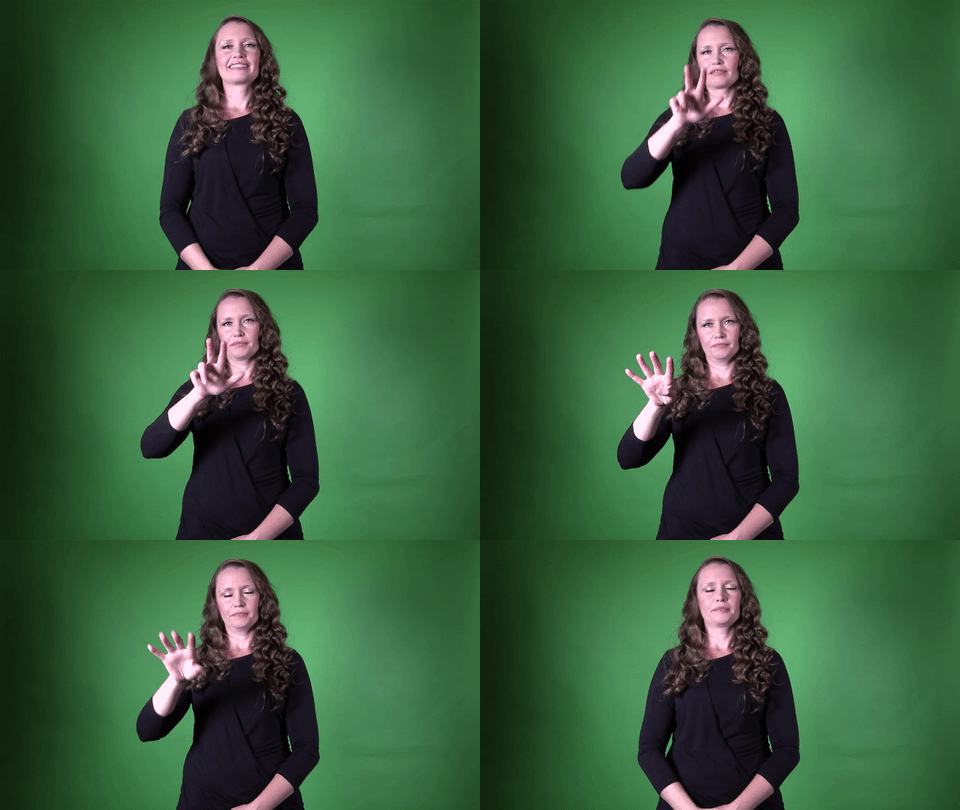
Sign for THE NUMBER THIRTY-FOUR in ASL | Learn the Sign for THE NUMBER THIRTY-FOUR in ASL with the #1 Best ❤️ Free Dictionary!

Definition: Refers to the number thirty-four

Sign for THE NUMBER THIRTY-FOUR in ASL 

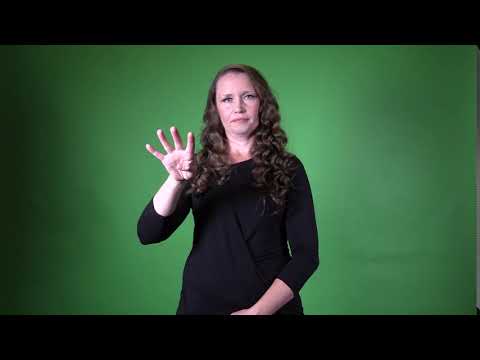
YouTube player

Practice Activities:

To practice the sign for the number thirty-four in ASL, start by repeatedly signing it in front of a mirror to ensure accuracy. Focus on handshape transitions between the “3” and “4” digits, keeping your movements smooth. Repeat the sequence slowly, then gradually increase speed while maintaining clarity.

Strengthen your number recognition by signing random numbers between 30 and 40, including the sign for the number thirty-four in ASL. Have a partner show you written numbers, and sign them back correctly. You can also watch videos of numbers in ASL and pause to sign along.

Incorporate the sign into real-world scenarios. Practice telling a fictional age, schedule time-based events, or mention quantities using the sign for the number thirty-four in ASL. For example, say: “I bought thirty-four apples at the store” or “The race had thirty-four participants.”

Try a number-based game with a partner where each person fingerspells a random number, and the other person signs it. Add fluency exercises by counting from 30 to 40 while focusing on each transition. Say the numbers aloud while signing to reinforce memory.

For storytelling, create a scenario where the number is meaningful, like a stadium seat number, a school classroom number, or the number of items collected in a game. Describe a situation where seeing or saying the number becomes important, ensuring repeated use of the sign.

Finally, challenge yourself by practicing in different environments, such as grocery stores or calendars, looking for something related to the number. Try to recognize numbers in daily life and sign them mentally to reinforce learning.

Cultural Context:

The sign for the number thirty-four in ASL is a combination of two individual number signs. In American Sign Language, numbers are often signed in sequence to express multi-digit numbers clearly. This ensures smooth communication for everyday conversations, addresses, prices, and more.

Numbers play an essential role in ASL, and the sign for the number thirty-four in ASL is commonly used in various contexts. Whether discussing age, counting objects, or providing numerical details, knowing how to sign numbers is crucial for clear and efficient communication. The proper formation of this number ensures accuracy in conveying information.

Deaf culture values precise communication, and the sign for the number thirty-four in ASL follows consistent numerical patterns. Understanding how to sign numbers correctly helps Deaf and hard-of-hearing individuals engage fully in conversations. This strengthens connections within the ASL community and enhances fluency in the language.

Sports scores, statistics, and player numbers often require the sign for the number thirty-four in ASL. Many athletes and sports enthusiasts use ASL to discuss game details and personal achievements. Mastering number signs allows for seamless communication in these activities.

Price negotiations, transactions, and budgeting frequently involve the sign for the number thirty-four in ASL. Deaf individuals use ASL to communicate costs, discounts, and financial details. Recognizing and signing numbers correctly is essential for financial literacy and independence.

The sign for the number thirty-four in ASL is also useful in education and workplaces. Teachers, students, and professionals rely on ASL numbers to reference assignments, instructions, and deadlines. Learning ASL number signs supports inclusivity in academic and professional environments.

Practicing the sign for the number thirty-four in ASL helps improve fluency in numerical gestures. Repetition and exposure to ASL numbers enhance memory recall and confidence in signing. Over time, signing numbers becomes a natural part of ASL conversations, making communication easier.

Parents, teachers, and interpreters often teach young children the sign for the number thirty-four in ASL. Early exposure to ASL numbers supports cognitive development and language acquisition. It also strengthens a child’s ability to communicate effectively in both social and academic settings.

Technology and media have increased the visibility of ASL, making the sign for the number thirty-four in ASL more accessible. Online videos, tutorials, and ASL courses provide resources for learning and practicing number signs. These tools help both beginners and advanced signers refine their skills.

Using the sign for the

Extended Definition:

The sign for the number thirty-four in ASL follows a two-digit number pattern commonly used in American Sign Language. It combines the individual signs for “three” and “four” in a smooth, continuous motion. This sign is essential for expressing numerical values in conversations, storytelling, and everyday communication.

To form the sign for the number thirty-four in ASL, hold up the number “three” with your dominant hand, then transition smoothly into the number “four.” The movement should be fluid and natural, without pausing between the numbers. This technique follows the general ASL rule for signing two-digit numbers.

Numbers play a crucial role in ASL, allowing signers to express quantities, addresses, ages, and more. The sign for the number thirty-four in ASL is useful for discussing topics such as sports scores, statistics, and financial amounts. Understanding number signs helps ASL users communicate effectively in various situations.

Facial expressions and body language can enhance the meaning when using ASL numbers. When signing the number thirty-four in ASL, keeping a neutral or context-appropriate facial expression ensures clarity. Numbers can be emphasized by adjusting speed and movement to match the conversation’s tone.

Many number signs in ASL follow a logical pattern that makes them easy to learn. The sign for the number thirty-four in ASL follows the standard two-digit sequencing rule. Mastering these patterns can improve fluency and confidence when signing numbers in everyday conversations.

Practicing number signs regularly can help improve speed and accuracy in signing. The sign for the number thirty-four in ASL can be memorized and reinforced through exercises such as counting aloud while signing. Engaging in real-life conversations that involve numbers also strengthens recognition and recall.

American Sign Language relies on consistent handshapes and movements to ensure clarity. The sign for the number thirty-four in ASL should be performed with precise finger positioning. Keeping the hand steady and maintaining a smooth transition between digits helps prevent misunderstandings.

Numbers in ASL are widely used in educational, professional, and social settings. The sign for the number thirty-four in ASL is commonly seen in classrooms, workplaces, and casual discussions. Learning and practicing number signs ensures effective communication in both formal and informal interactions.

Some number signs in ASL may have regional or stylistic variations, but most adhere to standard conventions. The sign for the number thirty-four in ASL is generally signed the same way across different ASL communities. Exposure to

Synonyms: thirty-four, number thirty-four, number 34, the number 34, the number thirty-four

Educational resources: Find related learning materials in our course bank!

Want more? Check out some of our popular learning activities on the homepage!

Need to look up a sign? Use our highly rated dictionary: https://aslinteractive.com/best-asl-dictionary/

Follow us on tiktok: https://www.tiktok.com/@aslinteractive. More social media links at the bottom of this page!

Long-tail Keywords: what is the sign for the number thirty-four in ASL, how do you sign the number thirty-four in ASL, learn how to sign the number thirty-four in American Sign Language

Categories: Numbers – Basics, Numbers 31-40, cardinal numbers

tags: Numbers 31-40, Numbers, Math, Educational, Language Learning

Parameters

*Handshape*:

The sign for the number thirty-four in ASL uses a combination of handshapes to represent the digits 3 and 4. Start with the number 3️⃣ handshape, where the thumb, index, and middle fingers are extended while the ring and pinky fingers are folded down. Then, smoothly transition to the number 4️⃣ handshape by extending the ring finger alongside the others. The sign for the number thirty-four in ASL is performed with a slight bounce or shift between the digits to indicate both numbers clearly.

*Palm Orientation*:

The palm orientation for the sign for the number thirty-four in ASL begins with the palm facing outward. The dominant hand first forms the “3” handshape, with the index, middle, and thumb extended while the ring and pinky fingers remain folded. Then, the hand transitions smoothly into the “4” handshape by extending the ring finger while keeping the palm orientation the same. Throughout the movement, the palm remains facing forward, ensuring clarity when signing the number.

*Location*:

The sign for the number thirty-four in ASL is produced in the neutral signing space in front of the chest. The dominant hand forms the number three with the index, middle, and thumb extended, then transitions smoothly to the number four by extending the ring finger. The motion is fluid, without excessive movement, keeping the numbers clearly visible. Signing should be done at a comfortable height, ensuring clarity for the viewer.

*Movement*:

To sign for the number thirty-four in ASL, begin with the number three handshape (index, middle, and thumb extended) facing forward. Quickly transition to the number four handshape (index, middle, ring, and pinky extended) without changing orientation. The movement should be fluid as you shift between the two handshapes. Maintain a steady and comfortable pace to ensure clarity. Avoid extra movements that could cause confusion.

*Non-Manual Signals*:

When signing the number, maintain a neutral or slightly attentive facial expression to support clarity. Eyebrows should remain relaxed, unless emphasizing or clarifying the quantity. Mouth movements may include slight enunciation of “thirty-four” to reinforce meaning. Eye gaze should be directed towards the listener, ensuring engagement. Small head nods may be used naturally in conversation to confirm understanding. Keep movements smooth and controlled to maintain the proper flow for the sign for the number thirty-four in ASL.

*Prosody, Dominant/Non-Dominant Hand*:

The sign for the number thirty-four in ASL uses the dominant hand only. Start with the number three by extending the index, middle, and thumb while the ring and pinky fingers are curled in. Then transition smoothly into the number four by extending all fingers except the thumb. The movement is fluid, shifting from three to four in a continuous motion. The non-dominant hand is not involved in producing the sign. ✋

Tips for Beginners:

When learning the sign for the number thirty-four in ASL, focus on handshape transitions. This number is signed using a fluid movement between the “3” and “4” handshapes. Ensure that each digit is clearly visible as you shift from one to the next, keeping your palm facing forward for readability.

A common mistake beginners make when signing the number thirty-four in ASL is rushing the transition. Moving too quickly can make the sign unclear, while moving too slowly can make it seem unnatural. Aim for a smooth but controlled shift to maintain clarity.

Another tip is to avoid twisting your wrist or changing orientation. Keep your palm forward and fingers steady. If you turn your hand too much, the sign could look like a different number. Practice in front of a mirror to ensure proper form.

Finger control is essential for signing numbers accurately. Strengthen your ability to isolate specific fingers by practicing counting from one to ten before signing numbers like thirty-four. This helps improve dexterity and makes transitions easier.

For better muscle memory, repeat the sign multiple times in a row. Start slow and gradually increase your speed while keeping movement controlled. Consistency is key to making the sign for the number thirty-four in ASL look natural in conversation.

Watching fluent ASL users sign numbers can also help. Study how native signers transition between handshapes smoothly. Following along with videos or practicing with others will reinforce correct movements.

Using proper facial expressions is also important when signing numbers in ASL. Though numbers themselves don’t always require expressions, keeping a natural and engaged look helps overall communication clarity. Keep your face relaxed for best results.

Connections to Other topics:

The sign for the number thirty-four in ASL is part of the numerical system in American Sign Language, which follows a structured pattern for numbers 30 and higher. Numbers in ASL are often categorized into groups that share similarities in movement and handshape, making it easier to recognize patterns. The transition from thirty to thirty-four involves a smooth shift of the handshape, reinforcing consistency across number signs.

The sign for the number thirty-four in ASL is connected to other multi-digit numbers, such as thirty-five and thirty-six, which follow a similar pattern of movement. Recognizing these patterns helps with fluidity when signing numbers in sequences, such as addresses, prices, and dates. This consistency supports ease of learning and application when discussing numerical values in conversations.

Numbers like the sign for the number thirty-four in ASL are commonly used in everyday contexts, such as sports scores, statistics, and counting. In a classroom or workplace setting, signing numbers correctly is crucial for conveying precise information. Additionally, they are vital for financial transactions, making purchases, and giving measurements, ensuring clarity in communication.

ASL numbers also play a role in storytelling and signing phone numbers, where rhythm and pacing are important. When signing phone numbers, for example, breaking numbers into recognizable groupings improves comprehension. This is especially beneficial for memorization and reducing errors in communication.

Ordinal numbers, like “thirty-fourth,” are derived from the cardinal number by incorporating slight modifications in movement. These variations are useful for discussing dates, rankings, or sequences, such as finishing in “thirty-fourth place” in a competition. Mastering these elements enhances fluency and allows signers to communicate numerical values efficiently in both casual and formal interactions.

Summary:

The sign for the number thirty-four in ASL is a combination of the signs for thirty and four. It is produced by smoothly transitioning between these two numbers in a single motion. This sign follows a common pattern in ASL number signs, where larger numbers are formed by sequentially signing their components.

To sign the number thirty, the hand starts in a “3” shape, with the index, middle, and thumb extended. Then, the thumb and index finger close together, forming an “O” shape, before quickly returning to the “3” shape. This movement makes the sign distinct from other number signs and ensures visual clarity.

After signing thirty, the transition to four happens fluidly. The hand shifts directly from the “O” shape to an open “4,” with the index, middle, ring, and pinky fingers extended. The shift is quick and efficient, following ASL’s preference for fluidity and economy of motion. The sign for the number thirty-four in ASL should be executed smoothly to avoid hesitation between components.

Numbers like thirty-four are frequently used in everyday ASL conversations. People use them for ages, addresses, prices, and quantities. Because of this, mastering fluid transitions in number signs improves overall signing speed and comprehension.

ASL number signs follow a structured linguistic system, reflecting the way numbers are visually grouped. Numbers from 30 to 99 are typically articulated with an internal movement or transition. This pattern helps separate these numbers from single-digit signs and reinforces ASL’s structured approach to numeral representation.

The number thirty-four, like other double-digit numbers, plays an important role in discussions about statistics, time, and measurements. Efficient articulation of this sign helps in conversations that require numerical precision, such as financial transactions or sports scores.

When fingerspelling or counting, consistency in handshape and movement matters. ASL users must ensure that each number is clearly formed to prevent misinterpretation. This is especially important for numbers with similar handshapes, like thirty-four and thirty-five, since a slight movement difference impacts meaning.

Deaf culture places great importance on clear and effective communication, especially regarding numerical data. In educational and professional settings, numbers must be conveyed accurately to avoid confusion. Learning number signs fluidly helps Deaf and hard-of-hearing individuals convey precise information efficiently.

The sign for the number thirty-four in ASL follows ASL’s rules for numerical expression. It adheres to the larger structure of ASL number formation, making it part of an established visual grammar. Understanding this pattern allows signers to quickly learn and recall other two-digit numbers.

Linguistically, ASL numbers are classified within numeral incorporation, a process where numbers are embedded into larger conceptual signs. Some signs allow numbers to attach directly to concepts like time or money. While thirty-four doesn’t incorporate into most classifier signs, it still follows ASL’s broader numerical system.

Applying ASL numerical rules consistently improves signing fluency. For learners, mastering number transitions builds confidence in signing multi-digit figures. The number thirty-four often appears in situations like listing addresses or referencing items, making it an essential everyday sign.

In the broader linguistic landscape, number signs like the number thirty-four in ASL demonstrate ASL’s efficiency in numerical representation. Unlike spoken languages, which rely on sequential verbalized digits, ASL condenses numbers into visually distinct handshapes. This visual efficiency contributes to the language’s expressiveness.

Beyond functional use, numbers in ASL carry cultural significance. They are used in games, storytelling, and traditions within the Deaf community. Understanding number signs enhances participation in these community activities, reinforcing both language fluency and cultural inclusion.

ASL learners benefit from practicing numbers frequently. Clear enunciation of the number thirty-four in ASL ensures quick recognition by others. This becomes especially useful in rapid exchanges, where numbers must be conveyed without hesitation.

The evolution of ASL number signs reflects the growing linguistics of the Deaf community. Older sign variations gradually gave way to more standardized forms. The consistency in modern number signs, including the number thirty-four, allows for uniformity across different sign language users.

Multimodal communication often integrates ASL numbers with fingerspelling or visual references. In scenarios where clarification is needed, numbers are sometimes reinforced using written text or repeating signs. This ensures absolute clarity, particularly in educational and business settings.

Numbers also interact with ASL classifiers in unique ways. Although the number thirty-four in ASL typically stands alone, larger numerical expressions sometimes blend classifier handshapes with counting techniques. For example, age references might incorporate the number within specific age-related classifiers.

When signing the number thirty-four, maintaining a steady rhythm and avoiding jerky movements helps ensure clarity. The transition between thirty and four should be smooth, demonstrating the signer’s proficiency. Like all ASL numbers, it benefits from natural hand positioning and appropriate facial expressions.

Mastering ASL numbers involves

Want more? Check out some of our popular learning activities!

ASL Interactive Resources

ASLInteractive YouTube Channel

Follow us on tiktok: @aslinteractive.com

Follow us on Instagram: aslinteractive

Facebook page: aslinteractive

Facebook group: aslinteractive

LInkedIn: ASL Interactive LLC

Twitter: @ASL_interactive

*Some information on this page is AI-generated. AI can make mistakes. Please check the information.

Sign for THIRTY-FOUR in ASL, Sign for NUMBER THIRTY-FOUR in ASL, Sign for THE NUMBER THIRTY-FOUR in ASL 

Responses