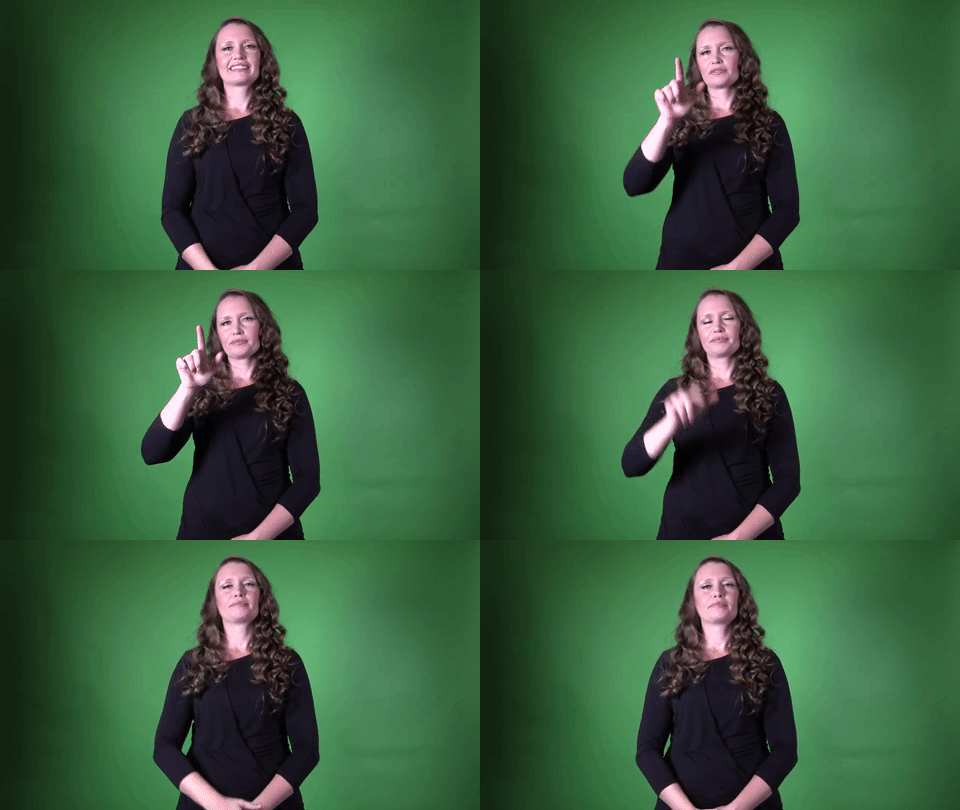
Definition: Refers to the number twenty-one
Sign for THE NUMBER TWENTY-ONE in ASL

Practice Activities:
Practicing the sign for the number twenty-one in ASL can be both fun and beneficial. Start by signing it repeatedly in isolation, ensuring your thumb moves correctly. Use a mirror or video recording to check your accuracy and fluidity. Gradually increase your speed while maintaining clarity.
Incorporate the sign for the number twenty-one in ASL into counting exercises. Count from one to thirty using ASL numbers, emphasizing twenty-one when you reach it. Then, count backward from thirty to one, reinforcing muscle memory. Challenge yourself by timing how quickly you can count while maintaining accuracy.
Use the sign for the number twenty-one in ASL in everyday scenarios. Sign your age if applicable or practice asking and answering, “How old are you?” with a partner. Apply it in real situations like ordering twenty-one of an item, talking about twenty-one dollars, or mentioning a date such as the twenty-first of the month.
Engage in a storytelling activity where twenty-one plays a key role. Create a short story about buying twenty-one apples, traveling twenty-one miles, or meeting twenty-one people. Sign the numbers clearly while telling your story, ensuring smooth transitions between signs. This helps improve fluency.
Pair up with a friend for a number-guessing game. One person signs a number between twenty and thirty, and the other person must identify and sign it back. Include the sign for the number twenty-one in ASL multiple times to reinforce recognition. Make it more challenging by asking players to fingerspell related words like “twenty-one” or guess an age or quantity based on clues.
Practice recognizing and responding to twenty-one in ASL conversations. Watch ASL videos where numbers appear frequently and sign along. Observe how fluent signers use the number naturally, then mimic their pacing and technique. Keep practicing to ensure accuracy and confidence when signing twenty-one.
Cultural Context:
The sign for the number twenty-one in ASL is a commonly used number sign in American Sign Language. This sign is essential for counting, giving age, addressing dates, and more in daily conversations. Being able to recognize and produce the sign for the number twenty-one in ASL correctly helps improve signing fluency and comprehension.
In Deaf culture, numbers are frequently used in various contexts, from casual conversations to formal settings. Whether you’re discussing age, time, or a specific numerical value, the sign for the number twenty-one in ASL is a fundamental part of communication. Mastering number signs ensures smooth interactions in the Deaf community.
The sign for the number twenty-one in ASL follows a specific handshape and movement that makes it distinct. Numbers in ASL often follow natural hand movements that make them easy to remember and use. Understanding the patterns behind ASL numbers helps signers communicate efficiently.
Fingerspelling is an important part of ASL, but number signs like the sign for the number twenty-one in ASL follow a unique structure. This sign, along with other number signs, follows clear patterns that differ from the manual alphabet. Learning number signs separately from fingerspelling improves accuracy in communication.
Children learning ASL are often introduced to numbers early in their language development. The sign for the number twenty-one in ASL is useful in educational settings, helping Deaf children count and recognize numbers. Using ASL numbers in daily practice strengthens language skills and confidence.
When discussing phone numbers, addresses, or money, number signs are crucial in ASL. The sign for the number twenty-one in ASL can appear in different contexts, making it an essential part of daily signing. Learning how to transition smoothly from one number to another is key in fluent ASL usage.
Technology and video resources have made learning ASL numbers easier than ever. Watching demonstrations of the sign for the number twenty-one in ASL can help new learners perfect their technique. Online tutorials and ASL classes are great tools for improving sign language skills.
In sports and entertainment, jersey numbers and statistics often require number signs. The sign for the number twenty-one in ASL is useful when discussing player numbers, game scores, or rankings. Many Deaf athletes and fans rely on number signs to engage in conversations about sports.
The sign for the number twenty-one in ASL, like other ASL numbers, follows a logical pattern that connects with other signs. Understanding these number signs helps sign
Extended Definition:
The sign for the number twenty-one in ASL is a common handshape used in everyday conversations. It is often seen when counting, giving addresses, or stating ages. This number is an essential part of learning basic ASL numbers.
To make the sign for the number twenty-one in ASL, start with your dominant hand in an “L” shape. The thumb and index finger move slightly as if mimicking the action of pulling a trigger. This small movement helps differentiate it from similar signs like twenty or other numbers.
The sign for the number twenty-one in ASL is versatile and appears in many contexts. Whether talking about a birthday, identifying someone’s age, or discussing quantities, this number is useful. Fluency in ASL numbers helps improve overall communication skills.
When signing the number twenty-one in ASL, hand orientation and movement are important. Keeping the fingers steady while making the slight thumb motion ensures clarity. Visual accuracy in signing numbers prevents misunderstandings in conversations.
Numbers in ASL have unique movements that make them distinct. The sign for the number twenty-one in ASL is easily recognizable due to its specific handshape. Understanding these differences is key to mastering ASL numbers.
Many beginners find ASL numbers challenging at first, but frequent practice helps. The sign for the number twenty-one in ASL becomes easier with repetition. Watching others sign and practicing in a mirror can improve accuracy.
ASL numbers follow a systematic pattern that helps with learning. Knowing the handshapes for twenty, twenty-one, and twenty-two can make number recognition faster. The hand movement for the sign for the number twenty-one in ASL sets it apart from similar numbers.
Accuracy is important when using the sign for the number twenty-one in ASL. Slight variations in hand positioning can change meaning in ASL. Paying attention to small details helps improve signing skills.
Fluent signers use the sign for the number twenty-one in ASL naturally. In fast conversations, signs may appear smoother but remain recognizable. Watching native signers can help improve speed and fluidity.
The sign for the number twenty-one in ASL is one of many essential number signs. Learning ASL numbers helps in both casual and formal conversations. Mastering number signs enhances overall fluency in ASL.
Practicing the sign for the number twenty-one in ASL in different contexts builds confidence. Using it in real-life situations strengthens retention. Consistent exposure to ASL numbers makes
Synonyms: twenty-one, number twenty-one, number 21, the number 21, the number twenty-one
Educational resources: Find related learning materials in our course bank!
Want more? Check out some of our popular learning activities on the homepage!
Need to look up a sign? Use our highly rated dictionary: https://aslinteractive.com/best-asl-dictionary/
Follow us on tiktok: https://www.tiktok.com/@aslinteractive. More social media links at the bottom of this page!
Long-tail Keywords: What is the sign for Number 21 in ASL, How do you sign Number 21 in American Sign Language, Learn how to sign Number 21 in ASL
Categories: Numbers – Basics, Numbers 21-30, cardinal numbers
tags: Numbers 21-30, Numbers, Language Learning, Math, Education
Parameters
*Handshape*:
The sign for the number twenty-one in ASL uses an “L” handshape , where the thumb and index finger extend while the other fingers remain folded down. The hand is positioned with the palm facing outward, and the thumb moves slightly back and forth like a small trigger motion. This movement is an essential part of clarity when signing numbers in ASL. The sign for the number twenty-one in ASL is distinct and easy to recognize.
*Palm Orientation*:
The palm orientation for the sign for the number twenty-one in ASL faces outward, with the palm directed toward the viewer. The dominant hand forms an “L” shape, with the index finger extended and the thumb sticking out to the side. The thumb moves slightly in a flicking motion toward the index finger, resembling a small pinching movement. This gesture clearly conveys the numeric value in ASL.
*Location*:
The sign for the number twenty-one in ASL is located at the dominant side of the body, typically near shoulder level. The hand remains in a natural, comfortable position close to the signer’s body. It does not move far from the signer’s dominant side, ensuring clarity and consistency.
When signing the number, the hand remains upright, with the palm facing the side. The signer maintains control over the movement, keeping the position stable. The location is essential for visibility, helping the receiver easily recognize the sign for the number twenty-one in ASL.
*Movement*:
To sign for the number twenty-one in ASL, use the L-handshape with the thumb and index finger extended. The thumb moves back and forth, tapping the side of the index finger twice. The motion is small and controlled, with the palm facing forward. Keep the rest of the fingers curled in while making the movement. When signing for the number twenty-one in ASL, be sure to use consistent hand positioning and gentle, repeated thumb motion.
*Non-Manual Signals*:
Facial expressions remain neutral or slightly focused when signing the sign for the number twenty-one in ASL, as it is a straightforward numerical sign. The eyebrows may stay in a resting position unless used in a question, where they might raise slightly. The lips can remain relaxed, with no specific mouth movement required, though some signers might lightly press them together for clarity.
*Prosody, Dominant/Non-Dominant Hand*:
The sign for the number twenty-one in ASL uses the dominant hand only. The hand is in an “L” shape with the index finger extended and the thumb sticking out. The thumb bends twice in a twitching motion, like a small “come here” movement. The non-dominant hand is not used. This sign is produced near the shoulder or slightly in front of the signer’s body, maintaining a neutral space.
Tips for Beginners:
When learning the sign for the number twenty-one in ASL, focus on hand positioning and movement to ensure clarity. The handshape starts with the “L” hand, where the index finger is extended, and the thumb moves slightly in and out, mimicking a small flicking motion. Keep the movement controlled and subtle to avoid making it look like a different number sign.
A common mistake beginners make is moving the thumb too dramatically or bending other fingers unnecessarily. Ensure that only the thumb moves while the index finger remains steady. This will make the sign for the number twenty-one in ASL look natural and prevent confusion with signs for other numbers like twenty or twenty-two.
Practice in front of a mirror to check that the movement is smooth and consistent. Slow, deliberate repetitions will help build confidence before increasing speed. Watching fluent signers also helps, as you’ll see how experienced signers simplify the motion while maintaining clarity.
It’s essential to maintain a relaxed hand to prevent stiffness, which can make the movement awkward. Keep your thumb motions small and precise rather than exaggerated. If your hand gets tired, take breaks and shake it out before resuming practice.
Using the sign for the number twenty-one in ASL in real-world conversations will reinforce muscle memory. Try signing numbers while counting objects, keeping track of dates, or discussing ages. Engaging in signed conversations whenever possible will build fluency and confidence more quickly.
Connections to Other topics:
The sign for the number twenty-one in ASL connects to broader numerical concepts in American Sign Language, particularly how numbers are formed with the dominant hand. This sign is unique because it involves a “gun” handshape with the thumb and index finger, where the thumb moves twice. Similar number signs, such as twenty-two, twenty-three, and beyond, use variations of the same handshape but incorporate different finger movements. Understanding these handshapes helps build a strong foundation for signing other numbers efficiently.
Number signs in ASL also have a rhythmic and visual flow that makes them dynamic within larger sentences. The sign for the number twenty-one in ASL is frequently used in contexts such as discussing ages, prices, and quantities. When combined with classifiers or other numerical expressions, it enhances clarity and precision in communication. For instance, when stating “twenty-one dollars,” signers may accompany the number with a dollar-hand shape to reinforce the meaning of currency.
The formation of the sign for the number twenty-one in ASL also connects to other number-related concepts like time, measurement, and ranking. Numbers often play a role in sequencing or ordering events, such as when listing steps, indicating sports scores, or giving addresses. Recognizing the subtle differences in how numbers are signed in different contexts is crucial for clarity. Additionally, when fingerspelling related terms such as “twenty-first (FS)” or “twenty-one-year-old,” signers may integrate numerical signs with classifiers to convey the idea naturally.
Numbers in ASL also intersect with cultural and social expressions, such as celebrating a twenty-first birthday, which holds significance in American traditions. Understanding the sign for the number twenty-one in ASL beyond its basic numeric function helps learners apply it effectively in everyday signing situations. Engaging with hands-on practice and watching fluent signers can reinforce muscle memory and fluency when using numerical signs in ASL.
Summary:
The sign for the number twenty-one in ASL is a fluid and natural movement that is commonly used in everyday communication. It is produced using the dominant hand in an “L” handshape, with the index finger extended and the thumb pointing outward. The thumb moves slightly back and forth, resembling the motion of pulling a trigger.
This sign stands out because of its simplicity and efficiency in conveying numerical information. It is distinct from other numbers in the twenties, as each number in ASL has its own unique movement. The repetition of the thumb’s motion helps differentiate it from visually similar signs.
When signing the number twenty-one, hand orientation and motion are crucial to ensure clarity. The movement of the thumb should be small and deliberate to avoid misunderstanding. While variations may exist depending on regional or personal signing styles, the general form remains consistent.
The sign for the number twenty-one in ASL is important for various situations, such as stating ages, discussing quantities, or giving addresses. It is commonly used in both formal and informal settings, making it a fundamental part of numerical communication. Mastery of this sign enhances fluency in ASL.
Numbers in ASL follow unique rules and vary significantly from English numerals. The system relies on handshapes, orientation, and movements rather than written symbols. This demonstrates ASL’s visual-spatial nature, which is distinct from spoken language structures.
The sign for the number twenty-one in ASL is an example of how numbers in ASL can incorporate subtle movements for clarity. Unlike some higher numbers that involve a repeating tapping motion, twenty-one uses a singular flicking gesture. This efficiency allows for quick and natural communication.
One of the unique aspects of numbering in ASL is how certain numbers have hand movements embedded within their structure. The variation in motion ensures that each number remains visually distinct. This prevents confusion, particularly when signing quickly or in rapid succession with other numbers.
Culturally, ASL numbers are deeply tied to Deaf identity and everyday interactions. Learning to sign numbers properly is an essential part of participating in signing communities. Misarticulating a number can lead to unintended misunderstandings, which is why clear, precise execution of the sign for the number twenty-one in ASL is necessary.
Linguistically, numbers in ASL reflect how the language operates through distinct rules rather than simply mirroring English. While English uses written numerals and spoken words, ASL relies on structured hand motions. This highlights the autonomy and richness of ASL as a full linguistic system.
In applied linguistics, the study of ASL numbers provides insight into how sign languages develop numerical representation. Researchers analyze differences in number signs across various sign languages to understand patterns of language formation. The sign for the number twenty-one in ASL is one example of how these unique number systems function.
ASL numbers have grammatical structures similar to other classifier systems in sign language. They follow specific rules when combined with certain words, such as counting objects or describing sequences. The number twenty-one integrates seamlessly into these grammatical frameworks.
The structure of numerical signs in ASL illustrates how signers utilize spatial awareness when communicating. The fluid wrist movements help differentiate one number from another. This demonstrates how ASL uses motion beyond static handshapes to convey meaning.
The sign for the number twenty-one in ASL is also notable for how quickly it can be adapted for larger numerical expressions. Numbers in ASL build upon basic handshapes, allowing signers to quickly convey precise information. This adaptability showcases the efficiency of ASL numerical construction.
Numbers in ASL are also connected to larger cultural themes, such as Deaf education and accessibility. Learning numerical signs is an important part of teaching mathematical concepts to Deaf children. The sign for the number twenty-one in ASL is particularly important in foundational learning.
The fluidity of ASL numbers also allows for quick exchanges, which is crucial in group conversations or fast-paced dialogues. Numeric fluency is key in professional and personal communication. Mastering the execution of twenty-one ensures smooth conversations involving numbers.
Related signs, such as those for twenty-two, twenty-three, and other numbers in the twenties, share similar starting handshapes. However, their motions vary in ways that help distinguish each number clearly. Recognizing these minor differences helps maintain clarity in numerical discussions.
Within ASL education, consistent reinforcement of correct number signs is important. Differences in finger movement between similar numbers can be challenging for new signers. Frequent practice helps to internalize the exact rhythm of the sign for the number twenty-one in ASL.
The study of ASL number formation also ties into broader themes of linguistic economy. ASL numbers often prioritize minimal movement while remaining visually distinctive. This efficiency is reflected in how twenty-one uses only a simple, brief movement.
The sign for the number twenty-one in ASL is also an instance of how numerical signs differ in signed versus spoken languages. Oral languages generally
Want more? Check out some of our popular learning activities!
ASL Interactive Resources
ASLInteractive YouTube Channel
Follow us on tiktok: @aslinteractive.com
Follow us on Instagram: aslinteractive
Facebook page: aslinteractive
Facebook group: aslinteractive
LInkedIn: ASL Interactive LLC
Twitter: @ASL_interactive
*Some information on this page is AI-generated. AI can make mistakes. Please check the information.


Responses