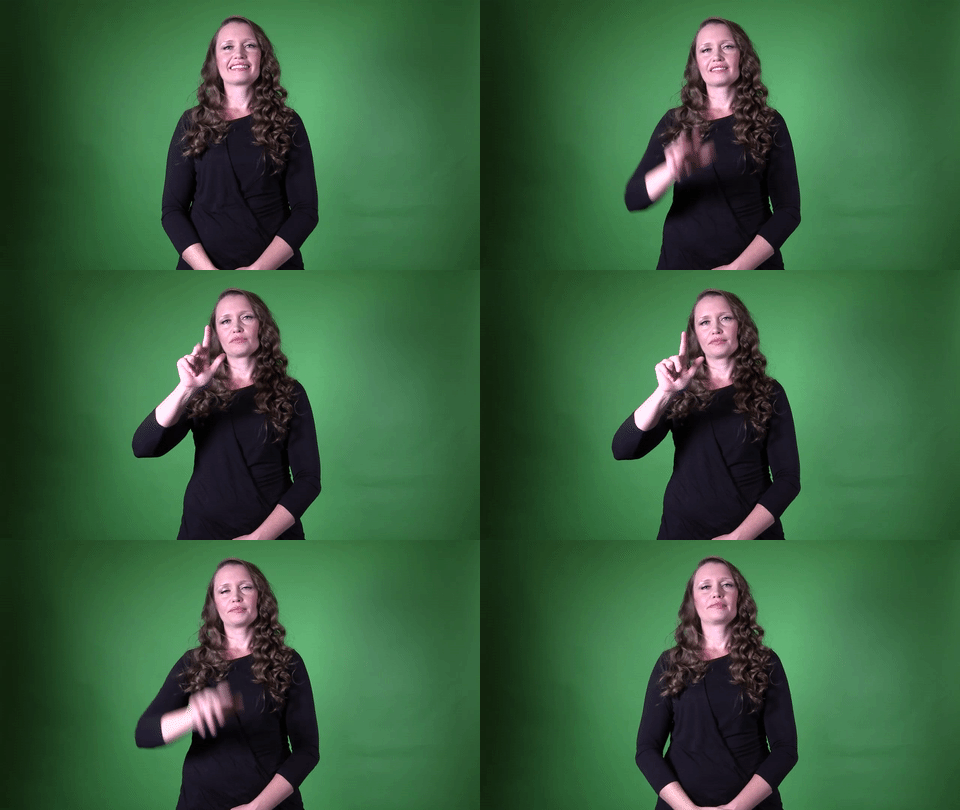
Definition: Refers to the number twenty-three
Sign for THE NUMBER TWENTY-THREE in ASL

Practice Activities:
Practicing the sign for the number twenty-three in ASL can help improve fluency with fingerspelling and number recognition. Begin by repeatedly forming the number with your dominant hand, ensuring your fingers move smoothly. Try signing it while looking at a mirror to check accuracy, and then sign it without looking for better muscle memory.
Use the sign for the number twenty-three in ASL in counting exercises. Count from twenty to thirty, making sure to sign each number distinctly and clearly. Challenge yourself by counting backward from thirty to twenty, focusing on fluid transitions.
Incorporate the sign for the number twenty-three in ASL into real-life scenarios. For example, role-play ordering food, such as asking for “twenty-three apples” at a store. Another scenario is giving an address or stating an age, like “I am twenty-three years old.”
Practice recognizing and producing the number in different contexts. Have a partner randomly sign numbers between twenty and thirty, and quickly identify the number. Reverse roles and sign numbers for your partner to recognize.
Create short ASL sentences using numbers in a story. For example, tell a story about seeing “twenty-three birds in the sky” or having “twenty-three dollars to spend.” Try using exaggerated facial expressions and movements to make the narrative engaging.
Use a flashcard game to reinforce learning. Have a set of flashcards with numbers written on them. Pick one, sign it, and check if your signing matches the number on the card before moving on to the next.
Try incorporating the number into daily conversations. Sign today’s date if it includes twenty-three, or mention a countdown such as “twenty-three days until vacation.” The more you practice it naturally, the more comfortable you’ll become.
Cultural Context:
The sign for the number twenty-three in ASL is a combination of hand movements that visually represent the number. American Sign Language uses a unique counting system that relies on handshapes and movement rather than spoken words. Understanding how to form the sign for the number twenty-three in ASL is essential for clear communication in the deaf and hard-of-hearing community.
In ASL, numbers are signed using one hand, making them easy to learn and use in everyday conversation. The sign for the number twenty-three in ASL follows the logical pattern of other numbers in the twenties, helping signers develop fluency in numerical expressions. Counting and using numbers in ASL is an important skill for discussing dates, prices, quantities, and more.
Deaf culture values accuracy in signing numbers, as it ensures clarity and avoids misunderstandings. The sign for the number twenty-three in ASL is commonly used in various situations, from telling time to sharing personal information like addresses and phone numbers. Learning to sign numbers correctly strengthens overall ASL proficiency.
Numbers in ASL are often incorporated into conversations effortlessly, allowing signers to communicate quickly and efficiently. The sign for the number twenty-three in ASL is part of a larger numerical system that follows specific grammatical rules. Practicing number signs regularly helps learners build confidence in their ASL skills.
The deaf community emphasizes visual communication, making precise hand movements essential. Using the correct handshape for the sign for the number twenty-three in ASL ensures that the number is clearly understood. Mastering numbers in ASL is a fundamental step in becoming proficient in the language.
ASL learners benefit from practicing numbers in context, such as when signing dates, ages, and prices. The sign for the number twenty-three in ASL is just one of many number signs that help facilitate smooth conversations. Engaging with native signers is an excellent way to refine signing skills and improve fluency.
Many teachers incorporate number signs into ASL lessons to help students gain confidence. The sign for the number twenty-three in ASL is often introduced along with other numbers to reinforce learning. Repetition and practice are key to mastering ASL numbers effectively.
Fingerspelling is sometimes used alongside number signs when clarification is needed. However, the sign for the number twenty-three in ASL is distinct and does not require fingerspelling for understanding. Visual recognition of number signs improves overall signing ability and comprehension.
Whether signing in educational settings, social gatherings, or professional
Extended Definition:
The sign for the number twenty-three in ASL is an essential building block for expressing numbers in American Sign Language. This number is commonly used in everyday conversations, including discussing ages, addresses, and quantities. Learning how to correctly sign it ensures effective communication with the Deaf community.
To make the sign for the number twenty-three in ASL, hold up your dominant hand with the palm facing outward. Start with the number two by extending your index and middle fingers while keeping the rest of your fingers folded. Then, transition to three by extending your thumb while wiggling your middle and index fingers up and down.
This sign follows a logical pattern in ASL number formation. Once you understand the system used for forming numbers beyond twenty, recognizing and signing them accurately becomes much easier. Practicing the sign for the number twenty-three in ASL will help reinforce your overall understanding of ASL numbers.
Numbers are an essential part of communication in sign language. Whether discussing a specific date, counting objects, or sharing personal information, knowing how to sign numbers fluently improves your signing skills. Accuracy in signing numbers ensures clear and effective conversations.
The sign for the number twenty-three in ASL is similar to other numbers in the twenties, making it easier to remember. Many numbers in this series use a combination of finger movements and positions, allowing for a smooth transition between signs. Recognizing patterns in ASL numbering helps speed up learning and increases fluency.
When signing numbers, always ensure your hand is positioned correctly and your movements are clear. Consistency in signing prevents confusion and helps the person watching understand quickly. Since ASL relies heavily on visual cues, maintaining the correct palm orientation and movement is important.
The sign for the number twenty-three in ASL is often used in daily interactions, such as stating an age or referencing a specific quantity. Practice signing numbers frequently to build confidence and fluency. Using numbers in different contexts will improve both your recall and ability to form them smoothly.
For beginners, mastering the sign for the number twenty-three in ASL may require some repetition. Watching experienced signers or using ASL learning resources can help reinforce proper technique. Signing in front of a mirror or recording yourself can also help identify any errors in movement or hand positioning.
Learning ASL numbers, including the sign for the number twenty-three in ASL, is an important step in becoming proficient in sign language. Fluency with numbers allows for more effective communication, especially when discussing time
Synonyms: twenty-three, number twenty-three, number 23, the number 23, the number twenty-three
Educational resources: Find related learning materials in our course bank!
Want more? Check out some of our popular learning activities on the homepage!
Need to look up a sign? Use our highly rated dictionary: https://aslinteractive.com/best-asl-dictionary/
Follow us on tiktok: https://www.tiktok.com/@aslinteractive. More social media links at the bottom of this page!
Long-tail Keywords: what is the sign for number 23 in ASL, how do you sign number 23 in ASL, learn how to sign number 23 in American Sign Language
Categories: Numbers – Basics, Numbers 21-30, cardinal numbers
tags: Numbers 21-30, Numbers, Language Learning, Math, Education
Parameters
*Handshape*:
The sign for the number twenty-three in ASL uses the dominant hand, forming a three-handshape. Start with the index, middle, and thumb extended while the ring and pinky fingers remain folded. The thumb and middle finger flick together twice while the index finger stays extended. This movement clearly differentiates it from similar numbers. The sign for the number twenty-three in ASL is fluid and precise, ensuring easy recognition when signing numbers in daily conversations.
*Palm Orientation*:
The palm orientation for the sign for the number twenty-three in ASL faces forward, away from the signer. The hand starts in an open position with the index and middle fingers extended upward while the thumb moves twice. The remaining fingers stay curled towards the palm. Throughout the movement, the palm remains outward, ensuring clear visibility for the receiver. Hand position and palm direction are essential for accurately signing the number.
*Location*:
The sign for the number twenty-three in ASL is produced in a neutral space in front of the signer’s torso. The dominant hand is used, with the palm facing outward. The fingers move distinctly to convey the combined numbers, ensuring clarity in articulation. The location remains consistent across various signing contexts to maintain visual recognition. Proper positioning allows for an accurate representation of the sign for the number twenty-three in ASL.
*Movement*:
To make the sign for the number twenty-three in ASL, start with an open “L” handshape, where the index finger and thumb remain extended. The middle finger bends down slightly and then straightens back up in a quick movement. This tapping motion occurs twice while keeping the other fingers tucked in. The hand stays in a neutral space in front of the body, and the palm faces outward. Maintain smooth and controlled motions.
*Non-Manual Signals*:
When signing the sign for the number twenty-three in ASL, keep a neutral or slightly focused facial expression. Raised eyebrows can emphasize clarity, especially if confirming or asking about a number. Maintain steady eye contact with your conversation partner to ensure comprehension. Mouth movements can be minimal, though some people slightly mouth “twenty-three” for reinforcement. Avoid unnecessary head movements to keep the sign distinct and easily recognizable.
*Prosody, Dominant/Non-Dominant Hand*:
The sign for the number twenty-three in ASL is made using the dominant hand, forming a three-handshape (thumb, index, and middle fingers extended). The palm faces outward, and the index and middle fingers alternate bending slightly before extending again. The non-dominant hand is not used. This movement creates a slight flicking motion, distinguishing it from other number signs. The sign for the number twenty-three in ASL is fluid and rhythmic, emphasizing clarity for visual communication.
Tips for Beginners:
Mastering the sign for the number twenty-three in ASL requires a combination of handshape control and smooth transitions. Since this sign involves finger movement, practice is key to making it look natural and fluid. Be sure to keep your hand steady, allowing only the intended fingers to move without unnecessary shifting.
One common mistake when signing the number twenty-three in ASL is tensing your fingers too much, which can make the movement appear stiff. Relax your hand and ensure your index and middle fingers extend comfortably while the thumb stays controlled. Moving too quickly can also lead to an unclear sign, so focus on deliberate and distinct motions.
When practicing, try performing the sign in front of a mirror to get a clear view of how your fingers are moving. Another useful technique is recording yourself and comparing it to fluent signers to check for accuracy. It’s normal for beginners to struggle with finger independence, so exercise patience and repeat the motion until it feels natural.
Finger sensitivity is crucial when learning the sign for the number twenty-three in ASL, so warm up by stretching your fingers before practice. If your fingers feel stiff, gently shake your hand and wiggle your fingers to loosen them up. The more comfortable your hand feels, the easier it will be to maintain fluid motion.
To build confidence, incorporate the sign into daily activities, such as counting objects or stating the number casually in conversations. Signing regularly helps reinforce muscle memory, making the movement smoother over time. If you’re unsure about your accuracy, seek feedback from fluent signers or use online video resources for reference.
Connections to Other topics:
The sign for the number twenty-three in ASL connects to broader number concepts, including cardinal and ordinal number usage. Numbers in ASL often follow distinct patterns, and learning them helps with counting, quantifying, and sequencing events. The sign for the number twenty-three in ASL is also part of the larger numerical category that includes related signs like twenty, twenty-one, and twenty-four, each following a similar handshape structure.
This sign is useful in contexts where specifying age, time, and quantities is necessary. For instance, it is essential in signing dates, such as saying “April twenty-third” or indicating an age like “twenty-three years old.” It is also frequently used in contexts like sports, where identifying a player’s jersey number may require it, or in business transactions, where exact amounts need to be conveyed clearly.
The sign for the number twenty-three in ASL shares characteristics with other number signs that involve the movement of the fingers. The repeating downward wiggle of selected fingers in numbers like twenty-three, twenty-five, and thirty-three can help learners see the relationship between movements and meanings. Recognizing this pattern aids fluency and improves accuracy when signing numbers rapidly in conversation.
Numbers in ASL also appear in compound signs where quantity is a key element. For example, signs for “$23” or “23 years old” incorporate the number within a concept rather than using separate gestures. Understanding number incorporation helps with learning related signs like measuring time, money, and dates. The sign for the number twenty-three in ASL highlights how numbers blend into everyday ASL discourse, making numerical fluency essential for effective communication.
Summary:
The sign for the number twenty-three in ASL is a combination of two numerical handshapes. It begins with the number twenty handshape, transitioning smoothly into the number three configuration. This sign requires precision in finger movement to maintain clarity.
To form the number twenty, the handshape resembles a pinching motion with the index and thumb. The index and thumb come together and separate rapidly. This motion expresses the number two in a stylistic way, common in ASL numerals.
After forming twenty, the signer transitions immediately into the number three handshape. The index, middle, and thumb extend outward while the ring and pinky remain folded. Keeping the hand steady ensures clarity when presenting twenty-three.
ASL numbers follow a distinct pattern, and the sign for the number twenty-three in ASL fits within a structured system. Numbers from twenty to twenty-nine involve a flicking or shifting movement. This fluency allows for easy communication without interruption.
It’s important to maintain a fluid motion when signing twenty-three. A choppy or slow transition can confuse viewers or suggest hesitation. Practicing the shifts between hand positions enhances fluency.
Hand orientation is key in producing the number twenty-three. The palm typically faces outward, ensuring visibility to the receiver. This orientation stays consistent with other ASL numbers in the twenties range.
Spacing also plays a role in numerical signs. The hand should not be too close to the body, as this could obscure the motion. Keeping the movement within the typical signing space makes the number more legible.
ASL numbers often follow a logical sequence, and the sign for the number twenty-three in ASL adheres to this pattern. The transition from twenty to three mirrors other two-digit numbers in the twenties series. Recognizing these systematic transitions helps in learning multiple numbers efficiently.
In conversations, numbers often appear alongside other signs, requiring smooth incorporation. The ability to insert the number twenty-three within a sentence seamlessly improves overall ASL fluency. Mastering number sequences allows for clear communication about dates, ages, and quantities.
The number twenty-three is frequently used in various settings. It may appear in sports scores, ages, addresses, or mathematical concepts. Understanding the proper ASL representation ensures accurate exchanges in these contexts.
ASL numbers are widely used in educational settings. Students may encounter twenty-three in math lessons, counting activities, or classroom instructions. Gaining comfort with the sign for the number twenty-three in ASL aids in effective learning.
In professional settings, signing numbers correctly is essential. Business transactions, scheduling, or financial discussions often require numerical clarity. Ensuring correct number formation in these environments prevents miscommunication.
Deaf culture places importance on accurate signing, particularly with numbers. Since ASL relies heavily on visual information, incorrect number signs can disrupt understanding. Practicing numbers diligently upholds effective signing etiquette.
Numerical signs in ASL demonstrate linguistic efficiency. By utilizing minimal hand movements, signers convey information quickly. This efficiency is evident in the sign for the number twenty-three in ASL, which combines two distinct handshapes in a seamless way.
ASL number signs showcase spatial awareness and dexterity. The ability to form numbers clearly without extra movement ensures proper communication. Mastery of numbers enhances overall ASL proficiency.
Many learners find ASL numbers easier to remember due to their structured nature. Patterns like the flicking motion in the twenties make numbers visually distinct. Recognizing these consistent elements makes learning ASL numbers simpler.
Historical influences have shaped ASL number signs. Early sign languages utilized different numeral systems before ASL developed a standardized approach. The sign for the number twenty-three in ASL reflects modern refinements in numerical signing.
Regional variations in ASL may affect some number signs. While twenty-three remains standardized across most areas, slight stylistic differences may exist. Being aware of these variations can help signers communicate effectively with diverse ASL users.
ASL numbers also interact with classifiers, which play a role in storytelling and description. The number twenty-three might integrate into classifier constructions when specifying amounts or sizes. Understanding these applications broadens ASL competence.
Expressing numbers quickly and clearly is essential in ASL conversations. Proper hand positioning, movement, and spacing contribute to effective numerical expression. These details ensure accuracy when signing the number twenty-three.
The importance of context cannot be overlooked when using ASL numbers. The number twenty-three may refer to a specific quantity, time reference, or personal identification. Contextual cues help viewers interpret signed numbers correctly.
Children learning ASL often enjoy practicing number signs. Interactive games and counting activities assist in reinforcing memory. Learning the sign for the number twenty-three in ASL becomes easier through repetition and engagement.
Mathematics and ASL intersect in many ways. Using signed numbers for calculations or problem-solving enhances accessibility. Recognizing the number twenty-three in ASL contributes to mathematical fluency in signed discussions.
Advanced
Want more? Check out some of our popular learning activities!
ASL Interactive Resources
ASLInteractive YouTube Channel
Follow us on tiktok: @aslinteractive.com
Follow us on Instagram: aslinteractive
Facebook page: aslinteractive
Facebook group: aslinteractive
LInkedIn: ASL Interactive LLC
Twitter: @ASL_interactive
*Some information on this page is AI-generated. AI can make mistakes. Please check the information.


Responses