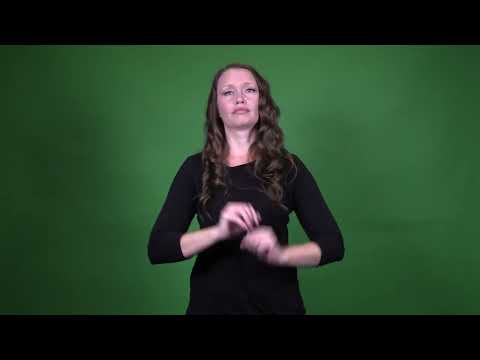
Sign for THE REST in ASL | ASL Dictionary

Definition: The remaining people or things. Sign for THE REST in ASL
YouTube player

Practice Activities

Practicing the sign for THE REST in ASL involves both physical repetition and conceptual understanding. Start by practicing in front of a mirror to check for clarity and accuracy in handshape and movement. Watch how your non-dominant and dominant hands interact, since this sign involves a crossing motion that symbolizes “remaining” or “the rest.” Record yourself signing simple sentences that use the sign for THE REST in ASL. This allows you to review your facial expressions and body language, which are essential components of fluent ASL communication. Try different sentence structures to see how the sign fits within various grammatical contexts. Incorporate the sign into real-life conversations or storytelling. For instance, when recounting a day’s events, pause and sign “the rest” to refer to remaining tasks or people. You can also sign in context by using it during group activities, such as when distributing items and referencing “the rest” that are left over. For advanced learners, use drills that involve role-playing or interpreting longer ASL narratives. Practice switching between signs like “all,” “some,” and the sign for THE REST in ASL to develop nuanced understanding. These activities help reinforce both vocabulary and grammar.

SEO Cultural Context

The sign for THE REST in ASL holds cultural and linguistic significance within the Deaf community. It reflects the visual-spatial nature of ASL, where concepts are often represented through spatial relationships and movement. This sign is commonly used in group settings to indicate people or things that remain after a portion has been addressed. Deaf culture emphasizes clarity and visual context, so the sign for THE REST in ASL often appears alongside facial expressions that indicate the speaker’s attitude or level of emphasis. For example, a raised eyebrow may show curiosity, while a slight head tilt can indicate uncertainty or reflection. There may be regional variations in how this sign is performed, especially in terms of speed or emphasis. In some areas, the movement may be larger or more deliberate, while in others it may be more compact. However, the core structure of the sign remains consistent across most dialects of American Sign Language. Understanding when to use the sign for THE REST in ASL is also culturally tied to the value placed on inclusion and clear communication. This sign is often used to clarify when not everyone or everything is being referred to directly, making it essential in group communication, storytelling, and instructions.

Extended Definition

The sign for THE REST in ASL typically involves crossing the arms over the chest, palms down, starting from a parallel position and then forming an “X” shape. This motion symbolizes the idea of what is left behind or what remains after a part has been removed or addressed. This sign is conceptually linked to other ASL signs like “leftover,” “remain,” and “others.” However, it’s important not to confuse it with signs like “extra” or “more,” which convey different meanings. The sign for THE REST in ASL specifically refers to what is remaining of a set or group. Common errors include using the wrong handshape or failing to cross the arms properly. Some learners may mistakenly use a single hand or make the movement too small, which can cause confusion or misinterpretation. Also, neglecting facial expressions can reduce the sign’s clarity and emotional tone. This sign is often used in both literal and abstract contexts. For example, in a classroom setting, a teacher might use it to refer to students who haven’t presented yet. In storytelling, it can be used to build suspense or indicate that more information is coming later.

Tips for Beginners

If you’re just starting to learn the sign for THE REST in ASL, begin by breaking it down into smaller movements. Focus first on your handshape, then on the crossing motion, and finally add facial expressions to give it full meaning. A common beginner mistake is to make the sign too quickly or to skip the crossing motion. This can lead to miscommunication, as the visual structure of the sign is crucial. Practicing in slow motion can help you internalize the correct form. Use repetition to build muscle memory. Practice the sign daily, even if it’s just for a few minutes. Try using it in everyday situations, such as when talking about chores, meals, or group activities. The more contexts you use it in, the more natural it will feel. Don’t be afraid to ask for feedback from fluent signers or instructors. The sign for THE REST in ASL has subtle nuances that are best learned through observation and correction. Watching Deaf signers use it in real-life settings can also provide valuable insight.

Connections to Other Topics

The sign for THE REST in ASL is closely related to the sign for “remain,” which also refers to items or individuals left after others are gone. Both signs share a similar concept but may differ slightly in usage depending on context. Another related sign is “others,” which indicates people or things not previously mentioned. While “others” can be more general, the sign for THE REST in ASL is more specific and often follows a known subset. You’ll also find a connection to the ASL concept of spatial referencing. When signing about a group and then using the sign for THE REST in ASL, you can place people or items in imagined space to clarify who or what you’re talking about. Grammar in ASL allows for topic-comment structure, and this sign often appears in the comment portion of a sentence. For example, you might sign “Five students finished. The rest—still working.” This structure showcases how ASL prioritizes visual clarity. Lastly, the sign ties into themes of inclusion and categorization. Knowing how to use signs like “some,” “all,” “few,” and “the rest” gives learners the tools to describe groups accurately and respectfully.

Lengthy Summary

Mastering the sign for THE REST in ASL is more than just learning a hand movement—it’s about grasping the concept of what remains and how to visually convey that idea. This sign is a vital part of everyday ASL vocabulary, often used in group discussions, storytelling, instructions, and more. Through consistent practice—such as mirror work, recording yourself, and engaging in real-world signing—you’ll gain both fluency and confidence. Understanding the cultural context of the sign helps you appreciate its role within the Deaf community and its emphasis on clarity and inclusivity. The

Extended Definition

shows how the sign for THE REST in ASL fits within a broader system of related signs, offering learners multiple ways to express nuanced ideas. Avoiding common beginner mistakes like incorrect handshape or rushed execution ensures your communication remains clear and respectful. Related signs like “remain,” “others,” and “some” help build a stronger foundation in ASL grammar and vocabulary. These connections deepen your understanding and allow you to use the sign in more complex and meaningful ways. In summary, the sign for THE REST in ASL is an essential tool for expressing what is left, whether you’re talking about people, items, or abstract ideas. Its use reflects the visual and conceptual nature of ASL, making it a powerful addition to your signing skill set. Keep practicing, stay curious, and continue exploring how this sign fits into broader conversations in ASL. With dedication, fluency is within your reach ✨ . Synonyms: remainder, others, balance, what’s left, residual Educational resources: Find related learning materials in our course bank! Want more? Check out some of our popular learning activities on the homepage! Need to look up a sign? Use our highly rated dictionary: https://aslinteractive.com/best-asl-dictionary/ Follow us on tiktok: https://www.tiktok.com/@aslinteractive. More social media links at the bottom of this page! Long-tail Keywords: Categories: tags: ASL phrases, rest-related ASL signs, relaxation in ASL, daily routine ASL vocabulary, common ASL expressions

Want more? Check out some of our popular learning activities!

ASL Interactive Resources

ASLInteractive YouTube Channel

Follow us on tiktok: @aslinteractive.com

Follow us on Instagram: aslinteractive

Facebook page: aslinteractive

Facebook group: aslinteractive

LInkedIn: ASL Interactive LLC

Twitter: @ASL_interactive

*Some information on this page is AI-generated. AI can make mistakes. Please check the information.  

Responses