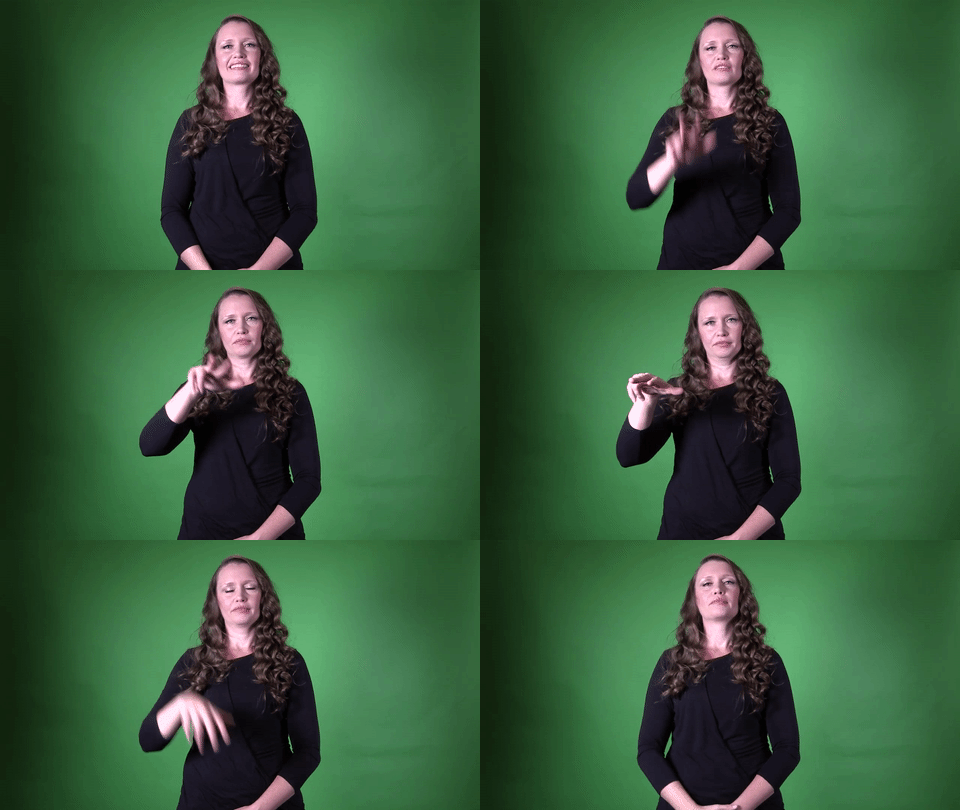
Sign for THIRTY-THREE in ASL | Learn the Sign for THIRTY-THREE in ASL with the #1 Best Free Dictionary!

Definition: The number thirty-three

Sign for THIRTY-THREE in ASL 

YouTube player

Practice Activities:

Practicing the sign for thirty-three in ASL can be fun and engaging through a variety of activities. Start by signing it repeatedly in isolation, ensuring smooth bouncing movement between the numbers. Watching yourself in a mirror can help refine hand positioning and fluidity. Try recording yourself signing and comparing it to a fluent signer to catch any inconsistencies.

Use the sign for thirty-three in ASL in context by incorporating it into simple phrases. For instance, sign “I have thirty-three books” or “She is thirty-three years old.” Challenge yourself by forming longer sentences that use the number naturally. Write a small paragraph with multiple number signs and practice signing it aloud.

Work with a partner and take turns quizzing each other on random numbers, ensuring the correct movement for double-digit numbers. One partner fingerspells a number, and the other signs it back using ASL number signs. This activity reinforces comprehension and recall while developing speed and accuracy.

Try a storytelling activity incorporating the sign for thirty-three in ASL. Create a short narrative that includes birthdays, money, or ages of family members to naturally use the number. For example, “My uncle turned thirty-three this year. He got thirty-three gifts!” Practicing within a meaningful context will enhance retention and fluency.

For a solo exercise, count up from one to thirty-five, pausing at thirty-three to focus on the sign’s movement. Then, count backward, ensuring you maintain accuracy and fluid movement on double numbers. Use an ASL number chart to track your progress and correct any errors.

Engage in real-life practice by using the sign when discussing prices, addresses, or times that include thirty-three. Challenge yourself to find real-world situations in which the number naturally arises, reinforcing fluency in daily use.

Cultural Context:

The sign for THIRTY-THREE in ASL is commonly used in conversations where numbers play a role, such as discussing ages, prices, addresses, or quantities. American Sign Language incorporates unique number signs that are visually descriptive and efficient. Numbers like THIRTY-THREE follow specific handshape and movement patterns that differentiate them from other numbers.

In Deaf culture, signing numbers correctly is essential for clear communication. The sign for THIRTY-THREE in ASL follows a pattern similar to other repeated-digit numbers, helping signers express numerical concepts quickly. Mastering number signs is crucial for daily interactions, whether discussing time, money, or measurements.

Many ASL users rely on number signs to convey important details in conversations. Whether talking about sports scores, birthdays, or addresses, the sign for THIRTY-THREE in ASL ensures clarity. Accuracy in signing helps maintain smooth communication in both casual and professional settings.

In educational and business environments, understanding number signs like THIRTY-THREE is essential. ASL students practice numbers frequently to build fluency and avoid confusion. Using the correct number signs allows for clear discussions about math, finance, scheduling, and other number-related topics.

The sign for THIRTY-THREE in ASL is part of a broader system of numerical expressions in sign language. Learning numerical signs helps build confidence in ASL conversations. Signing numbers fluently allows Deaf and hearing individuals to communicate effectively across various topics.

Using the sign for THIRTY-THREE in ASL correctly demonstrates respect for language conventions and cultural norms. Deaf culture places high value on accurate signing, especially when it comes to numbers. Learning proper number signs enhances communication and shows commitment to using ASL effectively.

ASL interpreters and students frequently practice number signs, including the sign for THIRTY-THREE in ASL, to ensure smooth translations. Signing numbers with precision is necessary for interpreting classroom lectures, financial transactions, and medical appointments. Clear numerical signing ensures messages are understood without confusion.

From casual conversations to formal presentations, ASL users rely on number signs daily. The sign for THIRTY-THREE in ASL follows a structured linguistic pattern that makes it easily recognizable among ASL users. Learning number signs strengthens signing skills and improves overall fluency in American Sign Language.

Extended Definition:

The sign for THIRTY-THREE in ASL is a combination of hand movements that represent the numbers three and three. This sign is used in American Sign Language to express the numerical value of thirty-three in conversations, storytelling, and descriptions. Learning to sign numbers correctly is important for clear communication in ASL.

To make the sign for THIRTY-THREE in ASL, start by forming the number three with your dominant hand. Extend your thumb, index, and middle fingers while keeping the ring and pinky fingers folded down. Then, repeat the movement twice to indicate the repetition in the number thirty-three.

This number is frequently used in everyday conversation, whether discussing someone’s age, a price, a quantity, or years in history. The sign for THIRTY-THREE in ASL follows the pattern used for all numbers in the thirties, making it easier to learn once you understand the structure. Consistency in finger positioning and movement helps ensure clarity when signing.

Numbers are a crucial part of ASL, and mastering them improves fluency. The sign for THIRTY-THREE in ASL is commonly introduced in beginner ASL classes since numbers are essential for daily interactions. Practicing in front of a mirror or with a partner can help reinforce the motion and improve accuracy.

In ASL, numbers above ten often involve a bouncing or repeated motion to distinguish them from single digits. The sign for THIRTY-THREE in ASL follows this rule, with a small repeated movement to indicate a double three. Paying attention to hand shape and movement ensures that the sign is understood correctly.

Using numbers in ASL allows signers to share important details about dates, times, and measurements. The sign for THIRTY-THREE in ASL is useful when discussing specific amounts, such as a temperature reading, sports scores, or financial figures. Being able to quickly and accurately sign numbers strengthens overall ASL proficiency.

Signers often combine the sign for THIRTY-THREE in ASL with other number signs to express larger values. For example, numbers in the hundreds and thousands may incorporate thirty-three as part of a larger numerical concept. Understanding how to structure numbers in ASL makes communication smoother and more efficient.

When learning the sign for THIRTY-THREE in ASL, it helps to practice in real-life scenarios. Using the number in context, such as discussing someone’s birthday or counting objects

Synonyms: thirty-three, number thirty-three, number 33, the number 33, the number thirty-three

Educational resources: Find related learning materials in our course bank!

Want more? Check out some of our popular learning activities on the homepage!

Need to look up a sign? Use our highly rated dictionary: https://aslinteractive.com/best-asl-dictionary/

Follow us on tiktok: https://www.tiktok.com/@aslinteractive. More social media links at the bottom of this page!

Long-tail Keywords: what is the sign for thirty-three in ASL, how do you sign thirty-three in American Sign Language, show me the ASL sign for thirty-three

Categories: Numbers – Basics, Numbers 31-40, cardinal numbers

tags: Numbers 31-40, Numbers, Math, Educational, Language Learning

Parameters

*Handshape*:

The sign for THIRTY-THREE in ASL uses the number “3” handshape on both hands. The thumb, index, and middle fingers are extended, while the ring and pinky fingers remain folded against the palm. The dominant hand starts by forming a “3,” then moves slightly to the side before repeating the motion. This bouncing movement emphasizes the repetition of the number. The sign for THIRTY-THREE in ASL is clear and visually distinct. ️

*Palm Orientation*:

The palm orientation for the sign for THIRTY-THREE in ASL faces upward with the dominant hand. The number formation alternates between the number three handshape, bouncing slightly between each repetition. Both the index, middle, and thumb remain extended while the ring and pinky fingers stay folded. The movement maintains an open palm position, ensuring visibility of the handshape. The sign for THIRTY-THREE in ASL requires controlled finger movement and consistency in repetition.

*Location*:

The sign for thirty-three in ASL is produced in the neutral signing space in front of the body, typically at chest level. The movement stays within a small area, with the palm facing outward as the numbers are transitioned. Since thirty-three in ASL uses a repeated gesture, the hand remains in approximately the same location while slightly bouncing to indicate the repeated digit structure.

*Movement*:

To produce the sign for thirty-three in ASL, form the number three handshape on your dominant hand with the index, middle, and thumb extended while the ring and pinky fingers stay folded. Move your hand slightly downward and back up while maintaining the handshape, then repeat the motion. This bouncing movement helps distinguish thirty-three from other numbers and ensures clarity when signing.

*Non-Manual Signals*:

When using the sign for thirty-three in ASL, keep a neutral or slightly focused facial expression to show clarity. Eyebrows remain in a natural position since it is a straightforward number sign rather than a question or emphasized concept. Maintain steady eye contact with the person you’re signing to for fluid communication. If needed for emphasis, you can slightly nod while signing the number to reinforce accuracy.

*Prosody, Dominant/Non-Dominant Hand*:

The sign for THIRTY-THREE in ASL uses the dominant hand, forming the number 3 handshape (thumb, index, and middle fingers extended, while the ring and pinky fingers are curled in). The palm faces outward, and the hand bounces slightly twice between two positions to indicate repetition. The non-dominant hand is not used. This movement distinguishes it from similar numbers and ensures clarity in communication.

Tips for Beginners:

When learning the sign for THIRTY-THREE in ASL, focus on maintaining clear finger movements. This sign involves the repetition of the number three, so ensure that both your palm orientation and finger position remain consistent. Many beginners struggle with keeping their fingers fully extended—if they curl slightly, the sign may be unclear.

Hand positioning is essential for the sign for THIRTY-THREE in ASL. Your hand should be in a comfortable, natural position, palm facing out. If you tilt your palm sideways, it may be interpreted differently, so ensure the orientation is facing forward. Keep your movements smooth as you transition from one instance of the number three to the next.

A common mistake is tensing up while forming the shape of three. Your thumb, index, and middle fingers should be fully extended without stiffness. If your hand starts to shake or feel strained, relax and try again. Fluency comes with practice, so repeat the sign at a comfortable speed until it feels natural.

Another challenge with the sign for THIRTY-THREE in ASL is ensuring that the transition between the signs is fluid. Avoid jerky motions or pausing between repetitions. Practicing in front of a mirror can help you observe your movements and make adjustments.

For added accuracy, watch videos of native signers to compare your handshape and motion. Signing in front of a friend or instructor for feedback will also help refine your technique. Repetition is key, so incorporate the sign regularly into daily practice. Keep practicing, and over time clarity and confidence in using the sign for THIRTY-THREE in ASL will improve!

Connections to Other topics:

The sign for thirty-three in ASL is part of a broader system of number signs that follow a pattern within the language. The movement of the hand reflects how other double-digit numbers in ASL are signed, keeping consistency in the system. Understanding this sign helps learners see the logical flow in ASL number formation, especially when counting or relaying information about numbers in everyday conversations.

This sign connects to other number-related concepts, such as age, money, and time. When signing amounts or price values, learners must adjust their signs slightly to fit the context, pairing them with dollar or cent markers. Similarly, when discussing ages, the number sign typically starts at the chin and moves outward, a modification necessary for clarity in communication.

Numbers in ASL also play a role in sports and statistics, where signers frequently use them to represent scores, jersey numbers, or rankings. The sign for thirty-three in ASL is essential for those discussing player statistics in sports commentary or for students working with math-related topics. Mastery of numbers in ASL is key for finance, business discussions, and event planning.

Understanding the sign for thirty-three in ASL helps with number incorporation in larger numerical phrases. By learning patterns in two-digit and three-digit numbers, signers can quickly recognize and produce other numbers like forty-four or fifty-five with ease. The repetition of movement in numbers like thirty-three showcases a distinct rhythm, reinforcing ASL’s unique structure in counting and numerical concepts.

Summary:

The sign for thirty-three in ASL is formed using the number three handshape. The dominant hand is extended with the index, middle, and thumb fingers up while the ring and pinky fingers remain folded down. The hand moves slightly from side to side, repeating the number three twice.

This movement visually represents the repetition of the number three, making it clear that the signer is indicating thirty-three. The handshape remains the same throughout the movement, ensuring clarity and consistency. The motion is not exaggerated but should be distinct enough to differentiate from a single three.

Numbers play a crucial role in ASL, and the sign for thirty-three in ASL is part of a broader numerical pattern. Double-digit numbers in ASL often have a repeated motion to indicate duplication. This makes it easier for signers to recognize patterns and understand numbers quickly.

ASL numbers accommodate a variety of contexts, including age, time, money, and proportions. When using the sign for thirty-three in ASL, context determines whether it refers to years old, dollars, or another quantity. Facial expressions and additional signs help clarify meaning in conversation.

Linguistically, the repetitive movement in the sign for thirty-three in ASL follows ASL’s principle of numerical redundancy. Many double-digit numbers feature this repetition to maintain comprehension. This feature increases the sign’s recognizability and fluidity in communication.

The placement of the sign within signing space can slightly shift depending on context. If used to indicate a monetary value, it may be accompanied by the sign for “dollars” or “cents” afterward. Similarly, if referring to age, it may pair with the sign for “years old.”

The consistency of numerical patterns in ASL allows for efficiency in signing. The sign for thirty-three in ASL follows the same pattern as other repeated numbers like twenty-two and forty-four. This systematic approach helps maintain uniformity in the language.

In applied linguistics, number signs exemplify ASL’s structured morphology. Unlike spoken languages that form numbers through verbal articulation, ASL incorporates movement to convey units. The repetition in thirty-three aligns with ASL’s rule of numerical reiteration.

Numbers in ASL also demonstrate the visual efficiency of signed languages. The repetition in the sign for thirty-three in ASL ensures quick recognition. This allows fluent signers to process numerical information rapidly in conversation.

When teaching ASL, numbers are among the first concepts introduced because of their frequent use. The sign for thirty-three in ASL fits into numerical lessons that emphasize patterns in tens and repetition among double numbers. Learning this pattern helps students grasp numerical fluency.

From a cultural perspective, numbers hold significant meaning in various Deaf communities. The sign for thirty-three in ASL may be found in conversations about anniversaries, addresses, or historical dates. These elements enrich conversations within the Deaf community.

Numbers are a key part of everyday life, and thirty-three can mark milestones such as birthdays, sports statistics, or academic achievements. Signers frequently incorporate numerical signs in daily interactions. Mastering these signs improves fluency in ASL.

ASL’s number system has evolved over time to incorporate standardization and clarity. The sign for thirty-three in ASL adheres to traditional sign formation while reflecting ASL’s structured syntax. This ensures that communication remains effective and accessible.

The handshape for thirty-three is similar to other numbers ending in three, like thirteen and twenty-three. However, thirty-three differs in its repeated movement, distinguishing it from single three-number formations. Recognizing this distinction is crucial for ASL learners.

Repetition in number signs helps avoid misinterpretation. By ensuring that the motion for thirty-three is distinct, signers can differentiate it from other numbers. This visual repetition enhances accuracy in both casual and formal settings.

In rapid conversation, number signs may be signed more fluidly but should remain clear. The sign for thirty-three in ASL must maintain its recognizable handshape and repeated motion. This ensures that the number is understood without confusion.

The visual nature of ASL numbers makes them accessible for many learners. The sign for thirty-three in ASL, like other numerical signs, demonstrates iconic movement patterns. This characteristic makes it easier to learn compared to arbitrary signs.

ASL number signs also highlight the role of movement within the language’s grammar. The motion in thirty-three is not decorative but an essential part of the sign’s meaning. This is a core principle in signed languages where movement conveys distinct linguistic information.

When signing thirty-three in numerical sequences, smooth transitions between numbers are crucial. ASL users often practice numerical sequences to improve fluency. Developing familiarity with repeated numbers enhances overall signing efficiency.

In a broader sense, ASL numerals are an integral part of Deaf culture and accessibility. The sign for thirty-three in ASL is one of many numerical signs that enable clear and direct communication. Mastery of numbers supports effective interaction in

Want more? Check out some of our popular learning activities!

ASL Interactive Resources

ASLInteractive YouTube Channel

Follow us on tiktok: @aslinteractive.com

Follow us on Instagram: aslinteractive

Facebook page: aslinteractive

Facebook group: aslinteractive

LInkedIn: ASL Interactive LLC

Twitter: @ASL_interactive

*Some information on this page is AI-generated. AI can make mistakes. Please check the information.

Sign for NUMBER 33 in ASL, Sign for THE NUMBER 33 in ASL, Sign for THE NUMBER THIRTY-THREE in ASL, Sign for NUMBER THIRTY-THREE in ASL, Sign for THIRTY-THREE in ASL 

Responses