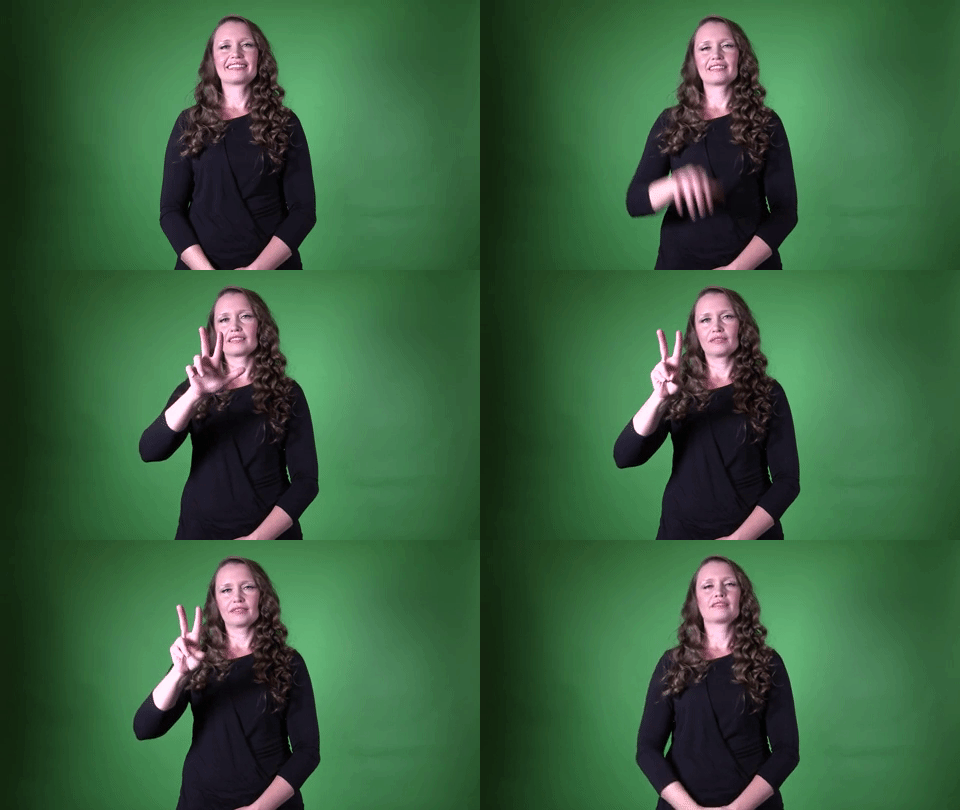
Definition: The number thirty-two
Sign for THIRTY-TWO in ASL

Practice Activities:
To practice the sign for thirty-two in ASL, start by signing it slowly and repeatedly in front of a mirror. Focus on the handshape and movement to ensure accuracy. Try switching hands for additional dexterity practice, even though dominant hand usage is standard.
Next, incorporate the sign for thirty-two in ASL into counting exercises. Count aloud while signing numbers from thirty to forty, emphasizing clarity in the transition between numbers. You can also challenge yourself by signing all numbers in reverse order from forty to thirty.
Use real-world situations to help reinforce understanding. Think of times when you might use the sign for thirty-two in ASL, such as discussing a person’s age, counting money, or marking a sports score. Practice forming sentences such as “My uncle is thirty-two years old” or “The game ended with thirty-two points.”
Engage with a partner for interactive activities. One person can sign a number while the other recognizes and responds with the following number in sequence. Another fun challenge is a “guess the number” game, where one partner signs different numbers and the other correctly identifies them.
Create a short story incorporating thirty-two into a real-life scenario. For example, imagine buying thirty-two apples at a grocery store or traveling thirty-two miles to a destination. Tell the story while signing keywords to build fluency.
Lastly, record yourself signing thirty-two, then watch the video for self-assessment. Compare it to reliable ASL resources to check accuracy. Practicing consistently will help solidify memory and comfort with the sign for thirty-two in ASL in daily conversations.
Cultural Context:
The sign for THIRTY-TWO in ASL follows the standard pattern for signing numbers in American Sign Language. Numbers in ASL are an essential part of communication, used for counting, addressing, and giving personal information. The sign for THIRTY-TWO in ASL is a combination of the numbers three and two, smoothly transitioning from one to the other.
Numbers in ASL, including the sign for THIRTY-TWO in ASL, are often signed with a fluid motion to ensure clarity. American Sign Language uses a one-handed number system, which means numbers like thirty-two are signed with one dominant hand. Understanding these number signs is crucial for fluency in ASL.
Cultural context plays a significant role in how numbers, including the sign for THIRTY-TWO in ASL, are used. In Deaf culture, numbers are often incorporated in storytelling, sports, and daily interactions. Fingerspelling and number signs help convey precise details in conversations.
Sports teams, birthdays, and addresses often require the use of the sign for THIRTY-TWO in ASL for clear communication. The accuracy of number signs helps avoid confusion, especially when discussing important details. Learning proper number signing is essential for both Deaf and hearing ASL users.
The sign for THIRTY-TWO in ASL is taught in ASL classes and is commonly practiced in number drills. Children learning ASL focus on number sequences to improve fluency. Practicing number signs like thirty-two helps build confidence in signing numbers quickly and correctly.
When signing numbers like the sign for THIRTY-TWO in ASL, facial expressions and context can add extra meaning. In casual conversations, numbers can be emphasized or signed more expressively depending on the situation. ASL allows for flexibility in signing numbers depending on the speaker’s intent.
Technology and video communication have made using the sign for THIRTY-TWO in ASL more accessible. Video calls and sign language apps help users refine their number signing skills. ASL learners can now practice signing numbers in real-time with Deaf and hearing signers around the world.
Mastering the sign for THIRTY-TWO in ASL, along with other numbers, is key to effective communication. Whether discussing prices, ages, or measurements, numbers are vital in daily ASL use. Fluency in number signs enhances communication in personal and professional settings.
Extended Definition:
The sign for thirty-two in ASL is a combination of number signs in one fluid motion. It follows the standard ASL number system, which incorporates handshapes and movements to convey numerical values clearly. This sign is used in everyday conversations, especially when discussing age, quantities, dates, or measurements.
To sign thirty-two in ASL, start by forming the number three with your dominant hand. Then, transition smoothly into the handshape for two without breaking the motion. This movement-based approach helps maintain the visual clarity of numbers in ASL and ensures fluent communication.
ASL numbers above ten often use a flicking or transitioning motion rather than individually signing each digit. The sign for thirty-two in ASL is fluid and efficient, making it easy to recognize and understand. This method speeds up counting and improves the natural flow of signed communication.
Many ASL users rely on number signs for daily interactions, such as talking about price amounts, sports scores, and addresses. Signing thirty-two clearly is essential in ensuring smooth exchanges, especially in conversations involving specific numerical data. Mastering this sign allows for more effective and natural ASL communication.
Like all ASL numbers, thirty-two follows the standard rules of ASL grammar. Context plays a key role in determining meaning, so facial expressions and sentence structure help clarify numerical references. This ensures that the sign integrates seamlessly into conversations without confusion.
Practice is essential when learning to sign thirty-two in ASL, as smoothness and speed improve over time. Watching fluent signers and using repetition in everyday situations can help build confidence. Signing numbers accurately is a valuable skill in ASL that enhances both comprehension and fluency.
ASL numbers are a crucial aspect of the language, providing an efficient way to communicate numerical data. The sign for thirty-two in ASL is just one example of how numbers are structured for clarity and ease of use. Understanding ASL numbering helps improve overall communication skills in the language.
Synonyms: thirty-two, number thirty-two, number 32, the number 32, the number thirty-two
Educational resources: Find related learning materials in our course bank!
Want more? Check out some of our popular learning activities on the homepage!
Need to look up a sign? Use our highly rated dictionary: https://aslinteractive.com/best-asl-dictionary/
Follow us on tiktok: https://www.tiktok.com/@aslinteractive. More social media links at the bottom of this page!
Long-tail Keywords: what is the sign for thirty-two in ASL, how do you sign thirty-two in American Sign Language, learn the ASL sign for thirty-two
Categories: Numbers – Basics, Numbers 31-40, cardinal numbers
tags: Numbers 31-40, Numbers, Math, Educational, Language Learning
Parameters
*Handshape*:
The sign for THIRTY-TWO in ASL uses a handshape that starts with the number “3” and transitions to the number “2.” Begin by forming the “3” handshape, with the index, middle, and thumb extended while the ring and pinky fingers remain tucked. Then, flick the middle finger down while keeping the index and thumb extended in a natural motion. This fluid transformation visually represents the number 32 in ASL, making it clear and easy to recognize.
*Palm Orientation*:
The sign for THIRTY-TWO in ASL starts with the palm facing forward as the number three is shown. The hand then transitions by flicking the middle and index fingers down to form the number two. Throughout the motion, the palm orientation remains outward, ensuring clarity in the sign. Keeping the fingers loose allows for smooth execution, making the sign for THIRTY-TWO in ASL easy to recognize.
*Location*:
The sign for thirty-two in ASL is made in the neutral signing space in front of the body, slightly above the waist. The dominant hand forms the number three, then transitions smoothly into the number two without dropping the hand. This motion is performed with a slight bounce to clearly show the numeral change. Keep the hand relaxed, ensuring each number is distinct for clear communication.
*Movement*:
To produce the sign for thirty-two in ASL, start with the number three handshape, with the index, middle, and thumb extended while the ring and pinky fingers are folded. Then, smoothly transition to the number two handshape by folding the thumb while keeping only the index and middle fingers extended. This movement should be fluid, as though the numbers merge in a continuous motion. Maintain a natural hand position, with the palm facing outward.
*Non-Manual Signals*:
When using the sign for THIRTY-TWO in ASL, the facial expression remains neutral unless emphasizing quantity or surprise. Eyebrows may raise slightly if asking for confirmation or clarification about the number. If expressing certainty, a firm head nod can accompany the sign.
For emphasis, tilting the head slightly forward can indicate importance or precision in the number. If used in a casual context, an easy-going expression with relaxed eyes maintains a natural delivery. Non-manual signals enhance the clarity and intent behind the sign for THIRTY-TWO in ASL.
*Prosody, Dominant/Non-Dominant Hand*:
The sign for THIRTY-TWO in ASL uses the dominant hand in a palm-forward position. Start by forming the number “3” (thumb, index, and middle fingers extended), then quickly transition to the number “2” by lowering the thumb while keeping the index and middle fingers extended. This movement creates a fluid numerical shift, maintaining a steady wrist and finger motion to ensure clarity in signing.
Tips for Beginners:
When learning the sign for THIRTY-TWO in ASL, focus on maintaining smooth transitions between the numbers. This sign is a combination of the numbers three and two, made in quick succession with your dominant hand. Keep your fingers steady and practice the motion slowly at first to ensure accuracy.
A common error is moving too fast and losing clarity in the individual numbers. Each number should be distinct, and the movement should look intentional rather than rushed. Beginners sometimes accidentally curl or relax their fingers at the wrong time, changing the meaning.
To improve fluency, practice signing numbers in sequences, such as counting from thirty to forty. This helps reinforce hand shapes and movement patterns for higher numbers. Watching native signers can also improve your understanding of the rhythm and slight hand adjustments needed for clarity.
Make sure your palm orientation is correct while signing the sign for THIRTY-TWO in ASL. The palm usually faces forward, similar to other number signs. If your palm faces inward or shifts unintentionally, it may confuse the meaning. Using a mirror or recording yourself signing can help spot mistakes.
Finger dexterity is important for signing numbers smoothly, so try finger exercises to strengthen your control. Stretching and warming up your fingers before practice can prevent stiffness, making the sign for THIRTY-TWO in ASL feel more natural. If your hands feel tense, shake them out and try again with relaxed movements.
Practice with others whenever possible, as feedback from fluent signers can be very helpful. If you’re unsure about your technique, watching ASL number lessons online can provide visual reinforcement. Over time, your confidence in using the sign for THIRTY-TWO in ASL will grow, making it second nature in conversation.
Connections to Other topics:
The sign for thirty-two in ASL connects with the broader number system in American Sign Language. Like other numbers in the thirties, this sign incorporates movement within a specific handshape pattern. Understanding this sign helps learners recognize the consistent structure used in ASL numbering, particularly with numbers that include a transition between two digits. Mastering the movement pattern for thirty-two makes it easier to sign other two-digit numbers efficiently.
The sign for thirty-two in ASL is part of the greater numeral series, which includes number signs up to ninety-nine. This sign follows a common formation seen in other numbers such as forty-two or fifty-two, where the hand transitions between digits smoothly. Learning this sign also helps in understanding related number signs used in quantities, time, and measurements. Numbers commonly appear in ASL conversations, such as when discussing ages, prices, or sports scores.
The structure of the sign for thirty-two in ASL demonstrates the economy of motion crucial in numerical signs. Some ASL number signs are borrowed into signs for measurements like minutes, dollars, and addresses. For example, when expressing thirty-two dollars, the number sign is followed directly by the sign for dollars. Similarly, in sequences such as giving a phone number, knowing how to quickly sign thirty-two improves fluency in communication.
Numbers in ASL also interact with classifiers, especially when describing quantities or ranking. The sign for thirty-two in ASL might be used in contexts like indicating the number of items on a list or referencing a player’s jersey number in sports discussions. Understanding how to incorporate numbers smoothly into sentences helps maintain visual clarity. Familiarity with the sign for thirty-two supports broader fluency in numerical communication across various ASL contexts.
Summary:
The sign for THIRTY-TWO in ASL is a numerical sign that follows a specific pattern for signing numbers within the 30s series. This sign is formed by using one hand and involves a combination of the digits three and two in a single fluid motion. It maintains the handshape for three before transitioning into the handshape for two.
Because ASL uses a base-ten system for numbers, the sign for THIRTY-TWO in ASL follows a consistent numerical pattern. This pattern is similar to other numbers in the thirties, maintaining a structured flow. Mastering this pattern helps with numerical fluency in ASL.
The sign for THIRTY-TWO in ASL is a variation of the general two-digit numbers between 30 and 39. It starts with the three-handshape and smoothly transitions into the two-handshape. This transition must remain clear and intentional for accuracy.
Numbers in ASL are visually iconic, helping reinforce cognitive associations with numerical values. The sign for THIRTY-TWO in ASL follows an intuitive motion that supports memorization. Many other numbers in the thirties share this movement pattern.
Numbers in ASL are not only functional but also play a significant role in daily conversations. The sign for THIRTY-TWO in ASL can be used in contexts ranging from listing quantities to specifying dates or ages. Precision in signing numbers is key for clarity in communication.
Just as spoken language relies on intonation, ASL numbers rely on smooth transitions for proper comprehension. The sign for THIRTY-TWO in ASL requires careful articulation to distinguish it from similar numbers. Avoiding handshapes that are unclear ensures the message is understood.
The cultural significance of signing numbers in ASL extends to areas such as education, business, and social interactions. The sign for THIRTY-TWO in ASL represents more than just a number; it serves as an essential tool for conveying exact numerical information. ASL users rely on numerical accuracy in everyday dialogue.
In Deaf culture, number signs hold importance in storytelling, academic discourse, and daily exchanges. The sign for THIRTY-TWO in ASL fits within a numerical framework that connects to time, money, and sequential concepts. Learning clear number signs strengthens overall ASL proficiency.
Grammatically, numerical signs like the sign for THIRTY-TWO in ASL follow standard word order when integrated into a sentence. Depending on the context, numbers may be signed before or after nouns, such as in measurements or lists. Mastering placement ensures fluid communication in ASL.
The principles behind numerical signs in ASL align with linguistic research on visual-spatial cognition. The sign for THIRTY-TWO in ASL exemplifies how the brain processes sequential handshapes for recognition. This knowledge supports advances in ASL instruction and learning strategies.
Comparing ASL numbers to spoken language reveals similarities in grouping patterns and numerical association. The sign for THIRTY-TWO in ASL is structured in a way that mirrors the spoken English word “thirty-two” but in a visual format. These parallels help bridge connections for bilingual ASL-English users.
Within the ASL numerical system, reducing ambiguity is essential for clarity. The sign for THIRTY-TWO in ASL, if signed incorrectly, could be confused with similar numbers like twenty-three or forty-two. Paying attention to movement direction and finger positioning prevents misunderstanding.
ASL learners benefit from repetitive exposure to numerical signs for retention. Practicing the sign for THIRTY-TWO in ASL alongside other numbers in the thirties range improves recognition. Drills that focus on smooth transitions between numbers aid muscle memory and fluency.
Numbers in ASL follow a structural logic that supports sign recall. The sign for THIRTY-TWO in ASL aligns with a predictable number formation rule that applies across decades. Recognizing these patterns allows for quicker mastery of multi-digit numbers.
The efficiency of ASL number signs ensures that communication remains streamlined. The sign for THIRTY-TWO in ASL provides a fast and accurate method for expressing the value without having to fingerspell. This efficiency makes ASL a powerful visual language for numerical concepts.
Linguistic research highlights how signed languages use handshapes to convey meaning efficiently. The sign for THIRTY-TWO in ASL exemplifies this principle by relying on minimal yet distinct hand configuration changes. This showcases the language’s compact and expressive nature.
ASL users frequently use numbers in everyday discussions involving money, dates, and addresses. The sign for THIRTY-TWO in ASL plays a role in ensuring transactions or appointments are communicated effectively. Signing numbers quickly and clearly helps maintain smooth interactions.
Technology and ASL learning applications now integrate numerical signs to assist students. The sign for THIRTY-TWO in ASL can be learned through video tutorials, interactive lessons, and AI-generated feedback. These tools help new signers master numerical accuracy efficiently.
Numbers in ASL vary slightly
Want more? Check out some of our popular learning activities!
ASL Interactive Resources
ASLInteractive YouTube Channel
Follow us on tiktok: @aslinteractive.com
Follow us on Instagram: aslinteractive
Facebook page: aslinteractive
Facebook group: aslinteractive
LInkedIn: ASL Interactive LLC
Twitter: @ASL_interactive
*Some information on this page is AI-generated. AI can make mistakes. Please check the information.


Responses