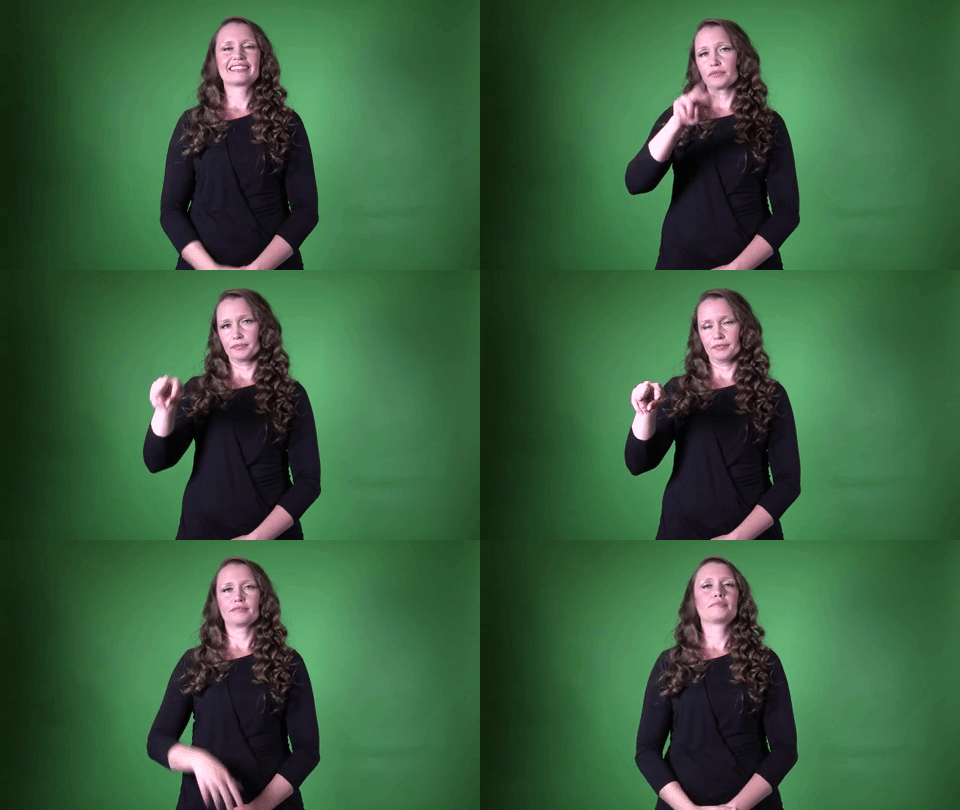
Sign for TWENTY-TWO in ASL | Learn the Sign for TWENTY-TWO in ASL with the #1 Best Online Dictionary! ✅

Definition: The number twenty-two

Sign for TWENTY-TWO in ASL 

YouTube player

Practice Activities:

Practicing the sign for twenty-two in ASL requires repetition and active engagement. Start by signing it slowly and clearly in front of a mirror, ensuring that your hand maintains the correct movement. Try signing it multiple times in a row while keeping a steady rhythm. Once comfortable, practice signing it with your non-dominant hand as well to improve coordination.

To strengthen recall, mix the sign for twenty-two in ASL with other number signs. For example, sign twenty, then twenty-one, then twenty-two, and continue up to thirty. You can also randomly pick number flashcards and quickly sign the appropriate number. This will improve speed and fluency when using numbers in ASL.

Use the sign for twenty-two in ASL in everyday situations to make it second nature. Count items around you, such as the number of books on a shelf or steps on a staircase. Try signing when discussing ages or numbers in conversations. Challenge yourself to count by twos using ASL to build confidence in signing numbers.

Practicing with a partner will reinforce the sign’s usage in context. One person can call out a number, and the other signs it. You can also create a scenario, like discussing an event happening on the twenty-second of a month. Another idea is to play a guessing game where one person signs a number while the other writes down what was signed.

Use storytelling to integrate the sign naturally. Create a short narrative that involves the number twenty-two, such as talking about a sports jersey number, a class of twenty-two students, or someone celebrating their twenty-second birthday. Signing within a story helps with retention and fluidity.

For fun, watch ASL videos featuring numbers and try to recognize when the sign for twenty-two in ASL appears. Repeating the sign in various contexts ensures accuracy and reinforces your confidence in its use. Keep practicing consistently to build familiarity and speed.

Cultural Context:

The sign for twenty-two in ASL is commonly used in daily communication. It follows the pattern of repeated movement that is typical for signs representing double numbers. This handshape and motion make it easily recognizable within the deaf community.

In American Sign Language, numbers play an important role in conversations, especially when giving personal details like age, addresses, or quantities. The sign for twenty-two in ASL is one of the many unique number signs that demonstrate how ASL incorporates movement for clarity. This visual nature of the language ensures efficient and clear communication.

When signing twenty-two in ASL, it’s important to maintain the correct handshape and motion. Accuracy ensures that the number is clearly understood, as some slight variations could be misinterpreted as a different number. Many ASL learners focus on mastering number signs early to build confidence in their signing skills.

The deaf community frequently uses number signs in both casual and formal settings. Learning the sign for twenty-two in ASL helps signers communicate dates, money amounts, and even sports scores. Numbers in ASL are a key part of storytelling and daily interactions.

In ASL culture, numbers are often used in name signs or personal identifiers. The sign for twenty-two in ASL might be included in references to years or ages during conversations. Understanding number signs enhances fluency and provides a deeper connection to ASL communication.

Fluency in signing numbers allows for clear and efficient exchanges of information. The sign for twenty-two in ASL is just one example of how ASL uses visual techniques to represent numerical concepts. Practicing these signs regularly improves accuracy and speed in signing.

When fingerspelling or signing numbers, facial expressions and body language can add emphasis. Signing twenty-two in ASL with confidence helps convey the correct meaning in context. Deaf culture values expressive signing, as it enhances communication and understanding.

Being able to quickly recognize and produce number signs is an important skill for all ASL learners. The sign for twenty-two in ASL follows a logical movement pattern shared with other double-digit numbers. Learning this sign helps build a strong foundation for mastering higher numbers in ASL.

ASL numbers are often incorporated into games, counting exercises, and classroom settings. The sign for twenty-two in ASL might appear in educational lessons or during discussions about historical events. Mastering number signs is essential for effective communication in both formal and informal situations.

Many ASL users prefer clear and distinct number signs to avoid confusion. The

Extended Definition:

The sign for twenty-two in ASL is a two-digit number sign that uses a specific hand movement. This sign follows the general pattern for repeating numbers in American Sign Language, making it visually clear and easy to recognize. Understanding how to sign twenty-two correctly is important for expressing numbers in conversation.

To form the sign for twenty-two in ASL, start by holding your dominant hand in an open “V” shape with your palm facing downward. The fingers bounce slightly twice to indicate the repeated number. This movement distinguishes twenty-two from similar number signs in ASL.

Numbers play a crucial role in communication, whether for counting, giving addresses, or stating ages. Knowing how to sign twenty-two correctly allows for clear exchanges in conversations involving numbers. Practicing the motion will help improve fluency when signing multiple-digit numbers.

The sign for twenty-two in ASL follows the same structure as other repeated numbers like thirty-three, forty-four, and so on. This consistency makes it easier for learners to remember and apply the correct motion. Mastering this movement helps with signing other double-digit numbers efficiently.

When signing twenty-two, keeping a steady hand and ensuring a slight bounce helps ensure clarity. The movement should be fluid, not exaggerated, for better readability. Watching native ASL signers will help learners refine their technique.

Understanding the sign for twenty-two in ASL is useful in daily interactions, such as stating a price, age, or counting objects. It is commonly used in various contexts, making it essential for both beginners and advanced signers. Learning this number improves overall ASL numerical proficiency.

Just like spoken languages have rules for pronunciation, ASL has rules for number signs. The sign for twenty-two in ASL follows a logical pattern that applies to other similar numbers. Recognizing these patterns helps in quickly learning more complex number signs.

Numbers in ASL rely heavily on movement and hand shapes to convey meaning. The sign for twenty-two in ASL is a perfect example of how small hand motions differentiate numbers. Paying attention to detail is key for accurate signing.

For beginners, practicing in front of a mirror can help with correctly forming the sign for twenty-two in ASL. Repeating the motion while watching hand position ensures accuracy. Consistency in practice leads to greater confidence in signing numbers.

Signing twenty-two is useful in many situations, from casual conversations to formal settings. Knowing the correct movement enhances your communication skills in ASL. Becoming familiar with the hand

Synonyms: twenty-two, number twenty-two, number 22, the number 22, the number twenty-two

Educational resources: Find related learning materials in our course bank!

Want more? Check out some of our popular learning activities on the homepage!

Need to look up a sign? Use our highly rated dictionary: https://aslinteractive.com/best-asl-dictionary/

Follow us on tiktok: https://www.tiktok.com/@aslinteractive. More social media links at the bottom of this page!

Long-tail Keywords: what is the sign for twenty-two in ASL, how do you sign twenty-two in ASL, twenty-two in American Sign Language

Categories: Numbers – Basics, Numbers 21-30, cardinal numbers

tags: Numbers 21-30, Numbers, Language Learning, Math, Education

Parameters

*Handshape*:

The sign for TWENTY-TWO in ASL uses a “V” handshape, made by extending the index and middle fingers while the remaining fingers remain curled against the palm. The palm faces downward, and the fingers quickly tap twice in a downward motion. This movement represents the numeral 22, with the repetition emphasizing the double-digit value. The sign for TWENTY-TWO in ASL is clear and efficient, commonly used when discussing ages, numbers, or addresses.

*Palm Orientation*:

The sign for TWENTY-TWO in ASL uses the index and middle fingers extended outward in a “V” shape while the rest of the fingers remain folded. The palm faces downward, and the hand moves slightly from one side to the other, forming a small bounce. This movement differentiates it from other numbers, ensuring clarity when signing. The palm’s downward orientation maintains consistency with similar number signs in ASL. ✋

*Location*:

The sign for twenty-two in ASL is produced in the neutral space in front of the signer’s body, typically at chest level. The hand moves slightly from side to side while forming the number two with the index and middle fingers extended. This motion helps distinguish it from other number signs, making it clear and easy to recognize in conversation.

*Movement*:

Hold your dominant hand in an open “V” shape with the palm facing down. Tap the index and middle fingers together twice as the hand moves slightly side to side. The sign for twenty-two in ASL resembles the double movement of the number two, reinforcing the concept of repetition. Keep the motion fluid and natural to maintain clarity.

*Non-Manual Signals*:

When using the sign for twenty-two in ASL, the facial expression remains neutral or slightly engaged, depending on context. Eyebrows may be slightly raised when emphasizing or clarifying the number. The head may tilt slightly forward if presenting the number emphatically. Eye contact enhances clarity, especially when signing in a conversation. A relaxed mouth posture is typical unless additional emphasis or questioning is involved.

*Prosody, Dominant/Non-Dominant Hand*:

The sign for TWENTY-TWO in ASL uses the dominant hand only. Form a “V” handshape with the index and middle fingers extended while the thumb, ring, and pinky fingers remain tucked in. The hand moves slightly to the side, then repeats the motion in a small bouncing movement. This movement mimics the repetition of the number 2, creating a visual representation of the numerical value. Keep the palm facing downward as the fingers move.

Tips for Beginners:

When learning the sign for TWENTY-TWO in ASL, focus on keeping your hand position steady. This sign involves a repeated motion using the number “2” handshape with the index and middle fingers extended. Make sure your palm faces downward and flick your fingers slightly twice as you move your hand outward to maintain clarity.

Beginners often struggle with hand positioning and motion fluidity. If your fingers are too stiff, the sign may look awkward. Keeping your wrist relaxed while maintaining controlled movement helps ensure precision. Avoid bouncing the hand too high or too low, as consistent motion helps maintain readability.

Practicing in front of a mirror or recording yourself can improve accuracy. Watching your fingers flick twice at the right pace will help with muscle memory. Try signing slowly at first, then gradually increase your speed while maintaining clarity. If you’re unsure whether you’re doing it correctly, compare your movements with native signers in ASL videos.

One common mistake is merging the two flicking motions into one fluid movement. Ensure a clear distinction between the two flicks to avoid confusion. Timing is crucial, so pause slightly between each flick while keeping the motion smooth. Over-exaggerating or rushing the flicks can make the sign look unnatural.

Consistency in signing the number signs is essential for fluency. The sign for TWENTY-TWO in ASL follows the same general pattern as other repeated number signs like THIRTY-THREE or FORTY-FOUR. Recognizing these patterns can reinforce your understanding and boost confidence. By practicing regularly and receiving feedback from fluent signers, you will become more comfortable using this number sign in daily conversations.

Connections to Other topics:

The sign for TWENTY-TWO in ASL connects to broader topics of number signs, handshape patterns, and numerical sequences. It falls within the category of repetition-based number signs, which means understanding TWENTY-TWO can help learners recognize the pattern used for numbers like THIRTY-THREE and FORTY-FOUR. Since the movement involves bouncing the number “2” handshape, this sign also reinforces controlled wrist motion, an important skill in ASL fluency.

Numbers in ASL are often incorporated into age signs, phrases related to time, and financial expressions. The sign for TWENTY-TWO in ASL is commonly seen in contexts like giving a person’s age, discussing years, or talking about amounts of money. For example, the sign may appear when stating “22 dollars” or “22 minutes.” Recognizing how number signs integrate into daily conversations can improve a learner’s ability to apply numerical signs in various settings.

This sign also relates to ordinal and cardinal number variations within ASL. While TWENTY-TWO itself is a cardinal number, modifying it with a slight twist in movement can indicate an ordinal form like “twenty-second.” This demonstrates the flexibility of ASL number signs in shifting meanings with subtle changes in motion. Additionally, knowing numbers like TWENTY-TWO helps with sequencing concepts, such as listing scores, dates, or rankings.

Repetition in number signs like the sign for TWENTY-TWO in ASL reinforces handshape consistency, which is key to clear communication. Similar patterns appear in ASL classifiers, where repeated movement can indicate plurality or distribution. When learners master number signs with bouncing repetition, they build a foundation for understanding other classifiers and numerical modifications in ASL grammar.

Summary:

The sign for twenty-two in ASL follows a numerical pattern consistent with other double-digit numbers in the twenties. It is a repeated movement sign, which means the handshape moves twice in the same manner. This repetition is essential because it distinguishes it clearly from the number twenty.

To sign twenty-two, use the “2” handshape, with the index and middle fingers extended while the other fingers are curled in. The palm typically faces downward, and the movement involves a slight bouncing or tapping motion of the two fingers. The fingers move twice in a horizontal direction, usually toward the dominant side.

This sign is part of the larger numerical system in ASL, which relies on consistent patterns to convey numerical sequences efficiently. Numbers in the twenties often use a bouncing motion, differentiating them from other numbers with a single movement. This repeated motion ensures clarity when communicating quickly.

The sign for twenty-two in ASL is easy to learn because it builds upon the logical progression of ASL numbers. Mastering numerical signs is essential for discussing dates, prices, quantities, and other numerical concepts. The motion is visually intuitive, reinforcing how ASL naturally incorporates spatial and kinetic elements.

When signing numbers, context matters. The sign for twenty-two in ASL can appear in various contexts, such as ages, addresses, or years. The signer’s facial expressions or sentence structure often provide additional information about the intended meaning.

Since ASL is a visual language, numbers incorporate movement to facilitate clarity. The bouncing movement for numbers in the twenties helps distinguish them from each other. The sign for twenty-two is particularly easy to recognize because of this distinct repetition.

Numerical signs like twenty-two are frequently used in daily communication. Whether discussing scores, measurements, or financial figures, signing numbers correctly ensures precise understanding. When combined with time-related words, twenty-two helps frame important information succinctly.

The repetition in the sign for twenty-two follows the pattern used in numbers twenty-one through twenty-nine. These numbers vary slightly in movement depending on linguistic conventions. However, the symmetry in form makes them predictable and easy to remember.

Hand dominance plays a key role in signing numbers correctly. Right-handed signers use the right hand as the active signing hand, while left-handed signers mirror the movement with their left hand. This consistency helps maintain fluency in signed conversations.

The visual and spatial nature of ASL enhances the representation of mathematical and numerical concepts. The sign for twenty-two in ASL takes advantage of space and movement to ensure clarity. These built-in patterns help signers communicate efficiently.

Numbers in sign language differ from spoken language in their physical representation. Spoken language relies on vocalized syllables, while ASL requires precise handshapes, movement, and orientation. This difference highlights the fundamental distinction between visual-spatial and auditory-oral communication systems.

The cultural significance of numbers in ASL extends to education, finance, storytelling, and daily conversation. Deaf culture values clear numerical communication to maintain accuracy and understanding. Accuracy in signing numbers is especially crucial in professional and academic settings.

ASL numbers connect to broader linguistic and cognitive studies, particularly in how the brain processes visual numeric patterns. Studies suggest that signers develop strong spatial awareness and cognitive flexibility due to ASL’s three-dimensional nature. The sign for twenty-two represents part of this complex yet efficient system.

Twenty-two is a common number in many contexts, making its accurate representation in ASL important. From sports jerseys to financial transactions, understanding and using numerical signs correctly is essential. Mastering numbers provides a foundation for effective ASL communication.

ASL incorporates numerical structure into larger grammatical patterns. Numbers like twenty-two frequently appear in classifiers, quantifications, and measurements. The numerical framework in ASL creates a structured way of expressing quantities.

The efficiency of numerical signs in ASL contributes to the language’s overall expressiveness. Rather than requiring multiple words, a single movement conveys a complete numerical idea. This efficiency enhances fluent communication, particularly in fast-paced conversations.

The handshape used in twenty-two is the same as the number two, but the motion distinguishes it. The bouncing or tapping movement is what signals a double-digit number. This physical distinction ensures that numbers remain visually distinct.

ASL reflects mathematical and numerical reasoning in its structure. The sign for twenty-two in ASL exemplifies these logical patterns with its repetition and directional placement. Recognizing these patterns makes number signs easier to learn and remember.

The role of numbers in ASL extends beyond basic counting and into social, economic, and academic discourse. Understanding how to sign numbers fluently is crucial for clear communication. The sign for twenty-two is a key component of this numerical system.

Because ASL relies on visual and spatial representation, number placement and motion contribute to meaning. The sign for twenty-two in ASL aligns with other numerical signs, ensuring consistency. This movement-based structure makes signing both logical and memorable.

In educational settings,

Want more? Check out some of our popular learning activities!

ASL Interactive Resources

ASLInteractive YouTube Channel

Follow us on tiktok: @aslinteractive.com

Follow us on Instagram: aslinteractive

Facebook page: aslinteractive

Facebook group: aslinteractive

LInkedIn: ASL Interactive LLC

Twitter: @ASL_interactive

*Some information on this page is AI-generated. AI can make mistakes. Please check the information.

Sign for 22 in ASL, Sign for TWENTY-TWO in ASL 

Responses