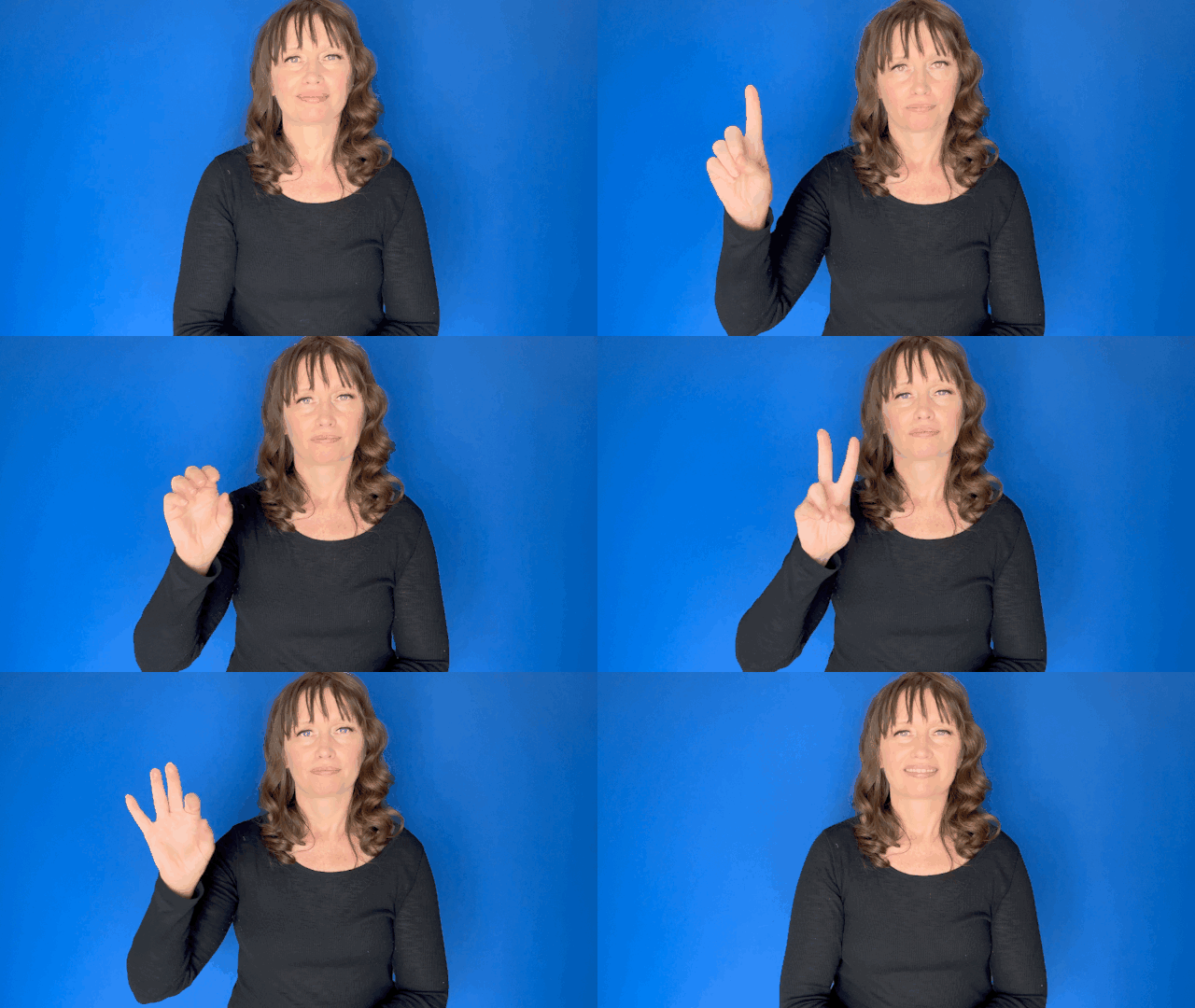
Definition: The years two thousand to two thousand ten.
Sign for TWO THOUSAND TO TWO THOUSAND TEN in ASL
Practice Activities:
Practicing the sign for two thousand to two thousand ten in ASL can be enhanced with both isolated drills and contextual usage. Start by signing each year individually from 2000 to 2010, focusing on hand placement and smooth transitions. Use a mirror or video recording to check for accuracy and consistency.
To build fluency, practice signing the full range in order and then mix up the years randomly. Challenge yourself to sign the even years first, then the odd years. Try signing the years backward from 2010 to 2000 to strengthen recall and dexterity.
Use the sign for two thousand to two thousand ten in ASL in sentences to improve contextual understanding. For example, sign “I graduated in (year)” or “The Olympics were held in (year).” Create five to ten sentences using historical events or personal milestones within this timeframe.
For partner activities, take turns quizzing each other by signing a year so the other person can identify it. Another variation is to describe something that happened between 2000 and 2010 without saying the exact year, prompting your partner to guess. This encourages critical thinking and engagement.
Storytelling activities can incorporate the full range of years. Describe a timeline of your life from 2000 to 2010, adding details to make it more engaging. Another approach is to narrate key world events spanning these years, reinforcing memory through storytelling techniques.
Engage in real-world practice by looking up significant events from two thousand to two thousand ten and signing about them to a friend or study group. Watching ASL storytelling videos that include these years can help reinforce natural signing flows. Practicing frequently and in varied contexts will deepen understanding and retention of the sign for two thousand to two thousand ten in ASL.
Cultural Context:
The sign for two thousand to two thousand ten in ASL represents the years from 2000 to 2010, a decade of significant change and growth. This period saw rapid advancements in technology, cultural shifts, and an increasing awareness of Deaf culture worldwide. The sign for two thousand to two thousand ten in ASL is essential for discussing history and personal experiences from this era.
Deaf communities experienced major progress during two thousand to two thousand ten, with the rise of video relay services and social media improving communication access. The expansion of captioning on television and online platforms also provided greater accessibility for Deaf individuals. Using the sign for two thousand to two thousand ten in ASL allows people to reflect on these important developments.
Pop culture during two thousand to two thousand ten included the rise of smartphones, the popularity of social media, and the dominance of streaming platforms. These changes had a huge impact on Deaf culture, making information and entertainment more accessible. The sign for two thousand to two thousand ten in ASL is useful when discussing these advancements within the community.
Education for Deaf students saw improvements between two thousand to two thousand ten, with more schools adopting bilingual-bicultural approaches. Increased awareness of ASL and its benefits contributed to better learning environments for Deaf children. The sign for two thousand to two thousand ten in ASL helps in conversations about these educational strides.
Many groundbreaking events took place from two thousand to two thousand ten, shaping both mainstream and Deaf culture. From advocacy movements to policy changes that improved accessibility, this decade left a lasting impact. Using the sign for two thousand to two thousand ten in ASL is important when discussing these critical moments.
The growth of ASL interpretation services and the increasing recognition of Deaf performers in entertainment were highlights of two thousand to two thousand ten. More Deaf actors, musicians, and content creators gained visibility, bringing ASL into the mainstream. The sign for two thousand to two thousand ten in ASL is valuable when recounting these achievements.
During two thousand to two thousand ten, public awareness of Deaf culture and ASL grew through popular media, documentaries, and viral videos. The internet became a powerful tool for Deaf individuals to share their stories and experiences. Using the sign for two thousand to two thousand ten in ASL allows people to talk about these cultural shifts.
Technological advances, including the widespread use of texting and video calls, changed how Deaf people communicated from two thousand to two thousand ten. These innovations made staying connected easier than
Extended Definition:
The sign for two thousand to two thousand ten in ASL is used to represent the years from 2000 to 2010. This period marks the first decade of the 21st century and is often referred to as the 2000s. In ASL, the way you sign these years follows a specific number pattern.
When signing two thousand to two thousand ten in ASL, most signers break the numbers down clearly. The number 2000 is typically signed by showing “2” followed by “thousand.” For the years 2001 to 2009, signers usually sign “2,” then “thousand,” then the individual last digits.
For example, to sign 2007, you would sign “2,” “thousand,” and “7.” This pattern makes the sign for two thousand to two thousand ten in ASL easy to understand. Once you reach 2010, the signing pattern tends to shift, with many signers switching to a more standardized number structure.
Different ASL users might sign years slightly differently based on regional variations or personal preference. However, the sign for two thousand to two thousand ten in ASL generally follows the “2-thousand” base structure. This pattern helps maintain clarity when discussing dates from this time.
Understanding how to sign two thousand to two thousand ten in ASL is useful for discussing historical events, personal experiences, and significant milestones. Whether referring to cultural events like the introduction of social media or personal milestones like birthdays, signing these years accurately ensures clear communication. The ability to sign years correctly is essential in both casual and formal ASL conversations.
If you are unsure about how to sign a specific year within two thousand to two thousand ten in ASL, watching native signers or ASL videos can help. Practicing with fluent signers or using ASL dictionaries can improve your understanding of number signs. Mastering the pattern for these years will make discussing past events in ASL much smoother.
While the sign for two thousand to two thousand ten in ASL follows a predictable pattern, staying aware of slight variations can be helpful. ASL evolves over time, and learning different ways signers may express these years can expand your comprehension. Whether in casual chats or history discussions, knowing these signs enhances your ASL communication skills.
Synonyms: None
Educational resources: Find related learning materials in our course bank!
Want more? Check out some of our popular learning activities on the homepage!
Need to look up a sign? Use our highly rated dictionary: https://aslinteractive.com/best-asl-dictionary/
Follow us on tiktok: https://www.tiktok.com/@aslinteractive. More social media links at the bottom of this page!
Long-tail Keywords: what is the sign for two thousand to two thousand ten in ASL, how do you sign two thousand to two thousand ten in ASL, ASL sign for two thousand to two thousand ten
Categories: Numbers – Basics, years, year numbers
tags: Numbers, Years, Counting, Mathematics, Educational, Language Learning
Parameters
*Handshape*:
The sign for TWO THOUSAND TO TWO THOUSAND TEN in ASL uses a number sequence to represent the years. The dominant hand forms the number “2” with the index and middle fingers extended while the other fingers remain folded. Then, “000” is signed by forming an “O” shape with the hand and moving it slightly forward. The number “10” is signed by forming a fist and extending the thumb outward, shaking it slightly.
When transitioning between numbers, the dominant hand moves smoothly from one numeral to the next. Each number is articulated clearly to ensure readability. The sign for TWO THOUSAND TO TWO THOUSAND TEN in ASL follows a consistent pattern used for signing years, making it visually clear and easy to follow.
*Palm Orientation*:
For the sign for TWO THOUSAND TO TWO THOUSAND TEN in ASL, the palm orientation is generally forward when signing the individual numbers. When signing “two thousand,” the dominant hand makes a bent “V” shape, moving forward slightly to indicate the passage of time. The numbers “two” and “ten” are signed with the palm facing outward. When transitioning between numbers, the palm orientation remains consistent to maintain clarity in the sign for TWO THOUSAND TO TWO THOUSAND TEN in ASL.
*Location*:
The sign for two thousand to two thousand ten in ASL takes place in the neutral signing space in front of the body. The hands maintain a position near chest level, comfortably within the central signing area. Because two thousand is often signed by using a bent hand motion, the hand moves slightly forward when transitioning from year to year. This location allows for clear visibility and easy movement between numerical signs.
*Movement*:
For the sign for two thousand to two thousand ten in ASL, the numbers are signed sequentially. Start by signing “2-0-0-0,” using the number 2 followed by two curved zeros and a final zero. Then, transition smoothly to “2-0-1-0,” signing the number 2, then a 0, then a 1, and finally a 0. Maintain a steady rhythm to ensure clarity when showing the sign for two thousand to two thousand ten in ASL.
*Non-Manual Signals*:
When using the sign for TWO THOUSAND TO TWO THOUSAND TEN in ASL, maintain a neutral or slightly focused facial expression to indicate the passage of time. If emphasizing a specific year within that range, raise your eyebrows slightly to show clarification. A small head tilt can show a transition from one year to another. Keep your mouth relaxed, but you can silently articulate the years for additional clarity.
*Prosody, Dominant/Non-Dominant Hand*:
For the sign for TWO THOUSAND TO TWO THOUSAND TEN in ASL, use the dominant hand in the “2” handshape. Start with the fingertips facing forward, then slightly arc downward and back up, mimicking the movement of counting years. For the transition, sign TWO THOUSAND by making a curved motion with a bent “2” hand, then smoothly sign TEN with a thumb flick from an “S” handshape. Maintain a steady, fluid motion for clarity.
Tips for Beginners:
Mastering the sign for TWO THOUSAND TO TWO THOUSAND TEN in ASL requires a clear understanding of numbering patterns in ASL. Unlike spoken English, where you might say “two thousand ten,” ASL often represents these years by signing “two thousand” and then the corresponding number. This means you’ll sign “2-0-0-0” for two thousand and follow it with each additional year’s number, such as “2-0-0-1” for 2001.
A common mistake beginners make is blending the numbers too quickly, making them difficult to read. Each number should be signed distinctly and smoothly so the viewer can clearly differentiate them. Another issue is incorrect palm orientation—ensure your palm faces outward when forming the numbers to enhance readability.
When signing the range from TWO THOUSAND TO TWO THOUSAND TEN, use the sign for “to” or a slight shift in location to indicate the transition between years. If you’re signing quickly, you can use a more natural pause or a slight head nod to help clarify the change from one year to the next. Practicing this technique can improve fluency and comprehension.
If you struggle with signing each individual digit smoothly, start slowly and gradually build up speed. Practicing in front of a mirror or recording yourself can help you catch mistakes and refine finger placement. Watching native ASL signers demonstrate the sign for TWO THOUSAND TO TWO THOUSAND TEN in ASL can also provide a helpful model.
Context matters when using these numbers. When discussing historical events or personal experiences, ensure clarity so your conversation partner understands the exact time frame. Repetition and regular exposure to signing years in ASL will make the sign for TWO THOUSAND TO TWO THOUSAND TEN in ASL feel more natural over time.
Connections to Other topics:
The sign for TWO THOUSAND TO TWO THOUSAND TEN in ASL connects closely to number-related signs in ASL. Numbers often follow a structured system in ASL, but some patterns, such as years, develop their own unique rhythm. The sign for TWO THOUSAND TO TWO THOUSAND TEN in ASL follows the general pattern used for years in the 2000s, where TWO THOUSAND is signed distinctly rather than splitting the number into two separate two-digit numbers, as is common in years before 2000.
Using numerical sequencing in ASL helps establish clear timeframes and is essential when discussing historical events or personal experiences. The year structure used in the sign for TWO THOUSAND TO TWO THOUSAND TEN in ASL is useful when describing a range of years, school years, or significant events occurring within that timeframe. For example, someone might reference their graduation occurring between TWO THOUSAND SIX and TWO THOUSAND TEN, following a predictable signing pattern to ensure clarity.
This sign also connects to how decades and centuries influence number formations in ASL. While numbers beyond TWO THOUSAND TEN shift toward a split-digit pattern such as TWENTY-TEN for ease of signing, TWO THOUSAND TO TWO THOUSAND TEN holds onto a full numerical realization. This distinction provides insight into how numerical signing evolves based on common usage within a signing community. Understanding these patterns helps improve fluency in numerical expressions and historical references.
Number sequencing extends beyond years to concepts such as addresses, time, and money. The ability to sign TWO THOUSAND TO TWO THOUSAND TEN in ASL smoothly prepares learners to handle large numbers in different contexts. By mastering this sign, signers can easily discuss a range of years while also reinforcing general number fluency for financial transactions or measurements in ASL conversations.
Summary:
The sign for two thousand to two thousand ten in ASL follows the structure commonly used for expressing years within this range. Signing numbers in ASL follows specific conventions, and numbers within the thousands often utilize a smooth transition between handshapes. Since “two thousand” consists of two distinct numerical portions, signers typically articulate it clearly to ensure legibility.
To sign “two thousand,” the number 2 is first shown with the index and middle fingers extended. Then, the signer forms a curved 0 handshape, representing the thousand transition. Some signers prefer to fingerspell “THOUSAND” instead of using the numerical structure, though this is less common.
For each year between two thousand to two thousand ten in ASL, the number two thousand is signed first, followed by the remaining digit or digits. For instance, for 2005, a signer would sign “two thousand” and then the number 5. This format maintains a logical progression and reflects speech patterns used when saying years aloud in English.
There are variations in signing years due to regional and generational preferences. Some signers may choose to emphasize the thousand marker in a distinct way, while others opt for a smoother blending. Fluent ASL users watch for clarity in movement so that each number in two thousand to two thousand ten in ASL is easily understood.
The structure of signing years changed slightly after 2010, as people began signing years in a way that split them into two numbers instead of retaining the “thousand” marker. This reveals natural shifts in linguistics within ASL. Language adaptation flows from efficiency and common usage, shaping how numerical concepts evolve.
Numbers play a significant role not just in dates, but in broader grammatical and conceptual structures in ASL. The movement, handshape, and clarity impact sign intelligibility. When signing years from two thousand to two thousand ten in ASL, precision is key in order to facilitate smooth communication in educational, professional, and casual settings.
Because numbers are universal in function but varied in expression, ASL signers need to be aware of numerical conventions. Watching fluent signers or engaging in immersive environments helps refine number accuracy. The consistency in two thousand to two thousand ten in ASL ensures that learners grasp structural norms before encountering variations.
Linguistically, numbers function differently in ASL compared to English because they incorporate inherent spatial elements. Years are a prime example of this since the structure adapts over time. The shift after 2010 from using “thousand” consistently to a more segmented style demonstrates ASL’s ability to naturally adjust based on efficiency and use.
Comparing how different numerical structures appear across signed languages also offers insight into linguistic diversity. Some sign languages emphasize the thousand marker more distinctly, whereas ASL tends to prioritize fluid movement. The pattern established in two thousand to two thousand ten in ASL reflects a temporary phase before linguistic efficiency pushed changes forward.
ASL thrives on logical structuring while adapting based on frequent use. The way years from two thousand to two thousand ten in ASL are signed may now seem slightly outdated in contrast to contemporary numerical usage. However, understanding this past form strengthens comprehension of ASL’s progression.
Teaching numbers in sign language requires attention to memorization and fluidity. Since clarity is essential in numerical communication, educators focus on reinforcing proper handshape formation. Practicing years within this specific decade ensures that students internalize ASL’s general number pattern conventions.
Culturally, signed years hold importance in conversations about history, personal milestones, and events. Whether discussing cultural shifts, anniversaries, or historical occurrences, mastery of numbers aids in expressing time-based concepts. Two thousand to two thousand ten in ASL appears frequently in topics ranging from personal narratives to broader historical discussions.
ASL number structuring follows an intuitive yet distinctive pattern. The choice between using explicit thousand markers or allowing smooth numerical blending highlights linguistic efficiency. This efficiency allows signers to convey years rapidly while maintaining mutual understanding within signing communities.
Historically, ASL users have adapted numerical expressions as communication norms shifted. The preference for the thousand marker in two thousand to two thousand ten in ASL gradually faded in favor of a split-year approach past 2010, indicating a linguistic trend toward brevity. This pattern resembles spoken language trends, reinforcing a connection between signed and spoken semantics.
Applied linguistics examines how different sign structures emerge based on need and convention. The way numbers transform over time showcases ASL’s dynamic nature. Observing how the signs for two thousand to two thousand ten in ASL differed from later years demonstrates this evolution firsthand.
Many fluent signers remember when using “thousand” for years was standard, providing a generational marker in ASL usage. Those learning ASL today may primarily see the split-year version, despite the former format still being understood. The dual awareness of ASL’s past and present number structures fosters strong interpretative skills.
When
Want more? Check out some of our popular learning activities!
ASL Interactive Resources
ASLInteractive YouTube Channel
Follow us on tiktok: @aslinteractive.com
Follow us on Instagram: aslinteractive
Facebook page: aslinteractive
Facebook group: aslinteractive
LInkedIn: ASL Interactive LLC
Twitter: @ASL_interactive
*Some information on this page is AI-generated. AI can make mistakes. Please check the information.


Responses