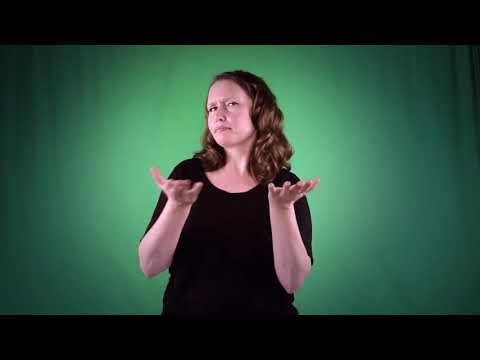
Sign for WHAT-KIND in ASL | ASL Dictionary

Definition: Asking about the category or type of something. Sign for WHAT-KIND in ASL
YouTube player

Practice Activities

Practicing the sign for WHAT-KIND in ASL effectively requires diverse techniques that engage both your visual and kinesthetic learning abilities. One of the most effective ways to begin is by standing in front of a mirror and slowly signing the phrase. This allows you to observe your handshape, motion, and facial expression, ensuring that you’re capturing the nuances of the sign for WHAT-KIND in ASL correctly. Another helpful method is to record yourself signing. Watching the recording lets you self-assess and compare your form to reliable ASL video resources or fluent signers. It’s a great way to identify areas for improvement and track progress over time. Signing in context is also crucial. Practice the sign for WHAT-KIND in ASL as part of full questions or conversations. For example, ask, “WHAT-KIND of food do you like?” or “WHAT-KIND of books do you read?” This builds fluency and helps integrate the sign naturally into your expressive skills. More advanced learners can use drills that focus on switching between WH-questions. Alternate between signs like WHO, WHERE, and WHAT-KIND to strengthen clarity and agility. These transition drills sharpen your receptive and expressive accuracy, especially in fast-paced conversation.

SEO Cultural Context

In Deaf culture, the sign for WHAT-KIND in ASL plays a vital role in everyday conversations. It is commonly used to request specific information or clarification about a category or type of something. Unlike spoken English, where intonation may convey nuance, ASL relies on facial expressions and body language to add meaning, especially in WH-questions like this one. The sign for WHAT-KIND in ASL is not just functional—it reflects a cultural emphasis on direct, clear communication. Deaf culture values precision, and a well-formed WHAT-KIND sign helps avoid ambiguity. Contextual cues, such as raised eyebrows or head tilts, can change the tone or urgency of the question. There can be regional variations in how the sign is performed. While the basic structure remains consistent, some signers may slightly alter the handshape or motion depending on their geographic or linguistic community. This reflects the rich diversity within the Deaf community while maintaining overall mutual intelligibility. In real-life situations, the sign for WHAT-KIND in ASL is used in classrooms, social interactions, interviews, and casual conversations. Whether you’re asking what kind of music someone likes or what kind of job they have, this sign helps build deeper understanding and connection.

Extended Definition

The sign for WHAT-KIND in ASL is made using both hands in the “K” handshape. The dominant hand rotates slightly forward and downward over the non-dominant hand, which remains stationary. This motion resembles a small twisting gesture, symbolizing a sort of categorization or inquiry into types. This sign falls under the category of WH-questions and is often accompanied by a questioning facial expression—typically furrowed brows and a slight forward head tilt. These non-manual markers are essential for the sign’s grammatical clarity. Without them, the question may be misunderstood or interpreted as a statement. It’s important to distinguish the sign for WHAT-KIND in ASL from similar signs like WHAT or WHICH. While WHAT is a more general inquiry, WHAT-KIND seeks specific information about a category or type. WHICH involves a choice between two or more known items. Confusing these signs is a common error among new learners. Another potential pitfall is incorrect handshape. Beginners sometimes default to “P” or “V” handshapes instead of the proper “K.” Ensuring the correct hand formation and motion will help you sign more fluently and be better understood by others.

Tips for Beginners

For those just starting out, learning the sign for WHAT-KIND in ASL can feel intimidating at first, but with steady practice, it becomes second nature. Start by watching fluent signers and mimic their handshapes and facial expressions. Use slow-motion videos if needed to break down the motion step by step. One of the most common beginner mistakes is neglecting facial expressions. In ASL, facial grammar is not optional—it’s critical to meaning. When signing the phrase, make sure to furrow your brows and slightly lean forward to convey the interrogative mood. Without this, the sign may appear flat or confusing. Another frequent error is mixing up WHAT-KIND with other WH-signs. To avoid this, isolate each question word and practice them in rotation. This will help you develop visual and muscular memory for each sign’s unique motion and structure. It’s also helpful to practice the sign for WHAT-KIND in ASL with a partner. Peer feedback can provide valuable insights into how your signing is perceived. If a partner isn’t available, online ASL communities and video calls with other learners can offer similar benefits.

Connections to Other Topics

The sign for WHAT-KIND in ASL connects closely to several other signs and grammatical structures. One important connection is with the sign for WHAT. Both are used in questions but differ in specificity. WHAT is general, while WHAT-KIND seeks a type or category. Another related sign is WHICH. Used when choosing between options, WHICH often appears alongside WHAT-KIND in conversations that involve comparisons or preferences. Understanding the difference in usage helps improve overall question formation in ASL. The sign for TYPE is also conceptually linked. While WHAT-KIND is a question, TYPE is often used in statements. For example, “I like that TYPE of music.” Recognizing how these signs relate helps learners build more expressive and nuanced sentences. TOPIC markers in ASL are essential when using WH-questions like WHAT-KIND. The structure of ASL often places the topic first, followed by the question. For instance, “BOOK—WHAT-KIND you read?” Understanding this syntax enhances your grammatical fluency. Conversational themes such as hobbies, food, and preferences naturally invite the use of the sign for WHAT-KIND in ASL. Learning this sign opens up a wide range of interactive dialogues that encourage deeper connection and engagement in conversations.

Lengthy Summary

Mastering the sign for WHAT-KIND in ASL is a foundational step in becoming fluent in everyday conversation. As a key component of WH-questions, this sign allows you to inquire about categories, types, and preferences—making your communication more precise and interactive. From ordering food to discussing interests, the sign for WHAT-KIND in ASL is used in countless situations that involve seeking clarification. By practicing in front of a mirror, recording your signing, and using the sign in real-life contexts, you reinforce both form and function. Incorporating facial expressions and proper handshapes helps ensure that your question is clearly understood. The cultural importance of directness in the Deaf community means that signs like WHAT-KIND carry both linguistic and social weight. Understanding how this sign differs from WHAT, WHICH, and TYPE gives you greater control over your language use. These distinctions allow you to ask more specific and meaningful questions. Recognizing the grammatical role of topic-comment structure and facial grammar further strengthens your ability to use the sign for WHAT-KIND in ASL accurately. For beginners, the journey may seem complex, but each step brings you closer to fluency. Avoiding common mistakes like improper handshape or lack of facial expression will make a big difference. Connecting this sign to broader ASL themes and vocabulary lets you build a more complete and functional signing vocabulary. Keep practicing the sign for WHAT-KIND in ASL in as many contexts as possible. The more you use it, the more natural it will feel. Whether you’re in a classroom, chatting with friends, or watching ASL videos, stay curious and keep asking, “WHAT-KIND?” Synonyms: type, sort, variety, category, classification Educational resources: Find related learning materials in our course bank! Want more? Check out some of our popular learning activities on the homepage! Need to look up a sign? Use our highly rated dictionary: https://aslinteractive.com/best-asl-dictionary/ Follow us on tiktok: https://www.tiktok.com/@aslinteractive. More social media links at the bottom of this page! Long-tail Keywords: Categories: tags: ASL question words, ASL signs for categories, ASL clothing vocabulary, ASL food-related signs, ASL travel signs

Want more? Check out some of our popular learning activities!

ASL Interactive Resources

ASLInteractive YouTube Channel

Follow us on tiktok: @aslinteractive.com

Follow us on Instagram: aslinteractive

Facebook page: aslinteractive

Facebook group: aslinteractive

LInkedIn: ASL Interactive LLC

Twitter: @ASL_interactive

*Some information on this page is AI-generated. AI can make mistakes. Please check the information.  

Responses