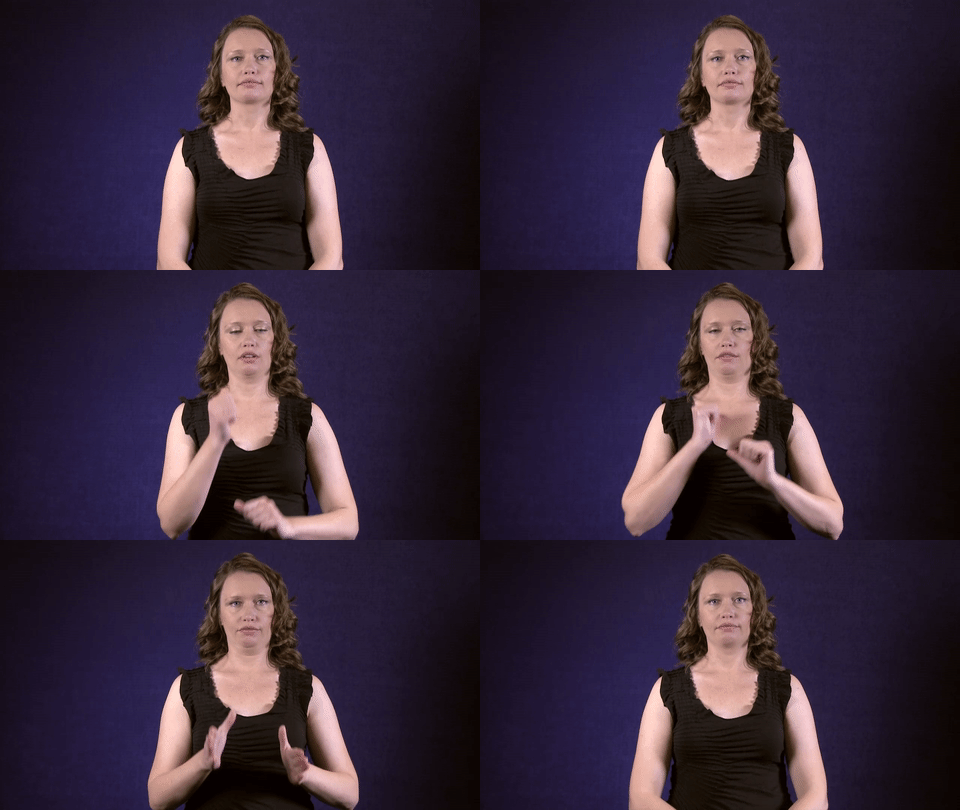
Definition: A male performer in film, theater, or television.
Sign for ACTOR in ASL

Practice Activities:
To practice the sign for ACTOR in ASL, start by signing it slowly in front of a mirror. Focus on the handshape, movement, and facial expression to ensure accuracy. Repeat the sign ten times to build muscle memory.
Next, use the sign in simple sentences. For example, sign “I am an ACTOR” or “She is an ACTOR.” Say the sentence aloud as you sign to reinforce meaning. Try replacing “ACTOR” with other professions to expand your vocabulary.
Engage in a storytelling activity where you describe a famous ACTOR using ASL. Use classifiers to show how they move, facial expressions for their emotions, and other signs to describe what kind of roles they play. If practicing with a partner, have them guess which ACTOR you are describing.
For a role-play activity, pretend you are auditioning for a role and introduce yourself using the sign for ACTOR in ASL. Expand your sentences by explaining what kind of acting you do, such as movies, theater, or television. This will help develop fluency and confidence.
Play an ASL charades game where you or a partner acts out a scene from a movie or play, then sign “ACTOR” as part of the explanation. This encourages creative language use and reinforces the connection between action and description.
Watch a video of an ACTOR signing in ASL and observe their hand movements and expressions. Try to mimic their signing style to improve your fluency. If possible, record yourself signing and compare it for self-assessment.
Practice fingerspelling the names of different actors, then use the sign for ACTOR in ASL to describe them. This helps improve fingerspelling speed while reinforcing the vocabulary.
By practicing the sign in different contexts, you will build confidence and become more comfortable using it in conversation.
Cultural Context:
In American Sign Language, the sign for actor reflects the expressive nature of performance. Acting is an essential part of storytelling and communication in Deaf culture. The use of sign language allows Deaf actors to deliver powerful performances across theater, film, and television.
The sign for actor in ASL is closely related to the sign for perform or performance. It captures the essence of bringing a character to life using gestures, expressions, and body language. Many Deaf actors use ASL to create authentic and engaging performances that connect with both Deaf and hearing audiences.
In the Deaf community, visual storytelling plays a significant role in communication. The sign for actor in ASL represents more than just a profession; it signifies creativity, self-expression, and cultural identity. Deaf actors often contribute to increasing awareness and representation in mainstream media.
Theater and film have long been part of Deaf culture, with productions performed entirely in ASL. The sign for actor in ASL is commonly used in discussions about theater arts, drama classes, and acting careers. Many Deaf actors have paved the way for greater accessibility and inclusion in the entertainment industry.
Understanding the sign for actor in ASL is useful for discussing roles in plays or movies. Whether in a professional setting or a classroom, this sign is essential for conversations related to performance and drama. Learning this sign helps connect with the Deaf community and appreciate the contributions of Deaf artists.
With increasing representation, more Deaf actors are gaining recognition for their work. The sign for actor in ASL allows for discussions about their impact, achievements, and contributions to storytelling. Seeing ASL on stage and screen highlights the power of visual language in performing arts.
Many theaters now offer ASL-interpreted performances to make theater more accessible. The sign for actor in ASL is often used when discussing these inclusive productions. Deaf performers bring unique perspectives to the stage, making acting an expressive and dynamic art form.
Using ASL in acting enhances communication and brings authenticity to performances. The sign for actor in ASL helps bridge the gap between Deaf and hearing audiences. Whether in traditional acting or Deaf theater, ASL plays a vital role in creative expression.
Deaf actors have made history by breaking barriers in film and theater. Learning the sign for actor in ASL helps foster conversations about their influence in the entertainment world. Supporting Deaf actors means supporting diverse storytelling and inclusive media.
The sign for actor in ASL is more than a simple gesture; it represents talent, imagination, and passion
Extended Definition:
The sign for actor in ASL is a combination of two signs: “act” and the agent marker. To sign “act,” form both hands into the “A” handshape and move them in a small circular motion near the chest. Then, add the agent marker by bringing both hands down in a straight line to indicate a person who performs.
This ASL sign captures the essence of acting, showing the movement and involvement of a performer. It visually represents the expressive nature of actors who bring stories to life on stage and screen. The sign for actor in ASL conveys not just the profession but also the creativity involved in acting.
ASL is a visual language that relies on hand movements, facial expressions, and body language. When signing actor, it’s important to use appropriate facial expressions to enhance the meaning. Small adjustments in movement and expression can indicate whether the person is a stage actor, film actor, or even a theatrical performer.
The sign for actor in ASL is related to other signs that describe performers and entertainers. Signs like “theater,” “drama,” and “perform” share similar movements to indicate performance arts. Learning these signs helps in discussing different aspects of acting and theater more effectively in ASL.
Understanding the sign for actor in ASL is useful for conversations about movies, plays, and famous performers. It allows for clear communication when discussing auditions, performances, or favorite actors. When used in context, it enhances discussions about the entertainment industry in the Deaf community.
For those learning ASL, mastering this sign helps with fluency in conversations related to the arts. Practicing the movement and combining it with other ASL signs creates more fluid communication. Signing actor accurately also helps when interpreting theatrical performances for Deaf audiences.
Actors in the Deaf community play a strong role in representation and storytelling. Learning the sign for actor in ASL helps support Deaf performers and encourages inclusivity in entertainment. Many talented Deaf actors contribute to theater and film, making this sign valuable in discussions about accessibility in the arts.
Using ASL to talk about acting opens up opportunities to engage with Deaf culture and entertainment. Whether discussing a school play or a professional performance, the ability to sign actor correctly enhances understanding. It fosters deeper connections with Deaf actors and the broader community.
Mastering the sign for actor in ASL is just one step toward better communication and cultural appreciation. Expanding ASL vocabulary related to film and theater helps build stronger connections. Learning and using these
Synonyms: performer, entertainer, stage artist, thespian, player
Educational resources: Find related learning materials in our course bank!
Want more? Check out some of our popular learning activities on the homepage!
Need to look up a sign? Use our highly rated dictionary: https://aslinteractive.com/best-asl-dictionary/
Follow us on tiktok: https://www.tiktok.com/@aslinteractive. More social media links at the bottom of this page!
Long-tail Keywords: what is the sign for actor in ASL, how do you sign actor in ASL, ASL sign for actor
Categories:
tags: Actors, Entertainment, People, Professions, Language Learning
Parameters
*Handshape*:
The sign for ACTOR in ASL uses the “A” handshape with both hands. Each hand forms a fist with the thumb extended, resembling the ASL letter “A.” The hands move in a small forward circular motion near the upper torso, representing the act of performing. This motion is followed by the sign for “person,” made with open hands moving downward parallel to the body. The sign for ACTOR in ASL visually conveys the idea of acting as a profession.
*Palm Orientation*:
The palm orientation for the sign for ACTOR in ASL starts with both hands in an open “5” shape, palms facing each other slightly inward. The hands are positioned near the upper chest area, with fingertips slightly curved toward the body. As the movement begins, the hands shift slightly downward in a repeated motion, maintaining the same palm orientation. This sign incorporates the motion for “act” followed by the agent marker, forming the full meaning of the sign for ACTOR in ASL.
*Location*:
The sign for ACTOR in ASL is produced in the area near the upper chest and torso. The hands start close to the shoulders and move downward in a controlled motion. Since this sign incorporates the agent marker, the movement extends downward to indicate a profession. The location emphasizes the connection to the body, visually representing someone performing a role. Proper hand placement ensures clarity and distinction from other signs.
*Movement*:
To sign for actor in ASL, start with both hands forming the “A” handshape (thumb tucked against the fist). Position the hands near the shoulders with palms facing each other. Move the hands forward in small circles, mimicking the motion of a theatrical performance. Then, bring both hands down to form a vertical “PERSON” classifier by moving open hands downward parallel to the torso. This sign combines “ACT” with the agentive suffix, meaning “one who acts.”
*Non-Manual Signals*:
When signing the sign for ACTOR in ASL, maintain a neutral or slightly engaged facial expression, depending on the context. If emphasizing professionalism, raise your eyebrows slightly to indicate importance. For a theatrical tone, widen your eyes and lean forward slightly to add emphasis. If discussing an actor in a storytelling context, subtle head movements can enhance the meaning. Keep your mouth relaxed, unless adding mouthing for clarity.
*Prosody, Dominant/Non-Dominant Hand*:
The sign for ACTOR in ASL uses both hands. The dominant and non-dominant hands form the “A” handshape , with the thumbs facing upward. Both hands move in small alternating circular motions near the chest, representing the act of performing. Then, both hands move downward in a straight line with open palms, symbolizing the person-agent suffix. This sign follows the standard structure for occupational terms in ASL.
Tips for Beginners:
When learning the sign for ACTOR in ASL, focus on the correct handshape and movement. This sign combines the sign for “act” with the agent suffix, which transforms a verb into a noun. Make sure both hands use an “A” handshape and move in small forward circles near the chest to signify acting before moving downward to indicate a person.
A common mistake beginners make is using an incorrect handshape or making circles that are too large. Keep your movements controlled so the meaning stays clear. Also, ensure your hands stay parallel rather than drifting apart, which can make the sign less recognizable.
Facial expression is essential when signing ACTOR in ASL because it adds emphasis and context. Focus on confident, natural motion as you execute the sign instead of appearing hesitant. Over-exaggeration can make the sign look awkward, so practice smooth, deliberate motions.
To reinforce muscle memory, practice signing ACTOR repeatedly while watching yourself in a mirror. If possible, observe native ASL users or skilled signers to fine-tune your technique. Practicing in conversations will help you integrate the sign more fluently.
Make sure to differentiate ACTOR from similar signs such as TEACHER or DOCTOR, which also include the agent suffix. Paying attention to the initial motion before the person marker will help distinguish this sign from others. Watching ASL videos and signing in real-life interactions will enhance recognition.
Remember, fluency comes with time and consistent practice. Stay patient with yourself and ask for feedback from experienced signers. The more you practice, the more natural the sign for ACTOR in ASL will become in your daily communication.
Connections to Other topics:
The sign for ACTOR in ASL is deeply connected to other occupation-related signs. It follows the common structure of signing the base verb, ACT, and adding the agentive suffix, which is represented by the downward movement of both hands in a parallel motion. This agent marker is frequently used in other signs like TEACHER, DOCTOR, and LAWYER, making it a useful pattern to recognize for understanding professions in ASL.
The concept behind the sign for ACTOR in ASL connects closely to performance-based ideas, such as THEATER and DRAMA. The base sign, ACT, also appears in expressions related to acting, such as PERFORM and SHOW. Learning this sign helps expand vocabulary into areas connected to performance arts, including MUSICIAN, DIRECTOR, and PLAY (as in theatrical play).
The sign for ACTOR in ASL also ties into identity and self-expression. Similar agent-based signs include ARTIST and DANCER, reinforcing how ASL conveys the idea of a profession through consistent morphological patterns. These signs emphasize the role of a person within a particular field, making it easier for learners to transfer knowledge across different signs.
Additionally, the sign for ACTOR in ASL can be incorporated into sentences discussing movies, television, and entertainment. It is often used in phrases like “FAVORITE ACTOR WHO?” or “HE/SHE ACTOR FAMOUS.” Understanding this sign helps in conversations about media, performance, and storytelling. This connection allows learners to discuss actors and performers in everyday conversations while reinforcing grammatical structures in ASL.
Summary:
The sign for actor in ASL is closely related to the sign for perform or theater, reflecting the nature of the profession. It is produced using both hands in the “A” handshape, moving in small circles near the chest. This movement symbolizes the act of performing or embodying a role, which captures the essence of what an actor does.
This sign is rooted in ASL’s structure of combining meaning components within signs. The first part of the sign is derived from the verb perform, while the second part incorporates the agent marker, which transforms verbs into nouns to indicate a person who performs that action. This structure is parallel to English words like teacher or artist, where the “-er” suffix signifies a person engaged in that activity.
The sign for actor in ASL aligns with how other profession-related signs are formed. Signs such as teacher, doctor, and lawyer often follow this same agent-marker pattern to indicate the person associated with the action. This grammatical consistency within ASL makes it easier to learn and recognize patterns when forming new job-related terms.
Linguistically, the sign for actor in ASL embodies classifier-like movement. The circular motion symbolizes performance, while the addition of the agent marker makes the sign more specific. By using this structure, ASL efficiently conveys both the action and the identity of an individual who carries out that action.
Actors play a significant role in storytelling, which is an essential aspect of Deaf culture and ASL. Storytelling in ASL often incorporates exaggerated facial expressions, body language, and signing techniques that resemble acting. Deaf actors contribute immensely to cultural preservation by bringing ASL storytelling to the stage and screen.
The visual nature of ASL makes it a powerful language for actors. In Deaf theater and Deaf cinema, ASL storytelling involves nuanced facial expressions and spatial awareness, which enhance performances. Many Deaf actors take pride in using ASL as their primary language on stage, advocating for authentic representation of Deaf culture in media.
The sign for actor in ASL represents a profession that has evolved significantly for the Deaf community. Historically, Deaf actors faced barriers in mainstream media due to a lack of accessibility and recognition. Over time, Deaf performers have gained visibility, breaking stereotypes and proving that ASL and visual storytelling can enrich the entertainment industry.
Many Deaf actors have paved the way for greater inclusion within the entertainment industry. Their success demonstrates that acting isn’t solely about spoken language, but rather about expression, movement, and authenticity. The use of ASL in performances highlights the beauty of visual storytelling, making it accessible to both Deaf and hearing audiences.
Modern technology has expanded opportunities for Deaf actors. Streaming platforms, social media, and online content have allowed for greater representation of ASL in film and theater. More directors and producers now seek Deaf actors to portray authentic Deaf roles rather than casting hearing actors who are not fluent in ASL.
The sign for actor in ASL is an important reminder of the value of representation. When Deaf actors play key roles in movies or television, they challenge misconceptions about Deaf talent. This leads to greater appreciation for ASL’s expressiveness and the abilities of Deaf performers in the entertainment industry.
Applying the sign for actor in ASL also extends beyond the professional setting. It can refer to anyone involved in drama, theater, or performing arts, whether professionally or recreationally. This flexibility allows the sign to be used in various contexts, highlighting its linguistic efficiency.
In everyday conversation, the sign for actor in ASL can be used to describe stage performers, television stars, or individuals playing roles in any situation. It is a versatile sign that can apply to local theater participants as well as internationally recognized figures in the entertainment world. The ability to convey such diverse meanings with one sign showcases ASL’s economy of expression.
The sign for actor in ASL can be modified with additional facial expressions and body language to provide further nuance. For example, an excited facial expression can indicate admiration for a specific actor, while a questioning expression can suggest curiosity about an individual’s career. ASL’s ability to integrate emotion into sign production enhances clarity and meaning.
In some contexts, slight variations of the sign for actor in ASL might be used depending on regional dialect or signing style. While the basic formation remains the same, slight differences in movement or emphasis might appear among signers from different Deaf communities. This variation is common in ASL, just as accents exist in spoken languages.
Related signs like show, movie, and perform often accompany discussions about the sign for actor in ASL. These signs help build conversations around entertainment, storytelling, and creative expression. The inclusion of multiple related signs creates a more robust vocabulary for discussing the role of actors in various artistic settings.
The historical evolution of the sign for actor in ASL reflects the changing perception of Deaf actors in society. As opportunities for Deaf performers increase, ASL signs related to acting, movies, and theater become more commonly used. This demonstrates
Want more? Check out some of our popular learning activities!
ASL Interactive Resources
ASLInteractive YouTube Channel
Follow us on tiktok: @aslinteractive.com
Follow us on Instagram: aslinteractive
Facebook page: aslinteractive
Facebook group: aslinteractive
LInkedIn: ASL Interactive LLC
Twitter: @ASL_interactive
*Some information on this page is AI-generated. AI can make mistakes. Please check the information.


Responses