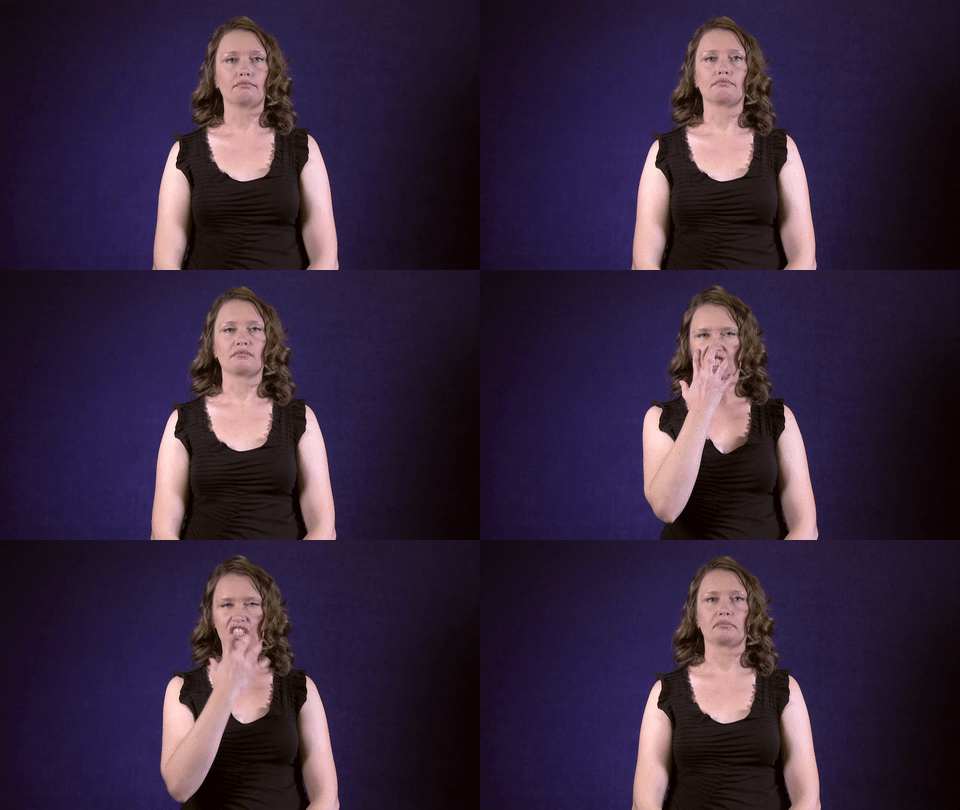
Definition: A strong feeling of displeasure.
Sign for ANGER in ASL

Practice Activities:
Practicing the sign for anger in ASL can help learners develop fluency and expressive signing. Start by signing anger slowly in isolation, focusing on the handshape, palm orientation, and movement. Gradually increase your speed while maintaining accuracy. Use a mirror or record yourself to compare with a reference video.
Try using the sign for anger in ASL in different contexts. Sign a sentence like “I feel anger when I lose my keys” and vary the emotions by changing your facial expressions. Practice signing about a frustrating situation, such as a computer crashing or a long wait in traffic. This helps reinforce the sign in real-world contexts.
Turn practice into a fun game with a partner. One person mimes a frustrating situation while the other identifies when to use the sign for anger in ASL. Another activity is storytelling: describe a time when you felt extreme frustration or irritation, incorporating anger naturally into the story.
Incorporate anger into longer signed conversations. Practice discussing emotions with phrases like “She had anger because of the bad news” or “His anger disappeared quickly.” Use different facial expressions and signing speed to convey intensity. A signing buddy can provide feedback to ensure natural flow and clarity.
For additional practice, try interpreting sentences with anger from English into ASL. For example, “That mistake really made me feel anger.” Pay attention to body language, and ensure the sign matches the intensity described in the sentence. Practicing in various ways will deepen your understanding and improve your expressive skills.
Cultural Context:
The sign for anger in ASL is an important expression in American Sign Language, allowing signers to communicate strong emotions effectively. Facial expressions play a crucial role in conveying the intensity of anger in ASL, making it clear how frustrated or upset someone feels. Using the correct facial expression along with the sign for anger in ASL ensures that the message is fully understood.
In Deaf culture, emotions are expressed openly and visually, making the sign for anger in ASL a natural part of communication. Since ASL relies on both hand movements and facial expressions, emphasizing emotions like anger helps create a full and accurate message. When signing anger in ASL, it’s important to match your facial expression to the emotion.
Non-signers may not realize that ASL includes rich visual elements beyond just hand movements. The sign for anger in ASL, like many other emotion-related signs, depends heavily on body language and expressive features. Someone signing anger in ASL with minimal expression might not effectively communicate their feelings.
Anger in ASL is not just about signing the word; the emotion must be conveyed with authenticity. Deaf individuals use ASL to express themselves just as freely as spoken language users express emotions through tone of voice. The intensity of the sign for anger in ASL can change depending on how extreme the emotion is.
Some variations exist in signing anger in ASL, depending on region, individual preference, or context. The core sign remains the same, but additional movements or expressions may enhance the meaning. Learning how to properly express anger in ASL provides a deeper understanding of Deaf communication.
When interacting with Deaf or hard-of-hearing individuals, understanding emotional signs fosters better communication. Using the sign for anger in ASL correctly demonstrates cultural awareness and respect for visual language. By practicing the sign for anger in ASL, learners develop better fluency and emotional expression in ASL conversations.
American Sign Language is deeply visual, and signing emotions accurately strengthens communication. The sign for anger in ASL teaches learners about the importance of expression in signed conversations. Whether expressing frustration, irritation, or full-blown rage, accurate signing helps ensure messages are conveyed effectively.
Extended Definition:
The sign for anger in ASL conveys strong emotions through facial expressions and hand movements. It is essential to use the correct intensity in the sign to match the level of frustration or rage being expressed. Understanding how to properly execute this sign will help ensure accurate communication in American Sign Language.
When signing anger in ASL, the hand shape and movement are crucial. The dominant hand typically forms a claw shape and moves upward from the stomach or chest to the face. This motion represents an internal feeling of frustration rising to the surface, helping to visually depict the emotion.
Facial expression plays a key role when using the sign for anger in ASL. The eyebrows are often furrowed, and the mouth may tighten to enhance the meaning. Without an appropriate facial expression, the sign may not fully convey the intensity of the emotion.
The sign for anger in ASL can vary slightly depending on the context and the level of intensity. A subtle or smaller motion can indicate mild irritation, while a more forceful movement can express extreme rage. Context and tone are just as important in sign language as they are in spoken communication.
ASL often incorporates body language and movement to emphasize the meaning of a sign. When signing anger in ASL, some individuals may also lean forward or tense their shoulders. These additional gestures help provide a more complete and natural expression of the emotion.
This sign can be used in various situations to describe personal feelings or to refer to someone else’s emotional state. Understanding how to sign anger in ASL accurately allows for clearer expression of emotions in conversations. Learning common ASL signs for emotions makes communication more expressive and dynamic.
Many ASL users pair the sign for anger with contextual signs to give more detail. For example, combining it with signs like frustrated, upset, or argue can clarify the reason behind the emotion. This makes dialogues in ASL richer and more nuanced.
Learning the sign for anger in ASL is an important step in mastering ASL emotions. Expressing emotions correctly ensures that conversations are fluid and natural. Whether in casual conversation or storytelling, accurate emotional representation makes communication more effective.
Watching experienced signers or ASL interpreters can help learners perfect the sign for anger. Observing how facial expressions and movements work together enhances understanding. Practicing in front of a mirror can also improve accuracy and confidence.
ASL is a dynamic language that relies on more than hand movements alone. The sign for anger in ASL is a great example of
Synonyms: rage, fury, wrath, irritation, resentment
Educational resources: Find related learning materials in our course bank!
Want more? Check out some of our popular learning activities on the homepage!
Need to look up a sign? Use our highly rated dictionary: https://aslinteractive.com/best-asl-dictionary/
Follow us on tiktok: https://www.tiktok.com/@aslinteractive. More social media links at the bottom of this page!
Long-tail Keywords: what is the sign for anger in ASL, how do you sign anger in ASL, ASL sign for anger
Categories:
tags: Emotions, Language Learning, Telling how one is, Verbs, Everyday activities
Parameters
*Handshape*:
The sign for ANGER in ASL uses a clawed handshape, with fingers bent slightly like a claw. The dominant hand moves upward from the stomach toward the face, mimicking the sensation of frustration or rage rising inside. This expressive motion intensifies the meaning behind the sign for ANGER in ASL, effectively conveying strong emotions. Facial expressions are crucial in emphasizing the depth of frustration or irritation.
*Palm Orientation*:
The palm orientation for the sign for ANGER in ASL faces the signer with fingers spread apart. The dominant hand is open, with the palm directed toward the face, and the fingertips begin near the middle of the forehead. As the hand moves downward over the face, the fingers slightly bend, mimicking the feeling of intense emotion. This movement helps convey the frustration and intensity associated with the sign for ANGER in ASL.
*Location*:
The sign for ANGER in ASL is produced in front of the face, near the forehead. The dominant hand is open with the fingers spread apart and slightly curved, positioned at the upper part of the face. The hand moves sharply forward and downward, resembling the motion of anger rising. Facial expressions are crucial, as an intense or furrowed brow enhances the meaning. This sign conveys strong emotion effectively.
*Movement*:
To make the sign for ANGER in ASL, start with an open claw hand (curved fingers) near the middle of your chest. Move the hand up toward your face with a quick, forceful motion, as if pulling something up from your stomach. The fingers may slightly curl inward as they travel. Keep your facial expression intense, reflecting the strong emotion of anger. Repeating the motion can intensify the meaning.
*Non-Manual Signals*:
Facial expressions play a crucial role in conveying the emotion behind the sign for ANGER in ASL . The eyebrows are furrowed, and the eyes may narrow slightly to display intensity. The mouth can be tense, with lips pressed together or slightly open in frustration. The head may move forward slightly, reinforcing the feeling of rage or irritation. A strong, intense facial expression will add emphasis to the sign for ANGER in ASL, making the emotion clear.
*Prosody, Dominant/Non-Dominant Hand*:
The sign for ANGER in ASL uses the dominant hand in a claw shape (curved fingers with an open palm). It starts near the chest or stomach and moves sharply upward towards the face, often stopping near the chin or mouth area. The motion is abrupt, reflecting an emotional surge. The non-dominant hand is typically not used. Facial expressions play a crucial role in conveying intensity, with furrowed brows and a tense face emphasizing the emotion.
Tips for Beginners:
When learning the sign for ANGER in ASL, focus on using strong and intentional movements. The handshape is often a clawed hand that moves upward from the stomach or chest toward the face, representing an emotion rising inside. Keep your fingers slightly bent and stiff to show the feeling of intensity rather than a loose or relaxed movement.
Facial expressions play a critical role in making the sign for ANGER in ASL clear and accurate. Without an angry or tense expression, the meaning may be lost or confused with other signs. Practice exaggerating your eyebrows, tightening your mouth, and showing frustration in your expression to add emphasis and make the emotion more believable.
A common mistake beginners make is using a weak or hesitant motion. The movement should be forceful but controlled to properly convey frustration or rage. Avoid moving the hand too softly, as this can weaken the intensity of the emotion you’re trying to express.
When signing with others, pay attention to the signing space and keep the movement close to your body. Extending too far may look unnatural or confusing. Also, ensure that your clawed hand does not accidentally shift into a different handshape, which could change the meaning entirely.
To improve fluency, practice signing ANGER in different conversational contexts. Try expressing mild irritation as well as full frustration by adjusting the strength of your movements and facial expressions. Watching native ASL signers can help refine your technique and reinforce the importance of non-manual signals.
Sign variations for ANGER may exist depending on regional differences or individual preference. Watching videos or working with fluent signers will help you recognize and apply the most widely understood version. Becoming comfortable with this sign will allow for a more natural and expressive ASL conversation.
Connections to Other topics:
The sign for ANGER in ASL connects to a variety of emotional and psychological states. It is closely related to signs that express frustration, irritation, and rage, each with varying intensity in facial expressions and movement. Understanding emotion-related signs helps in conveying tone and depth in conversations, making nonverbal context essential in ASL communication.
Many signs related to emotions modify the sign for ANGER in ASL by changing parameters such as speed, repetition, or intensity. For example, a stronger, more aggressive movement can indicate extreme anger, while a smaller motion with a tense face can mean mild frustration. The ability to modify this sign allows signers to express nuanced emotions without needing additional words.
This sign is also useful in compound expressions where it combines with other signs to refine meaning. For example, ANGER and CONTROL can be used together to express self-control over one’s temper. Another example is forming the sign for ANGER alongside signs like BUILD-UP to show that frustration has been growing over time.
The sign for ANGER in ASL is also important for discussing mental health and conflict resolution. It is commonly used when expressing feelings in therapy-related conversations or when explaining emotional responses. Knowing how to contrast ANGER with signs for CALM, RELAX, or FORGIVE can assist in discussing conflict management.
Expressing emotions accurately in ASL depends on non-manual markers such as furrowed eyebrows, tense facial muscles, or aggressive head movement. The sign for ANGER in ASL is often accompanied by an intense facial expression to emphasize the emotion. Without proper facial grammar, the sign may not fully convey the intended meaning or intensity.
Summary:
The sign for ANGER in ASL is a powerful and expressive movement. It involves a dominant hand in a claw shape, with fingertips touching the upper chest or near the center of the torso. The hand then moves sharply upward toward the face, reflecting an intense surge of emotion.
Facial expressions play an essential role in conveying the full meaning of this sign. A furrowed brow, squinted eyes, or an open mouth can intensify the emotion behind the movement. Without the proper facial expression, the sign might lose its potency and could be misinterpreted.
ASL relies heavily on non-manual markers, and this word is no exception. Raised eyebrows may indicate suppressed anger, while a scowl and tight jaw show a deeper emotional response. This makes it crucial to engage the entire face when signing this word.
The sign for ANGER in ASL can vary in intensity based on movement speed and facial expression. A subtle, slower motion may imply mild irritation, while a more forceful action signals rage. These variations help convey a wide spectrum of emotions without requiring additional signs.
Different regions and communities may have slight variations in this sign’s execution. While the core movement remains the same, some signers place their hands higher or use a sharper, more abrupt transition. These variations reflect personal style and linguistic diversity within ASL.
In casual conversation, signers sometimes modify a sign for ANGER in ASL using repeated motion. Repeating the movement a few times can indicate simmering frustration rather than an explosive outburst. This subtle change allows for nuanced emotional expression.
This sign is often used in storytelling or dramatic signing to illustrate emotions vividly. ASL storytelling often exaggerates movements and expressions, making it possible to depict a character’s anger dynamically. The expressive nature of ASL allows signers to bring stories to life with minimal verbal explanation.
Anger is a universal human emotion, and ASL captures its intensity superbly. Showing frustration, exasperation, or even suppressed rage is easily achieved with this sign. Signers often incorporate body shifts or additional gestures to emphasize their level of distress.
Certain grammatical structures in ASL may require modifying how this sign is used. If talking about a specific person’s anger, directional movement may be added to clarify the subject. These types of modifications make ASL a dynamic and rich language.
Linguistically, this sign follows typical ASL conventions in that it is iconic yet abstract. The movement mimics the common human reaction of clenching fists near the chest when feeling frustrated. However, it is refined to function effectively within ASL’s linguistic framework.
ASL classifiers also contribute to expressing anger beyond the base sign. Classifier handshapes can portray clenched fists, stiff posture, or erratic hand motions to expand the meaning. This allows for even more detailed expressions of frustration or rage.
Related signs might include FURIOUS, MAD, and FRUSTRATED, which all share similar visual elements. However, each has distinct motion patterns that differentiate them. Understanding these subtle variations ensures clear communication when discussing different levels of anger.
While this sign is commonly used for emotional expression, it can also appear in idioms. ASL has unique ways to express concepts like “seeing red” or “boiling with rage” through modifications of this sign. These idiomatic expressions enrich the language and make it more expressive.
The role of cultural context cannot be overlooked when using the sign for ANGER in ASL. In Deaf culture, open and direct communication is valued, but excessive emotional displays can sometimes be seen as unnecessary. Knowing when and how to use this sign appropriately is important for clear communication.
In interactions between Deaf and hearing individuals, the sign for ANGER in ASL may sometimes be misinterpreted. A hearing person unfamiliar with ASL morphology might assume the movement is overly dramatic. This highlights the importance of teaching ASL nuances to ensure accurate understanding.
ASL poetry and performance art frequently incorporate anger as a theme. In expressive signing, emotional signs like this one can be modified dramatically for artistic effect. The use of body language, hand movement, and facial expression all contribute to performance-based ASL.
Parents teaching ASL to children often introduce emotions through simple, repeated signs. The ability to sign emotions helps children articulate their feelings better, reducing frustration. Encouraging kids to express emotions in ASL fosters emotional intelligence in a visual and tactile way.
Psychologists and therapists working with Deaf clients may use signs like ANGER to encourage emotional exploration. Since ASL is highly visual, it allows for direct communication about emotions. This fosters a more open and direct discussion about feelings without misinterpretation.
Many ASL lessons for beginners introduce emotion signs early in learning. Emotions are foundational to communication, making this sign indispensable. New signers quickly learn its importance and application in everyday interactions.
The sign for ANGER in ASL also appears
Want more? Check out some of our popular learning activities!
ASL Interactive Resources
ASLInteractive YouTube Channel
Follow us on tiktok: @aslinteractive.com
Follow us on Instagram: aslinteractive
Facebook page: aslinteractive
Facebook group: aslinteractive
LInkedIn: ASL Interactive LLC
Twitter: @ASL_interactive
*Some information on this page is AI-generated. AI can make mistakes. Please check the information.


Responses