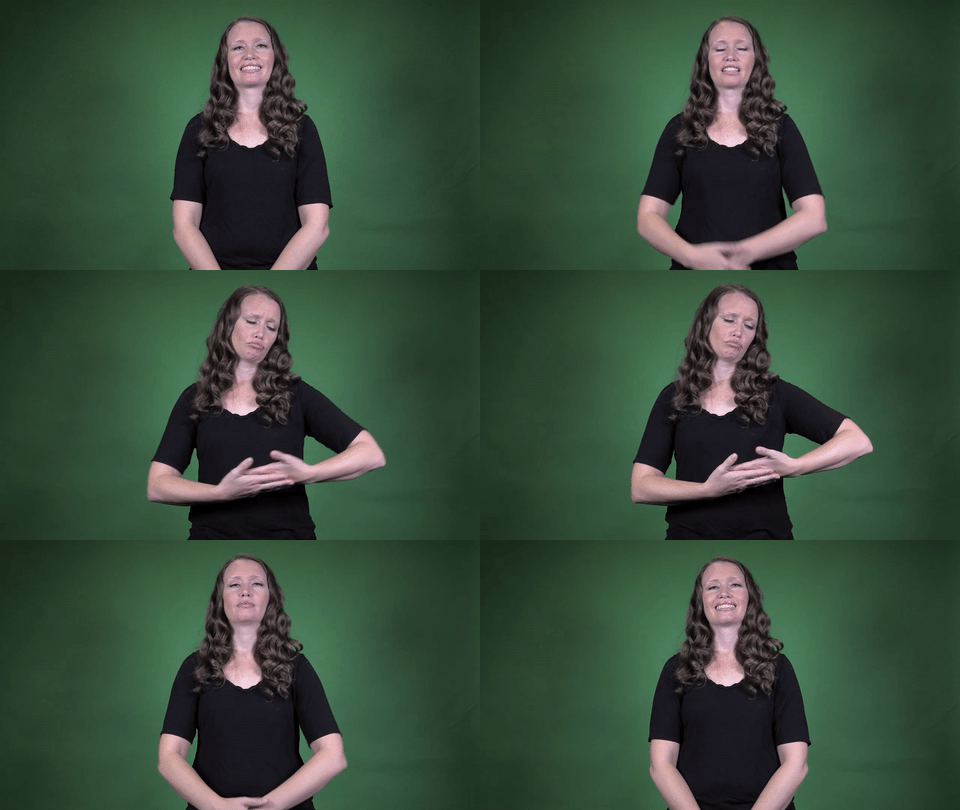
Sign for BABY in ASL | 👩‍🍼 ASL Dictionary

Definition: A very young child.

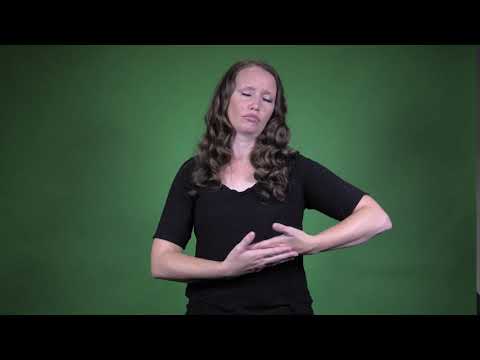
Sign for BABY in ASL

YouTube player

Practice Activities:

Start by practicing the sign for BABY in ASL in front of a mirror. Focus on your body posture and the gentle rocking motion that mimics cradling an infant. Repeat the sign slowly 10–15 times, making sure your hands are correctly positioned and that your facial expression is soft and caring, reflecting the meaning of the word.

Next, try incorporating the sign into short phrases like “baby sleep,” “the baby is cute,” or “I love baby.” Say these aloud or silently as you sign to help develop connection between the sign and the context. Record yourself using the sign for BABY in ASL and watch it back to observe your fluidity and accuracy.

Practice storytelling by creating a short narrative that includes a baby. For example, tell a story about a baby waking up, crying, being fed, and falling back asleep. Use related signs like MOM, DAD, SLEEP, MILK, and CRY to give more context and reinforce vocabulary around the concept of baby. This will help reinforce the sign for BABY in ASL while improving your expressive signing.

In a partner activity, take turns signing short sentences and asking questions about a baby. One partner might sign, “The baby is hungry,” and the other could respond with, “Does the baby want milk?” This way both partners get to use the sign in natural conversation.

For a solo exercise, use flashcards with images of babies doing various activities. When you see the image, sign BABY and then add a verb or situation such as EAT, PLAY, or CRAWL. Linking the sign with various contexts will help you remember its use in everyday topics related to infants.

Lastly, use baby-themed picture books or videos and describe what you see using signs. This reinforces visual recognition and helps you integrate the sign for BABY in ASL into practical communication scenarios.

Cultural Context:

In American Sign Language, the sign for BABY in ASL carries not only a literal meaning but also deep cultural significance. Deaf culture places great value on visual communication from infancy, so early exposure to signs like the sign for BABY in ASL is encouraged for both Deaf and hearing babies. Language development is seen as crucial from the very beginning, making this sign a powerful tool for bonding and learning.

The sign for BABY in ASL is often one of the first signs that parents use with their children. This reflects a cultural mindset that communication should begin as early as possible. Signing BABY in ASL is not just practical—it’s also deeply nurturing, reinforcing the relationship between caregiver and child.

In many Deaf households, using ASL to communicate with babies supports fluency and helps strengthen identity in the Deaf community. The sign for BABY in ASL is commonly seen in baby-related contexts, from lullabies to storytelling time. This sign often helps set the tone for a child’s early experiences with language and community.

Showing affection, expressing care, and establishing emotional connections are emphasized through visual means in Deaf culture. The sign for BABY in ASL is more than a word—it’s a gesture filled with love and attention. It illustrates the importance of expression in child-rearing and cultural values.

ASL is a complete language with its own grammar and syntax, and the sign for BABY in ASL fits naturally into this linguistic structure. Using visuals to convey concepts like BABY keeps interaction fully accessible, especially to those who are Deaf or hard of hearing. This accessibility is a key element of inclusivity, which holds immense cultural weight.

Storytelling in ASL often features family roles and relationships, and the sign for BABY in ASL is regularly used in these narratives. Whether portraying a newborn or discussing family, this sign appears frequently in cultural media like ASL poetry, handshape stories, and visual vernacular. The repetition of signs like BABY builds familiarity and emotional connection through storytelling.

In Deaf education, the sign for BABY in ASL is taught early and often to support early childhood communication. Many preschools and daycare centers prioritizing Deaf culture incorporate this sign into everyday routines. This early incorporation reflects the importance of data-based learning combined with cultural practices.

Baby sign language programs often use ASL signs like the sign for BABY in ASL to help hearing families communicate with their infants. This cross-cultural adoption of ASL demonstrates the versatile and practical application of

Extended Definition:

The sign for BABY in ASL is a simple and gentle motion that mimics the act of cradling a baby in your arms. This motion is performed by placing both forearms across the chest and rocking them back and forth. It’s one of the first signs often taught to children and beginners because of its clear visual representation and ease of movement.

In American Sign Language, gestures often symbolize real-world actions. The sign for BABY in ASL is a great example of this visual connection. The swaying motion helps new learners associate the sign with the universally understood image of holding a baby. It’s easy to remember and can be recognized even by those with limited ASL experience.

When learning or teaching ASL, context is key. The sign for BABY in ASL can be used in both literal and figurative contexts. You might use it while talking about an actual infant, or you might use it affectionately when referring to a loved one or pet. This flexibility adds richness and emotional connection to everyday signed conversations.

This sign is often used in combination with other ASL vocabulary words to form full phrases or sentences. For example, you might pair the sign for BABY in ASL with signs for sleeping, crying, eat, or change to express different needs and actions involving a baby. This builds ASL fluency and helps learners better understand how signs work together to create meaning.

Many beginner ASL users incorporate the sign for BABY early in their vocabulary. It is frequently used in family-related topics, which are essential when learning about people, relationships, and personal identity using sign language. Parents, teachers, and caregivers who interact with babies or young children benefit from knowing this basic but useful sign.

In deaf culture, communication accessibility is emphasized from birth. Using the sign for BABY in ASL promotes inclusion and understanding from the earliest stages of life. It encourages visual communication not just between deaf individuals, but also between hearing parents and their deaf or hard-of-hearing children.

Signing to babies is a proven method to boost early language development. Many hearing and deaf parents alike use signs like the one for BABY to help infants communicate their needs before they can speak. This practice promotes bonding while also supporting stronger language comprehension.

In ASL videos, books, and family learning resources, the sign for BABY frequently appears as part of daily routines and storytelling. Its expressive motion and emotional relevance make it a favorite in ASL storytime and early childhood education settings. Lear

Synonyms: infant, newborn, little one, toddler, young child

Educational resources: Find related learning materials in our course bank!

Want more? Check out some of our popular learning activities on the homepage!

Need to look up a sign? Use our highly rated dictionary: https://aslinteractive.com/best-asl-dictionary/

Follow us on tiktok: https://www.tiktok.com/@aslinteractive. More social media links at the bottom of this page!

Long-tail Keywords: what is the sign for baby in ASL, how do you sign baby in ASL, baby sign language meaning in ASL

Categories:

tags: Family, Relationships, People, Language Learning, Life Milestones

Parameters

*Handshape*:

The handshape for the sign for BABY in ASL uses both hands in a flat ‘B’ shape, palms facing upward. The arms are crossed in front of the body at the wrists, and the hands gently pat an imaginary baby as if cradling it.

This common sign for BABY in ASL mimics the gesture of rocking a baby to sleep. The motion should be soft and fluid to convey nurturing and care.

*Palm Orientation*:

The palms in the sign for BABY in ASL face upward toward the sky ️, as if cradling a baby in your arms. Both hands are slightly cupped, resting near the midsection, and gently move in a rocking motion, simulating soothing a baby.

In the sign for BABY in ASL, the fingertips are angled slightly inward and the hands remain relaxed. This palm orientation reinforces the visual of holding and comforting an infant.

*Location*:

The sign for BABY in ASL is made at the torso, typically centered around the chest or upper stomach area. This location symbolizes the way a baby might be cradled in someone’s arms.

When producing the sign for BABY in ASL, both forearms rest across the body just below the chest, mimicking the natural position of holding an infant. This location and movement help reinforce the meaning of the sign.

*Movement*:

To make the sign for BABY in ASL, place both forearms across the front of your torso as if cradling an infant. Your hands should rest near the elbow crease of the opposite arms, palms facing upward.

Gently rock your arms back and forth in a small motion, as if soothing a baby to sleep. This rocking is repeated a couple of times to complete the sign for BABY in ASL .

*Non-Manual Signals*:

When using the sign for BABY in ASL, the facial expression is typically soft and affectionate, matching the gentle cradling motion of the sign. Relaxed eyebrows and a slight smile often accompany the movement to convey warmth and tenderness.

Since the sign for BABY in ASL represents holding an infant, the signer’s body language should be nurturing and calm. A relaxed posture and kind facial expression help emphasize the caring tone of the message.

*Prosody, Dominant/Non-Dominant Hand*:

The sign for BABY in ASL uses both the dominant and non-dominant hands. Place your arms in front of your torso as if cradling an infant, with both hands gently holding your imaginary “baby” and rocking side to side. The motion is soothing and mimics rocking a real baby to sleep .

The sign for BABY in ASL should be expressed smoothly and rhythmically, maintaining a tender tone. This sign communicates nurturing and softness, and the use of both hands conveys the universal gesture of holding a baby.

Tips for Beginners:

When learning the sign for BABY in ASL, it’s important to focus on the motion and posture of your arms. This sign mimics the action of cradling an infant, so your forearms should cross gently across your torso as if holding a baby, with hands slightly cupped and relaxed. Be aware of your facial expression—keeping it soft and nurturing helps reinforce the meaning of the sign.

One tip for beginners is to make sure your movements are controlled and not too fast. Quick or jerky arm movements can make the sign unclear or change its meaning. Practice holding your arms just below chest height and gently rocking them a couple of times, as natural as possible, to mirror how someone might rock a baby to sleep.

A common mistake when signing the sign for BABY in ASL is locking the elbows or making stiff motions. ASL is a fluid and expressive language, so stiffness can make your signs look unnatural. Try practicing in front of a mirror to make sure your motion looks soft and relaxed rather than overly mechanical.

Consistency is key when practicing this sign. Because the sign for BABY in ASL doesn’t rely on handshape changes or facial grammar as much as some other signs, it’s a great starting point for beginners. But don’t forget to pair it with appropriate context and use it actively in real-life situations for better retention.

Joining an ASL practice group or watching native signers use the sign for BABY in ASL in sentence structures can help you understand when and how to use it. Repetition and context are powerful tools when learning any new sign. Stick with your practice and soon it will become second nature .

sign for BABY in ASL, how to sign BABY in ASL, simple ASL sign for baby, basic baby sign in ASL, ASL sign for newborn, beginner ASL baby sign

Connections to Other topics:

The sign for BABY in ASL connects closely with signs like CHILD, INFANT, and PARENT. These related signs often appear together in conversations about family, caregiving, or development stages. The sign itself mimics the gesture of cradling a baby, which aligns with other nurturing-related signs such as HOLD or ROCK.

In family-related compound signs, the sign for BABY in ASL often appears alongside MOM, DAD, or BORN to describe specific relationships or events. For example, combining BABY with SISTER or BROTHER can clarify “baby sister” or “baby brother.” This usage helps convey both age and relationship, making communication more precise and intuitive.

The sign also appears in more abstract or emotional contexts. For instance, combining the sign for BABY with LOVE expresses deep care or attachment, often seen when talking about one’s own children or expressing affection. BABY can also be used in idiomatic expressions or playful signing, especially when describing someone acting immature.

When learning classifiers in ASL, the sign for BABY provides a useful reference for describing small size or fragility. It also appears in role-shifting narratives, where the signer may mimic holding a baby while telling a story, bringing physicality and emotion into the visual-spatial grammar of ASL.

The sign integrates well into signs related to care routines, like FEED, CHANGE (diaper), and SLEEP. This demonstrates how the sign for BABY in ASL serves as a foundation for expressing daily interactions and responsibilities related to infants. These combinations are especially important for parents, educators, and caregivers who use ASL regularly.

Additionally, in medical or health-related signing, BABY connects to signs like BIRTH, DOCTOR, and HOSPITAL. This helps in discussing childbirth, pediatric care, or developmental milestones. The sign for BABY in ASL carries both practical and emotional dimensions and links strongly to cultural themes of family and care.

Summary:

The sign for BABY in ASL is a visually iconic representation that mimics the action of cradling a baby. To perform it, both arms are bent at the elbows, with hands near the torso, overlapping one another like you’re holding a small infant. Then, gently rock the arms back and forth a couple of times.

This sign is categorized as an iconic sign because it directly resembles the act of holding a baby. Iconic signs, especially in ASL, often help new learners grasp meanings quickly since they visually tie to the concepts they represent. The sign for BABY in ASL is among the most intuitive and universally understood within the Deaf and signing communities.

In ASL grammar, the sign for BABY in ASL can function as a noun and appear in both questions and statements. For example, in the sentence “Where is the baby?” the sign will often be used at the beginning or end depending on sentence structure and topicalization rules. ASL follows a topic-comment syntax, so placement depends on what is being emphasized.

This sign is also commonly modified by incorporating facial expressions, directional verbs, or classifiers to provide context. For instance, you can localize the direction of the sign to indicate the baby’s location or use classifiers to add movement if the baby is crawling or being carried.

From a cultural standpoint, the sign for BABY in ASL is often associated with expressions of care, vulnerability, and nurturing. It holds emotional depth, especially in family conversations or discussions involving children. In ASL storytelling, the sign frequently appears when describing family narratives or recounting memories of early childhood.

The sign is also often used metaphorically. For example, in conversations, someone might use the sign for BABY in ASL to refer affectionately to a romantic partner, similar to how “baby” is used conversationally in English. ASL users will alter facial expression and body language to express affection or sarcasm, depending on context.

In signed songs and poetry, the sign for BABY in ASL plays a powerful role. It can be nuanced with rhythm and flow, aligning with music or poetic beats. This adds emotional intensity, especially in lullabies or songs about motherhood and family.

Bilingual ASL-English children often find the sign for BABY in ASL to be one of their earliest acquired signs. This is partly due to its intuitive motion and emotional resonance. Parents and early childhood educators frequently introduce this sign along with others in the family vocabulary set, such as MOTHER, FATHER, and MILK.

The broader lexical family of signs related to BABY includes CRY, DIAPER, MILK, and BATH. These signs often cluster together in discourse about babies, and compounds or classifier constructions might be used to express complex ideas. Understanding the sign for BABY in ASL opens up this entire semantic field for discussion.

In applied linguistics, the acquisition of this sign plays a role in studies on language development in Deaf children. Researchers track when and how children acquire the sign for BABY in ASL relative to other early developmental signs. It provides insight into cognitive milestones and the influence of iconicity on early language learning.

The structure of this sign involves a symmetrical, two-handed movement close to the body’s core. The rhythm and repetition of the sign mirror natural rocking, creating a gentle aesthetic quality. Unlike more abstract signs, this movement appeals to embodied cognition, tapping into the user’s understanding of how bodies move with babies.

In morphosyntactic analysis, the sign for BABY in ASL doesn’t usually inflect but can appear within classifier constructions. A signer might use a “baby classifier” (typically a small C-handshape) to show the baby crawling or being placed somewhere. These classifiers allow for greater description and spatial storytelling.

The use of space in ASL allows the signer to localize the baby in the conversation either in front of them, beside them, or on the timeline space. For instance, when telling a narrative of raising a child, a signer might place the sign for BABY on the body’s left side to reference an earlier stage in life, corresponding with the left-to-right timeline schema.

The sign also shows up regularly in Deaf community narratives, especially in shared experiences around parenting and child rearing. The emotional and practical aspects of being a parent often revolve around signs like this. In support groups, health-related workshops, or educational discussions, the sign for BABY in ASL enables quick connection and clear communication.

In popular culture and visual vernacular performances, the sign is stylized for comedic or dramatic effect. Performers may exaggerate the cradling motion or pair it with expressive faces to evoke humor or tenderness. It’s a sign that allows creative play while still being easily understood.

Because the sign for BABY in ASL is so widely recognized, it’s often included in educational materials, apps, and baby sign language curriculums. Hearing parents teaching their children baby signs often start

Want more? Check out some of our popular learning activities!

ASL Interactive Resources

ASLInteractive YouTube Channel

Follow us on tiktok: @aslinteractive.com

Follow us on Instagram: aslinteractive

Facebook page: aslinteractive

Facebook group: aslinteractive

LInkedIn: ASL Interactive LLC

Twitter: @ASL_interactive

*Some information on this page is AI-generated. AI can make mistakes. Please check the information.

Sign for BABY in ASL

Responses