Sign for FAMILY in ASL | ASL Dictionary

Definition: A group of one or more parents and their children living together as a unit.

Sign for FAMILY in ASL

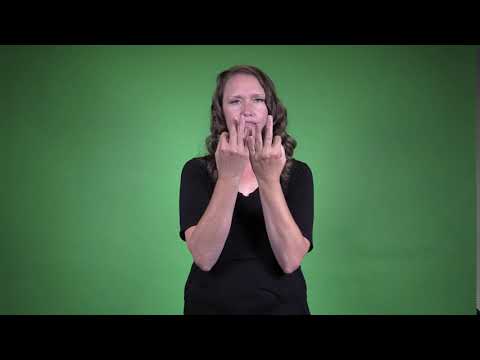
YouTube player

Practice Activities:

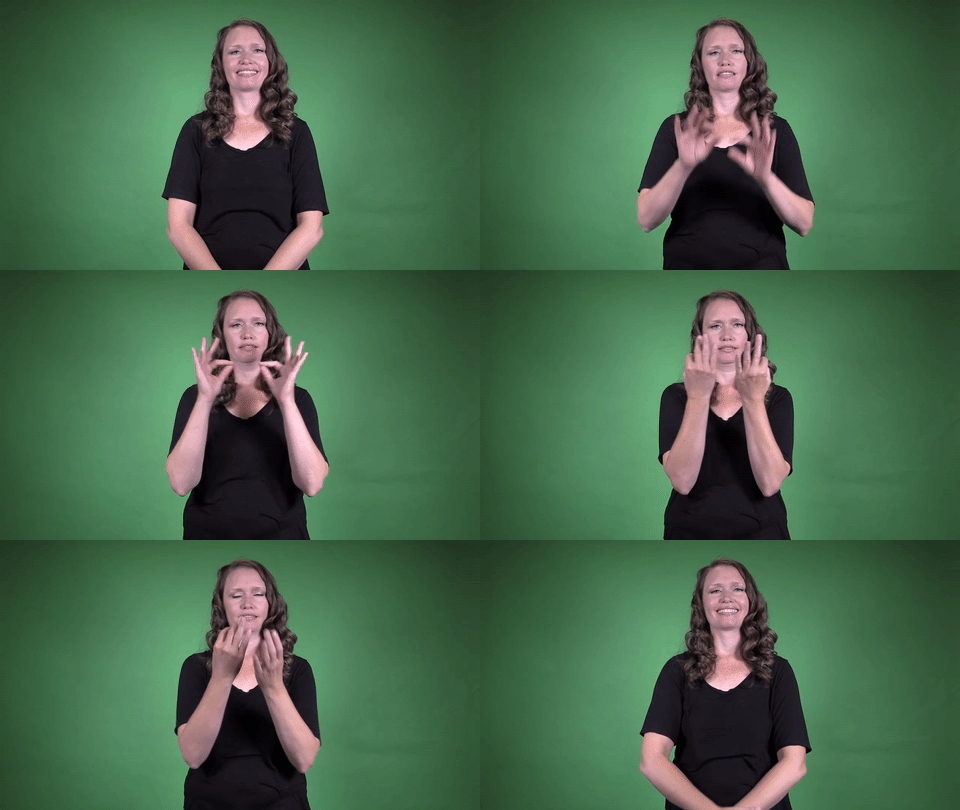
To build fluency with the sign for FAMILY in ASL, start by practicing the sign in isolation. Use a mirror to check handshape and movement—both hands form the “F” handshape, touch at the tips, then curve around to touch pinkies, forming a circle. Repeat slowly, then increase speed while keeping clarity of the sign.

Next, practice with simple phrases like “my family,” “big family,” or “your family.” Watch videos of fluent signers using the sign for FAMILY in ASL to observe fluid motion and facial expressions. Incorporate the sign into basic sentences such as “I love my family” or “My family lives in Texas.” Sign these slowly and focus on facial grammar to indicate emotions.

Storytelling is a great way to reinforce usage. Tell a short story about your family, signing details like how many members are in your family, what they enjoy doing, or where they live. Keep it simple: “I have four people in my family. We like to camp. My family likes dogs.” Rehearse the story alone, then share with a partner or sign to the mirror.

Use flashcards with pictures of different family members. When you pull a card, sign FAMILY and add the appropriate family member sign like MOM, DAD, or SISTER. This reinforces context and helps with vocabulary expansion.

Engage in partner activities like role play. One person can ask questions such as “How many people in your family?” or “Do you have a big family?” and the other can respond using the sign for FAMILY in ASL within complete replies. Correct each other gently and repeat for fluency.

End your practice session with a review game. Mix up a short dialogue using the sign for FAMILY in ASL and other common signs. This kind of immersive activity helps reinforce meaning and improves recall in real communication.

Cultural Context:

In American Sign Language (ASL), the sign for FAMILY in ASL holds deep cultural meaning beyond just the motion of the hands. It represents the strong sense of connection, community, and belonging that is deeply valued in Deaf culture. Using the sign for FAMILY in ASL conveys more than just a biological relationship—it reflects support, understanding, and shared identity.

For many in the Deaf community, family is not defined only by blood but also by bonds built through shared language and experience. When you sign FAMILY in ASL, it can refer to a chosen family that includes Deaf friends, mentors, and allies. This expanded meaning reflects how inclusive and community-oriented Deaf culture can be.

The sign for FAMILY in ASL is commonly taught early to Deaf children as part of foundational vocabulary. It helps them express their relationships and feel a sense of inclusion. In Deaf schools and homes that use ASL, this sign is one of the first gestures that connects children to their social world. It creates early emotional ties through visual language.

Using the sign for FAMILY in ASL at Deaf events like reunions, community gatherings, and storytelling circles strengthens cultural identity. It reflects pride in ASL heritage. The gesture becomes part of traditional celebrations and is often seen in performances, where the idea of family is celebrated with expressive signs and rich storytelling.

Culturally, the ASL community values collective strength, and the sign for FAMILY in ASL acknowledges this. It’s not uncommon to see it used in group photos, community murals, and advocacy campaigns that promote Deaf unity. The symbol is not just about kin—it’s about standing together and recognizing each other as part of a shared journey.

The sign for FAMILY in ASL also connects with the tradition of visual storytelling. Many Deaf artists and poets incorporate the concept of family into their work through ASL poetry and visual art. The sign becomes a symbol of love, resilience, and the visual power of language.

When people learn the sign for FAMILY in ASL, they gain access to the values and identity of an entire culture. It opens the way to deeper understanding and appreciation. In classrooms, interpreter training, and family education sessions, this sign creates bridges between Deaf and hearing people.

The social use of the sign for FAMILY in ASL brings attention to the importance of inclusive communication in all family systems. Parents of Deaf children benefit from learning it early, reinforcing bonds and reducing communication barriers. It becomes a tool for emotional connection and active love

Extended Definition:

The sign for family in ASL is a circular motion made with both hands, using the signed handshape for the letter F. Place the F-handshape on each hand, palms facing out, and start with the tips of the index fingers and thumbs touching in front of the body. Then move the hands in an outward and around motion, bringing the pinky sides together to complete the circle.

This circular motion is symbolic of unity and connection. In American Sign Language, the concept of family revolves around togetherness and support, which the sign effectively communicates. The shape of a circle represents inclusion, love, and wholeness, key ideas within any family unit.

The sign for family in ASL is commonly used in everyday conversations, storytelling, and formal discussions. Because family is an essential part of many topics, from relationships to healthcare settings, it’s a foundational sign that ASL learners should master early. Whether you are discussing parents, children, or extended family members, this sign helps frame the context.

It’s important to note that facial expressions and body language play a significant role in signing. When using the sign for family in ASL, your facial expression can convey affection, pride, or concern, depending on the context. These visual cues add emotional depth and clarity to the signed message.

There are variations of this sign depending on regional dialects or community preferences, but the F-handshape circle is the most commonly accepted form. Some users may slightly alter the motion or hand placement, especially in casual or rapid signing. However, the overall meaning remains consistent and easily understood.

This sign is an excellent example of how American Sign Language conveys abstract concepts through spatial and visual language. Rather than spelling out the word, the sign for family in ASL draws from symbolic handshapes and motion to deliver meaning quickly and clearly. For new learners, this offers a powerful visual connection to the concept.

In signed storytelling, the sign is often paired with other signs representing specific family members. For instance, you might sign family and then add signs for brother, sister, or grandparents to specify the people involved. These combinations allow signers to build complex narratives that are rich in detail.

Understanding this sign also opens the door to exploring cultural values within the Deaf community. Family often extends beyond biological ties to include close friends and mentors. Signing family in ASL honors both literal relatives and chosen connections within one’s support network.

When introducing yourself to a new signer or participating in group introductions, you may use the sign

Synonyms: relatives, kin, household, lineage, clan

Educational resources: Find related learning materials in our course bank!

Want more? Check out some of our popular learning activities on the homepage!

Need to look up a sign? Use our highly rated dictionary: https://aslinteractive.com/best-asl-dictionary/

Follow us on tiktok: https://www.tiktok.com/@aslinteractive. More social media links at the bottom of this page!

Long-tail Keywords: what is the sign for family in asl, how to sign family in american sign language, asl sign for family

Categories:

tags: family ASL sign, how to sign family in ASL, family in American Sign Language, ASL dictionary family, learn family in ASL

Parameters

*Handshape*:

The handshape for the sign for FAMILY in ASL uses the “F” handshape on both hands, which is formed by touching the tips of the thumb and index finger together while the other three fingers are extended upward. Both hands form “F” shapes and start with the fingertips touching in front of the body.

To complete the sign for FAMILY in ASL, the hands trace a small outward circular motion, ending with the pinky fingers nearly touching. This movement symbolizes the concept of a family circle.

*Palm Orientation*:

In the sign for FAMILY in ASL, both hands form the letter “F” with the thumbs and index fingers touching to create small circles. The palms initially face outward, away from the body. As the movement progresses in a circular motion, the hands rotate so the palms end up facing inward toward the body.

This circular motion helps convey the concept of unity or a group, fitting for the sign for FAMILY in ASL. Maintaining consistent palm orientation during the rotation emphasizes the idea of inclusion and togetherness, central themes of family. ‍ ‍ ‍

*Location*:

The sign for FAMILY in ASL is made in the neutral space in front of the torso, slightly away from the body. Both hands begin in front of the chest, roughly at mid-chest level, and the movement forms a circular shape that stays at the same level without rising or dropping.

The circular motion that completes the sign for FAMILY in ASL happens in a horizontal plane, centered in front of the body. This general location supports visibility and clarity of the sign in conversational settings.

*Movement*:

Start by forming both hands into the “F” handshape, with thumbs and index fingers touching to make a small circle. Begin with both hands held in front of the chest, palms facing each other and the circles touching at the tips. Move the hands outward in a circular motion away from the body and around, ending with the pinky sides of the hands nearly touching.

This movement represents the concept of a connected group, which is central to the sign for FAMILY in ASL. It emphasizes how family members are united in a circle of support ‍ ‍ ‍ . Repeating or exaggerating the arc slightly can show inclusiveness or a larger family unit.

*Non-Manual Signals*:

The non-manual signals for the sign for FAMILY in ASL typically include a gentle and warm facial expression, often accompanied by a slight head tilt to convey inclusiveness or closeness. The eyebrows are relaxed, and the eyes may soften to reflect the affectionate and unified concept of family ‍ ‍ ‍ .

When using the sign for FAMILY in ASL, the emotional tone should match the context. For example, a proud or loving expression reinforces the sense of connection the sign represents.

*Prosody, Dominant/Non-Dominant Hand*:

The sign for FAMILY in ASL uses both the dominant and non-dominant hands in the “F” handshape, formed by touching the tips of the thumb and index finger while the other fingers are spread out. The hands start with the tips of the “F” hands touching at the sides and then move in a circular motion forward to end with the pinky sides touching.

Both hands move as a unit to represent the idea of a group encircling, symbolizing the concept of family. The sign for FAMILY in ASL is symmetrical, and the dominant hand mirrors the movement of the non-dominant hand throughout the motion. ‍ ‍ ‍

Tips for Beginners:

When learning the sign for FAMILY in ASL, it’s important to focus on handshape and movement. Begin with both hands in the “F” handshape (thumb and index finger touch to make a circle, remaining fingers extended). Start with the fingertips of each “F” hand touching in front of you and then move them outward in a circular motion so that pinkies almost meet, creating a visual circle to represent a family unit.

One helpful tip is to keep your facial expression neutral or pleasant, since the sign represents a positive concept. Avoid making large or exaggerated movements that can distort the sign and slow down your communication. Controlled, fluid hand movements give clarity and keep your message understandable.

Consistency in handshape is key for the sign for FAMILY in ASL. Beginners sometimes confuse the “F” handshape with the “O” or “9” handshape, especially if they are not familiar with the ASL alphabet. Practice forming the “F” handshape in a mirror and double-check that your fingers and thumb form a clean circle.

Try not to overextend or twitch your wrists. The motion should be smooth and circular, not stiff or jerky. Watching native signers and practicing along with videos can boost your confidence and help you internalize proper movement and rhythm.

Spending time fingerspelling “FAMILY” may also help reinforce handshapes and develop finger dexterity, though the sign for FAMILY in ASL is not fingerspelled in conversation. Still, this extra practice strengthens muscle memory and improves signing flow overall .

Finally, don’t be discouraged by early mistakes. ASL is as much about expression as it is about form. The more you expose yourself to ASL immersion—through classes, sign language groups, or online content—the easier it will be to sign FAMILY naturally and accurately ⭐.

Connections to Other topics:

The sign for FAMILY in ASL uses the “F” handshape on both hands, starting with the fingertips touching and then moving outward in a circular motion to indicate inclusivity. This concept of inclusion and connectedness is foundational in ASL and also appears in signs for TEAM, GROUP, and CLASS. All these signs reflect a shared space or unity using circular motion, reinforcing the spatial and relational nature of ASL.

The sign for FAMILY in ASL often connects to broader discussions of relationships and social structures. It’s commonly used in combination with other signs, such as HOME or EXTENDED, to indicate specific types of family units. For example, pairing FAMILY with the sign for BIG can emphasize an extended or large family. This layering of meaning is common in ASL and highlights the visual and spatial richness of the language.

The visual similarity in the sign for FAMILY and signs like FRIEND-CIRCLE or COMMUNITY showcases how ASL uses repeated gestures to reflect closeness or bonds between people. These signs help reinforce the semantic fields linked to belonging and unity. This also opens opportunities for learners to group vocabulary by conceptual categories, making it easier to remember and apply them in context.

In conversations about genealogy or background, the sign for FAMILY in ASL is a frequent starting point. From there, directional verbs and additional facial expressions can help add depth, such as indicating maternal or paternal lineage. This adaptability demonstrates the flexibility of ASL to express nuanced family relationships clearly and effectively.

Signs like FAMILY often serve as a core part of identity-based conversations in the Deaf community. They may be combined with signs for CULTURE, DEAF, or TRADITION to express pride and shared heritage. Understanding connections through the sign for FAMILY in ASL deepens cultural awareness and enhances the expressive range of communicators. ‍ ‍ ‍

Summary:

The sign for FAMILY in ASL begins with both hands in the “F” handshape, forming the initial configuration that directly reflects the English letter “F.” The palms face forward as the tips of the index fingers and thumbs from each hand touch together.

Then, the hands move away from the center and rotate outward in a circular motion, eventually allowing the pinky sides of the hands to touch together. This movement symbolizes a gathering or circle, visually representing the concept of family unity.

The circular motion is a crucial aspect since it conveys the idea of connection and wholeness. The use of the “F” handshape links the sign explicitly to the English word “family,” making it both iconic and somewhat initialized.

The sign for FAMILY in ASL is not only about physical movement but also deeply tied to cultural understandings of what family represents within the Deaf community. In Deaf culture, chosen family and community members often hold equal or greater significance than biological family members.

The bounded circular shape in the sign illustrates that family is viewed as an inclusive, almost protected space. This visual metaphor aligns with many cultural attitudes in the Deaf world, where shared language and experiences can bind a community tighter than blood relations.

In ASL grammar and syntax, the sign for FAMILY often functions as a noun and can also act as a topic marker. You might see it used at the beginning of a sentence to establish the subject, followed by information about that family’s composition, location, or status.

The sign is symmetrical and uses both hands, a trait shared by other signs like GROUP or CLASS. These signs all use the same general circular motion but differ based on the initialized handshape—the “G” for group, “C” for class, and of course “F” for family.

This structural consistency across signs reflects how ASL builds meaning through shared linguistic mechanisms. Initialization, while debated in some linguistic circles because of its tie to English spelling, aids in sign recall and differentiation.

The sign for FAMILY in ASL is a good example of a compound sign with iconic roots leaning on initialization. Although some purists in ASL linguistics prefer signs developed independently of English, signs like FAMILY have persisted due to their visual clarity and communicative effectiveness.

Linguistically, the sign embodies the concept of spatial temporality. The closed circular movement expresses not just physical unity but sometimes the passage of lineage or the concept of continuity across generations.

The sign offers a glimpse into how ASL often uses spatial metaphors to express abstract concepts. The idea of family isn’t shown through people or names, but through movement and shape, offering a tactile sense of cohesion.

When used in broader discourse, the sign for FAMILY in ASL can be paired with possessive signs like MY, OUR, or YOUR for nuanced communication. Associating these with facial expressions deepens understanding in conversation.

Facial expression plays a significant role when signing FAMILY. A warm smile, furrowed brows, or neutral expression provides context—whether you’re celebrating, questioning, or mourning a family connection.

The sign also offers fertile ground for exploring applied linguistics topics. It becomes a tool for understanding how Deaf individuals conceptualize not just relational labels but cultural and emotional significance through kinship signs.

In sociolinguistic studies, FAMILY serves as a gateway for comparing interpretations of family roles in Deaf households, whether the household includes Deaf parents (Deaf-of-Deaf) or CODAs (Children of Deaf Adults).

There is also pedagogical relevance. Teaching the sign for FAMILY in ASL helps students delve into deeper conversations about identity, responsibility, and interdependence, reinforcing values native to both the Deaf and hearing cultures.

The circular element across various group-related signs connects well when teaching classifiers in ASL. Learning FAMILY alongside signs like TEAM or CLUB highlights how ASL categorizes collective identities.

Semantically, the sign engages with themes of belonging. The circular path visually encloses an imagined space, suggesting intimacy, support, and safety—all centered aesthetics in the sign’s execution.

Deaf literature and storytelling often invoke the sign for FAMILY when discussing community narratives. The motion acts as both a literal description and a figurative symbol of collective history and survival.

From a teaching standpoint, the sign is memorable thanks to its visual symmetry and clear movement. It becomes a cornerstone for beginner ASL lessons, acknowledged for how it draws learners into more complex dialogues.

In bilingual environments, signs like FAMILY help bridge understanding between Signed and spoken languages. Educators and interpreters often use such high-frequency, iconic signs as stepping stones to foster full language immersion.

Code-switching between family-related signs varies by region. Some communities emphasize signed gestures for family roles—MOTHER, FATHER, SISTER—while others shift fluidly with English mouthing to clarify specificity.

The sign also exists in versions like EXTENDED FAMILY, which may involve modifying the sign with additional classifiers

Want more? Check out some of our popular learning activities!

ASL Interactive Resources

ASLInteractive YouTube Channel

Follow us on tiktok: @aslinteractive.com

Follow us on Instagram: aslinteractive

Facebook page: aslinteractive

Facebook group: aslinteractive

LInkedIn: ASL Interactive LLC

Twitter: @ASL_interactive

*Some information on this page is AI-generated. AI can make mistakes. Please check the information.


Responses