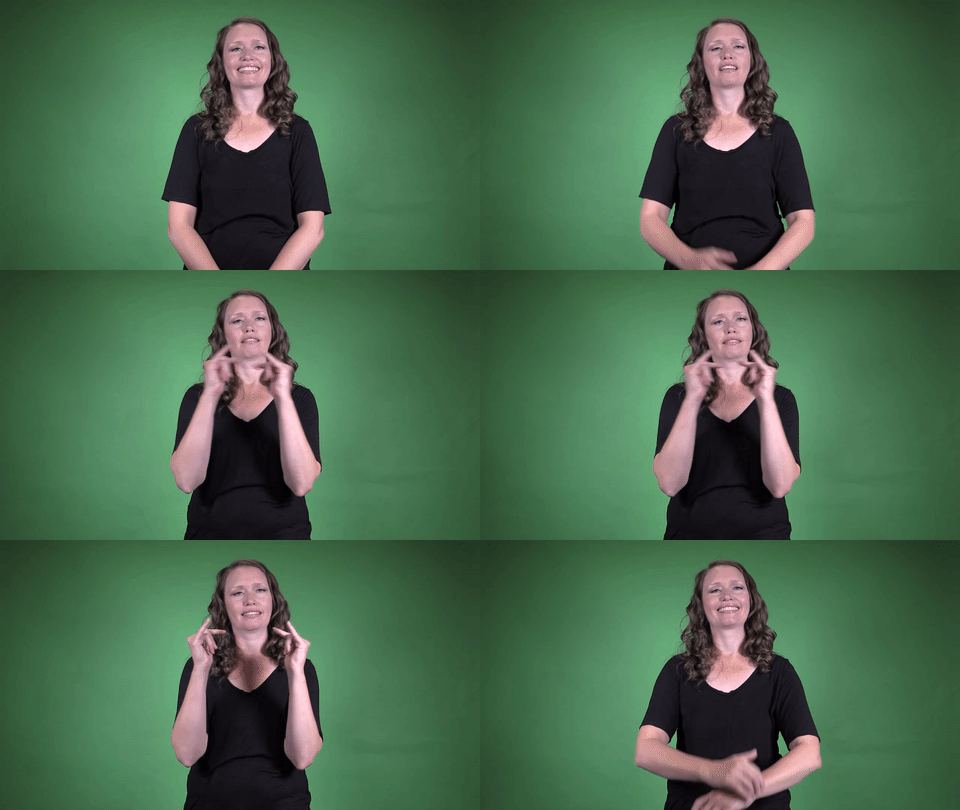
Definition: The activity of living outdoors for a time.
Sign for CAMPING in ASL

Practice Activities:
Practice recognizing and producing the sign for CAMPING in ASL by starting with isolated repetition. Stand in front of a mirror and sign it several times slowly, making sure your handshapes and movement match the correct form. Record yourself and compare your sign to a video example to self-assess and adjust your accuracy.
Next, move on to short phrases using the sign for CAMPING in ASL. Examples include “we love camping,” “camping is fun,” or “they go camping every summer.” Practice both asking and answering questions using this sign, such as “Do you like camping?” or “Where do you go camping?” This helps integrate the sign into meaningful communication.
Try creating a mini story using the sign in context. For example, describe a trip where you went camping, what you brought, where you stayed, and what you did during the trip. Include other relevant signs like TENT, FIRE, NIGHT, SLEEP, and FOOD. This gives you a chance to build fluency while reinforcing the vocabulary related to outdoor adventures.
With a partner or in a study group, take turns miming different activities and guessing what is being signed. One person could sign CAMPING and connect it with related concepts, while the other practices identifying and responding appropriately. This promotes both expressive and receptive skills.
Use drawing prompts or visual aids by looking at pictures of campsites and signing what you see. For example, sign “CAMPING,” then describe objects in the scene. This makes vocabulary practice fun and more memorable.
Close your practice session by reviewing all the sentences and scenarios where you’ve used the sign for CAMPING in ASL. Repetition combined with variety helps solidify your understanding and ability to recall the sign quickly during real-life conversations.
Cultural Context:
The sign for CAMPING in ASL reflects the deep connection between American Sign Language and the experience of outdoor life. In Deaf culture, activities like camping are not only recreational but also community-centered moments where communication plays a vital role. Using the correct sign for CAMPING in ASL ensures clear interaction and inclusivity during group gatherings in nature.
When you use the sign for CAMPING in ASL, it visually represents the idea of setting up a tent or being outdoors in a natural setting. This connection to visual storytelling is central in ASL, where signs often depict real-world experiences in a highly expressive and visual way. It’s more than just a word—it’s a shared image through hand shapes that can be easily understood by those fluent in the language.
Deaf families and Deaf scouts often use the sign for CAMPING in ASL when talking about their weekend adventures or overnight stays in national parks. It’s common in signed conversations about travel, nature, and team-building activities. Children learn this sign early, especially at summer camps geared toward Deaf and hard of hearing communities.
Teaching the sign for CAMPING in ASL helps bridge communication between Deaf and hearing campers. Staff members at inclusive or Deaf-focused programs often focus on learning essential signs like this to better support participants. It helps build trust and smooth communication in mixed-language environments where visual cues are key.
The shared experience of being outdoors is something many in the Deaf community value, especially because natural settings can offer rich, unobstructed visual space. The sign for CAMPING in ASL helps reinforce that shared love for the outdoors. Whether someone is retelling a ghost story from a campsite or making plans to pitch a tent next weekend, this sign becomes an important part of the narrative.
Storytelling is a vital part of Deaf culture and the sign for CAMPING in ASL often appears in visual storytelling, particularly when recounting outdoor adventures. Whether it’s for ASL poetry, vlogs, or daily conversations, this sign is essential in describing specific memories in nature. It helps capture not just the act of being outside but the full experience surrounding it.
Using the sign for CAMPING in ASL can also be a cultural bridge when educators plan activities for inclusive settings. Understanding these everyday signs empowers hearing individuals to communicate more effectively and respectfully. It reinforces social bonds and brings people of all backgrounds together through shared outdoor experiences.
Church retreats, nature hikes, and weekend getaways are all moments when people use the sign for CAMPING in ASL
Extended Definition:
The sign for camping in ASL is a descriptive and iconic gesture that visually represents the idea of setting up a tent. This sign is commonly used in conversations about outdoor activities, travel, and recreational hobbies. Learning how to sign camping in ASL can help you communicate more naturally with Deaf individuals when discussing adventures or nature-based experiences.
To produce the sign for camping in ASL, both hands typically form the I-L-Y handshape, which represents the concept of “I love you” in American Sign Language. From there, the fingertips of each hand touch and then move downward and outward in a slightly curved motion. This mimics the shape of a pitched tent, creating a clear visual connection to the idea of camping.
This sign communicates not just the action of going camping, but also the broader concept of spending time outdoors. It’s often used when talking about campgrounds, backpacking trips, hiking experiences, or vacations spent in the woods. Because of its visual nature, the sign for camping in ASL is easy to remember once you understand the movement and handshape.
When using this sign in a sentence, it fits naturally into ASL grammar and structure. You might pair it with signs for “family”, “weekend”, or “mountains” to say something like “My family go camping every weekend.” The sign for camping in ASL is also useful when discussing school trips, summer programs, and scout activities where overnight stays in nature are common.
There are slight variations in the way some signers produce the camping sign, and regional differences may affect how it is taught or demonstrated. These variations are completely natural in ASL, as with any language. Regardless of the variation, the core concept remains the same and is easily understood across a wide range of signers.
Children learning ASL can grasp the sign for camping quickly because of the intuitive visual movement that resembles putting up a tent. This makes it a fantastic sign to teach in ASL classes focused on outdoor vocabulary or themed lessons about nature and recreation. It’s typically categorized as a verb, although it can also function as a noun depending on sentence context.
In Deaf culture, camping is a popular communal activity that brings people together in a relaxed environment, and this sign supports that by providing an efficient way to express the concept. Whether you’re planning a trip or reminiscing about past adventures, the sign for camping in ASL is essential vocabulary. It appears frequently in everyday conversations around seasonal activities and travel planning.
If you are expanding
Synonyms: Camping, outdoor camping, wilderness camping, tenting, outdoor lodging
Educational resources: Find related learning materials in our course bank!
Want more? Check out some of our popular learning activities on the homepage!
Need to look up a sign? Use our highly rated dictionary: https://aslinteractive.com/best-asl-dictionary/
Follow us on tiktok: https://www.tiktok.com/@aslinteractive. More social media links at the bottom of this page!
Long-tail Keywords: what is the sign for camping in ASL, how do you sign camping in ASL, ASL sign for camping explained
Categories:
tags: Camping, Outdoor Activities, Nature, Equipment, Leisure
Parameters
*Handshape*:
The handshape used in the sign for CAMPING in ASL involves both hands making the ILY (I love you) handshape , where the thumbs, index fingers, and pinkies are extended while the middle and ring fingers are folded down. This distinctive handshape is crucial for representing objects like tents or the concept of camping.
To perform the sign for CAMPING in ASL, both ILY handshapes start near the shoulders and then move downward and away from the body simultaneously, mimicking the shape of a pitched tent. The handshape helps visually convey the core idea associated with outdoor camping.
*Palm Orientation*:
The palm orientation for the sign for CAMPING in ASL involves both hands in a modified “Y” handshape, where the pinky and thumb are extended while other fingers are closed. Palms face each other, slightly inward toward the body.
During the movement, the hands touch at the thumb and pinky tips, then move downward and outward, mimicking the outline of a tent. For the sign for CAMPING in ASL, this palm orientation helps visualize the shape and setup of a campsite structure. ️
*Location*:
The sign for CAMPING in ASL is produced in the area in front of the torso, roughly between the chest and upper stomach. Both hands are brought together near the center of the body then pulled outward in a downward arc to form a tent-like shape.
This sign typically stays within the neutral signing space, avoiding contact with the body. The visibility in this central location ensures the sign for CAMPING in ASL can be clearly seen and easily understood by the viewer. ️
*Movement*:
To sign the word CAMPING in ASL, position both hands in the “ILY” handshape (thumb, index finger, and pinky extended). Bring the hands together at the fingertips in front of your body, then pull them slightly apart and downward in a relaxed arc motion, as if outlining a tent ️.
This movement represents the shape of a tent and is iconic for outdoor stays. The sign for CAMPING in ASL is clear and expressive, making it easy to associate with the outdoor concept.
*Non-Manual Signals*:
When signing the sign for CAMPING in ASL, the facial expression should convey enjoyment or relaxation, matching the context of outdoor leisure. A slight smile or a relaxed facial expression is common, suggesting positive feelings associated with camping activities ️.
Mild head nods or subtle head movements may accompany the sign for CAMPING in ASL to emphasize a natural environment or a storytelling tone. Eyebrows remain neutral, and eyes may slightly widen if describing an exciting or adventurous trip.
*Prosody, Dominant/Non-Dominant Hand*:
The sign for CAMPING in ASL uses both hands in the “I love you” handshape . Start with the fingertips of both hands touching in front of the chest, then move them downward and apart simultaneously, resembling the shape of a tent. The dominant and non-dominant hands perform the same movement in sync, reflecting a symmetrical action that emphasizes the setting up of a campsite.
This symmetrical use of both hands helps visually represent the concept of camping clearly. The sign for CAMPING in ASL is iconic and easy to remember because it mirrors the experience of pitching a tent outdoors.
Tips for Beginners:
When learning the sign for CAMPING in ASL, it’s important to focus on proper handshape and movement. The sign uses both hands in a “Y” handshape (like the “I love you” sign with the middle and ring fingers folded down), starting together at the fingertips and pulling apart slightly to mimic putting up a tent. This movement needs to be smooth and deliberate to clearly convey the concept.
One tip for mastering the sign for CAMPING in ASL is to practice the motion slowly at first. Make sure your fingers form a clear “Y” handshape and aim to keep your movement symmetrical. Beginners often forget to maintain consistency with both hands, which can lead to confusion or misinterpretation in conversations.
Facial expressions enhance ASL communication, so using a relaxed and content face while signing helps deliver the right tone for the concept of camping. Overdoing facial expressions or being totally expressionless are common setbacks among beginners. Practice in front of a mirror to see what your face is doing when you sign and adjust accordingly.
Another useful tip is to watch native signers and imitate their fluidity. Pay attention to how they present the sign for CAMPING in ASL in passages or discussions instead of just in isolation. Signing in context helps solidify understanding and improves muscle memory.
Repetition is key. Add this sign to your vocabulary flashcards and incorporate it into daily conversations, especially when talking about outdoor activities. Remember, accuracy is more valuable than speed. Take your time to ensure you’re executing each component of the sign properly—this lays a strong foundation that helps prevent bad habits.
Lastly, don’t be afraid to ask for feedback. Practicing with others can help catch minor errors, especially with signs that involve both hands like the sign for CAMPING in ASL. Embrace corrections as growth opportunities and keep practicing regularly! ️
sign for CAMPING in ASL, how to sign CAMPING in ASL, ASL vocabulary CAMPING, learn the sign for CAMPING in ASL, camping sign ASL, ASL sign for outdoor CAMPS, summer CAMPING in ASL, CAMPING gesture ASL
Connections to Other topics:
The sign for CAMPING in ASL often relates closely to outdoor and nature-related vocabulary, such as signs for TENT, FIRE, HIKE, and SLEEP. These connections help expand communication around outdoor activities and are useful when describing weekend plans, discussing childhood memories, or planning school outings. For example, pairing the sign for CAMPING with specific locations like FOREST or MOUNTAIN enriches the narrative and offers context.
In terms of derived phrases, the sign for CAMPING can be integrated with signs like FAMILY, FRIEND, or SCHOOL to create compound expressions such as FAMILY CAMPING or SCHOOL CAMPING TRIP. These combinations are common in storytelling and educational discussions, especially when describing group activities. Linking it with TIME indicators like SUMMER or WEEKEND allows for fuller descriptions of when the camping experience occurred, which adds temporal context to your ASL storytelling.
The visual nature of the sign for CAMPING, which mimics the setting up of a tent, connects to other gestural signs that involve using both hands in spatial representations, such as BUILD or SET-UP. These related movements help learners recognize patterns in ASL and memorize new signs more easily. Furthermore, the structure of the sign encourages an understanding of classifiers and spatial referencing, both important in ASL grammar.
In casual conversations, one might use the sign for CAMPING in ASL alongside facial expressions and classifier use to show the environment—whether it involved a small tent in a forest or a group setting near a lake. This contextual richness teaches students how to incorporate descriptive details naturally. As learners build fluency, they begin to understand how foundational signs like CAMPING serve as central pieces for broader discussions about outdoor activities and travel ️.
Summary:
The sign for CAMPING in ASL is rooted in visual symbolism that mirrors the outdoor activity it represents. It creatively embodies the act of pitching a tent, offering an intuitive and memorable sign. Users appreciate how the motion mimics placing stakes into the ground and enclosing space.
To sign CAMPING, both hands form the ‘I-L-Y’ handshape, which stands for “I love you” in ASL, a shape that emphasizes familial or friendly adventure. The tips of the pinkies and thumbs on each hand touch, and the hands then move downward and apart, forming a triangle that symbolizes a tent. This gesture encapsulates the core imagery of sleeping outside beneath temporary shelter.
The motion is fluid and downward, suggesting placement or grounding, much like setting up a tent in nature. The fingertips do not aggressively collide, keeping the movement soft and intentional. The triangle created is often interpreted as the visual shape of a tent, an iconic part of camping imagery.
Due to the cultural connection between nature, community, and American Deaf culture, CAMPING is often seen as more than recreation. In Deaf camps, outdoor activities are often central to community-building. Therefore, the sign for CAMPING in ASL holds both recreational and communal significance.
Within ASL grammar, the sign functions typically as a verb or noun depending on its placement and accompanying non-manual markers. For example, the phrase “I went CAMPING last weekend” uses it as a verb, while “Our CAMPING trip was amazing” turns it into a noun. ASL syntax often places time markers like “last weekend” at the beginning of the sentence for clarity.
The sign is often accompanied by facial expressions indicating enjoyment or intensity, depending on the storyteller’s intention. Facial grammar enhances understanding and adds narrative richness. If discussing extreme weather while camping, exaggerated expressions help convey the story’s emotional tone.
Related signs include TENT, HIKE, FIRE, and OUTDOOR. Each complements the context of CAMPING, often used together in storytelling or lesson planning. When used in educational settings, students frequently associate these signs together to reinforce vocabulary in outdoor or nature-themed ASL lessons.
For children and beginners, the sign for CAMPING in ASL is usually one of the more accessible compound signs because of its iconic structure. The tent shape appeals to visual learners and reinforces the manual motion’s meaning. Visual storytelling is central to ASL acquisition, making signs like CAMPING essential for language development.
From an applied linguistics perspective, the use of iconic and mimetic elements in the sign for CAMPING reflects broader patterns in ASL. These types of signs are easier to learn and remember because they mirror real-world objects and actions. Iconicity serves as an important bridge between cognition and communication in sign languages.
The I-L-Y handshape being used in this sign also shows how certain handshapes can take on new meanings depending on the spatial and kinetic context. This highlights ASL’s capacity for polysemy and semantic extension, where one form can signify different meanings across contexts. Such linguistic flexibility challenges the idea that signed languages are strictly one-to-one translations of spoken counterparts.
The sign for CAMPING in ASL also intersects with Deaf Gain, a theoretical framework that celebrates Deaf cultural contributions to broader society. Outdoor camps led by Deaf leaders often use signs like CAMPING for shared identity and group forming. These environments provide immersion in culturally rich ASL while participating in nature.
Many Deaf education programs integrate the sign for CAMPING in ASL during summer or environmental units. It is also commonly used in storytelling, particularly within narratives involving family trips or school excursions. ASL poetry often references camping settings for themes of escape, peace, and natural beauty.
Deaf Scouts and similar groups often use the sign as part of community rituals where CAMPING is a staple activity. These signs become embedded with personal and collective stories, and the sign itself can evoke nostalgia or pride. Over time, CAMPING in ASL begins to represent heritage and tradition for many Deaf individuals.
On social media platforms, Deaf content creators frequently use the sign for CAMPING when vlogging about outdoor experiences. It appears in travel logs, campsite reviews, or wilderness survival tips shared in ASL. Emojis ️ often accompany these videos, merging visual language and emoji-based digital dialects.
The interpretive quality of the sign also allows artists and performers in the Deaf community to innovate. ASL storytellers may expand on the sign, adding illustrative gestures to highlight specific camping details like wildlife, starry skies, or river sounds. This performative variance adds depth to the narrative experience without altering the core sign.
There are slight regional variations to the sign, with some communities using alternative hand orientations or movement paths. However, the triangular “tent” structure remains universally understood among ASL users. These variations demonstrate the diversity within ASL without impeding mutual intelligibility.
Grammatically, the sign for CAMPING can be inflected to show tense or intensity
Want more? Check out some of our popular learning activities!
ASL Interactive Resources
ASLInteractive YouTube Channel
Follow us on tiktok: @aslinteractive.com
Follow us on Instagram: aslinteractive
Facebook page: aslinteractive
Facebook group: aslinteractive
LInkedIn: ASL Interactive LLC
Twitter: @ASL_interactive
*Some information on this page is AI-generated. AI can make mistakes. Please check the information.


Responses