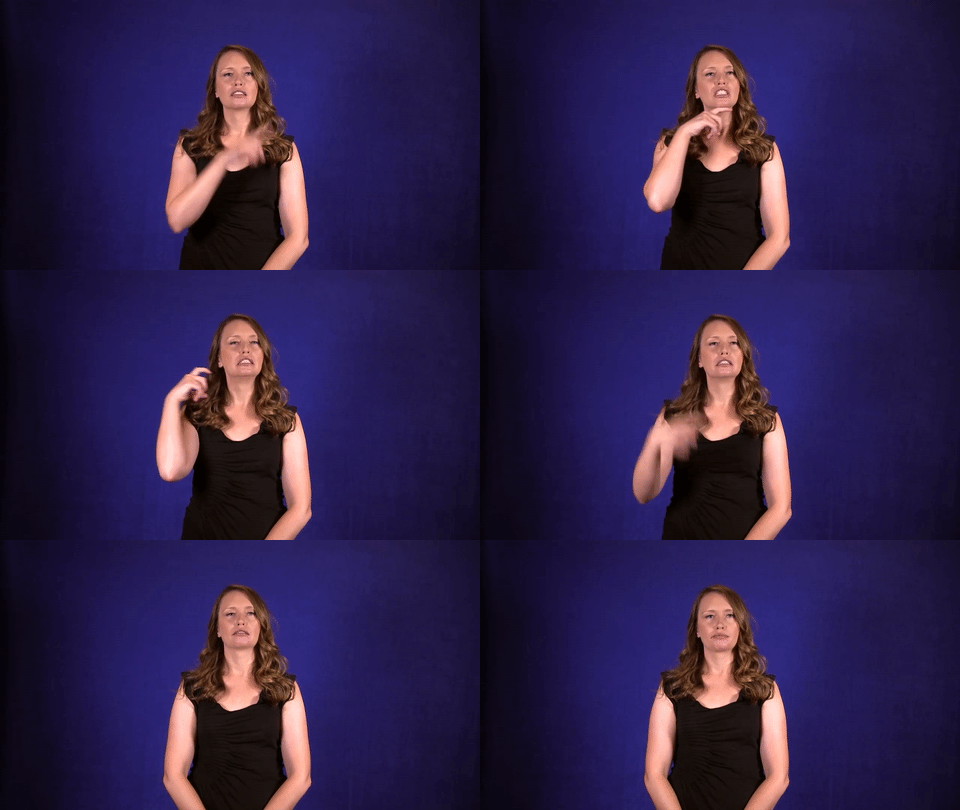
Sign for DRY in ASL | ASL Dictionary

Definition: Not wet.

Sign for DRY in ASL

YouTube player

Practice Activities:

Start practicing the sign for DRY in ASL by isolating the movement and handshape. Use a mirror to ensure your index finger moves correctly across your chin, transforming from an extended index hand to an “X” handshape as it moves from one side to the other. Repeat this sign slowly multiple times, focusing on clean, accurate movements.

Once you’re comfortable with the isolated sign, try using it in context. Sign simple phrases such as “my mouth dry,” “dry clothes,” “it’s dry today,” and “dry your hands.” Saying or thinking the sentence while signing can help build a connection between meaning and movement.

Incorporate the sign for DRY in ASL into short storytelling activities. Describe a day in the desert, explaining how it was sunny, hot, and dry. You could also tell a short anecdote about running out of water after a long practice and how your throat felt dry. This allows you to associate the sign with real-life scenarios.

Engage in a partner activity where one person signs short sentences with the sign for DRY in ASL and the other guesses the meaning or responds with a related thought. Practice back and forth exchanges such as “I forgot my umbrella. I’m not dry!” and your partner could respond with “Me too!”

Use flashcards showing different weather or condition-related pictures, like rain, sun, a towel, or cracked soil. Pick out the ones that match the concept of dry and sign the word accordingly. This helps reinforce visual connection to the sign.

And finally, record yourself using the sign for DRY in ASL in a full sentence. Watch the video to self-check for clarity and accuracy. This is a great habit to build expressive signing fluency.

Cultural Context:

The sign for dry in ASL is more than just a vocabulary term. It carries cultural importance within the Deaf community, where visual communication holds depth and subtlety. In American Sign Language, facial expressions and body language often enhance meanings, making the sign for dry especially expressive depending on context.

Understanding the sign for dry in ASL also opens the door to learning about how signs evolve based on practical use. In Deaf culture, efficiency in signed expression matters. That’s why certain signs, like dry, can be delivered with a slight variation to convey different shades of meaning such as dry humor, dry skin, or dry weather.

The sign for dry in ASL usually involves a single movement across the chin area. While the motion may seem simple, its use in conversation can reflect a nuanced understanding of situational dryness, whether it’s describing a desert or a bland story. These distinctions come naturally to native signers, but for learners, grasping this opens up clearer, more natural communication.

It’s also useful to consider how Deaf people share experiences tied to the concept of dryness. For example, a common situation like dry hands in winter might lead to a visual description followed by the clear use of the sign for dry in ASL. This makes vocabulary like this one an important part of everyday life in signing communities.

In visual storytelling, which is prevalent in Deaf narratives and performances, the concept of dryness is often expressed in creative ways. The sign for dry in ASL can be exaggerated for comedic effect or subtly altered in rhythm or expression to set a mood. These layers of meaning illustrate the artistic side of ASL and add to its cultural richness.

Learning the sign for dry in ASL also teaches learners about regional and generational differences. Some older signers might use a slightly different version than younger ones in urban Deaf communities. This diversity reflects the living and evolving nature of ASL within different social groups.

In settings like Deaf schools and community centers, teaching the sign for dry in ASL often includes real-life examples. Educators might use tactile activities or storytelling to ensure learners not only memorize the sign but also understand when and how to use it. This hands-on approach deepens language comprehension and builds stronger communication habits.

Media plays a significant role in spreading ASL usage, and current online videos often demonstrate common signs like dry to help reach a broader audience. Through captioned and signed content, viewers can repeatedly see the sign for dry in ASL used accurately, improving both recognition and fluency.

Extended Definition:

The sign for dry in ASL is a commonly used facial and hand gesture that expresses a lack of moisture or the condition of being dry. It’s a basic vocabulary word often taught to beginners learning American Sign Language. It can refer to a dry surface, dry climate, or even a person feeling thirsty because of dryness in the throat.

To produce the sign for dry in ASL, you usually begin with your dominant hand in an index-finger shape across your chin. Then, you move the finger from one side of the chin to the other while keeping a neutral or slightly serious facial expression. The motion is smooth and quick, almost like you’re wiping something away.

ASL signs often have visual or conceptual connections to what they represent, and the sign for dry is no exception. The motion across the chin mimics the feeling of dryness, like wiping a dry mouth. This visual representation makes it easier to remember the meaning behind the sign.

In conversational signing, the sign for dry in ASL is very versatile. You can use it when talking about dry clothes, dry hair, or dry weather. It also comes in handy when describing how your mouth feels, like when you’re dehydrated or lacking saliva.

There are variations in how people perform the sign depending on their region or personal style. While the motion and handshape remain similar, the speed or intensity of the sign can change. These differences don’t usually affect meaning but show the natural variation found within sign language use.

Non-manual markers, like facial expressions, play an important role in ASL. When signing dry, a slight frown or tight lips can emphasize the discomfort or seriousness of dryness. For example, if you’re indicating a dry throat, an exaggerated swallow or uncomfortable face might accompany the sign.

The sign for dry in ASL is often taught alongside related descriptive signs like wet, thirsty, or water. This helps learners build a stronger vocabulary network and understand contrasts in meaning. It’s especially useful in daily interactions, when discussing weather, personal comfort, or food textures.

Parents teaching ASL to their young children often introduce the sign for dry when talking about drinks or during mealtimes. It’s also commonly used by educators and speech-language therapists to support language acquisition in deaf and hard-of-hearing children. Incorporating it into routines helps reinforce its meaning and usage.

Understanding how to use the sign for dry in ASL in both literal and figurative contexts adds depth to your signing. For instance, a comedian might sign dry when referring

Synonyms: arid, parched, dehydrated, moistureless, bone-dry

Educational resources: Find related learning materials in our course bank!

Want more? Check out some of our popular learning activities on the homepage!

Need to look up a sign? Use our highly rated dictionary: https://aslinteractive.com/best-asl-dictionary/

Follow us on tiktok: https://www.tiktok.com/@aslinteractive. More social media links at the bottom of this page!

Long-tail Keywords: what is the sign for dry in ASL, how do you sign dry in ASL, ASL sign for dry

Categories:

tags: weather, chores, everyday activities, verbs, language learning

Parameters

*Handshape*:

The handshape for the sign for DRY in ASL uses the index finger extended while the rest of the fingers are curled into the palm, forming an “X” handshape. This hand moves across the chin from one side to the other, emphasizing a change in texture or moisture.

In the sign for DRY in ASL, the movement and facial expression can reinforce the meaning, suggesting something becoming moisture-free. The sleek motion of the “X” handshape under the chin visually conveys the concept of dryness .

*Palm Orientation*:

For the sign for DRY in ASL, the palm orientation starts with the dominant index finger extended and placed near the lower lip. The palm typically faces down or slightly inward toward the signer during the motion.

As the sign moves horizontally across the chin, the finger curls into an “X” handshape, maintaining the palm’s downward or slightly inward orientation. This palm position helps convey the precise movement needed when producing the sign for DRY in ASL.

*Location*:

The location for the sign for DRY in ASL is directly in front of the mouth area. The dominant hand begins in a position under the chin, with the index finger extended in a horizontal orientation.

As you perform the sign for DRY in ASL, the index finger slides across the chin from one side to the other in a smooth motion. This sign is made close to the lower part of the face, helping to visually convey the concept of dryness or absence of moisture.

*Movement*:

The sign for DRY in ASL begins with the dominant hand in an index finger shape placed at the side of the chin, palm facing in. The finger then moves horizontally across the chin while curling into an “X” handshape.

The motion should be smooth and deliberate, reflecting the idea of something becoming dry. This sign for DRY in ASL conveys a transformation—much like moisture disappearing—and can also be used metaphorically for concepts like humorless or arid. ️

*Non-Manual Signals*:

When performing the sign for DRY in ASL, your facial expression should reflect a sense of discomfort or dryness. A slight squint of the eyes paired with a pursed mouth helps convey the sensation of dryness or something unpleasant, like a parched throat or dry humor.

Using appropriate non-manual signals enhances the clarity and emotion behind the sign for DRY in ASL ️. These signals are especially important when giving context or contrasting with other textures or sensations.

*Prosody, Dominant/Non-Dominant Hand*:

The sign for DRY in ASL primarily uses the dominant hand. Start with the dominant index finger extended and placed near the chin, palm facing down. The finger pulls across the chin to the side while it curls into an “X” handshape, indicating dryness. The non-dominant hand remains inactive throughout. The sign for DRY in ASL is quick and uses subtle facial expressions to reflect the concept.

Tips for Beginners:

When learning the sign for DRY in ASL, focus on facial expressions, as they help communicate the nuance of the word. The sign makes use of a single index finger drawn across the chin, ending in a slightly bent position. Practice this motion deliberately and smoothly, being careful not to move too fast or too stiffly.

One common mistake beginners make is using the whole hand instead of the index finger, which can confuse the meaning. Another frequent issue is losing the dryness expression from your face—think about the sensation of dryness or discomfort to help your non-manual signals match. Always make sure the movement goes from one side of the chin to the other, not under the chin or lower on the neck.

To improve clarity, practice this sign in front of a mirror to check both hand motion and facial expression. It’s also helpful to record yourself so you can catch habits that might not match fluent signers. The more you see yourself sign, the faster you’ll spot inaccuracies and improve your confidence.

Use the sign for DRY in ASL during casual conversations when talking about weather, skin, or food textures, so it becomes second nature. Try incorporating it in short sample sentences to boost recall. For example, “My lips feel dry” or “The weather is dry today” helps with memory and contextual learning.

Don’t confuse the sign for DRY in ASL with signs for similar descriptors like rough or thirsty. Although some facial expressions may overlap, the hand gestures are different. Watching native signers use the sign will sharpen your accuracy and help you develop a more natural flow.

Patience and repetition are your best tools as you learn. Use slow, intentional practice first, and gradually build speed. With time, the sign for DRY in ASL will become a smooth part of your everyday vocabulary. ✨

Connections to Other topics:

The sign for DRY in ASL is closely connected to facial expressions, which play a critical role in conveying the intensity or subtlety of the concept. A neutral face can indicate something is simply not wet, while a more exaggerated expression might convey intense dryness, thirst, or even discomfort. This connection reflects how linguistic nuance in ASL depends not just on hand movements but also on non-manual markers.

The sign for DRY in ASL also has strong links with signs for weather and environmental concepts. For instance, it appears in compound signs like DRY-WEATHER or DRY-SEASON, pairing it with time-related indicators or climate descriptors. These combinations help learners understand how core signs can evolve into more complex ideas by modifying context.

In everyday conversation, the sign for DRY in ASL can combine with FOOD or THROAT to describe specific sensations like dry throat or stale food. These context-based combinations allow for efficient communication and show the flexibility of the sign. Additionally, pairing DRY with the sign for SKIN can indicate dry skin, further showing how the sign is used descriptively in practical settings.

The motion of the sign for DRY, which moves across the chin, is similar to other signs involving changes in texture or condition, such as UGLY or MUSTACHE. This handshape and location parallel helps learners recognize patterns in ASL sign formation. Recognizing these shared traits supports memory and fluency development.

In storytelling or visual vernacular, the sign for DRY in ASL often plays a symbolic role, representing desolation or need. It’s a useful device in poetic or emotional storytelling, reinforcing how ASL uses visual space and symbolic movement. Understanding these deeper uses expands the learner’s appreciation for the sign beyond its basic definition.

Summary:

The sign for DRY in ASL is a common, frequently used sign in everyday interactions. It’s visually intuitive, making it accessible for learners at various levels. The gesture typically involves brushing the index finger across the chin from one corner of the mouth to the other in a straight line.

This movement represents the idea of something being devoid of moisture, paralleling the concept of dryness. The handshape remains in a straight index position while the motion is tight and controlled. Facial expression often enhances the meaning, especially when emphasizing just how dry something is.

Grammatically, the sign for DRY in ASL functions primarily as an adjective. It can also work contextually to describe actions depending on the sentence’s structure. Whether you’re talking about weather, food, or physical texture, this sign plays a critical role in descriptive communication.

In ASL syntax, adjectives often follow the noun, though they can precede them for emphasis. Saying “shirt dry” or “dry shirt” are both understandable within the right context. Signers may modify their register depending on whether they’re in a casual or formal setting.

Culturally, a sign like DRY symbolizes more than its literal meaning. In Deaf spaces, weather and environment discussions are key parts of small talk, just like in hearing culture. So describing a dry day matters socially.

ASL also includes idiomatic expressions using the sign for DRY. For instance, paired with the sign for MOUTH it can describe being thirsty. The linguistic economy of ASL lets one sign take on broader meanings.

There are multiple related signs that pair naturally with DRY. These include WET, THIRSTY, DESSERT, and CLIMATE. Often, DRY contrasts with WET in both environmental and metaphorical usage.

Linguistically, the sign for DRY provides an example of iconicity. The sign visually resembles a dry motion—a stringing out, almost lifeless gesture across the face. That gives it extra power for learners and fluent signers alike.

Applied linguistics sheds more insight into how learners grasp the sign for DRY in ASL. Because it moves across the mouth, it holds a cognitive association with dryness as experienced in thirst or arid environments. Learners associate that mouth region with bodily senses.

Child language acquisition studies in ASL reveal that children learn iconic signs like DRY sooner than arbitrary ones. Its visibility and ease of motion also contribute to early retention. The face area is highly attended to in ASL input for both comprehension and production.

In mimetic terms, the sign for DRY mimics how dryness affects the lips and chin. That mimesis creates a visceral experience for the signer and the viewer alike. There’s a silent poetry to how this gesture repeats in conversation naturally.

Digital resources providing visual breakdowns of ASL signs often include the sign for DRY early in beginner modules. It’s foundational not just linguistically, but functionally in communicative situations. Mastery of this sign also builds confidence.

There’s interesting regional variance in how the sign for DRY may be produced. Slight shifts in facial expression or movement range may occur depending on region or signing community. These variants still converge on the shared core meaning.

In broader Deaf culture, the sign’s association with thirst can also extend metaphorically. For example, feeling emotionally dry or socially deprived can be gestured with exaggerations of the basic DRY sign. It lets emotions and states of being be communicated with brevity.

For interpreters, accurate use of DRY requires sensitivity to cultural context and tone. Overuse or under-inflection might result in a mismatch between speaker affect and interpreted meaning. Non-manual markers are indispensable in these situations.

Narrative performance in ASL frequently uses environmental signs like DRY to build setting and mood. In storytelling competitions or poetry, visual signs like DRY contribute to the spatial experience of a narrative. It’s not just about communication—it’s about art.

Educational curricula that include the sign for DRY in ASL often pair it with opposites or related semantic fields. Students engage with WET, RAIN, or DESSERT to understand lexical relationships. Semantic networks become clearer with these contrasts.

Morphologically, the sign for DRY does not change radically with time tense. Instead, aspect and time are modified through other markers or signs like YESTERDAY or WILL. The root form remains consistent, which simplifies its learning curve.

Facial grammar supports the intensity of the sign. A squinted eye, pinched lips, or furrowed brow can change how dry something is perceived to be. ASL relies heavily on these non-manual markers to elaborate on core signs.

From a historical perspective, the sign for DRY in ASL has remained relatively stable. Given its high frequency, stability ensures mutual understanding across generations and learning tiers. It differs from more niche terminology that undergoes faster evolution.

The sign for DRY also intersects with ASL classifiers. For instance, to

Want more? Check out some of our popular learning activities!

ASL Interactive Resources

ASLInteractive YouTube Channel

Follow us on tiktok: @aslinteractive.com

Follow us on Instagram: aslinteractive

Facebook page: aslinteractive

Facebook group: aslinteractive

LInkedIn: ASL Interactive LLC

Twitter: @ASL_interactive

*Some information on this page is AI-generated. AI can make mistakes. Please check the information.


Responses