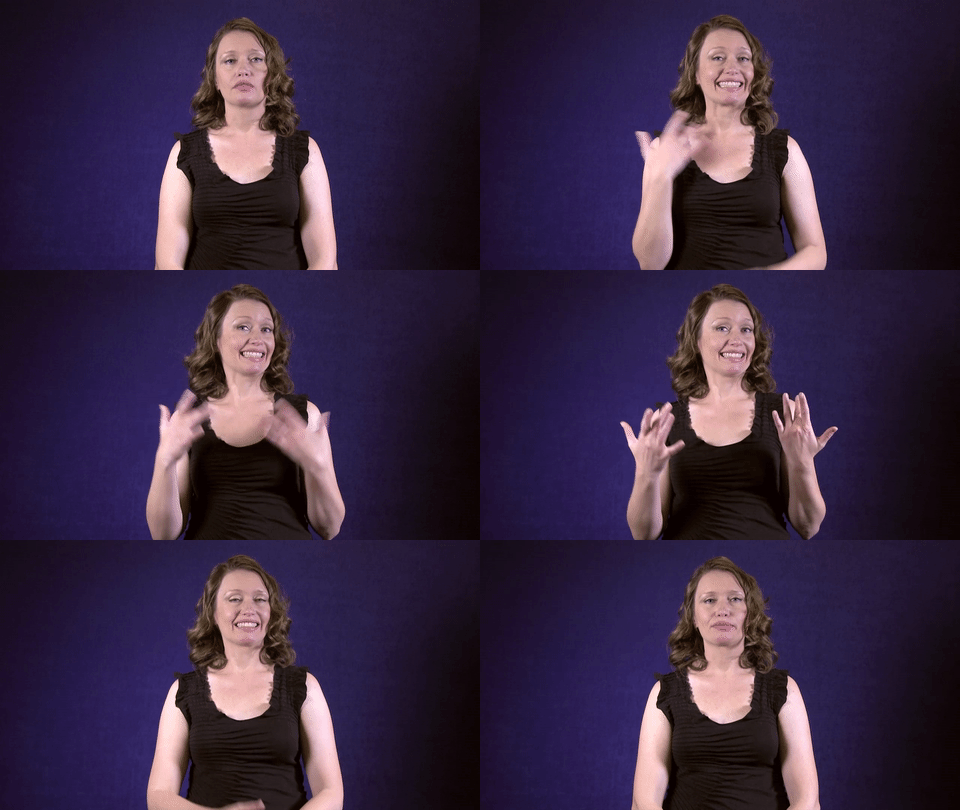
Definition: Feeling or showing happiness and enthusiasm.
Sign for EXCITED in ASL
Practice Activities:
To build confidence with the sign for EXCITED in ASL, begin by practicing the sign in isolation in front of a mirror. Focus on facial expressions, keeping them lively and animated to match the meaning of the sign. Repeat the sign several times with different intensities to reflect feelings like very excited, a little excited, or playful excitement.
Next, try incorporating the sign for EXCITED in ASL into short sentences. Examples include “I am excited to see you,” or “She is excited about her birthday.” Practice signing these in front of a camera or with a friend, focusing on fluid hand movements and expressive facial grammar.
Storytelling is a great way to reinforce the sign. Create a short story with a build-up and a climax where someone becomes excited. For example, tell a story about a child going to a theme park for the first time. Sign the story in ASL, highlighting the moment of excitement with clear use of the sign for EXCITED in ASL.
For partner practice, take turns acting out different scenarios where someone would feel excited—such as receiving a gift, passing a test, or seeing an old friend. Have one partner describe the situation using ASL while the other reacts with the appropriate signs and expressions.
Play emotion charades by signing different feelings and having your partner guess which one it is. Include the sign for EXCITED in ASL among other emotions like sad, angry, or tired, to reinforce the contrast through facial expression and body language.
End practice with a journaling activity. Write three things that make you excited, then sign them in ASL. Record yourself and review to check clarity. This will help you feel more comfortable using the sign for EXCITED in ASL in real-life conversations.
Cultural Context:
In American Sign Language, facial expressions and body language are just as important as hand movements. When learning the sign for excited in ASL, it’s essential to understand how Deaf culture uses expression to convey emotion. A flat, emotionless sign might be technically correct, but it won’t carry the intended meaning without energy and visual emotion.
The sign for excited in ASL reflects genuine joy and enthusiasm. Deaf culture places a high value on expressive communication, and excitement is often demonstrated with full-body involvement. A big smile, raised eyebrows, and quick, rhythmic movements bring the sign to life and match the energy of the emotion.
It’s common in Deaf culture to emphasize feelings through dynamic signing. So, when you’re using the sign for excited in ASL, try to match your facial expression with the level of excitement you’re communicating. A small, reserved smile might show mild excitement, while a huge grin and lively eyes will show strong, genuine excitement.
The Deaf community embraces visual connection, and the sign for excited in ASL helps reinforce that visual bond. When someone shares good news, their excitement is usually visible not just in their signs, but in their entire demeanor. That animated expression helps others feel the shared emotion and builds connection through shared joy.
In many social settings, expressing excitement clearly is a sign of support and encouragement. Whether it’s someone getting a new job, celebrating a birthday, or achieving a life goal, responding with the sign for excited in ASL shows genuine emotional engagement. Definitely bring the energy when using this sign—your reaction becomes a part of the interaction.
It’s important to understand that signed languages are not just translations of spoken words; they carry their own grammar, emotion, and rhythm. The sign for excited in ASL is more than a translation—it’s a cultural expression of feeling. Using it correctly strengthens connection, mutual understanding, and cultural respect within the Deaf community.
Even in classrooms or storytelling settings, the sign for excited in ASL plays a big role in engaging the audience. Teachers and performers in Deaf culture often use large, enthusiastic expressions to keep attention and build anticipation. Signing excited in a dull or passive way can lead to confusion or misplaced emotion.
When meeting someone new or reconnecting with a friend, the sign for excited in ASL helps you show authentic enthusiasm. Deaf culture encourages recognition of positive emotions through expressive signing. It helps build rapport and shows that you care about the moment and the people involved.
In everyday conversations, showing excitement can elevate the energy of a group
Extended Definition:
The sign for excited in ASL is an expressive gesture that shows strong positive emotion or anticipation. This American Sign Language sign is often used to convey feelings of joy, enthusiasm, or eagerness. It’s a useful sign for conversations where you want to show energy or discuss emotionally charged experiences.
To make the sign for excited in ASL, both hands are open with the middle fingers slightly bent. The fingertips of the middle fingers alternately brush up the chest in a circular motion. The motion gives the impression of bubbling excitement rising inside the person. This movement is repeated a couple of times to convey the feeling clearly.
This sign is typically accompanied by facial expressions that help show the emotion behind the sign. It’s important in ASL to match your facial expression to your sign, especially with emotional signs like excited. A big smile or energized eyes gives the sign more meaning and helps the viewer understand the context of your emotion.
When learning the sign for excited in ASL, make sure you don’t confuse it with similar signs like happy or enjoy. While the sign for happy features a more general upward motion on the chest, excited has a quicker and more circular path, showing a greater level of energy. Practice observing the difference between signs to use them correctly in conversations.
You can use the sign for excited in ASL in many everyday situations. For example, you might sign excited when talking about an upcoming event, such as going to a concert or seeing a friend after a long time. Kids often use this sign in ASL when talking about birthdays , holidays , and other special events.
ASL is a visual language, and emotional signs like excited play a powerful role in storytelling and personal communication. Whether you’re sharing good news, talking about your dreams, or reacting to a surprise, using the correct sign helps your message come across clearly. The sign for excited in ASL is a great way to bring lively emotion into your signing vocabulary.
The sign also works across different age groups and regions in the deaf community. While variations may exist, most signers recognize this version and understand its usage. Watching fluent signers and practicing regularly is key to mastering how and when to use it naturally.
If you’re learning American Sign Language, including the sign for excited in ASL in your practice can help boost both your vocabulary and your comfort level with emotional expressions. You can practice with a mirror or record yourself to ensure your hand movements and facial expressions match the feeling. Don’t forget
Synonyms: thrilled, enthusiastic, eager, exhilarated, pumped
Educational resources: Find related learning materials in our course bank!
Want more? Check out some of our popular learning activities on the homepage!
Need to look up a sign? Use our highly rated dictionary: https://aslinteractive.com/best-asl-dictionary/
Follow us on tiktok: https://www.tiktok.com/@aslinteractive. More social media links at the bottom of this page!
Long-tail Keywords: What is the sign for Excited in ASL, How do you sign Excited in ASL, ASL sign for Excited
Categories:
tags: excited in American Sign Language, how to sign excited in ASL, ASL sign for excited, learn excited in ASL, excited ASL dictionary
Parameters
*Handshape*:
The handshape used in the sign for excited in ASL involves both hands using open, curved hands, often described as the middle fingers slightly bent and extended while the other fingers are spread. The middle fingers are the primary contact points during the movement. ️
When using the sign for excited in ASL, the hands alternate and brush upward on the chest in a lively motion, starting near the bottom of the chest and moving up. This motion and handshape help convey the emotional energy of the concept.
*Palm Orientation*:
In the sign for excited in ASL, both hands are open with the middle fingers bent slightly, and palms facing inward toward the body. The middle fingers alternate brushing upward on the chest in a circular motion, showing the build-up of emotion.
The palms remain towards the torso throughout the movement, emphasizing the feeling coming from within. This palm orientation helps convey the energy and internal enthusiasm behind the sign for excited in ASL.
*Location*:
The location for the sign for excited in ASL is primarily centered on the chest area, just below the shoulders. Both hands move in a circular motion on the chest, alternating slightly. The movement is energetic and expressive, matching the emotional intensity conveyed by the sign for excited in ASL. The action stays close to the upper torso without shifting to the sides or lower body.
*Movement*:
Both open hands, palms facing the body, are placed near the chest with fingers spread and slightly curved. The middle fingers are slightly more prominent and move in small alternating circles on the chest, with a brushing motion that indicates heightened emotion.
The movement is energetic and repeated two or three times to convey strong feeling. The sign for excited in ASL uses a bouncy, enthusiastic motion to express emotional excitement or eagerness . The sign for excited in ASL captures a sense of vivid and joyful emotion through the use of expressive movement and facial cues.
*Non-Manual Signals*:
When using the sign for excited in ASL, the facial expression should show energy and enthusiasm. Eyes are typically wide, with raised eyebrows and a broad smile . Slight head movements or a small bounce in the body may accompany the sign to reflect emotional intensity. The sign for excited in ASL depends heavily on these non-manual signals to convey genuine feelings of joy or anticipation.
*Prosody, Dominant/Non-Dominant Hand*:
The sign for excited in ASL uses both hands in a symmetrical movement. The dominant hand and non-dominant hand are in open 5-handshapes, palms facing the body. Alternate brushing the middle fingers upward on the chest in circular motions, showing enthusiasm and a heightened emotional state.
This expressive movement helps convey the meaning behind the sign for excited in ASL clearly. Keep a lively facial expression to match the emotion being communicated.
Tips for Beginners:
When learning the sign for EXCITED in ASL, beginners should focus on dynamic hand movement and correct body language. This sign uses both open hands with middle fingers bent slightly forward (as in the emotion-based “feel” family of signs). The hands alternate in motion, circling lightly on the chest area, with your fingers making contact in a bouncing motion near the chest. Be sure to keep the movements lively but controlled to avoid over-exaggeration.
Practice in front of a mirror to ensure your facial expression matches the mood of the sign. Since the sign for EXCITED in ASL conveys a strong feeling, your face should reflect genuine excitement—open eyes, a big smile, raised eyebrows. Without expressive features, your message may feel disconnected or unclear. ASL heavily relies on non-manual signals to convey the full emotion, so don’t skip this part!
Watch native signers either in person or in online videos to observe how they use the sign for EXCITED in ASL fluidly in conversations. Mimicking rhythm and tone is often more useful than rigid memorization. Many beginners unknowingly lock their shoulders or keep their hands too close, so check that your movements are open and natural. Relax your arms and let the motion flow from your shoulders.
Common mistakes include using only one hand, forgetting to alternate, or placing the hands too low. Also, don’t confuse this sign with others like “happy” or “enthusiastic”—each has distinct motions in ASL. Repeated practice and feedback from fluent signers will help build confidence and reduce errors.
Finally, situational practice is key! Try inserting the sign for EXCITED in ASL into mock conversations about fun topics, like vacations or celebrations. The more you use it in context, the more comfortable you’ll become adding this expressive sign into your everyday signing vocabulary.
sign for EXCITED in ASL, ASL sign for excited, how to sign excited in ASL, excited sign language translation, learn ASL excited sign
Connections to Other topics:
The sign for EXCITED in ASL connects closely with emotional vocabulary such as HAPPY, THRILLED, and NERVOUS. It uses a two-handed motion with middle fingers bent and brushing upward alternately on the chest, emphasizing the inner feeling being stirred. This motion is common in other emotional signs, so recognizing these handshape patterns can expand your expressive range in ASL.
There’s a strong relationship between the sign for EXCITED in ASL and emotional intensity. For instance, it can be incorporated into facial expressions and body language to differentiate between being slightly excited and overwhelmingly thrilled. This visual layering makes ASL incredibly expressive, allowing signers to give more depth to communication.
In terms of compound signs, the sign for EXCITED in ASL can be combined with other signs to convey more specific meanings like EXCITED-SEE-YOU or EXCITED-GO-EVENT. These compound expressions rely heavily on context and non-manual markers like raised eyebrows and body movement to emphasize enthusiasm. This connection helps learners understand how ASL leans on visual-spatial grammar to fill in grammatical roles that English assigns to word order or tone.
It’s also valuable to compare the sign for EXCITED in ASL with signs like INTERESTED or ENTHUSIASTIC. While these share some conceptual overlap, they use different locations on the body and distinct handshapes, highlighting the importance of precision in ASL. These distinctions clarify subtle differences in emotional nuance — for example, INTERESTED may be calmer than EXCITED, and understanding this helps with accurate storytelling or conversation.
Additionally, the sign for EXCITED in ASL often appears in storytelling, especially among children or in narratives involving celebrations . Recognizing how this sign functions contextually empowers signers to build stronger sentence structures and emotional resonance. Being able to tie feelings to actions in ASL enhances conversational fluency and cultural depth.
Summary:
The sign for EXCITED in ASL is rich in both emotional expression and physical movement. It relies heavily on body language, facial expression, and the nuanced placement of the hands to convey the specific kind of excitement the signer feels. This makes it a dynamic and emotionally charged sign that resonates across various conversational contexts.
To produce the sign for EXCITED in ASL, both open hands are used with middle fingers slightly bent inward. The tips of the bent middle fingers brush upward in alternating circular motions on the chest. This movement mimics a kind of pulsing of the heart or overflow of adrenaline, symbolically capturing enthusiastic emotion.
Facial expression plays a critical role in delivering the full emotional context of the sign. Wide eyes, raised eyebrows, and a big smile often accompany the movement, amplifying the meaning. The face helps differentiate between casual excitement and deep, joyful elation.
In the realm of ASL grammar, the sign for EXCITED in ASL functions primarily as an adjective but can appear in verb-like roles depending on context. Due to the visual-spatial modality of the language, it is tightly integrated with facial grammar and body orientation. These non-manual signals help indicate intensity or contrast with related emotions.
The bodily movement is forward and outward, suggesting energy directed from within the person. This directionality aligns with how emotions in ASL are often externalized through space. Forward movement helps anchor the emotion in a visceral way that is visible to the viewer.
The handshape for the sign incorporates the middle finger as a contact point due to its specificity in tactile feedback. This is a key feature in many emotion-related ASL signs, including INTERESTING and ENTHUSIASTIC. Emotional states are often expressed through this channel of tactile-energy release.
Compared to the sign for HAPPY, which uses an open palm brushing upward on the chest or slightly away from the chest, the sign for EXCITED in ASL is more complex and layered. EXCITED implies more intense or anticipatory happiness, often linked to future events or sudden stimuli. This marks a semantic distinction valuable in daily ASL discourse.
The sign connects not just to a singular emotion but also to a broader emotional spectrum. Related signs include AMAZED, THRILLED, ANTICIPATE, and HYPED. Each sign varies in handshape or location to reflect subtle differences in emotional nuance while still maintaining core excitement-related qualities.
When teaching the sign for EXCITED in ASL, instructors often emphasize how it differs from more static or subdued positive emotion signs. Students are encouraged to practice the exuberant body and facial cues that naturally accompany the sign. This promotes emotional realism and engagement in communication.
In Deaf culture, the clear expression of emotion through signs like EXCITED holds strong cultural value. Limiting emotion or failing to reflect it in the face and hands can appear disingenuous or flat. Thus, full-bodied communication is respected and expected.
The use of the sign in storytelling, especially narratives involving children’s stories or event build-ups, is frequent and dramatized. It creates a rhythm and energy that enhances the linguistic dynamics of visual storytelling in ASL. The sign helps construct tension and anticipation in poetic or narrative flow.
Linguistically, the sign for EXCITED in ASL demonstrates how affective language in signed modalities moves beyond lexicon into embodied expression. The meaning is constructed via prosody, rhythm, and spatial metaphors. In speech, tone would carry this weight, while in ASL, kinetic energy becomes a crucial semantic vehicle.
In applied linguistics, this sign showcases how second language learners of ASL must master multimodal registers. It is not enough to memorize signs; learners must practice connotative power through the body. This highlights the embodied cognition aspect of sign language acquisition.
The sign frequently appears in conversation topics involving birthdays, special announcements, upcoming plans, and celebratory settings. Its utility makes it a core emotional sign for both one-on-one and group conversations. The intensity can be modulated by changing the speed, size, or number of repetitions in the movement.
Native ASL users often inject subtle personal styles into how they perform the sign for EXCITED in ASL. For example, some may lean the torso slightly forward or exaggerate circularity of the hand motion. These individual flairs add to the diversity within the Deaf community.
In literary ASL discourse, like ASL poetry or signed performance spheres, this sign has symbolic potential. When repeated rhythmically or dramatized, it can symbolize societal momentum, spiritual energy, or joyful resistance. These metaphorical expansions add aesthetic depth to artistic sign language platforms.
Culturally, expressing joy and excitement openly is often embraced in the Deaf community. Shared emotional resonance contributes to tight-knit social bonds. The sign for EXCITED in ASL functions as a bridge for creating these affective connections.
For interpreters, accurately conveying the sign’s emotional depth in real-time interpretation requires keen
Want more? Check out some of our popular learning activities!
ASL Interactive Resources
ASLInteractive YouTube Channel
Follow us on tiktok: @aslinteractive.com
Follow us on Instagram: aslinteractive
Facebook page: aslinteractive
Facebook group: aslinteractive
LInkedIn: ASL Interactive LLC
Twitter: @ASL_interactive
*Some information on this page is AI-generated. AI can make mistakes. Please check the information.


Responses