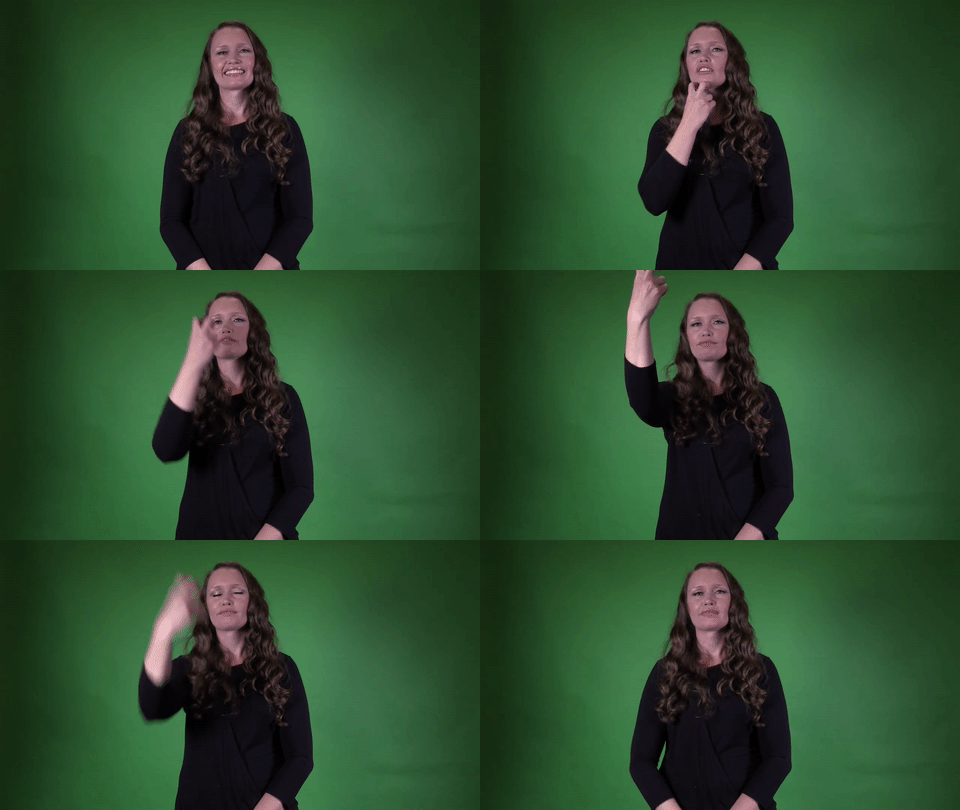
Definition: A tall African mammal with a very long neck.
Sign for GIRAFFE in ASL
Practice Activities:
Begin practicing the sign for GIRAFFE in ASL by isolating the sign and repeating it in front of a mirror. Focus on the motion starting at the neck and rising above the head to mimic the long neck of a giraffe. Do the sign in slow motion first, then gradually increase your speed while keeping the movement clear and accurate.
Next, sign the word along with fingerspelling it to reinforce recognition, especially for newer learners. Try alternating between the isolated sign and fingerspelling G-I-R-A-F-F-E. This helps reinforce both the lexical sign and the understanding of the fingerspelled term when context requires it.
Use the sign for GIRAFFE in ASL within short, basic sentences. For example, you can sign “I SEE GIRAFFE ZOO” or “GIRAFFE NECK TALL.” Try coming up with a few more sentences that describe what a giraffe is doing, where it lives, or what it looks like. Keep your sentence structures simple as you build confidence.
Practice storytelling by creating a short narrative involving a giraffe. You might sign a story like: “ONE DAY, GIRAFFE WAKE-UP, WALK ZOO, EAT LEAVES.” Use expressive facial grammar to show emotions or highlight actions. Have a classmate or friend sign their story so you can switch roles and repeat for comprehension.
In a partner activity, one person can act out an animal using only signs, and the other guesses. Include the sign for GIRAFFE in ASL among the choices. This reinforces recognition of the sign in a fun, interactive setting and builds vocabulary.
Finish by watching a nature video with no audio and narrate what you see using ASL. Focus on moments when a giraffe appears and describe its actions using the correct sign in context. This type of fluency practice will help connect visual elements with expressive communication.
Cultural Context:
The sign for giraffe in ASL is not just a way to label a tall animal. It represents how American Sign Language incorporates visual cues and physical characteristics to create meaningful communication. The gesture shows the long neck of a giraffe, making it easy for Deaf and hard-of-hearing individuals to understand even if they’ve never seen one in person .
Using the sign for giraffe in ASL provides an example of how ASL often uses spatial and iconic elements to describe animals. This sign is not arbitrarily chosen—it mimics the towering height and long neck of a giraffe, making the meaning visually intuitive. Children learning ASL quickly recognize the sign for giraffe in ASL and connect it to real-life zoo experiences or animal books.
In Deaf culture, animal signs like the sign for giraffe in ASL serve not only for everyday communication but also for sharing stories, teaching children, and creating vivid visual narratives. ASL storytelling often uses animal signs to make tales engaging and educational. The sign for giraffe in ASL plays a part in bringing African safari stories and wildlife education to life.
It’s common in ASL classrooms to use animal signs like the sign for giraffe in ASL to practice descriptive and creative signing techniques. Educators use this sign to help learners explore how ASL can paint pictures in the air. The act of mimicking a giraffe’s long neck helps to improve spatial awareness and physical expression.
Culturally, signs like the sign for giraffe in ASL help bridge the hearing and Deaf worlds. It shows how the Deaf community adapts language to visually capture meanings in ways that are intuitive and accessible to all. This adaptability is a key feature of ASL that highlights its beauty and depth.
The sign for giraffe in ASL also shows up in visual art, cartoons, and performances in the Deaf community. It becomes more than just a word—it’s a motion with character and expression. Whether in poetry or a stage play, the giraffe sign visually enlivens any scene involving animals.
Parents who use ASL with their children often incorporate the sign for giraffe in ASL during playtime or reading. It’s fun for kids to act out the long neck gesture and learn more about animals while developing their language skills. This makes ASL interactive and joyful, especially when learning about exotic animals.
For those studying ASL linguistics or working in the education field, the sign for giraffe in ASL is a clear
Extended Definition:
The sign for giraffe in ASL is a visually descriptive sign that mimics the long neck of this tall animal. To create this sign, start with your dominant hand open and positioned at the base of your neck, then move it upward as if tracing a giraffe’s neck. This movement clearly illustrates the animal’s most prominent characteristic — its long, graceful neck.
When learning the sign for giraffe in ASL, it helps to visualize the animal in a natural setting. Think of how a giraffe stretches to eat leaves from tall trees in the savannah. The sign captures this upward stretch perfectly, making it easy to remember and recognize during asl conversations about animals, zoos, or wildlife.
This sign is often used in educational settings, especially when teaching children or beginners about different animals in American Sign Language. Pairing the sign with a picture or a toy giraffe enhances memory retention. Teachers and parents often use the sign for giraffe in ASL while reading books or singing animal songs that mention jungle animals or zoo themes .
Children especially love learning the sign for giraffe in ASL due to its fun and animated nature. It encourages them to engage with the language physically and mentally. Many ASL educators use it during circle time or interactive language games, making it both an educational and entertaining experience.
When using the sign in conversation, it’s helpful to combine it with facial expressions or body language to give more context. For example, widening your eyes or showing surprise while signing giraffe can emphasize the animal’s height or uniqueness. Visual storytelling is a key component of American Sign Language, and animal signs like giraffe work well within this framework.
The sign for giraffe in ASL is classified as an iconic sign, meaning its movement is closely related to the object it represents. This makes it easier for new learners to pick up quickly since the gesture makes logical sense. Iconic signs help create strong visual associations, which are essential for effective communication in ASL.
Interacting in ASL about animals, including the giraffe, supports language development and vocabulary expansion. People use this sign at zoos, in nature-themed discussions, or even during outdoor storytelling sessions. It’s often paired with signs for other animals such as elephant, lion, or zebra when discussing habitats or animal features.
This particular sign is not only educational but also culturally rich, offering insight into how ASL integrates the visual and natural world. The use of movement for the giraffe’s long neck shares
Synonyms: Giraffa camelopardalis, long-necked animal, African herbivore, tallest land mammal, savanna dweller
Educational resources: Find related learning materials in our course bank!
Want more? Check out some of our popular learning activities on the homepage!
Need to look up a sign? Use our highly rated dictionary: https://aslinteractive.com/best-asl-dictionary/
Follow us on tiktok: https://www.tiktok.com/@aslinteractive. More social media links at the bottom of this page!
Long-tail Keywords: what is the ASL sign for giraffe, how to sign giraffe in American Sign Language, giraffe sign language tutorial
Categories:
tags: giraffe in American Sign Language, how to sign giraffe in ASL, ASL sign for giraffe, learn to sign giraffe in ASL, giraffe ASL dictionary
Parameters
*Handshape*:
The sign for GIRAFFE in ASL uses a dominant hand in a flat C handshape. Starting at the neck area, the hand moves upward to above the head, illustrating the long neck of a giraffe. The non-dominant hand may remain at the base of the neck to emphasize the motion. This visually represents the height and extended neck typical of a giraffe. The sign for GIRAFFE in ASL clearly mimics the unique physical traits of the animal .
*Palm Orientation*:
For the sign for GIRAFFE in ASL, the palm orientation starts with the dominant hand open, palm facing inward toward the neck. As the hand moves upward, mimicking the long neck of a giraffe, the palm continues to face the signer. This orientation helps visually represent the height and stretch of a giraffe’s neck.
The sign for GIRAFFE in ASL relies on this palm-facing-inward position to maintain the iconic gesture. The natural flow of movement paired with consistent orientation enhances recognition and clarity of the sign.
*Location*:
The sign for GIRAFFE in ASL is produced in the neutral space in front of the body, beginning at the neck area and moving upward. The dominant hand forms a loose “C” shape around an imaginary giraffe neck and glides from the collarbone area to just above the head, tracing the long neck of a giraffe.
This placement visually emphasizes the tall stature of a giraffe and makes the sign for GIRAFFE in ASL easy to remember. The space used is just in front of the shoulder and head area to accurately reflect the animal’s proportions.
*Movement*:
The sign for giraffe in ASL begins with the dominant hand in a “C” shape near the neck. The hand then moves upward, tracing from the base of the neck toward the top of the head, mimicking the long neck of a giraffe . This upward motion emphasizes the giraffe’s tall stature.
To effectively demonstrate the sign for giraffe in ASL, keep the movement smooth and deliberate. The sign visually represents the distinct neck length that sets a giraffe apart from other animals.
*Non-Manual Signals*:
When performing the sign for GIRAFFE in ASL, the facial expression typically involves a neutral to slightly inquisitive look, which matches the tall and majestic nature of a giraffe. Eyebrows may lift slightly to add emphasis, especially when describing the animal to someone unfamiliar.
Head movement can be subtly upward to follow the vertical arc of the sign, enhancing the visual metaphor. The overall demeanor should remain calm and descriptive , supporting clarity in conveying the sign for GIRAFFE in ASL.
*Prosody, Dominant/Non-Dominant Hand*:
The sign for GIRAFFE in ASL uses the dominant hand in a “C” shape starting at the neck and moving upward to above the head, representing the long neck of a giraffe . The non-dominant hand is not used in this sign. Make sure the motion is smooth and upward, mimicking the graceful stretch of a giraffe’s neck.
This motion helps visually convey the characteristic feature of the animal. When learning the sign for GIRAFFE in ASL, keep your arm extended to emphasize the height.
Tips for Beginners:
When learning the sign for GIRAFFE in ASL, it’s helpful to visualize the long neck of the animal. The motion of your dominant hand moving upward from your neck to above your head helps mimic this distinctive feature. Be sure your movement is fluid and not too quick, as rushing the sign can make it harder to understand.
One common pitfall is not starting the sign low enough on the neck or not extending the hand far enough upwards. To ensure clarity, think of tracing the outline of a giraffe’s long neck starting from the base of your throat. Keep your facial expression neutral or slightly interested to match the tone of the subject.
Practice the sign for GIRAFFE in ASL slowly at first, focusing on clean handshape and steady motion. Consistency in your hand shape, typically a “C” shape or a slightly open curved shape, is key. Be mindful not to overexaggerate the gesture or lean your body back too far, as this can appear cartoonish rather than natural.
Use a mirror to check your positioning and fluidity. This can be a useful way to self-correct and build confidence. Watching native signers or video examples online is also beneficial; observe hand placement and rhythm closely.
Another good tip is to practice in a sentence. Instead of only signing the word, use it in context like “I saw a giraffe at the zoo.” This will make the sign for GIRAFFE in ASL more meaningful and help you retain it more effectively.
Keep practicing consistently every day. Reps over time lead to muscle memory, which boosts fluency. Don’t worry if it doesn’t feel perfect right away—patience and regular use are keys to mastery.
sign for giraffe in asl, giraffe sign asl, asl sign for giraffe, learn sign for giraffe, how to sign giraffe in asl
Connections to Other topics:
The sign for GIRAFFE in ASL connects naturally with signs for other animals, especially those with distinctive features related to size or neck length. For example, signs for animals like ELEPHANT or ZEBRA also include iconic features that mirror real-world characteristics, which helps learners build a mental map for categorizing and describing wildlife. Understanding these connections encourages learners to recognize how physical traits are emphasized in many animal signs.
This sign also relates to descriptive classifiers, such as CL:1 or CL:3, often used in ASL to show a giraffe’s movement or posture in a spatial context. For instance, combining the sign for GIRAFFE in ASL with a classifier can allow someone to describe a herd of giraffes walking slowly or stretching their necks up to reach trees. It supports broader storytelling and scene-building abilities in ASL conversations.
In narratives or classroom contexts, the sign for GIRAFFE in ASL may be used in compound ideas, such as ZOO + GIRAFFE or AFRICA + GIRAFFE, to specify locations or themes. This invites learners to expand phrases meaningfully by linking geography or setting with the animals being discussed. These combinations help users become fluent in both topical and contextual expansions.
Another relevant connection comes from the use of size and height modifiers in ASL, like signing TALL alongside or before GIRAFFE to emphasize height for contrast or educational storytelling. It’s a natural bridge to discussions about relative heights among animals or people. This also enhances comparisons like GIRAFFE + NECK + LONG to elaborate on the animal’s features.
Finally, animal-themed songs or stories in ASL often include the sign for GIRAFFE in ASL, making it useful for early language learners, particularly children. Incorporating singing, rhythm, and visual storytelling supports retention and introduces the sign as part of a vibrant linguistic experience .
Summary:
The sign for GIRAFFE in ASL visually and conceptually captures the essence of the animal’s most striking feature—its long neck. The sign typically starts with the dominant hand in a curved shape at the neck area and then moves upward, mimicking the upward stretch of a giraffe’s neck.
This upward motion is iconic and mimetic, rooted deeply in the visual-gestural modality of ASL. ASL often utilizes iconicity, where the form of a sign reflects the physical characteristics of the referent, and the sign for GIRAFFE in ASL is a classic demonstration of this principle.
Grammatically, the sign operates as a noun within ASL syntax. It fits naturally into declarative, interrogative, or descriptive sentences and can be modified with facial expressions and non-manual markers to indicate emotions or emphasis.
Children learning ASL are often introduced to animal signs early, and the sign for GIRAFFE in ASL becomes a favorite because of its imaginative gesture. The upward movement relays both visual and spatial awareness for learners, helping to reinforce the physical traits of the animal.
The sign for GIRAFFE in ASL also opens a window into how ASL categorizes information spatially. By using the vertical plane of the body to show height and length, the sign inherently integrates spatial grammar and visual storytelling.
From an applied linguistics standpoint, the use of such iconic signs reflects how ASL structures meaning through kinetic memory and imagery. ASL learners often find it easier to retain and recall signs that are visually representative of what they describe.
The sign for GIRAFFE in ASL is culturally significant because it reflects a shared understanding of the natural world among Deaf community members. Storytelling in ASL frequently incorporates animal signs, and this sign is commonly used in children’s books, stories, and educational programs.
The storytelling potential of the sign is vast. When used in visual narratives, such as folktales or personal experience stories, this sign adds flair and dynamism, often paired with exaggerated facial expressions to mimic the grandeur or elegance of the giraffe.
In Deaf culture, expressive communication is key, and the sign for GIRAFFE in ASL allows for playful creativity. The tall nature of the giraffe and its gentle demeanor can be reflected in how the sign is produced—gracefully, slowly, or even with embellishments for dramatic effect.
Related signs such as ZEBRA, ELEPHANT, LION, and other safari animals are often used alongside the sign for GIRAFFE in ASL when discussing zoos or wildlife. This cluster of signs forms a thematic category that makes animal-related vocabulary acquisition both manageable and visually engaging.
Linguistically, the classifier system in ASL can be used to further describe the giraffe beyond the basic sign. Classifier handshapes might depict the giraffe’s walking, turning its neck, or interacting with other animals, thereby expanding on the single sign with richer description.
When telling a story involving multiple giraffes or emphasizing the species’ characteristics, the pluralization strategy may involve either repetition of the sign in space or using number incorporation alongside facial grammar. This allows the language to remain fluid and adaptable.
In Deaf education, the sign for GIRAFFE in ASL is often included in thematic units about animals or nature. Educators use visuals, real-life models, or even zoo field trips to reinforce the sign, tying tactile learning with established signs.
The physical and spatial nature of the sign encourages kinesthetic learning, particularly for young Deaf children. The sweeping gesture up the body along the neck helps children understand both the concept and the sign, embedding it in muscle memory.
The sign for GIRAFFE in ASL is also relevant when analyzing ASL through the lens of cognitive linguistics. The gesture imitates real-world features, supporting the theory that human cognition favors signs that are closely matched with sensory or physical realities.
A multilingual perspective shows that many sign languages incorporate iconic signs for animals, but each does so in unique ways. The sign for GIRAFFE in ASL may differ from British Sign Language or Japanese Sign Language, showing variation even when attempting to communicate the same concept through shared visual logic.
This variation across sign languages highlights how visual metaphors can be both universal and culture-specific. The sign for GIRAFFE in ASL takes the American cultural understanding of giraffes into account and visually represents its long neck accordingly.
ASL poetry and narrative arts make use of visually rich signs like the one for GIRAFFE. In poetic storytelling, the sign may be performed with exaggerated movement or paired with classifiers to create metaphor—perhaps representing someone who stands out or sees beyond others due to their height.
The sign for GIRAFFE in ASL also embodies one of the key artistic strengths of ASL: the language’s ability to animate the physical world visually with minimal explanation. A single upward arc of the hand can invoke the entire image of a tall, peaceful animal standing against the savannah
Want more? Check out some of our popular learning activities!
ASL Interactive Resources
ASLInteractive YouTube Channel
Follow us on tiktok: @aslinteractive.com
Follow us on Instagram: aslinteractive
Facebook page: aslinteractive
Facebook group: aslinteractive
LInkedIn: ASL Interactive LLC
Twitter: @ASL_interactive
*Some information on this page is AI-generated. AI can make mistakes. Please check the information.


Responses