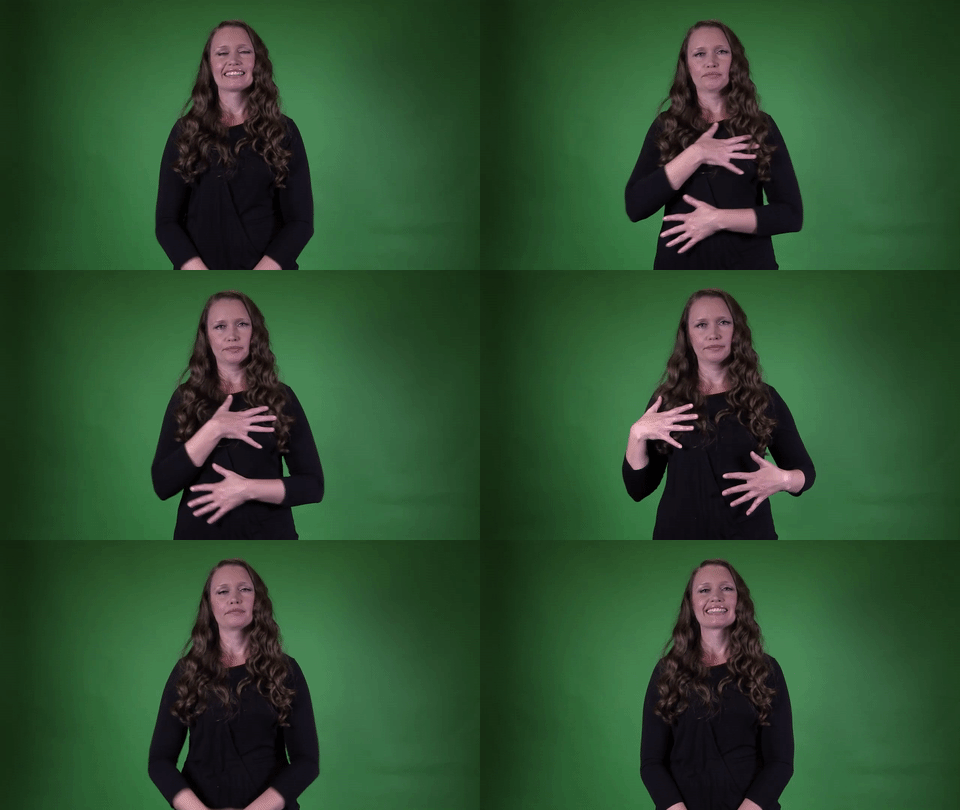
Sign for ZEBRA in ASL | ASL Dictionary

Definition: An African wild horse with black-and-white stripes. Sign for ZEBRA in ASL
YouTube player

Practice Activities

To master the sign for ZEBRA in ASL, start with mirror work. Stand in front of a mirror and practice the handshape and movement to ensure accuracy. Pay attention to your facial expressions, which play a role in conveying clarity and natural fluency in ASL. Record yourself signing the word in different contexts. Watching your own videos helps identify inconsistencies or any awkward transitions. This technique offers real-time feedback and encourages self-correction, which is especially helpful when learning the sign for ZEBRA in ASL. Use the sign in context by describing animals, going through flashcards, or creating short ASL stories about zoo animals. Include signs like LION, GIRAFFE, or ELEPHANT to place the sign for ZEBRA in ASL into a meaningful narrative. This builds retention and helps reinforce vocabulary through storytelling. For advanced learners, try receptive drills and expressive drills. In receptive drills, watch others sign and identify the sign for ZEBRA in ASL among other animal signs. In expressive drills, sign quickly and clearly in sequence while maintaining appropriate spatial referencing and grammar.

SEO Cultural Context

The sign for ZEBRA in ASL is rooted in the visual nature of American Sign Language. The sign mimics the striped pattern of a zebra’s coat, making it iconic and easy to remember. This visual representation is consistent with ASL’s tendency to embody concepts through physical imagery. In Deaf culture, signs related to animals are often used in storytelling, education, and everyday conversation—especially with children. The sign for ZEBRA in ASL is commonly used when discussing animals at the zoo, in ASL storybooks, or during interactive educational activities. Regional variation in the sign for ZEBRA in ASL is minimal, but some signers may modify the movement or hand orientation slightly depending on local ASL dialects. Still, the overall concept of showing zebra stripes across the chest remains consistent nationwide. In real-life settings, this sign is frequently used in classrooms, zoos, and during animal-themed storytime. It’s also a popular vocabulary word during early childhood ASL instruction due to its visual clarity and connection to familiar animals.

Extended Definition

The sign for ZEBRA in ASL is typically made using the four fingers of a flat hand, sweeping across the chest from one shoulder to the other in a zigzag or striped motion. This movement visually imitates zebra stripes, making it an iconic sign that is both descriptive and easy to remember. Some variations may use both hands or a repeated motion to emphasize the striping. However, it’s important to keep the movement smooth and natural. Over-exaggerating can distort the meaning or make the sign unclear to native signers. It’s essential not to confuse the sign for ZEBRA in ASL with signs for similar animals like HORSE or TIGER. While TIGER also uses a stripe motif, it’s signed across the face rather than the chest. Understanding these differences helps avoid miscommunication. Common errors include using the wrong handshape, incorrect movement direction, or omitting the zigzag motion altogether. These mistakes can lead to confusion or make the sign unrecognizable. Practicing consistently helps avoid these pitfalls and builds confidence.

Tips for Beginners

If you’re just starting to learn the sign for ZEBRA in ASL, take it one step at a time. Focus first on mastering the handshape and the sweeping motion across your chest. Don’t worry about speed—clarity is more important. Beginners often forget to complete the full stripe motion or use a bent hand instead of a flat hand. These subtle differences can change the meaning or make the sign unclear. Watch native signers, pause frequently, and mirror their movements. Use flashcards with animal pictures to quiz yourself. Say the word out loud, then sign it. Reinforce your learning by teaching the sign for ZEBRA in ASL to a friend or family member. Teaching others helps solidify your own understanding. Consistency is key. Even practicing for five minutes a day will improve your fluency over time. Celebrate small victories and don’t get discouraged by early mistakes—they’re part of the learning journey.

Connections to Other Topics

The sign for ZEBRA in ASL connects closely with other animal signs such as LION, GIRAFFE, and TIGER. These signs also use iconic movements that represent physical features of the animals, making them easier to remember through visual association. It also ties into the broader topic of classifiers in ASL. While the sign for ZEBRA in ASL is iconic, classifiers are often used to describe the animal’s size, movement, or behavior. This makes ASL storytelling more dynamic and visually rich. Another related concept is spatial referencing. When telling a story about a zoo visit, for example, you can use space around you to indicate where each animal is located. The sign for ZEBRA in ASL can be placed in a spatial map to show its position relative to other animals. Facial expressions also play an important role. When using the sign for ZEBRA in ASL in a sentence, your facial expressions can indicate excitement, curiosity, or even fear—adding emotional depth to communication. Lastly, fingerspelling is a valuable skill when introducing new or less common animal names. Although the sign for ZEBRA in ASL is widely understood, knowing how to fingerspell Z-E-B-R-A adds another layer of communication, especially when teaching or clarifying vocabulary.

Lengthy Summary

The sign for ZEBRA in ASL is a visually iconic and conceptually rich part of American Sign Language. It uses a sweeping hand motion across the chest to mimic zebra stripes, aligning perfectly with ASL’s visual-spatial grammar. This makes it an excellent starting point for new learners and a fun vocabulary word for children and adults alike. Culturally, the sign is used in a wide range of settings—from educational environments to storytelling. Understanding how and when to use the sign for ZEBRA in ASL offers meaningful insight into Deaf culture and communication norms. Whether you’re discussing a trip to the zoo, reading an ASL storybook, or engaging in classroom learning, this sign adds vivid imagery to your conversation. By practicing regularly through mirror work, video recordings, and contextual drills, learners can master the sign and incorporate it fluently into their ASL vocabulary. Beginners should focus on handshape, movement, and clarity while avoiding common mistakes. Advanced users can explore its use in narratives and spatial mapping. The sign for ZEBRA in ASL connects naturally with other animal signs, classifier use, and expressive techniques like facial expressions and spatial referencing. These connections deepen your understanding of both the vocabulary and the grammar system of ASL. As you continue your ASL journey, remember that consistency and repetition are your best tools. Keep signing, stay curious, and don’t be afraid to practice the sign for ZEBRA in ASL in new and creative ways. Keep learning—your ASL skills will only grow stronger from here! Synonyms: Zebra, Striped Animal, Equine, Savanna Animal, Black and White Stripes Educational resources: Find related learning materials in our course bank! Want more? Check out some of our popular learning activities on the homepage! Need to look up a sign? Use our highly rated dictionary: https://aslinteractive.com/best-asl-dictionary/ Follow us on tiktok: https://www.tiktok.com/@aslinteractive. More social media links at the bottom of this page! Long-tail Keywords: Categories: tags: animals, zoo animals, ASL animals, wildlife in ASL, animal signs

Want more? Check out some of our popular learning activities!

ASL Interactive Resources

ASLInteractive YouTube Channel

Follow us on tiktok: @aslinteractive.com

Follow us on Instagram: aslinteractive

Facebook page: aslinteractive

Facebook group: aslinteractive

LInkedIn: ASL Interactive LLC

Twitter: @ASL_interactive

*Some information on this page is AI-generated. AI can make mistakes. Please check the information.  

Responses