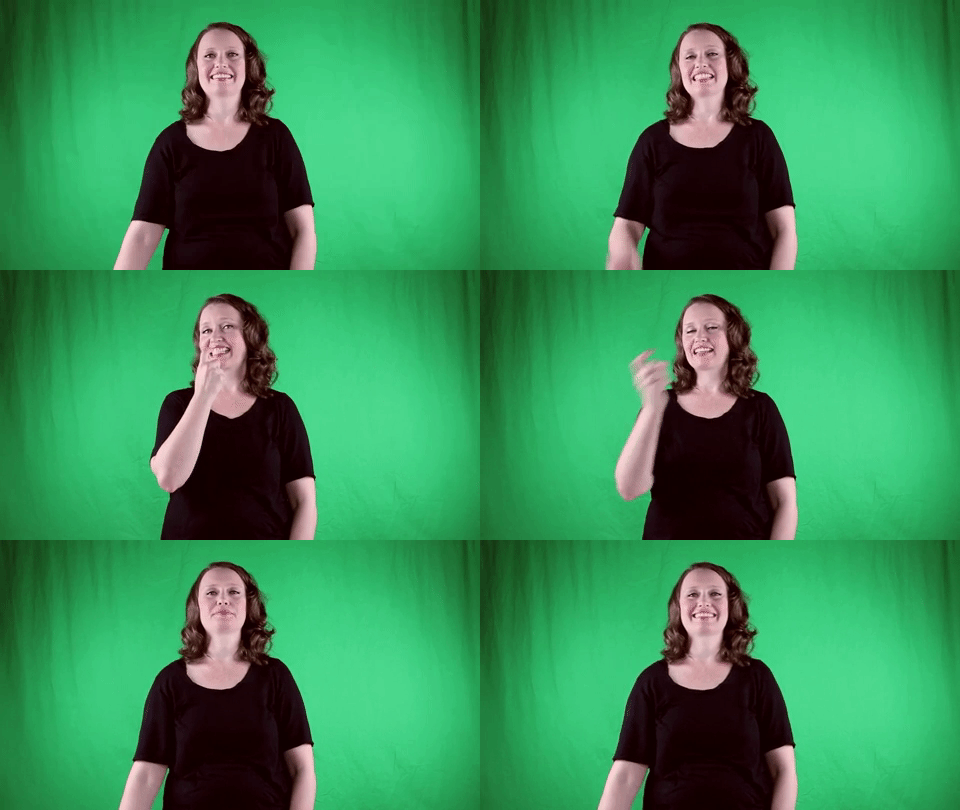
Sign for GLASS in ASL | ASL Dictionary

Definition: A hard, brittle substance typically transparent.

Sign for GLASS in ASL

YouTube player

Practice Activities:

Start by practicing the sign for GLASS in ASL in isolation. Stand in front of a mirror and repeat the sign slowly while watching your handshape and facial expression. Focus on forming the correct movement with a “G” or curved index finger at the teeth to suggest the touch of a fragile material.

Use flashcards with images of objects made of glass, such as a cup, window, or bottle. Practice signing the word as you show each image. You can also practice naming items around your home that are made from glass and sign the object along with the sign for GLASS in ASL.

Create simple sentences such as “I drink from a GLASS,” “The window is GLASS,” or “Be careful, it’s GLASS.” Practice these with a partner or record yourself for self-assessment. Focus on clarity and appropriate non-manual signals to make your sentences accurate.

Develop short stories that use the sign multiple times. For example, tell a story about a broken GLASS or visiting a glass museum. Including descriptive signs like “clear,” “broken,” or “tall” helps expand vocabulary while reinforcing the sign for GLASS in ASL.

Interactive games like “What’s It Made Of?” help learners distinguish the material used in objects. One partner shows a picture or signs an item, and the other responds with the correct material, signing things like GLASS, plastic, or wood.

Set a challenge to spot as many things in a room made of glass and sign them. Practice with peers by signing and guessing objects made of glass without speaking, encouraging receptive skills.

Review videos showing native signers using the sign in different contexts. Pause and imitate their speed, use of space, and facial expressions to enhance accuracy and fluency when using the sign for GLASS in ASL.

Cultural Context:

The sign for glass in ASL reflects more than just the physical object; it offers insight into how Deaf culture values clarity, transparency, and interaction with the physical world. In American Sign Language, everyday objects like glass are signed in ways that represent their defining characteristics, helping to create a visual and tactile understanding aligned with Deaf experiences.

When using the sign for glass in ASL, the concept of texture and soundlessness can be seen. Glass is often appreciated for its silence compared to other materials—a detail that resonates with the visual nature of ASL communication. Because Deaf culture relies heavily on visual cues, the quiet properties of glass are not perceived as a limitation, but rather as an opportunity to enhance visual focus in a shared space.

The sign for glass in ASL is frequently used in many contexts: from describing a drinking glass to pointing out a glass window or even topics involving broken glass. These conversations often feature signs that highlight the material’s fragility and transparency, emphasizing safety, aesthetics, and functionality. This reflects how closely ASL is tied to physical interaction with one’s environment.

In Deaf households and schools, the use of the sign for glass in ASL is practical and common, especially when teaching concepts of safety and cleanliness. Children learn to associate the sign not just with drinking but also with caution—like when a glass item breaks. These lessons are reinforced through storytelling and visual examples, bridging language learning and cultural values.

The sign for glass in ASL also appears regularly in conversations about architecture, design, and fashion—places where glass plays a major visual role. Whether discussing a modern building with floor-to-ceiling glass panels or stylish glasses worn as accessories, the sign allows for expressive communication about aesthetics in both daily and professional settings.

In the broader context of ASL, using specific signs like the sign for glass in ASL highlights the language’s adaptability. New meanings and updates to usage often emerge within the community, especially through social media where Deaf creators showcase variations and evolving signs. This keeps the language dynamic and tied to current cultural experiences.

Barriers, like those created by glass walls or partitions, can symbolize isolation for Deaf people when communication is hindered. Though glass may be see-through, it can represent a lack of access when lipreading or visual cues are obstructed. This symbolism sometimes gives deeper meaning when using the sign for glass in ASL during conversations about accessibility and inclusion.

In visual storytelling such as ASL poetry or performances, the sign for glass in ASL helps

Extended Definition:

The sign for glass in ASL refers to the material commonly used in windows, bottles, and drinking cups. In American Sign Language, this sign typically focuses on the concept of transparency and breakability that characterizes glass. It’s important to understand the context when using the sign, as ASL signs often convey more than just the direct English translation.

To make the sign for glass in ASL, you generally use your dominant index finger and gently tap against your front teeth once or twice. This mimics the delicate, clinking sound that glass might make and symbolically represents the fragility of glass materials. Expression and clarity of movement are key to ensure you’re understood in a conversation.

The sign for glass in ASL can also be used to indicate the concept of fragility or a reflective surface, depending on how it’s expressed within a sentence. ASL is a visual language, so incorporating facial expressions can change the meaning slightly. For example, a more exaggerated movement might suggest something made entirely of glass, while a softer expression might indicate a small detail like a glass button or bead.

Synonyms or related signs may include window, mirror, or the sign for cup, depending on context. These signs, while related, are different from the sign for glass in ASL and should not be confused. Each has its own specific execution and meaning that aligns more directly with its object or concept.

When teaching or learning this sign, it’s useful to think about the physical characteristics of glass—its transparency, hardness, and propensity to shatter. This assists in conceptually anchoring the movement and helps your brain associate the tactile experience with the visual ASL representation. Signing glass in ASL isn’t just about memorization; it’s about connecting the visual sign to the nature of the item it represents.

In storytelling or everyday conversation, the sign for glass in ASL might appear when discussing drinking glasses, windows, or even items made out of glass like ornaments and décor. For example, describing how a window broke would include this sign as part of the action being described. You might also use it when ordering a glass of water or identifying a glass container in a recycling bin ♻️.

Variations may occur depending on regional dialects in ASL, but the most widely accepted version involves tapping the teeth. Just be sure to sign lightly to avoid discomfort and maintain clear articulation. Practicing in front of a mirror can help refine the subtle motions involved in this sign.

Remember that the sign for glass in ASL is

Synonyms: cup, tumbler, goblet, drinking vessel, clear container

Educational resources: Find related learning materials in our course bank!

Want more? Check out some of our popular learning activities on the homepage!

Need to look up a sign? Use our highly rated dictionary: https://aslinteractive.com/best-asl-dictionary/

Follow us on tiktok: https://www.tiktok.com/@aslinteractive. More social media links at the bottom of this page!

Long-tail Keywords: what is the sign for glass in ASL, how do you sign glass in ASL, ASL sign for glass

Categories:

tags: ASL sign for glass, how to sign glass in ASL, glass meaning in American Sign Language, learning ASL glass sign, glass translation in ASL

Parameters

*Handshape*:

The handshape for the sign for GLASS in ASL uses the index finger in an extended “1-handshape,” with the remaining fingers curled into the palm. The fingernail side of the index finger lightly taps on the front upper teeth to represent the concept of a glass surface or drinking glass.

This handshape is key to communicating the sign for GLASS in ASL and captures the idea of transparency or fragility. Be careful to keep the wrist relaxed and the motion gentle for the most accurate sign. ️

*Palm Orientation*:

For the sign for GLASS in ASL, the palm orientation typically faces inward toward the face or body. The dominant index finger is extended and gently taps the front of the teeth, suggesting the thinness or delicacy of glass.

This inward-facing palm position mirrors the action of touching or referencing something close to the mouth. The sign for GLASS in ASL uses a natural, relaxed handshape with minimal movement. ️

*Location*:

The sign for GLASS in ASL is made near the mouth area. The dominant hand, formed into a curved index finger, lightly taps the front upper teeth.

This location helps illustrate the idea of something hard and reflective, like a surface of glass. Using the facial area for the sign for GLASS in ASL connects visually to where one might feel or notice glass, such as on a drinking glass near the lips.

*Movement*:

To perform the sign for GLASS in ASL, use your dominant hand in an index finger shape and gently tap the tip of the extended index finger against your front teeth once or twice. The motion is small and flick-like, meant to suggest the clinking quality of glass.

The sign for GLASS in ASL mimics the sound or sensation of something made out of glass being touched or tapped. This subtle movement captures the delicate nature associated with glass material.

*Non-Manual Signals*:

When demonstrating the sign for glass in ASL, the facial expression should remain neutral or slightly inquisitive, depending on the context. Keep your eyes focused on the handshape to clearly convey the sign’s meaning.

Maintaining a calm and attentive facial demeanor helps clarify the motion and supports the visibility of the sign for glass in ASL. Avoid exaggerated expressions, as glass is a neutral noun and doesn’t carry strong emotion unless contextually emphasized.

*Prosody, Dominant/Non-Dominant Hand*:

The sign for GLASS in ASL uses the dominant hand in an index finger shape. The fingertip of the index finger taps the front upper teeth area gently, imitating the idea of a clear surface or fragile material. The non-dominant hand is not used in this sign.

When teaching or learning the sign for GLASS in ASL, make sure the finger approaches the teeth area carefully to avoid contact injuries. Facial expression remains neutral to slightly alert, matching the delicate nature associated with glass.

Tips for Beginners:

When learning the sign for GLASS in ASL, focus on the small, quick flick made with your dominant index finger. The motion should lightly tap your chin, simulating the feel or idea of a delicate glass surface. Keep the movement minimal and controlled to communicate the concept clearly.

A common mistake beginners make when signing GLASS is tapping the chin too hard or with a stiff hand. This can be distracting and might change the meaning unintentionally. Since this ASL sign depends on subtlety, it’s important to maintain a gentle, precise contact and always use the pad of your index finger, not the tip or knuckle.

Practice the sign in a mirror to check for speed and facial expressions. It may help to associate the light touch with the fragility of actual glass. This visual connection strengthens muscle memory and makes the sign for GLASS in ASL easier to remember and perform fluidly.

Another tip is to observe native or fluent ASL users perform the sign in context. Watching how the sign is used during natural conversation will reveal how it fits within full sentences and expressions. Since glass can refer to windows, cups, or drinking glasses, context often clarifies your meaning.

Don’t forget to accompany the sign with the right facial expression. For delicate or expensive glass, a slightly raised eyebrow or cautious look might be appropriate. When referring to something common like a water glass, a neutral expression works well.

Repetition is key. Add the sign for GLASS in ASL into daily practice drills or short signing conversations. Reinforcement over time helps build confidence and fluency so you can use it naturally. As you grow more comfortable, try signing related words like “cup,” “window,” or “glass bottle” to expand your vocabulary and connection to this core concept.

Connections to Other topics:

The sign for GLASS in ASL connects closely with signs that describe materials or transparency, such as WINDOW, MIRROR, or PLASTIC. These signs often involve similar handshape concepts, like a curved index finger tapping the teeth or body, emphasizing fragility or clarity. Understanding the sign for GLASS in ASL builds foundational knowledge for recognizing other material-based categories.

This sign can also appear as part of compound signs where a clear differentiator is needed. For example, you might use the sign for GLASS when discussing GLASS-CUP or GLASS-DOOR, combining the original sign with a classifier or descriptive sign. This shows how ASL often stacks signs to convey specific meanings that English captures with compound nouns.

The sign for GLASS in ASL is visually iconic, often made with a single index finger lightly tapping the front teeth, suggesting brittleness or clarity. This visual element aligns it with other signs for fragile or see-through items, helping learners group signs by similar concepts. Signs like SCREEN (for phone or TV) and LENS (as in CAMERA-LENS or GLASSES) maintain a thematic connection around viewing or transparency.

Learning the sign for GLASS in ASL also supports understanding classifiers and role-shifting. When describing broken glass or someone pouring water into a glass, you might shift into a role or use a classifier to show shape, size, or breakage. This adds depth and dynamism to your signing by moving beyond static vocabulary and into descriptive storytelling.

In everyday conversations, the sign for GLASS in ASL allows for fluid communication when ordering food, shopping, or describing household items. It often appears in context with DRINK, BEVERAGE, or BREAK, helping to expand vocabulary naturally. The flexibility of the sign demonstrates how material-based signs anchor larger, practical sign sequences in ASL discourse.

Summary:

The sign for GLASS in ASL is typically made by lightly tapping the tip of the dominant index finger against the front surface of the teeth. This movement mimics the tapping sound glass might make. It also gives an impression of the fragile and smooth character of glass material.

Some people describe the sign as representing the sound of a glass object being tapped or clinked. The brevity and precision of the motion reflect the delicate and transparent nature of glass. Despite being minimal, the sign holds strong visual symbolism.

In context, the sign for GLASS in ASL can refer to various forms of glass, such as a drinking glass, a windowpane, or the substance itself. If the intent is to talk about a drinking glass versus the material, facial expressions and surrounding context will help clarify. When someone signs GLASS before “window” or “cup,” it shifts the interpretation.

This sign is an excellent example of iconicity in American Sign Language. Iconicity refers to how a sign visually resembles its meaning. The tap on the teeth closely mimics the subtle ‘tink’ of a glass item, making it intuitive for learners.

From a linguistic perspective, this sign is composed of a single manual sign with contact on the teeth, involving the handshape of an extended index finger. It uses contact, directionality, and quickness of movement to encode properties of the object. These represent phonological features of the sign in the visual-gestural modality.

In terms of grammatical function, the sign for GLASS acts as a noun. However, there may be instances where it is used within compound signs or noun phrases. For example, “GLASS CUP” or “BROKEN GLASS” integrates seamlessly into sentence structures.

Cultural implications of this sign are subtle but significant. The gestural mimicry demonstrates how Deaf culture preserves sensory associations visually. Where other cultures might describe glass through sound with adjectives like ‘clinking,’ this sign conveys the effect nonverbally.

The sign can also intersect with emotion or intensity through non-manual markers. For instance, if someone shatters glass in a story, the sign might be made sharply and accompanied by an exaggerated facial expression. This layering allows for dramatic enrichment and storytelling.

Some dialectal variation might appear in how forcefully the sign is made or which finger is used, but the standard usage remains relatively consistent across most regions. This consistency helps learners across different ASL communities understand the sign quickly.

ASL users may elaborate on the sign for GLASS using classifiers. For instance, a handshape representing a flat object combined with movement can refer to a windowpane. A C-shaped hand may represent a round glass, giving much room for vivid description.

The sign for GLASS in ASL also ties into broader categories of material signs. Similar signs exist for METAL, PAPER, or PLASTIC, often borrowing iconic or tactile features. These offer glimpses into how abstract concepts like materiality are coded in ASL.

From an applied linguistics standpoint, representing materials like glass spotlights the importance of sensory translation. In English, hearing people might evoke clinking sounds or see the label GLASS. In ASL, the visual element and bodily sensation are central.

The tactile aspect of the sign for GLASS in ASL underscores the blend between visual and physical awareness in Deaf culture. Many signs echo real-world interactions with objects, giving users an embodied understanding of vocabulary.

When teaching the sign, instructors often emphasize the carefree but gentle contact the finger makes. It mustn’t appear aggressive. This deliberate behavioral cue reinforces the idea of fragility and care.

The sign also opens discussions on safety, damage, or sound in storytelling. Since glass often appears in contexts of shattering or reflecting, it becomes an anchor point in narratives—both personal and fictional.

Variations in usage may occur in different generational cohorts. Older signers might prefer fingerspelling GLASS in very formal contexts or when discussing scientific materials. Younger signers tend to opt for the iconic tooth-tap method.

It’s important not to confuse the sign for GLASS in ASL with similar ones like DENTIST or TOOTH. These signs might overlap around the teeth but involve different handshapes or tapping styles. Context helps prevent confusion.

Compounds that use glass, like GLASS HOUSE or GLASS OBJECT, rely on conceptual clarity. Signers rely not only on handshapes but rhythm and emphasis to differentiate between poetic and literal meanings.

In poetic ASL performance, glass is sometimes signed more fluidly or metaphorically. The transparency and fragility of glass serve as layered themes in Deaf storytelling, similar to metaphors used in spoken languages.

There is continued academic interest in how signs for materials develop and stabilize. The sign for GLASS in ASL reflects how gestures continually evolve while maintaining consistent references. This balance keeps the language dynamic and functional.

Glass also appears symbolically in visual art forms linked with Deaf culture. Incorporating the sign into

Want more? Check out some of our popular learning activities!

ASL Interactive Resources

ASLInteractive YouTube Channel

Follow us on tiktok: @aslinteractive.com

Follow us on Instagram: aslinteractive

Facebook page: aslinteractive

Facebook group: aslinteractive

LInkedIn: ASL Interactive LLC

Twitter: @ASL_interactive

*Some information on this page is AI-generated. AI can make mistakes. Please check the information.


Responses