Sign for HALLOWEEN in ASL | ASL Dictionary

Definition: The eve of All Saints’ Day celebrated on October 31st.

Sign for HALLOWEEN in ASL

YouTube player

Practice Activities:

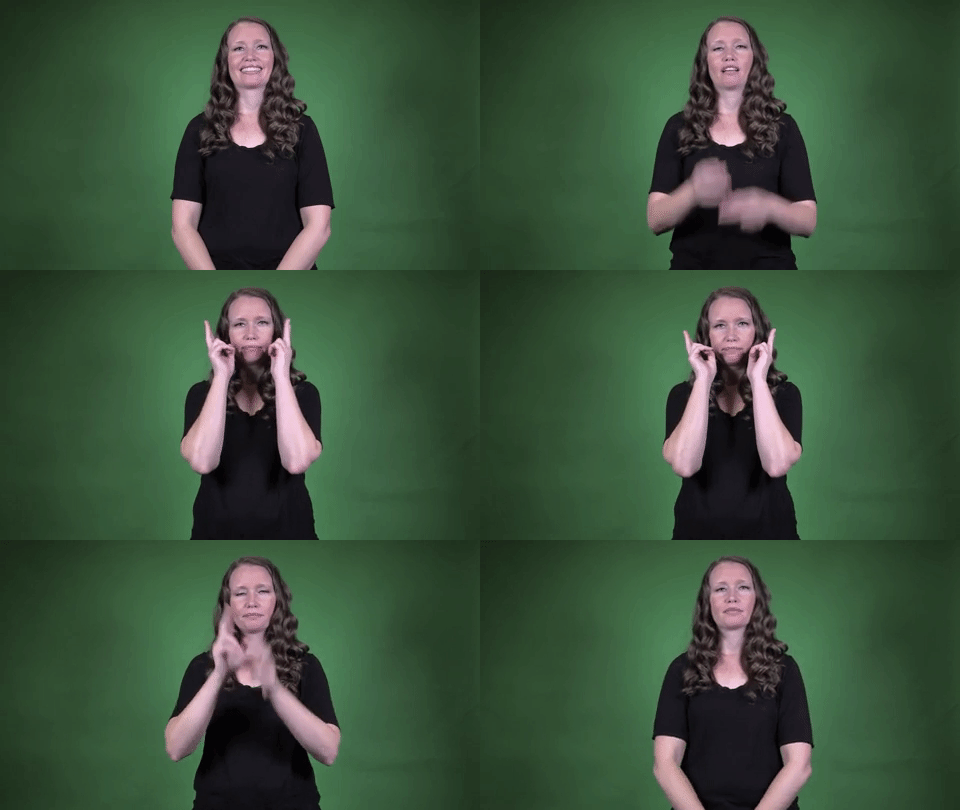
Start your practice with the sign for HALLOWEEN in ASL by repeating it in front of a mirror. Focus on handshape, palm orientation, and facial expression. Since this sign mimics wearing a mask, your fingers should come together and move out around your face area. Repeat steadily, making sure the motion is smooth and expressive.

Create flashcards with the word “Halloween” on one side and a picture of a costume or celebration on the other. Sign the word each time you flip a card to associate the visual theme with the sign for HALLOWEEN in ASL. Quiz yourself by mixing in other holiday signs like CHRISTMAS and THANKSGIVING and identifying each through signing only.

Use simple sentences to incorporate the sign for HALLOWEEN in ASL, such as “I love Halloween,” “Halloween is fun,” or “My costume is scary.” Practice signing these while paying attention to your facial grammar and matching the expressive tone of the sentence. Record yourself and self-assess for clarity and accuracy.

Invite a partner to roleplay a Halloween-themed conversation. One person can describe their favorite costume, while the other signs along or asks questions. Include signs for “candy,” “pumpkin,” “ghost,” and “October” to expand vocabulary in context. Practicing with a partner will help you react and respond naturally in small dialogues.

Create a short Halloween-themed story and sign it from beginning to end. For example, describe kids going trick-or-treating or a spooky haunted house. Try to include the sign for HALLOWEEN in ASL multiple times throughout the story to reinforce fluency. Add expressive elements with your body and face to show excitement or fear, depending on the scene.

Finish practise with a fun Halloween signing game. Mimic costume ideas using acting and fingerspelling, and reward each correct guess with signing “Happy Halloween!” This builds confidence and makes learning the sign for HALLOWEEN in ASL engaging and memorable .

Cultural Context:

The sign for HALLOWEEN in ASL is often used across many cultural and community events in the Deaf community during the fall season. Whether in schools, Deaf clubs, or family gatherings, knowing how to use the sign for HALLOWEEN in ASL connects individuals to the excitement and traditions of the holiday. It brings accessibility to Halloween-themed conversations and storytelling.

Deaf children and adults participate in Halloween activities just like hearing individuals, and using the appropriate sign for HALLOWEEN in ASL ensures inclusion and understanding. From spooky stories to visually rich costumes and games, ASL transforms Halloween into a language-rich experience. Signs are often emphasized and expressed with facial expressions to heighten the festive mood.

In many ASL-based storytelling sessions, the sign for HALLOWEEN in ASL appears frequently when describing haunted houses, trick-or-treat routes, and costume themes. These visual narratives are central to Deaf community celebrations, making the sign for HALLOWEEN in ASL an important expression for cultural connection. It allows the language to stay lively and relevant across holiday seasons.

Festivals and inclusive events like Deaf Halloween parties and trunk-or-treat gatherings rely heavily on signs like HALLOWEEN to maintain communication and promote joy. Using the sign for HALLOWEEN in ASL during these events symbolizes the presence of Deaf culture and the pride of using ASL in everyday life. Many interpreters and teachers also incorporate this sign into themed lessons.

Schools for the Deaf begin celebrating fall themes by teaching vocabulary such as ghost, pumpkin, and the sign for HALLOWEEN in ASL. This builds not only language competence but also cultural awareness among students. These seasonal signs are woven into songs, skits, and classroom storytelling sessions.

In family traditions where hearing and Deaf members share space, the sign for HALLOWEEN in ASL helps bridge communication around costumes, candy, and safety tips. It becomes a tool for unity as parents and children, siblings and friends communicate together in ASL. Visual language brings depth and engagement to spooky fun.

Online ASL content creators often release Halloween-themed videos that use the sign for HALLOWEEN in ASL to engage their Deaf and hearing audiences. These videos encourage learning new signs within the context of seasonal fun, increasing interest in sign language. By viewing such content, learners can see how vital this sign is during October.

Churches, community centers, and social media platforms that cater to ASL users post event announcements and flyers

Extended Definition:

The sign for Halloween in ASL is a fun and expressive gesture used to talk about the popular fall holiday. This sign is commonly used in conversations about costumes, trick-or-treating, decorations, and other Halloween-themed events. Knowing how to sign Halloween in ASL helps make holiday discussions more engaging and inclusive in the Deaf and hard of hearing community.

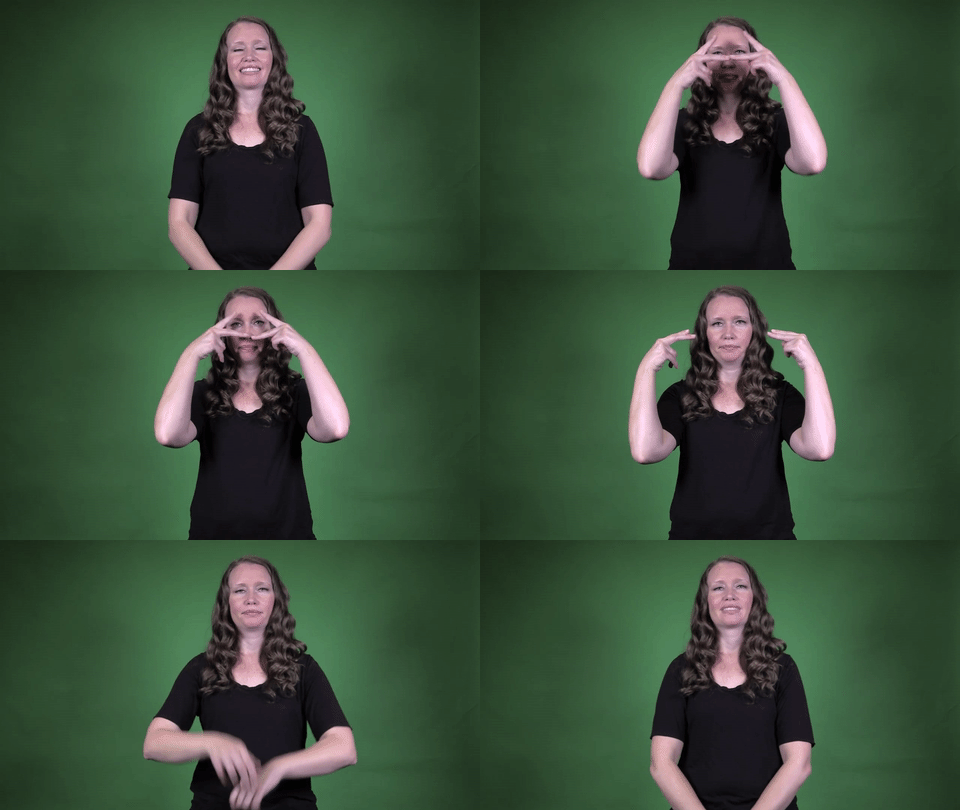
To sign Halloween in ASL, place both hands in a “C” shape and bring them together in front of your face like you’re framing a mask, then move the hands away. This sign represents the imagery of wearing a mask or costume. Because Halloween is associated with dressing up, the sign makes perfect sense in context.

The sign for Halloween in ASL is often used with other seasonal signs to talk about spooky activities and fall celebrations. For example, you can combine this sign with signs for candy, pumpkin, ghost, or party to broaden your conversation. ASL learners and teachers use this sign as part of thematic vocabulary during October lessons or events.

Children especially enjoy learning the sign for Halloween in ASL as part of classroom activities, Deaf education curricula, or interactive storytime. Parents, teachers, and interpreters also use this sign regularly during school functions or social events that revolve around the Halloween season. Seeing this sign used in Halloween songs and stories helps young learners stay connected and engaged.

In video content and on social media platforms, the sign for Halloween in ASL is often included in holiday countdowns, themed posts, and educational reels. ASL content creators love to incorporate seasonal signs to make their videos more festive and culturally relevant. This helps to raise awareness and promote language accessibility.

The use of the Halloween sign in ASL can vary slightly depending on regional or personal signing styles, but the mask-like gesture is widely understood across Deaf communities. Language evolves over time while remaining rooted in the culture it serves, and the sign for Halloween in ASL is a great example of that creativity.

Learning this sign can help hearing people communicate more effectively with their Deaf friends and family during Halloween events. It enables everyone to enjoy decorations, haunted houses, costume contests, and trick-or-treat activities with full participation. Using the correct ASL signs shows respect for Deaf culture and helps promote inclusive communication.

The sign for Halloween in ASL is fun to teach, easy to learn, and visually descriptive. It captures the playful and mysterious nature of the holiday with just a simple hand motion. Whether you’re attending a Deaf community gathering or teaching ASL

Synonyms: Halloween, All Hallows’ Eve, Allhalloween, All Saints’ Eve, Hallowe’en

Educational resources: Find related learning materials in our course bank!

Want more? Check out some of our popular learning activities on the homepage!

Need to look up a sign? Use our highly rated dictionary: https://aslinteractive.com/best-asl-dictionary/

Follow us on tiktok: https://www.tiktok.com/@aslinteractive. More social media links at the bottom of this page!

Long-tail Keywords: what is the sign for Halloween in ASL, how do you sign Halloween in ASL, learn the ASL sign for Halloween

Categories:

tags: Halloween signs, ASL holiday signs, ASL Halloween costumes, ASL Halloween food, ASL seasonal vocabulary

Parameters

*Handshape*:

The handshape used in the sign for HALLOWEEN in ASL involves forming both hands into the flat “O” handshape, also known as the “peekaboo” shape. Each hand creates an “O” by bringing the fingertips and thumbs together.

To sign it, both hands start in front of the face with palms facing out, then move slightly away and back toward the face in a peekaboo motion. This gesture mimics the playful hiding and revealing often associated with the sign for HALLOWEEN in ASL .

*Palm Orientation*:

In the sign for HALLOWEEN in ASL, both hands form the number 5 handshape and are held in front of the face. The palms initially face outward, away from the signer. As the movement occurs, the hands move in slightly toward the face, creating a peeking motion, and then return to the original position with palms facing outward again.

This motion mimics someone peeking out from behind a mask or their hands, perfectly symbolizing the holiday. The palm orientation being outward emphasizes the visual nature of the sign for HALLOWEEN in ASL .

*Location*:

The sign for HALLOWEEN in ASL is typically performed in front of the face, near the upper part of the head. Both hands are used in an open-5 handshape, mimicking the act of peeking around or covering the eyes. The movement occurs close to the forehead and eyes, making that location central to the sign.

Location plays a crucial role in the sign for HALLOWEEN in ASL, emphasizing facial expressions and visibility around the eye area . This is symbolic of costumes, masks, and spooky themes commonly associated with the holiday.

*Movement*:

The sign for HALLOWEEN in ASL starts with both hands in the “5” handshape, placed palm-out in front of the face. The fingers then move in a slight circular motion outward, as if showing a mask opening or peeking through a disguise.

The movement reflects the festive and mysterious nature of the holiday. The sign for HALLOWEEN in ASL may also resemble an action of hiding and revealing the face, capturing the playful theme of costumes .

*Non-Manual Signals*:

The non-manual signals for the sign for HALLOWEEN in ASL usually include a cheerful or playful facial expression, reflecting the fun and festive nature of the holiday . Slight eyebrow raises and a light smile are common, helping emphasize the joyful spirit associated with Halloween celebrations.

When performing the sign for HALLOWEEN in ASL, keeping the facial expression lively adds clarity and aligns with cultural context. This expression supports the visual nature of the language and enhances the viewer’s understanding.

*Prosody, Dominant/Non-Dominant Hand*:

The sign for HALLOWEEN in ASL uses both hands. Both the dominant and non-dominant hands form the flat “O” handshape and start in front of the eyes, just like peeking through a mask. The hands move outward slightly, away from the face, and open into spread “5” handshapes, mimicking the look of removing a mask or revealing one’s identity .

This expressive motion shows the playful and costume-based concept of Halloween. The sign for HALLOWEEN in ASL effectively captures the mysterious and festive spirit of the holiday.

Tips for Beginners:

To learn the sign for HALLOWEEN in ASL, pay close attention to hand placement and facial expression. This sign involves both hands forming the letter C and moving in front of the face like a mask. Precision is important—if the hands are too far from the face or the movement unclear, the sign can be misunderstood.

A common challenge for beginners is not holding the handshapes consistently in the C position. If your fingers are too curved or too straight, the shape won’t look right. Practice slowly at first in front of a mirror so you can see how your hands appear to others. Repetition with visual feedback builds muscle memory faster.

Another useful tip when learning the sign for HALLOWEEN in ASL is to incorporate some theatrical flair . HALLOWEEN has an expressive and visual quality in Deaf culture, so using eye movements or a playful expression while signing makes it more engaging and authentic. Always keep your palm orientation visible and clear.

Avoid mouthing the word too much while signing. Although facial expressions are key in ASL, exaggerated spoken English movements aren’t necessary. Focus on natural movement and signing in one smooth motion without tension in your fingers.

Try signing in context to get the full rhythm and flow. Pair the sign for HALLOWEEN in ASL with related vocabulary, like COSTUME, CANDY, or PARTY. Signing full ideas or phrases helps reinforce meaning and improve fluency.

Also, be aware that regional differences may exist. Some areas use a variation where the hands sweep over the face only once. Watch native signers and ask Deaf friends or instructors what is most common in your local community. Immersing yourself in interaction will boost confidence quickly .

sign for HALLOWEEN in ASL, halloween sign in asl, how to sign halloween in american sign language, asl halloween vocabulary, halloween american sign language sign

Connections to Other topics:

The sign for HALLOWEEN in ASL connects closely with signs that involve the face, eyes, or costumes. It mimics the motion of lifting a mask or peeking through eyes, which relates to other cultural signs involving disguise, celebration, and identity. This makes it conceptually linked with signs like MASK, COSTUME, and PARTY.

When discussing holidays in ASL, many signs are tied directly to cultural iconography or gestures representing typical activities. The sign for HALLOWEEN in ASL shares thematic elements with other holiday signs like CHRISTMAS, THANKSGIVING, and EASTER. All evoke visual or symbolic references to what people commonly associate with that day, helping the deaf community understand concept meaning through shared cultural imagery.

Learners will also find that the sign for HALLOWEEN in ASL can be part of compound signs or serve as context in longer sentences. For example, signs such as HALLOWEEN-PARTY or HALLOWEEN-COSTUME are common in conversation when discussing festivities or events. These compound forms help communicate more specific ideas quickly and clearly in ASL without resorting to fingerspelling.

There is potential overlap with classifier structures, especially when describing Halloween scenes or costumes. You might use descriptive classifiers to show someone putting on a mask or dressing up like a specific character. This creative use of classifiers allows for dynamic storytelling, which is an essential aspect of ASL fluency and cultural expression.

The gesture used in the sign for HALLOWEEN in ASL also shares elements with the sign for FACE or SEE, giving learners a reference point if the sign feels abstract. By understanding how it links to more general signs, students can better internalize its form and context. It’s a great example of how ASL uses visual metaphors to express seasonal and cultural ideas .

Summary:

The sign for HALLOWEEN in ASL is rich with visual metaphor and cultural symbolism. The most commonly used sign involves forming both hands into flat O shapes and placing them in front of the eyes, then moving them outward slightly, resembling a mask or someone peeking through eyeholes. This visual concept draws on imagery tied to costumes and mystery, both closely linked to how Halloween is celebrated in American culture.

ASL users often appreciate the iconic nature of this sign, as it visually represents a key aspect of the holiday—wearing masks and dressing in disguise. The handshape and motion closely mimic the act of lifting a mask or peering out from one, which connects strongly to the performative and transformative aspects of Halloween.

The most recognized version of the sign for HALLOWEEN in ASL is universally understood across many regions in the United States, but dialectal differences might still occur. Some signers may choose to fingerspell the word or combine this visual sign with other descriptive signs to describe specific Halloween traditions or activities.

Grammatically, the sign functions as a noun and is often accompanied by facial expressions that help convey the mood associated with Halloween. ASL’s reliance on non-manual markers allows additional meaning to be added through exaggerated facial expressions, showing whether the context is fun, spooky, eerie, or joyful.

The sign for HALLOWEEN in ASL may be used in narrative storytelling, which is particularly popular during the Halloween season. It plays a vital role in Deaf culture’s embrace of visual storytelling techniques, which are ideal for narrating ghost stories, costume descriptions, or recounting haunted house visits.

Storytelling in ASL surrounding the Halloween tradition often includes creative use of classifiers. Classifiers can show a costume’s shape, a character’s sneaky movement, or the way a person in a mask might “sneak up” on someone. In this context, the sign for HALLOWEEN in ASL often appears early in a narrative or sets up a themed description.

There’s also an intersection between folktale performance in ASL and Halloween storytelling. Folktales lend themselves beautifully to Halloween themes—witches, ghosts, black cats, and eerie forests—with the sign for HALLOWEEN in ASL acting as a thematic marker introducing spooky narratives. ️

Using the sign for HALLOWEEN in ASL can also include modifying sign space and direction to show contrasts—day vs. night, light vs. dark, concealment vs. exposure. These strategic choices make the holiday’s themes come alive more vividly in signed conversations and performances.

Linguistically, the sign reflects the modality of ASL as a visual-spatial language. Unlike English, which relies heavily on word order, ASL can highlight key concepts like Halloween through visual parallels, intensifiers, and facial affect. The sign’s iconic quality makes it accessible and intuitive, even for beginners.

ASL linguistics scholars often use signs like HALLOWEEN to illustrate how signs can be formed iconically yet function abstractly. Even though it’s possible to guess the meaning of the sign for HALLOWEEN in ASL from its visual outline, experienced users understand the nuances that go beyond the surface.

Many children in the Deaf community learn this sign early in life, as Halloween celebrations are accessible and inclusive—visual costumes, decorations, and events like trick-or-treating encourage sensory engagement. The tactile and visual excitement of Halloween makes the sign especially memorable for early learners.

Halloween vocabulary in ASL extends well beyond just the sign for HALLOWEEN in ASL. Related signs include COSTUME, CANDY, GHOST, MONSTER, and PUMPKIN. This network of thematic vocabulary makes it easy to teach and discuss the holiday in ASL conversation and lesson plans.

Educators in Deaf schools plan seasonal lessons incorporating signs linked with Halloween to build vocabulary, narrative skills, and cultural awareness. By including the sign for HALLOWEEN in ASL in sentence frames such as “I wear (COSTUME) on (HALLOWEEN)”, instructors help children connect meaning with appropriate context.

Exploring variants or creative adaptations of the sign, especially in ASL poetry or performance art, shows how the sign for HALLOWEEN in ASL can evolve. Expressions associated with fright, surprise, or playfulness can be layered atop the base sign for greater narrative creativity.

Those discussing horror movies or books in ASL will also rely on the sign for HALLOWEEN in ASL as a point of genre identification. It can introduce discussions around horror, suspense, or fantasy themes that are intertwined with the eerie spirit of the holiday season.

The cultural relevance of Halloween within the wider American society helps explain both the frequency and the enthusiasm surrounding the use of the sign. Deaf families and communities participate in accessible versions of haunted houses, costume contests, and visual storytelling events, placing the sign for HALLOW

Want more? Check out some of our popular learning activities!

ASL Interactive Resources

ASLInteractive YouTube Channel

Follow us on tiktok: @aslinteractive.com

Follow us on Instagram: aslinteractive

Facebook page: aslinteractive

Facebook group: aslinteractive

LInkedIn: ASL Interactive LLC

Twitter: @ASL_interactive

*Some information on this page is AI-generated. AI can make mistakes. Please check the information.


Responses