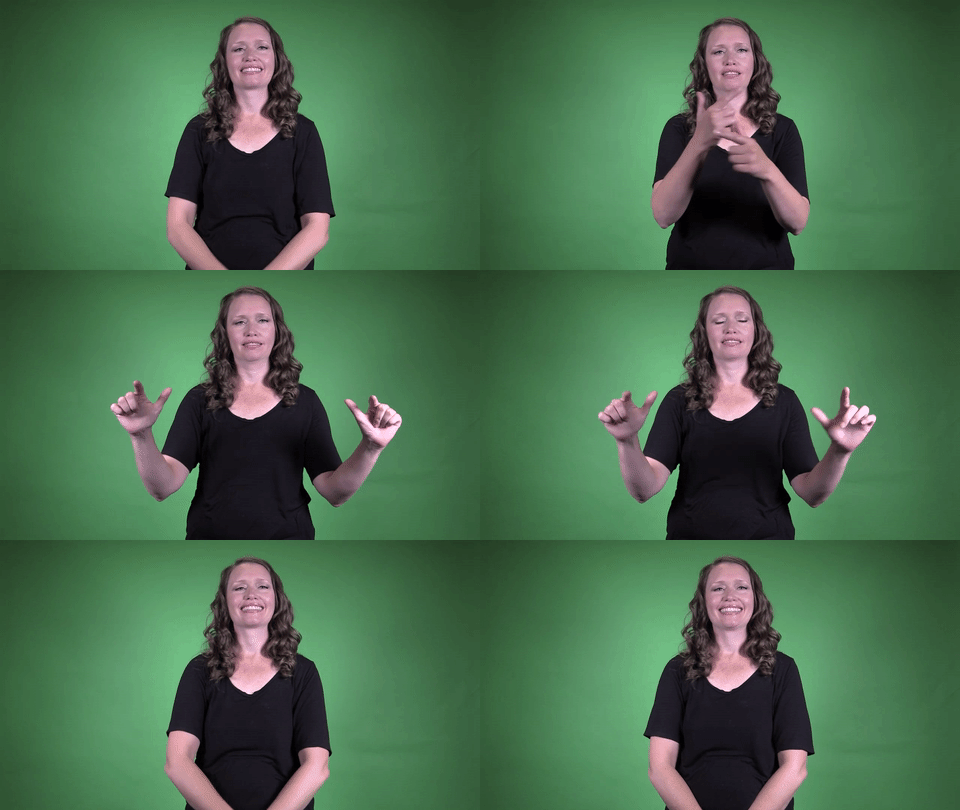
Sign for LANGUAGE in ASL | ️ ASL Dictionary

Definition: A system of communication used by a particular country or community.

Sign for LANGUAGE in ASL

YouTube player

Practice Activities:

Cultural Context:

Practice Activities

Practicing the sign for LANGUAGE in ASL can be both fun and effective when using a variety of techniques. Mirror work is a great starting point—stand in front of a mirror and sign slowly while watching your hand movements and facial expressions. This helps you build muscle memory and correct handshape errors early on.

Recording yourself is another helpful strategy. Use your phone or webcam to film short clips of you signing sentences that include the sign for LANGUAGE in ASL. Watch the playback to notice areas for improvement, and compare your sign with native signers from trusted sources.

Contextual practice is essential. Try using the sign in conversations or while describing your favorite spoken or signed languages. For example, you can sign phrases like “I love ASL” or “What language do you speak?” to reinforce meaning and fluency.

Advanced drills can push your skills further. Practice fingerspelling different world languages (like Spanish, French, or Japanese), followed by the sign for LANGUAGE in ASL. This builds vocabulary and helps you transition smoothly between signs and fingerspelling. Pairing LANGUAGE with related signs like LEARN or COMMUNICATION also strengthens your expressive skills.

SEO Cultural Context

Understanding the cultural context behind the sign for LANGUAGE in ASL is key to respectful and effective communication. In Deaf culture, language is more than a tool—it’s a symbol of identity, community, and cultural pride. The sign for LANGUAGE in ASL, therefore, carries deep significance and should be used thoughtfully.

This sign is commonly used in both formal and informal settings. Deaf individuals may use it when discussing ASL, other signed or spoken languages, or when talking about bilingual or multilingual experiences. For example, in educational settings, students may use it to ask what language a book is in or to describe their language background.

Regional variations of the sign for LANGUAGE in ASL are minimal, but signing style can vary slightly depending on context or emphasis. Some signers may use more fluid movements, while others may sign with sharper, clearer articulation, especially in teaching settings or formal presentations.

Deaf culture places high value on clear signing, eye contact, and appropriate use of space. When signing LANGUAGE, be sure your movements are not rushed or sloppy, as this can lead to misunderstandings. Always match your facial expression to the tone of the conversation, which strengthens your message and shows cultural awareness.

Extended Definition

The sign for LANGUAGE in ASL is a compound sign. It starts with the sign for SIGN or COMMUNICATE, typically made with both hands in an “F” handshape, moving in alternating circular motions. Then, the hands move outward in a wavy or flowing motion, symbolizing the spreading or flow of communication—this represents LANGUAGE.

This flowing motion is key to conveying the abstract concept of language as a system of communication. It’s important not to confuse this sign with similar signs like TALK or SPEAK, which are usually produced differently and refer specifically to spoken language. The sign for LANGUAGE in ASL encompasses all forms of language—signed, spoken, or written.

A common error is to use only the sign for SIGN and assume it means LANGUAGE. While related, the full sign for LANGUAGE includes the outward flow that distinguishes it as referring to an entire system of communication, not just the act of signing. Another mistake is using a rigid or abrupt movement, which can make the sign unclear or change its meaning.

Beginners should pay close attention to the handshape, movement, and direction of the sign. The “F” handshape is essential, and the movement should resemble a gentle wave or flow away from the body. Practicing slowly and deliberately will help reinforce the correct motion.

Tips for Beginners

If you’re just starting to learn the sign for LANGUAGE in ASL, don’t worry—this is a great sign to begin with. It helps you build a foundation for describing communication, culture, and identity. The best tip is to start slow and focus on accuracy before speed.

One common mistake is mixing up similar signs or omitting the flowing motion that distinguishes LANGUAGE from other signs. Be sure you include both parts of the movement: the initial connection of the hands and the outward wavy motion. Watching videos of fluent signers and mimicking their rhythm can help you internalize the correct flow.

Use hand mirrors or video recordings to self-correct. Don’t be discouraged if your sign doesn’t look perfect right away—fluency takes time. Repetition is your friend, especially when learning the sign for LANGUAGE in ASL. Try pairing it with frequently used signs like ASL, ENGLISH, or LEARN in short sentences.

Another strategy is to practice in short bursts throughout the day. Even signing LANGUAGE a few times during your lunch break or while watching a video can reinforce your memory. Stay consistent and patient with yourself.

Connections to Other Topics

The sign for LANGUAGE in ASL connects naturally with the sign for ASL, which is commonly used together in phrases like “ASL is my first language.” Learning both signs can help you express complex ideas about identity and communication.

Another related sign is COMMUNICATE. While LANGUAGE refers to the system, COMMUNICATE emphasizes the act of sharing information. These two can be used together when discussing how people use language to connect with one another.

The sign for LEARN is another useful connection. You might use the sign for LANGUAGE in ASL when talking about learning new languages or studying ASL as a second language. A sentence like “I am learning ASL as a second language” would use both LEARN and LANGUAGE.

You can also connect this sign with the sign for UNDERSTAND. This is helpful when expressing whether you understand a particular language. For example, “I understand Spanish but not French” would involve both signs.

Lastly, the sign for CULTURE is often associated with LANGUAGE. In Deaf culture, language and cultural identity are tightly interwoven. Being able to sign both allows you to engage in deeper discussions about heritage, norms, and values in ASL conversations.

Lengthy Summary

Mastering the sign for LANGUAGE in ASL is a foundational step toward fluency and cultural understanding. This sign is more than just vocabulary—it represents the rich and diverse ways people communicate. From the initial “F” handshape sign for SIGN to the outward flowing motion that captures the essence of a language system, each part of the sign plays an important role in its meaning.

Through targeted practice activities like mirror work, video recording, and contextual usage, learners can develop both accuracy and fluency. Using the sign in real-life or simulated conversations helps embed it in memory and improves expressive skills. Advanced drills that combine fingerspelling and related vocabulary build complexity and confidence.

Culturally, the sign for LANGUAGE in ASL holds deep significance within the Deaf community. It’s a marker of identity and pride, often used to describe not just ASL, but the broader concept of language diversity. Understanding the cultural weight of this sign ensures respectful and meaningful communication.

Beginners should approach this sign with patience and focus. Common mistakes—like skipping the flowing motion or using the wrong handshape—can be avoided through consistent, slow practice and feedback. Using the sign in combination with others like ASL, LEARN, and COMMUNICATE creates powerful phrases useful in everyday conversations.

The sign for LANGUAGE in ASL also opens the door to broader topics in ASL, from education and culture to identity and global communication. By linking this sign with vocabulary like CULTURE, UNDERSTAND, and COMMUNICATE, learners can express complex ideas and grow their signing abilities.

Keep practicing the sign for LANGUAGE in ASL daily. Use it in sentences, combine it with new signs, and don’t be afraid to make mistakes along the way. Every repetition brings you closer to fluency and cultural connection. Stay motivated, stay curious, and let each sign deepen your understanding of American Sign Language and the community it represents.

Extended Definition:

Synonyms: Language, Tongue, Speech, Dialect, Vernacular

Educational resources: Find related learning materials in our course bank!

Want more? Check out some of our popular learning activities on the homepage!

Need to look up a sign? Use our highly rated dictionary: https://aslinteractive.com/best-asl-dictionary/

Follow us on tiktok: https://www.tiktok.com/@aslinteractive. More social media links at the bottom of this page!

Long-tail Keywords: what is the sign for language in ASL, how do you sign language in ASL, ASL sign for language

Categories:

tags: ASL vocabulary categories, American Sign Language topics, ASL signs for categories, language grouping in ASL, categorized ASL dictionary

Tips for Beginners:

Connections to Other topics:

Summary:

Want more? Check out some of our popular learning activities!

ASL Interactive Resources

ASLInteractive YouTube Channel

Follow us on tiktok: @aslinteractive.com

Follow us on Instagram: aslinteractive

Facebook page: aslinteractive

Facebook group: aslinteractive

LInkedIn: ASL Interactive LLC

Twitter: @ASL_interactive

*Some information on this page is AI-generated. AI can make mistakes. Please check the information.


Responses