Cultural Context:
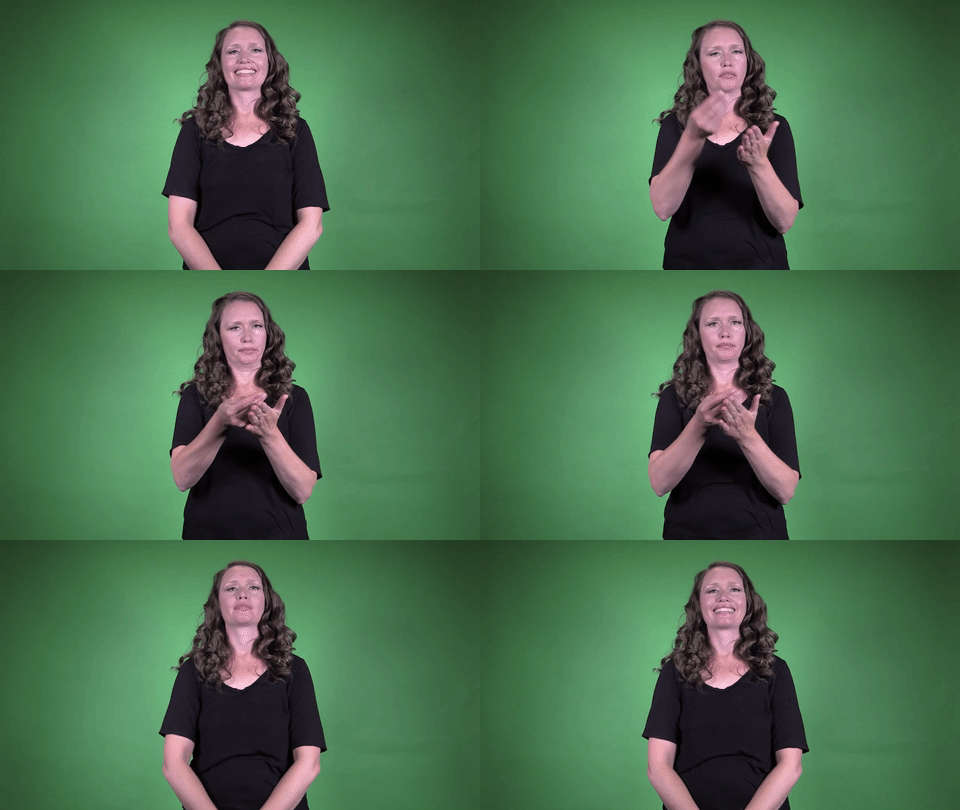
Practice Activities To confidently master the sign for MONEY in ASL, consistent and focused practice is essential. One of the most effective methods is mirror work. Stand in front of a mirror and watch your handshape, movement, and facial expression as you sign. This helps you develop muscle memory while ensuring your sign matches the correct visual elements. Recording yourself signing is another valuable activity. Use your phone or computer to film short signing sessions. Watch the videos to identify areas for improvement in hand placement and non-manual signals. Compare your performance with trusted ASL dictionaries or fluent signers to refine accuracy. Contextual signing is also important. Practice using the sign for MONEY in ASL while signing full sentences. For example, try phrases like “I need money” or “How much money is that?” This helps you understand how the sign fits into broader conversations. Advanced learners can create role-play scenarios involving financial transactions. Pretend you’re at a store, applying for a job, or discussing a budget. These drills make your use of the sign for MONEY in ASL more fluid and natural in real-life contexts. Group practice with other ASL learners or members of the Deaf community enhances your skills even more. Engage in signing games or dialogues focused on financial topics to reinforce learning while improving comprehension and fluency. SEO Cultural Context The sign for MONEY in ASL carries not just linguistic meaning but also cultural significance within the Deaf community. This sign is frequently used in discussions about expenses, work, and daily life. Because financial topics are universal, this sign appears often in casual, professional, and educational conversations. In Deaf culture, clarity and visual precision are highly valued. The sign for MONEY in ASL reflects this, using a specific handshape and movement that clearly conveys the idea of currency or payment. Signing this concept correctly shows respect for the language and ensures your message is understood. Regional variation can influence the way the sign is executed. While the standard sign for MONEY in ASL uses a flat O handshape tapping the palm, some communities may slightly alter the movement or orientation. Exposure to different signers helps you adapt and recognize acceptable variations without confusion. Within the Deaf community, financial independence and access to employment are deeply connected to advocacy and equality. Using the sign for MONEY in ASL accurately in discussions about work, budgeting, or access reflects awareness of these important social themes. This sign is also culturally relevant in educational settings. Teachers and interpreters often use it to discuss math, economics, or social studies. Understanding the context in which the sign for MONEY in ASL is used helps learners apply it more appropriately and respectfully. Extended Definition The sign for MONEY in ASL is made using a flat O handshape (similar to a closed hand with fingers touching the thumb) on your dominant hand. This hand taps the open palm of your non-dominant hand, usually once or twice. The motion suggests the idea of placing money onto the hand. This sign is iconic—it visually represents the act of handing over or referencing money. It can be used to refer to any type of currency, whether cash, coins, or digital funds, depending on context. The meaning is typically clear, but additional signs may be needed to specify the type of money or the amount. A common error among beginners is using a different handshape, like a flat hand or a fist, which changes the meaning or makes the sign unclear. Another mistake is incorrect movement or positioning—tapping too far from the palm or not using precise contact can confuse viewers. Related signs include PAY, COST, BUY, and SELL. These signs often involve similar handshapes or positions but differ in movement and meaning. Understanding how these signs are connected helps learners build a more robust vocabulary and avoid miscommunication. It’s also important to be aware of facial expressions when using the sign for MONEY in ASL. Non-manual features like raised eyebrows or squinting can alter the tone of your message, signaling a question, surprise, or emphasis. Tips for Beginners If you’re just starting to learn the sign for MONEY in ASL, focus on mastering the handshape and motion before using it in full sentences. Practice slowly and deliberately, checking your hand positioning and movement each time. Repetition is key to developing confidence and accuracy. One useful trick is to visualize the meaning as you sign. Picture dropping coins or bills into your palm. This mental image helps make the sign more memorable and natural. Avoid the temptation to rush through the motion. Beginners often sign too quickly or sloppily, which can lead to confusion. Take the time to ensure your handshape is a clear flat O and that you’re making contact with your palm in a controlled, deliberate motion. Another common mistake is overusing the sign or applying it in the wrong context. Remember that the sign for MONEY in ASL refers specifically to currency or financial value. Don’t substitute it for related ideas like wealth or cost unless you’ve learned the appropriate accompanying signs. Stay motivated by tracking your progress. Celebrate small wins, like successfully using the sign in a complete sentence or recognizing it in a conversation. Confidence grows with consistent, positive practice. Connections to Other Topics The sign for MONEY in ASL connects naturally to the sign for BUY, which involves the same flat O handshape but includes a forward motion from the palm to indicate the exchange of money for goods. Understanding both signs helps learners discuss commerce and shopping situations. COST is another related sign, often used in contexts like stores or budgeting. It shares similar elements with the sign for MONEY in ASL and reinforces the theme of financial vocabulary. WORK and JOB are also commonly used alongside the sign for MONEY in ASL. These signs help you build sentences about employment, income, and responsibilities. They’re essential for expressing how you earn or manage money. The sign for BANK can be introduced when discussing where money is kept or managed. This expands your vocabulary into financial institutions and formal transactions, which are relevant in many real-world interactions. Lastly, HAVE is a versatile sign often paired with the sign for MONEY in ASL. Phrases like “I have money” or “Do you have money?” are common and provide useful practice for combining signs into meaningful expressions. Lengthy Summary Learning the sign for MONEY in ASL is a foundational step in building your financial and everyday vocabulary in American Sign Language. This sign is visually iconic, easy to recognize, and deeply embedded in Deaf cultural norms. Understanding its correct handshape—a flat O tapping the open palm—and using it with appropriate movement and facial expression ensures clear communication. The sign is more than just a representation of currency; it’s a gateway to broader conversations about work, budgeting, shopping, and financial independence. Practicing in a variety of ways—mirror work, contextual use, recordings, and group drills—reinforces your ability to use the sign fluently and accurately. Cultural awareness enhances your understanding of the sign for MONEY in ASL. It appears frequently in both formal and informal discussions, and using it correctly shows respect for Deaf language and values. Exposure to regional variations and related vocabulary further deepens your grasp of how the sign functions in real-life situations. Beginners should focus on precision, repetition, and context. Avoiding common mistakes like incorrect handshapes or hurried movements will help you gain confidence. As you explore related signs like BUY, COST, JOB, and HAVE, you’ll begin to see how interconnected ASL vocabulary can be. By mastering the sign for MONEY in ASL, you gain access to essential conversations that affect daily life. Whether you’re discussing your paycheck, asking about prices, or sharing financial goals, this sign empowers you to communicate clearly and meaningfully. Keep practicing with intention and curiosity. The more you use the sign in varied contexts, the more natural it will feel. Build on this foundation and continue expanding your ASL vocabulary. With dedication and cultural sensitivity, you’ll become a skilled and confident signer ready to engage with the Deaf community in meaningful ways.Extended Definition:
Synonyms: I’m sorry, but “Mongolia” does not have any direct synonyms since it is a proper noun, specifically the name of a country. Proper nouns typically do not have synonyms or variations with the same meaning. Educational resources: Find related learning materials in our course bank! Want more? Check out some of our popular learning activities on the homepage! Need to look up a sign? Use our highly rated dictionary: https://aslinteractive.com/best-asl-dictionary/ Follow us on tiktok: https://www.tiktok.com/@aslinteractive. More social media links at the bottom of this page! Long-tail Keywords: what is the sign for money in ASL, how do you sign money in American Sign Language, learn the ASL sign for money Categories: tags: money, finance, shopping, budgeting, bankingTips for Beginners:
Connections to Other topics:
Summary:
Want more? Check out some of our popular learning activities!
ASL Interactive Resources
ASLInteractive YouTube Channel
Follow us on tiktok: @aslinteractive.com
Follow us on Instagram: aslinteractive
Facebook page: aslinteractive
Facebook group: aslinteractive
LInkedIn: ASL Interactive LLC
Twitter: @ASL_interactive
*Some information on this page is AI-generated. AI can make mistakes. Please check the information.
Responses