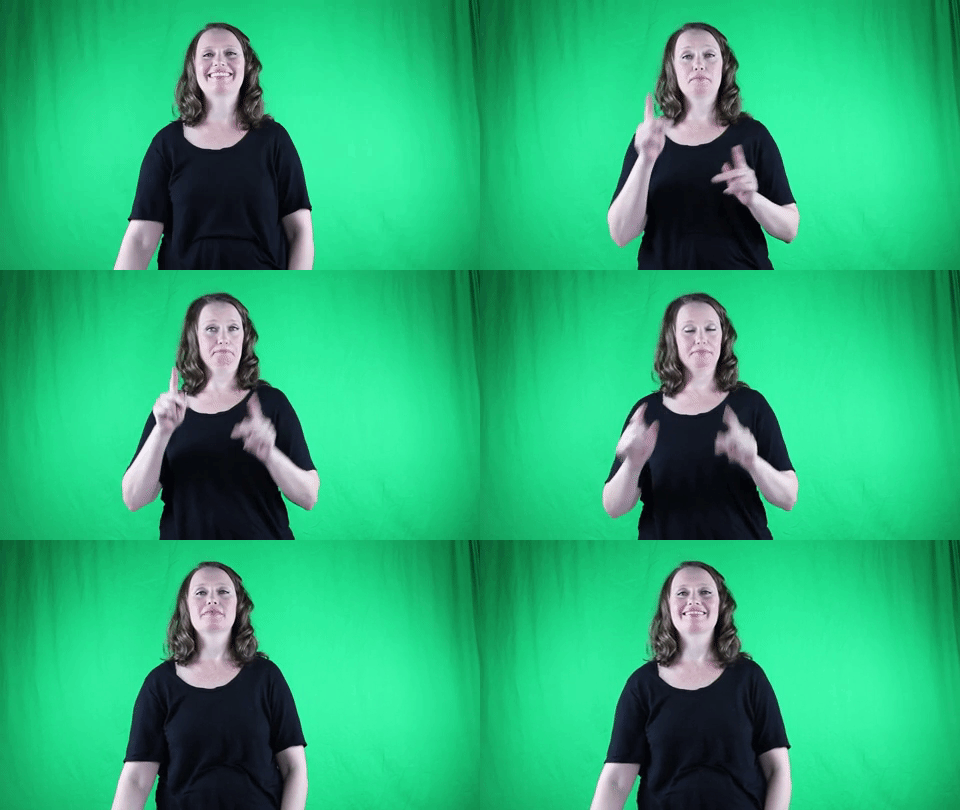
Definition: Human beings in general.
Sign for PEOPLE in ASL
Practice Activities
Practicing the sign for PEOPLE in ASL can be both fun and effective when you use a variety of activities. Start with mirror work by standing in front of a mirror and signing the word slowly. Pay attention to handshape, movement, and facial expression. This helps reinforce muscle memory and ensures you’re producing the sign accurately.
Record yourself signing the word PEOPLE along with short sentences. Watching playback allows you to catch subtle mistakes and track your progress over time. Try signing phrases like “many people,” “those people,” or “lots of people” to reinforce context.
Use the sign for PEOPLE in ASL during conversations with peers or in pretend dialogues. This helps you move from isolated practice to real-world use. Try role-playing scenarios like discussing a party, a protest, or a work meeting where you’d naturally refer to groups of people.
Advanced learners can drill the sign for PEOPLE in ASL using speed and fluency exercises. Pair it with related vocabulary like COMMUNITY, GROUP, or FRIEND. Sign through short narratives or ASL stories where PEOPLE appears frequently, focusing on smooth transitions and consistent signing.
SEO Cultural Context
Understanding the cultural relevance of the sign for PEOPLE in ASL adds depth to your learning. In Deaf culture, this sign is more than a word—it reflects values of community, identity, and shared experience. The sign captures the collective nature of Deaf society, where people support each other and relationships are central.
The sign for PEOPLE in ASL is typically made using the “P” handshape on both hands, moving downward in parallel paths. This movement symbolizes individuals standing or existing alongside one another. It’s a respectful and inclusive sign, often used in both formal and casual contexts.
Regional variation in ASL can affect how the sign is performed. In some areas, the movement may be slightly more curved or fluid. However, the core structure—using the “P” handshape and a downward motion—remains consistent. Understanding these subtle regional differences helps you communicate more effectively with signers from different backgrounds.
In real-life settings, the sign for PEOPLE in ASL appears in stories, lectures, and everyday conversations. Whether you’re talking about a group of students, a crowd at an event, or the general public, this sign plays a key role in expressing collective identity in a visual language.
Extended Definition
The sign for PEOPLE in ASL uses both hands in the “P” handshape. Each hand is held in front of the body, palms facing downward. The hands move in a small downward circular motion side by side, representing individuals moving or existing together.
This sign differs from similar signs like PERSON or GROUP. PERSON uses a flat vertical downward motion, indicating a single individual. GROUP uses a sweeping circular motion with “G” handshapes to show a collection of individuals. The sign for PEOPLE in ASL focuses on the idea of multiple individuals together, but not necessarily organized as a single unit like a group.
Common errors include using the wrong handshape—such as “F” or “K”—or incorrect movement, like moving the hands apart instead of downward. Another frequent mistake is dropping facial expression, which is essential for clear and respectful communication in ASL.
The sign for PEOPLE in ASL is also often confused with the sign for PUBLIC or AUDIENCE, which may involve different handshapes and directional movement. Paying close attention to context and hand positioning helps avoid these confusions.
Tips for Beginners
If you’re just starting to learn the sign for PEOPLE in ASL, take your time mastering the handshape. The “P” handshape can be tricky at first, especially for those not used to specific finger positioning. Practice forming the handshape slowly and correctly before adding movement.
Be mindful of the direction and speed of your signing. Beginners often rush through the motion, which can distort the sign or make it unclear. Keep your movement consistent and smooth, and use a mirror to double-check your form.
Facial expression supports meaning in ASL, so don’t forget to include appropriate non-manual markers. When referring to a large group, widen your eyes or tilt your head slightly to match the size or importance of the people you’re describing.
It’s also helpful to practice the sign for PEOPLE in ASL in different sentence types, such as questions, affirmations, and descriptions. This builds flexibility and prepares you for real-life conversations.
Don’t be discouraged by mistakes. ASL is a dynamic, expressive language, and fluency grows with time. Use feedback from native signers or instructors to fine-tune your signing and stay motivated through regular practice.
Connections to Other Topics
The sign for PEOPLE in ASL connects naturally to the sign for PERSON. PERSON is made by using flat hands moving straight down in parallel, suggesting an individual. Understanding PERSON helps you differentiate singular vs. plural concepts in ASL.
Another related sign is GROUP. GROUP uses a “G” handshape in a circular motion to represent a collection of individuals. While PEOPLE refers to a general population, GROUP often implies a more defined or organized assembly.
The sign for COMMUNITY is also closely linked. COMMUNITY incorporates the idea of PEOPLE but adds layers of social connection and shared space. This sign is useful when discussing neighborhoods, cultural groups, or social networks in ASL.
CROWD is a more specific sign that builds on the concept of PEOPLE. It typically uses bent hands that move in a clustering motion, showing a dense gathering. Learning this sign helps you describe different types or sizes of people gatherings.
The sign for EVERYONE combines the signs for EACH and PERSON, and it’s another way to reinforce plural concepts. Recognizing how these signs relate to the sign for PEOPLE in ASL strengthens your understanding of number and quantity in ASL grammar.
Lengthy Summary
The sign for PEOPLE in ASL is an essential building block in American Sign Language vocabulary. It reflects the value placed on community and collective identity within Deaf culture. Made with “P” handshapes on both hands moving downward in parallel, the sign visually represents individuals existing alongside one another.
Practice is key to mastering the sign for PEOPLE in ASL. Activities like mirror work, video recording, and contextual conversations help reinforce accuracy and fluency. Advanced learners benefit from drills and storytelling that include varied uses of the sign.
Culturally, the sign is used in many contexts—from talking about friends and family to describing large events or audiences. It carries a respectful and inclusive tone, aligning with Deaf cultural values that emphasize community and mutual support.
Understanding the extended definition helps learners avoid common mistakes, such as using incorrect handshapes or getting the motion wrong. Differentiating the sign from related signs like PERSON, GROUP, and CROWD deepens your comprehension of ASL structure and meaning.
For beginners, it’s important to approach the sign slowly and accurately. Focus on clean handshapes, consistent movement, and facial expression. Avoid rushing, and don’t be afraid to make adjustments based on feedback. Mistakes are part of the learning process.
The sign for PEOPLE in ASL also connects to broader topics in the language. Related signs like COMMUNITY, EVERYONE, and GROUP offer opportunities to explore shared grammatical structures and expand your vocabulary. These connections make your signing more versatile and expressive.
By incorporating the sign for PEOPLE in ASL into your daily practice, you’re not only building vocabulary—you’re learning to express collective ideas and cultural values through a visual language. Keep signing, stay curious, and use every opportunity to bring this sign to life in your conversations. With consistent effort, you’ll gain confidence and fluency in using this fundamental ASL sign.
Synonyms: humans, individuals, persons, humans beings, folks
Educational resources: Find related learning materials in our course bank!
Want more? Check out some of our popular learning activities on the homepage!
Need to look up a sign? Use our highly rated dictionary: https://aslinteractive.com/best-asl-dictionary/
Follow us on tiktok: https://www.tiktok.com/@aslinteractive. More social media links at the bottom of this page!
Long-tail Keywords: what is the sign for people in ASL, how do you sign people in ASL, ASL sign for people
Categories:
tags: people, family signs, professions, relationships, social groups
Want more? Check out some of our popular learning activities!
ASL Interactive Resources
ASLInteractive YouTube Channel
Follow us on tiktok: @aslinteractive.com
Follow us on Instagram: aslinteractive
Facebook page: aslinteractive
Facebook group: aslinteractive
LInkedIn: ASL Interactive LLC
Twitter: @ASL_interactive
*Some information on this page is AI-generated. AI can make mistakes. Please check the information.


Responses