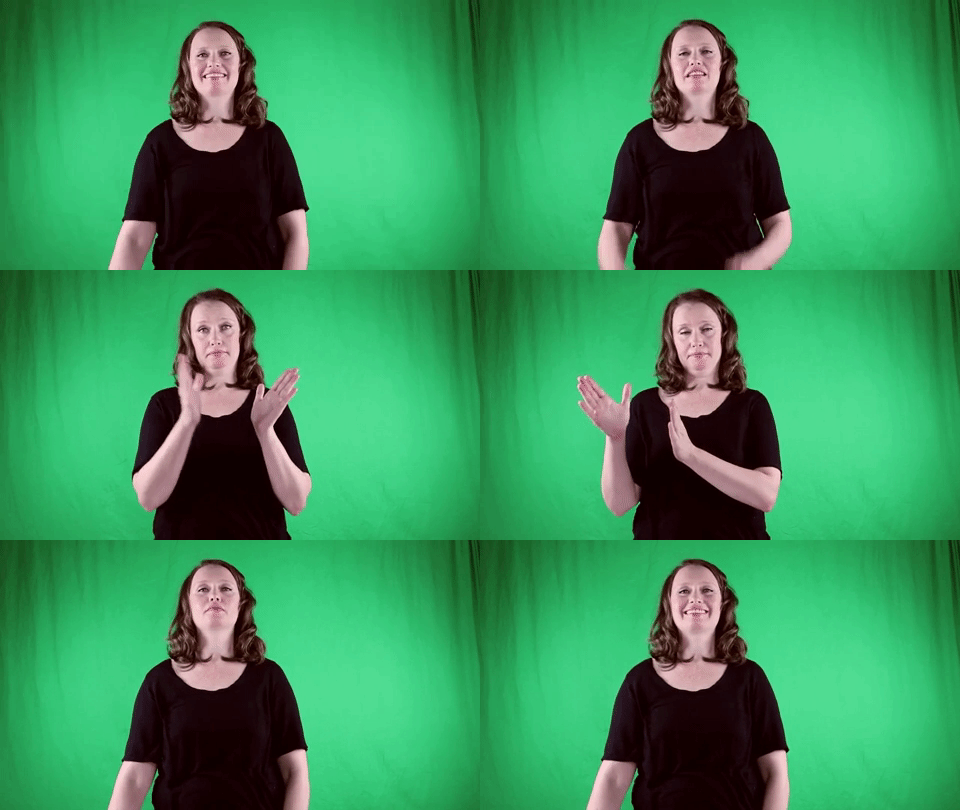
Sign for PLAN in ASL | ️ ASL Dictionary

Definition: A detailed proposal for achieving something.

Sign for PLAN in ASL

YouTube player

Practice Activities

To master the sign for PLAN in ASL, one of the best starting points is mirror practice. Stand in front of a mirror and carefully observe your handshape, movement, and facial expression. This allows you to self-correct and develop muscle memory for the sign for PLAN in ASL.

Recording yourself signing is another effective method. Use a smartphone or webcam to sign short phrases or full sentences that include the sign for PLAN in ASL. Watch the playback to analyze your clarity, fluency, and accuracy. This helps you track your progress over time.

Contextual signing is crucial. Practice using the sign for PLAN in ASL in real-life conversations or simulated dialogues. For example, describe your weekend plans or explain a project timeline using ASL. This reinforces fluency and situational usage.

Advanced learners can challenge themselves by incorporating the sign for PLAN in ASL into storytelling or structured narratives. Try describing a series of events that involve planning steps or hypothetical outcomes. This will deepen your understanding of how ASL organizes time and action.

You can also engage in receptive practice by watching ASL videos or stories that use the sign for PLAN in ASL. Pause the video to identify and replicate the sign, then play it back to check for accuracy. This strengthens both expressive and receptive skills.

SEO Cultural Context

The sign for PLAN in ASL holds cultural significance within the Deaf community, particularly in how it reflects values around structure, preparation, and communication. In Deaf culture, planning is often emphasized due to the importance of clear visual communication and coordination in group settings.

The sign for PLAN in ASL typically involves a horizontal sweeping movement of both open hands, suggesting the visualization of a timeline or steps laid out in order. This physical representation aligns with the visual-spatial modality of ASL and the way time and sequence are often conceptualized.

Deaf social gatherings, events, and meetings usually depend on detailed planning. Using the sign for PLAN in ASL in these contexts reflects a shared value of organization and community participation. It’s also common in educational and professional settings, where planning lessons, meetings, or projects in ASL is a standard practice.

Regional variation in the sign for PLAN in ASL is minimal, although some slight differences in hand movement or facial expression may occur across different states or signing communities. However, the core structure of the sign remains widely understood and standardized.

Understanding when to use the sign for PLAN in ASL also involves cultural sensitivity. For instance, it’s often used with signs like FUTURE, SCHEDULE, or ARRANGE to indicate a detailed or long-term plan. In Deaf culture, being direct and clear about intentions and timelines is appreciated, and this sign supports that value.

Extended Definition

The sign for PLAN in ASL involves both hands, typically using flat B-handshapes. Start with hands held in front of the body, palms facing down and slightly apart. Then move both hands smoothly from one side of the body to the other in a parallel motion. This sweeping gesture represents the laying out of a plan or sequence.

This sign is iconic in nature, meaning it visually represents the concept it stands for, a common feature in ASL. The motion of arranging something in a line mirrors the idea of organizing steps or events, making the sign intuitive once learned.

It’s important not to confuse the sign for PLAN in ASL with similar signs like SCHEDULE, PREPARE, or ARRANGE. While these signs are related, they each have unique handshapes and movements. For example, SCHEDULE often includes a grid-like movement, while PREPARE uses a double motion of one hand over the other.

A common error among beginners is using the wrong handshape or making the movement too small or too quick. The sign for PLAN in ASL should be deliberate and smooth to convey intention and clarity. Another mistake is omitting facial expressions, which are essential in ASL grammar and can modify the tone or urgency of the plan being discussed.

To enhance your understanding, observe how native signers use the sign for PLAN in ASL in different contexts. Notice how they adjust facial expression, body posture, and movement speed to reflect urgency, complexity, or informality of the plan.

Tips for Beginners

If you’re just beginning to learn the sign for PLAN in ASL, be patient with yourself. Start by observing the sign multiple times through instructional videos or live demonstrations. Mimic the handshape and movement slowly, then gradually build up speed.

A helpful tip is to associate the motion with laying out items on a table. Imagine organizing a sequence of tasks or ideas in front of you. This mental imagery can support muscle memory and improve recall of the sign for PLAN in ASL.

Avoid rushing the sign. Many beginners make the mistake of shortening the movement or using the incorrect hand orientation. Focus on precision first, then work on fluidity. Repetition with correct form is more beneficial than fast, inaccurate signing.

Facial expressions are just as important as the hand movement. When using the sign for PLAN in ASL, think about your intent. Are you casually mentioning a plan, or are you urgently describing a detailed schedule? Your eyebrows, eyes, and mouth should reflect that tone.

Practice the sign in sentences right away. Even if your ASL vocabulary is limited, try combining the sign for PLAN in ASL with other basic signs like TOMORROW, MEET, GO, or WORK. This helps you internalize grammar and context early in your learning journey.

Connections to Other Topics

The sign for PLAN in ASL connects closely with the sign for SCHEDULE. Both signs deal with organizing time, though SCHEDULE often emphasizes a more structured, time-specific layout. Learning both can help you express nuanced differences in how you manage or describe time.

Another related sign is PREPARE. While PLAN focuses on laying out steps, PREPARE emphasizes getting ready for those steps. These two signs often appear together in conversations about events or work projects, and using them correctly demonstrates a deeper understanding of ASL syntax.

The sign for ARRANGE is also relevant. It shares a similar handshape and motion to the sign for PLAN in ASL but adds more detail about positioning objects or ideas in a specific order. Knowing the distinction between these signs allows for more precise communication.

FUTURE is another concept tied to PLAN. Many ASL users will combine the sign for PLAN in ASL with a time marker like NEXT WEEK or NEXT YEAR. This helps situate the plan in a temporal context, a key element of ASL grammar.

Lastly, the sign for ORGANIZE pairs well with PLAN. While PLAN focuses on sequencing actions, ORGANIZE refers to structuring elements within a space or system. Understanding how these signs relate can support your ability to describe complex ideas, such as event planning or project development.

Lengthy Summary

The sign for PLAN in ASL is a fundamental vocabulary word that expresses the idea of organization, sequencing, and preparation. It is visually iconic, using parallel flat hands moving from one side to the other in a smooth motion. This sign is used frequently in everyday Deaf interactions, from casual conversations about the weekend to professional discussions about meetings and timelines.

Culturally, the sign for PLAN in ASL reflects shared values in the Deaf community around clarity and preparedness. Visual communication relies heavily on deliberate expression, and this sign plays an essential role in coordinating events and setting expectations. Its widespread use and relatively minimal regional variation make it an important sign to learn early in your ASL journey.

Learning the sign for PLAN in ASL involves more than just memorizing the motion. It requires an understanding of facial grammar, context, and related signs. By practicing in front of a mirror, recording yourself, and using the sign in context, you can build both accuracy and fluency. Avoid common mistakes like incorrect handshapes or lack of facial expression, and always aim for intentional, clear movements.

Beginner learners should take time to observe native signers and engage in immersive practice. Connecting the sign for PLAN in ASL with related signs such as SCHEDULE, PREPARE, ARRANGE, and FUTURE will expand your expressive range and deepen your understanding of ASL structure. These connections also make it easier to construct full, meaningful sentences.

Whether you’re discussing your goals, making a to-do list, or coordinating an event, the sign for PLAN in ASL empowers you to communicate with clarity and purpose. Keep practicing, stay curious, and immerse yourself in real-life usage. The more you sign, the more natural it will become. Practice today, and let your plans take shape in ASL!

Synonyms: strategy, blueprint, outline, roadmap, scheme

Educational resources: Find related learning materials in our course bank!

Want more? Check out some of our popular learning activities on the homepage!

Need to look up a sign? Use our highly rated dictionary: https://aslinteractive.com/best-asl-dictionary/

Follow us on tiktok: https://www.tiktok.com/@aslinteractive. More social media links at the bottom of this page!

Long-tail Keywords: what is the sign for Plan in ASL, how do you sign Plan in ASL, Plan sign language meaning

Categories:

tags: ASL vocabulary, ASL planning signs, planning and scheduling signs, American Sign Language dictionary, learning ASL signs

Want more? Check out some of our popular learning activities!

ASL Interactive Resources

ASLInteractive YouTube Channel

Follow us on tiktok: @aslinteractive.com

Follow us on Instagram: aslinteractive

Facebook page: aslinteractive

Facebook group: aslinteractive

LInkedIn: ASL Interactive LLC

Twitter: @ASL_interactive

*Some information on this page is AI-generated. AI can make mistakes. Please check the information.


Responses