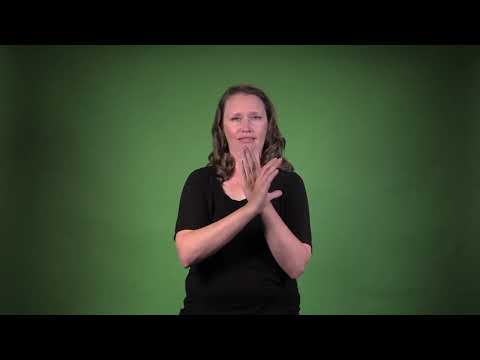
Sign for CALENDAR in ASL | 📆 ASL Dictionary

Definition: A chart showing days, weeks, and months.

Sign for CALENDAR in ASL

YouTube player

Practice Activities:

To practice the sign for CALENDAR in ASL in isolation, start by standing in front of a mirror and repeatedly performing the sign while watching your handshape and movement. Focus on the dominant hand making a “C” handshape and moving it down the back of your non-dominant flat hand, which represents a page or the surface of a calendar. Repeat the motion smoothly and consistently to build muscle memory.

Once you can confidently produce the sign alone, begin using it in short phrases or sentences. Sign phrases like “look at calendar,” “check calendar day,” or “mark calendar.” Record yourself and review to ensure your movement, facial expression, and hand placement match the correct sign parameters.

Try storytelling to incorporate the sign for CALENDAR in ASL naturally. Create a short story about planning a trip, preparing for a birthday, or remembering an important appointment. As you sign, include references to specific days, weeks, months, or events. This helps reinforce calendar-related vocabulary in context.

Set up a partner activity where one person gives a scenario like “You have to schedule a doctor’s appointment” and the other responds using the sign for CALENDAR in ASL along with other relevant ASL vocabulary. Switch roles so both people get a chance to practice expressive and receptive signing.

Label a printed calendar with important events in English and take turns signing what will happen on different days. Ask and answer questions like “What’s happening on Friday?” or “When is the meeting?” using the target sign in your responses.

Play a game where you sign a month or event, and your partner identifies the date on the calendar and signs it back to you. Use emoji ️ props or real wall calendars to enhance the fun and make practice more engaging.

Cultural Context:

In American Sign Language, the sign for CALENDAR in ASL holds both practical and cultural significance in the Deaf community. Time management and scheduling are crucial aspects of daily life, and the ability to reference a calendar with clarity and accuracy in ASL is essential.

Deaf culture emphasizes visual access to information. When using the sign for CALENDAR in ASL, clear visual communication allows for more effective interaction, especially when setting appointments or planning community events. This sign is commonly used during conversations about upcoming activities, classes, or meetings.

In Deaf schools and organizations, planning and coordination are often discussed in ASL. The sign for CALENDAR in ASL is frequently used as part of structured classroom routines where students discuss the date, weather, or events. This visual routine supports language development and time awareness.

The sign for CALENDAR in ASL is also a key part of storytelling when recounting past or future events. Deaf individuals may use this sign while discussing birthdays, holidays, or personal milestones. It offers a straightforward way to anchor events in time without needing a written calendar.

Social events play a significant role in Deaf culture, and being able to refer to dates using the sign for CALENDAR in ASL supports group planning. Whether it’s a Deaf expo, a meet-up, or advocacy events, this sign is used to organize participation and coordinate schedules. Many Deaf clubs rely on visual calendar systems that are supported by ASL vocabulary.

Technology and the integration of digital calendars have added new dimensions to how the sign for CALENDAR in ASL is used. With many Deaf individuals using smartphones and apps, they often explain or show calendar details using a blend of signing and technology. This cross-over of visual communication and digital tools emphasizes the importance of this sign in bridging traditional and modern interactions.

Parents who use ASL with their Deaf children often rely on the sign for CALENDAR in ASL to establish routines. Daily discussions that include the day of the week, upcoming events, and reminders help strengthen language skills and organizational habits from an early age. The sign becomes part of daily structure and family bonding.

In Deaf churches and community centers, the sign for CALENDAR in ASL helps announce upcoming events and coordinate volunteer roles. These signs are often used alongside visual aids like posters and digital screens to enhance group understanding. It plays a vital role in reducing misunderstandings and ensuring participation.

Understanding the cultural context of the sign for CALENDAR in ASL enriches the learning experience for both Deaf and hearing learners. It

Extended Definition:

The sign for calendar in ASL is a helpful and commonly used word in everyday conversations. Whether discussing appointments, important dates, holidays, or school schedules, knowing how to sign this word can make communication smoother and clearer. The sign for calendar in ASL visually represents the idea of flipping through a calendar’s pages or progressing from one day or month to another.

In American Sign Language, many time-related signs are based on real-world objects or behaviors, and the calendar sign is no exception. When using the sign for calendar in ASL, your hands often simulate turning or referencing a hanging wall calendar. This sign is considered intuitive and can easily be grasped by both beginner and advanced learners of ASL.

This sign usually involves a motion that reflects the passage of time or the act of checking a schedule. It can be modified slightly to indicate different types of calendars, such as school calendars , work calendars, or monthly planners. The context in which the sign is used often helps clarify its meaning and relevance. For example, adding signs for “school,” “meeting,” or “vacation” helps frame the use of calendar more specifically.

The sign for calendar in ASL can also be combined with numbers or dates to create full sentences. You can sign days of the week, months, or specific dates before or after using the word calendar. These combinations are useful in discussions about planning, deadlines, or when looking ahead to future events.

Fluency with the sign for calendar in ASL also opens the door to better conversation skills when talking about time management , coordination, or scheduling. Teachers, parents, and professionals often use this sign to communicate efficiently with deaf or hard-of-hearing individuals. It’s also an essential sign in educational settings where discussing the timeline of assignments, holidays, and extracurricular activities is important.

The sign for calendar in ASL can also be used when referencing digital tools like smartphone calendars or scheduling apps. Even though the sign is based on the traditional concept of a paper calendar, its use has evolved to apply to modern technology as well. As the language adapts, signers continue to use it for both tangible and digital scheduling systems.

Children learning ASL can benefit from learning the sign for calendar early on, especially in relation to learning days and months. It’s often taught in classrooms alongside daily routines like marking the weather or tracking upcoming events. Understanding this sign supports language development and helps children engage in activities that require planning ahead.

For adults learning ASL

Synonyms: schedule, agenda, planner, timetable, almanac

Educational resources: Find related learning materials in our course bank!

Want more? Check out some of our popular learning activities on the homepage!

Need to look up a sign? Use our highly rated dictionary: https://aslinteractive.com/best-asl-dictionary/

Follow us on tiktok: https://www.tiktok.com/@aslinteractive. More social media links at the bottom of this page!

Long-tail Keywords: what is the sign for calendar in ASL, how do you sign calendar in ASL, calendar in American Sign Language

Categories:

tags: Time, Calendar, Months, Days of the week, Planning

Parameters

*Handshape*:

The handshape used in the sign for calendar in ASL involves both hands. The non-dominant hand is held flat in a “B” handshape, palm facing the signer and stationary. The dominant hand also forms a “B” handshape and moves behind and downward along the non-dominant hand, representing a page or date being flipped or tracked on a calendar .

This dynamic combination of “B” handshapes gives a clear visual representation in the sign for calendar in ASL. The movement emphasizes the idea of flipping through time, lending meaning and clarity to the concept of a calendar system.

*Palm Orientation*:

The palm orientation for the sign for CALENDAR in ASL typically involves the non-dominant hand held in front of the body with the palm facing sideways, resembling a wall or flat surface. The dominant hand, shaped like a “C” handshape, moves downward along the front of the non-dominant palm in a vertical motion.

This movement mimics placing a page or marking a day on a calendar. The sign for CALENDAR in ASL emphasizes spatial awareness, so keeping consistent palm orientation conveys the concept clearly.

*Location*:

The sign for calendar in ASL is produced in the neutral space in front of the chest. One hand acts as a base, held out flat or slightly curved, while the dominant hand mimics the turning of a page, moving downward and forward over the base hand. This location allows for clear visibility and aligns with similar time-related concepts.

Because the sign for calendar in ASL simulates flipping a page, its neutral chest area placement supports the visual representation. This positioning also helps differentiate it from signs located at the head or sides of the body.

*Movement*:

The sign for CALENDAR in ASL starts with the non-dominant hand held flat in front of the body, palm facing sideways to represent a surface or page. The dominant hand forms a “C” handshape and moves down behind the palm and then flips forward, like you’re turning a page or pulling off a calendar sheet .

This movement mimics turning pages of a calendar and gives the sign for CALENDAR in ASL a clear visual representation. The motion is smooth and deliberate, helping reinforce the concept of passing time.

*Non-Manual Signals*:

When using the sign for CALENDAR in ASL, the facial expression is generally neutral, but can shift slightly based on context. If asking a question such as “What’s on the calendar?” eyebrows may be raised to indicate inquiry . If emphasizing a scheduled event, the signer may slightly narrow the eyes and nod for confirmation.

For clarity, eye gaze usually follows the dominant hand as it moves across the nondominant hand, reinforcing the spatial aspect of a calendar layout. The sign for CALENDAR in ASL is most effective when accompanied by attentive and purposeful facial expression to reflect context.

*Prosody, Dominant/Non-Dominant Hand*:

The sign for CALENDAR in ASL uses the non-dominant hand held upright in a flat B-handshape to represent a standing surface. The dominant hand, also in a B-handshape, starts in front of the non-dominant hand and then moves down behind it as if showing a page or date flipping behind a calendar.

This spatial motion demonstrates how calendars are organized, and the movement is smooth and deliberate. The sign for CALENDAR in ASL clearly captures the concept of dates being tracked across time. ️

Tips for Beginners:

When learning the sign for CALENDAR in ASL, it’s important to focus on the motion and spatial orientation of your hands. The dominant hand represents a flat sheet moving behind the non-dominant hand, symbolizing flipping calendar pages. Keep your fingers straight and still to make the overall sign look clean and clear.

Beginners sometimes confuse this sign with others like PAPER or SCHEDULE, so make sure to note the specific movement. The sign for CALENDAR in ASL involves a behind-the-hand sweeping gesture rather than a straight lift or side motion. Practicing in front of a mirror can help ensure your motion is consistent.

A helpful tip is to visualize an actual wall calendar while doing the sign. This visualization helps reinforce the direction of the motion. Repeating the sign while speaking or thinking the word can also help lock in the connection between concept and movement.

Use your dominant hand to make the motion; this consistency helps you maintain accuracy. Switching dominant hands without thinking can confuse both the signer and the viewer. When observing others, try slowing the action down in your mind to dissect exactly what each hand is doing.

The sign for CALENDAR in ASL should be crisp and clearly executed to avoid ambiguity. Keep the movement consistent in size to aid clarity, and avoid overly exaggerated motions, which can confuse others. Small, deliberate motion is usually more effective than dramatic sweeping.

Practice the sign in context rather than in isolation. For example, sign the phrase “check the calendar” or “what day on the calendar?” This helps you build fluency and confidence. Regularly watching native ASL users sign these types of phrases also sharpens your own signs.

Remember, the sign for CALENDAR in ASL is not fingerspelled—focus on motion, not spelling. With repetition and attention to clean motion, your accuracy and clarity will improve rapidly. Keep at it daily! ✨ ️

sign for CALENDAR in ASL, calendar sign ASL, ASL sign for monthly calendar, how to sign calendar in American sign language

Connections to Other topics:

The sign for CALENDAR in ASL is closely tied to concepts of time, planning, and organization. It shares conceptual space with signs like SCHEDULE, APPOINTMENT, and DATE. These signs often overlap in usage, especially in contexts like planning meetings or setting reminders, and understanding one helps build a clearer grasp of the others.

In compound or derived signs, the sign for CALENDAR in ASL may be combined with days of the week or months to express specific timeframes. For example, you might sign CALENDAR alongside MONDAY to clarify what you’re referencing. It’s also common to use it with TIME or FUTURE when making advanced plans or talking about upcoming events.

The sign also connects conceptually with temporal sequencing, including signs like BEFORE, AFTER, and NEXT. Learners who understand the sign for CALENDAR in ASL will have an easier time navigating sequential conversation and marking event order. These relationships are especially useful when telling stories or relaying future plans in ASL.

The sign for CALENDAR in ASL helps anchor communication around daily routines, work schedules, and social appointments. When paired with numerical signs, it allows for specific date expression. For instance, CALENDAR combined with the numbers for day and month efficiently communicates a full date without the need for fingerspelling.

This sign is useful in academic and professional settings. In classrooms, teachers use it to indicate due dates or test schedules. In work environments, the sign for CALENDAR in ASL becomes key when discussing project timelines or shared appointments.

Understanding this sign also supports broader language development in topics involving time management ⏰, goal setting , and organizational practices. Whether you’re scheduling a doctor’s visit or making vacation plans, the sign for CALENDAR in ASL underpins those time-based conversations.

Summary:

The sign for CALENDAR in ASL is a conceptually accurate and spatially based representation of a page turning or a grid format. This makes it naturally intuitive to users once they understand the underlying metaphor that American Sign Language often uses. As with many ASL signs, visual logic plays a key role, reinforcing ASL’s spatial and gestural grammar system.

To produce the sign for CALENDAR in ASL, begin by holding your non-dominant hand in a flat, vertical “B” handshape as if representing a wall or a standing sheet. Your dominant hand, also in a “B” or flat handshape, starts at the top and moves behind the non-dominant hand from top to bottom or top left to bottom right in a quick arc-like or vertical downward motion. This gives the visual impression of flipping a page of a calendar or having time arranged against a spatial plane.

This sign rules out the need for fingerspelling most days or months unless specificity is required. It allows users to reference the concept of time management or scheduling without emphasizing the specific dates. The sign is often placed in context, with facial expressions and body posture helping to determine whether the speaker is referring to an actual wall calendar, a digital calendar, or a broader concept of scheduling. ️

The sign for CALENDAR in ASL helps show just how deeply cultural habits shape sign language. ASL visualizes concepts like time in space. Instead of thinking of time as purely abstract, users position events, times of day, and scheduling ideas in relation to physical space in front of them. This spatial grammar distinguishes ASL from English, offering a visual dimension to what are often linear constructs in spoken language.

Linguistically, the sign for CALENDAR in ASL is rooted in classifiers and indexical referencing. When you sign calendar, you can then reference specific dates by pointing to sections of the air around you. This function gives continuity to a conversation in ASL that might otherwise be disrupted by constant modifiers or specific date signs. It enriches time-based discourse, enhancing understanding through spatial memory.

From an applied linguistics perspective, this sign supports the argument that ASL users develop strong spatial reasoning skills. When discussing events or comparing dates, signers can map multiple days, weeks, or appointments across a 3D space in front of them. This builds what some cognitive linguists call “time conceptual mapping”—essential for deeper narrative cohesion in ASL.

The sign for CALENDAR in ASL is not just practical—it holds social significance, particularly in community contexts. For the Deaf community, having a “calendar” is often symbolic of access, planning, and inclusion. The ability to schedule a job interview, attend Deaf culture events, or manage interpreter appointments speaks to autonomy and agency, closely tied with the right to language.

In narrative storytelling, the sign for CALENDAR in ASL contributes to the temporal sequence. Storytellers often visually structure time before diving into events. A signer may start by signing calendar and then mapping out “last week,” “next month,” and events associated with each. The use of space in combination with the calendar sign helps to structure the signed story across time clearly and memorably.

Although CALENDAR in ASL has a default sign, it may vary slightly according to region or educational background. Some individuals may flip from top to bottom, while others go left to right. These variations aren’t accidental—they reflect bilingualism influences, contact with English print calendars, and cultural preferences in orientation. Such variation reveals the natural diversity present within the Deaf signing community.

When learning the sign for CALENDAR in ASL, beginners often struggle to understand how it interacts with other time-based signs. It’s often taught alongside WEEK, MONTH, YEAR, and SCHEDULE. Together, these signs form a semantic group that learners must distinguish both in terms of movement and orientation. Differentiating them is key to expressing oneself accurately in academic or work-based environments.

Typical learner errors with this sign include confusing it with BOOK or SCHEDULE due to visual similarities. This highlights how critical it is to learn signs not only by form but also in context. Rehearsing how the sign for CALENDAR in ASL is used in real conversation improves fluency and builds confidence in grasping subtle differences in movement and handshape.

The sign for CALENDAR in ASL works within a well-established time framework that can also include fingerspelling for clarity. For example, someone’s calendar might require expressing acronyms like “PTO” or “ASL class,” which would be fingerspelled before or after the calendar sign. This makes the sign a hub word—central to many conversations filled with subcategories and elaborations.

In ASL linguistics, signs such as CALENDAR demonstrate the blending of iconicity and arbitrariness. While the movement of flipping a page is iconic, it still requires learning the associated meaning. Native ASL signers internal

Want more? Check out some of our popular learning activities!

ASL Interactive Resources

ASLInteractive YouTube Channel

Follow us on tiktok: @aslinteractive.com

Follow us on Instagram: aslinteractive

Facebook page: aslinteractive

Facebook group: aslinteractive

LInkedIn: ASL Interactive LLC

Twitter: @ASL_interactive

*Some information on this page is AI-generated. AI can make mistakes. Please check the information.

Sign for CALENDAR in ASL

Responses