Practice Activities
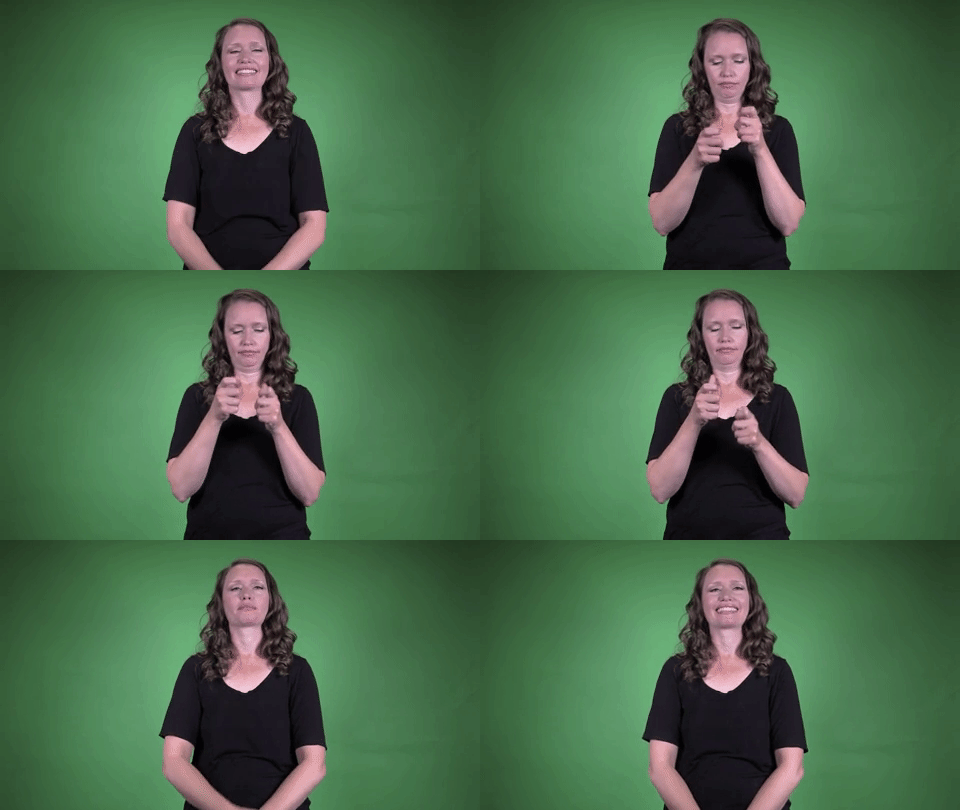
Practicing the sign for TEXTING in ASL helps develop fluency and confidence in both expressive and receptive signing. Start by watching native signers perform the sign for TEXTING in ASL on video platforms or ASL learning websites. Pause and mimic their handshapes, placement, and movement patterns in front of a mirror to ensure accuracy. Next, record yourself signing the word in isolation and then within full sentences. Compare your video to native signers and look for differences in facial expressions, speed, and clarity. This self-feedback loop is essential for refining your signing skills. Use the sign for TEXTING in ASL during mock conversations about daily routines or technology use. For example, practice signing phrases like “I love texting my friends” or “Are you texting right now?” This applies the vocabulary in real-life contexts, which strengthens memory retention. Advanced learners can incorporate the sign into fingerspelling drills, sentence building exercises, or speed trials. Try alternating between signs like PHONE, MESSAGE, CALL, and the sign for TEXTING in ASL to develop smooth transitions between technology-related vocabulary.
SEO Cultural Context
The sign for TEXTING in ASL reflects the integration of digital communication into everyday Deaf culture. Just like hearing people often rely on texting, members of the Deaf community also use texting as a primary mode of communication—especially in situations where video calling is not available. Understanding how and when to use the sign for TEXTING in ASL is key to participating respectfully in these conversations. The sign usually mimics the motion of typing with both thumbs, resembling how people type on a smartphone. This visual metaphor makes the concept instantly recognizable and easy to remember. However, regional variation may exist. In some communities, people may use a single finger instead of both thumbs, depending on local usage or generational habits. Deaf culture emphasizes direct and clear communication. Using the sign for TEXTING in ASL in the appropriate context—such as describing how someone contacted you or confirming a message—demonstrates not just linguistic skill, but cultural awareness. Avoid overusing this sign in face-to-face interactions where visual communication is preferred.
Extended Definition
The sign for TEXTING in ASL typically involves both hands in a modified “A” or “S” handshape. The thumbs move up and down as if tapping on a phone screen. The motion is usually quick and repetitive, simulating the action of texting on a mobile device. The hands are held in front of the body, near chest level, oriented in a way that mimics holding a phone. This sign is conceptually accurate and visually descriptive, making it intuitive even for beginners. It falls under the category of classifier-based signs or mimetic signs, where the motion represents the action being described. Be cautious not to confuse this with the sign for TYPE or PHONE. While those signs share similar handshapes or concepts, they have distinct movements and meanings. A common mistake is to make the sign for TEXTING in ASL too slow or too exaggerated, which can make it look unnatural or confuse it with unrelated signs. Understanding the subtle movements—like the quick thumb tapping—is crucial. Facial expressions should match the context. If you’re excited about texting a friend, let that emotion show in your face. If you’re annoyed by constant texting, that should be visible too.
Tips for Beginners3>
For new learners, mastering the sign for TEXTING in ASL can be both fun and practical. Start by focusing on the handshape and thumb motion. Use a mirror to check if your thumbs are moving in a natural and rhythmic way, similar to real texting. Don’t overthink the gesture. Sometimes beginners try too hard to be perfect and end up stiff. Keep your hands relaxed and mimic real-life texting. Practicing in short, frequent sessions is more effective than long, infrequent ones. A common mistake is confusing the sign for TEXTING in ASL with signs like EMAIL or MESSAGE. These have different movements and purposes. Watch native signers and pay close attention to the speed and fluidity of their motion. Another beginner error is not using appropriate facial expressions. ASL relies heavily on non-manual markers, so remember to include your facial cues to show the tone of your message. Whether you’re happy, surprised, or frustrated while texting—show it on your face.
Connections to Other Topics
The sign for TEXTING in ASL is closely tied to other technology-related signs. One useful connection is the sign for PHONE, which involves mimicking a phone receiver with the thumb and pinky extended. This provides a contrast with the thumb-tapping motion of texting. Another related term is MESSAGE. While the sign for TEXTING in ASL focuses on the act of using a phone, the sign for MESSAGE emphasizes the content being sent or received. Knowing both signs allows you to express more complex sentences like “I sent a message by texting.” The sign for EMAIL is also connected. It has a unique motion that simulates sending a message electronically but through a different medium. Practicing these signs together helps learners build a vocabulary set around digital communication. Additionally, signs like COMPUTER and SOCIAL MEDIA are often used alongside the sign for TEXTING in ASL in discussions about technology or daily routines. These signs share a theme and often appear in similar contexts. Grammatically, all of these signs can be used with time indicators (like YESTERDAY or TOMORROW) and location markers to build full ASL sentences. Understanding how these signs interact helps reinforce your overall fluency.
Lengthy Summary
The sign for TEXTING in ASL is more than just a vocabulary word—it’s a gateway into understanding how modern communication fits into Deaf culture. With its intuitive handshape and iconic motion, the sign captures the essence of texting in a visually descriptive way. Whether you’re a beginner or an advanced signer, learning this sign opens the door to rich conversations about technology, relationships, and daily life. Through mirror practice, video feedback, and real-world application, learners can master the nuances of the sign. Understanding its cultural significance ensures respectful and accurate use, while exploring related signs deepens overall language competence. Avoiding common mistakes like incorrect handshapes or confusing similar signs will help you gain confidence. By connecting the sign for TEXTING in ASL to related signs such as PHONE, MESSAGE, and EMAIL, you’re not just learning one sign—you’re building a thematic vocabulary network. This sign also offers a valuable opportunity to practice facial expressions and timing, both of which are vital in ASL. Whether you’re describing a funny text conversation or explaining how you contacted someone, the sign fits naturally into many contexts. Keep practicing the sign for TEXTING in ASL in meaningful ways. Try incorporating it into your daily signing routine, create short skits, or even teach it to a friend. The more you use it, the more natural it will become. Keep learning, stay curious, and enjoy the journey of becoming fluent in ASL! Synonyms: messaging, sending messages, chatting, SMSing, instant messaging Educational resources: Find related learning materials in our course bank! Want more? Check out some of our popular learning activities on the homepage! Need to look up a sign? Use our highly rated dictionary: https://aslinteractive.com/best-asl-dictionary/ Follow us on tiktok: https://www.tiktok.com/@aslinteractive. More social media links at the bottom of this page! Long-tail Keywords: Categories: tags: ASL texting phrases, texting-related signs in ASL, digital communication in ASL, technology vocabulary in ASL, common texting signs in ASL
Want more? Check out some of our popular learning activities!
ASL Interactive Resources
ASLInteractive YouTube Channel
Follow us on tiktok: @aslinteractive.com
Follow us on Instagram: aslinteractive
Facebook page: aslinteractive
Facebook group: aslinteractive
LInkedIn: ASL Interactive LLC
Twitter: @ASL_interactive
*Some information on this page is AI-generated. AI can make mistakes. Please check the information.
Responses