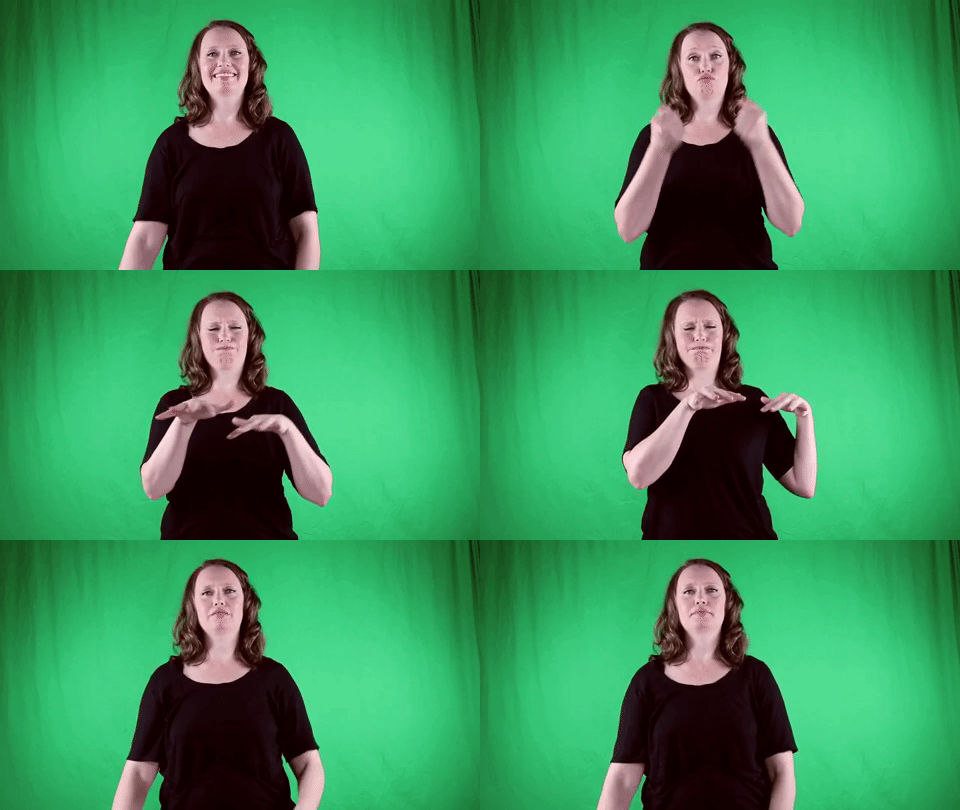
Sign for TRAFFIC in ASL | ASL Dictionary

Definition: The movement of vehicles along a road or path. Sign for TRAFFIC in ASL
YouTube player

Practice Activities

Learning the sign for TRAFFIC in ASL is most effective when approached with a variety of practice methods. One of the best ways to begin is by using a mirror. Stand in front of a mirror and practice the sign slowly, watching your handshape, direction, and facial expression. Make sure your movements are fluid and match the correct placement and orientation. Recording yourself signing is another powerful method. Set up a camera or use your phone to practice the sign for TRAFFIC in ASL and then play it back to analyze your accuracy. Look for consistency in handshape, movement, and non-manual markers. Compare your version with trusted ASL video dictionaries or fluent signers. Signing in context helps integrate vocabulary naturally. Use the sign for TRAFFIC in ASL while describing your day, such as mentioning heavy traffic on the way to school or work. Try to incorporate it into conversations or role-plays with a study partner or tutor. Advanced learners can challenge themselves with speed drills and variations. Sign phrases like “rush hour traffic,” “car traffic,” or “foot traffic” quickly and clearly. This will help build fluency and prepare you for real-time conversations. Switch up the context to include different sentence structures and locations to deepen understanding.

SEO Cultural Context

In Deaf culture, the sign for TRAFFIC in ASL is commonly used to describe both literal and figurative congestion. Whether referring to cars on the freeway or people moving through a crowded hallway, this sign is versatile and frequently used in everyday conversation. Understanding how and when to use it appropriately is essential for respectful and fluent communication. The sign for TRAFFIC in ASL may vary slightly by region or signer. Some may use a movement that emphasizes two hands weaving past each other to show congestion, while others may use a more static, repeated motion to indicate a standstill. These variations reflect the dynamic and living nature of ASL across different communities. Deaf individuals often use this sign in narratives, vlogs, and casual conversation to describe daily experiences. It also appears in news reports and community announcements shared in ASL, especially when discussing weather-related road conditions or public transportation issues. Using the sign accurately shows not only language skill but also cultural awareness.

Extended Definition

The sign for TRAFFIC in ASL typically involves two flat hands, oriented vertically, moving past each other in opposite directions. The non-dominant hand moves one way while the dominant hand moves the other, mimicking the flow of cars or people in opposite directions. The movement can be repeated to emphasize volume or congestion. Some signers may add directionality or use facial expressions to indicate whether the traffic is heavy, light, or stuck. For example, puffed cheeks or a facial expression showing frustration can help convey the idea of a traffic jam. This layering of expression is a key feature of ASL grammar and should not be overlooked. It’s important to avoid confusing this sign with related ones such as “driving,” “car,” or “street.” While they may share similar handshapes or movement paths, each has a distinct meaning. Beginners often make the mistake of using the sign for “drive” when they intend to refer to traffic. Remember that context and movement are essential to communicating the right message.

Tips for Beginners

When first learning the sign for TRAFFIC in ASL, start by focusing on handshape and movement. Use slow, deliberate motions at first to ensure accuracy. Watch videos of native signers and imitate their rhythm and expression to build confidence. One common mistake is moving both hands in the same direction. To avoid this, imagine two lanes of traffic moving in opposite directions and let that image guide your signing. Practicing the sign in front of a mirror can help you see whether your hands are correctly positioned. It’s also helpful to pair the sign with real-life experience. For example, after sitting in traffic, describe the situation in ASL. Integrating the sign naturally into your life will make it easier to remember and use. Don’t be discouraged by small errors—every signer starts somewhere, and consistency leads to improvement.

Connections to Other Topics

The sign for TRAFFIC in ASL connects closely with the sign for ROAD or STREET. Both often appear together when giving directions or describing a commute. These signs use similar spatial grammar, helping learners reinforce patterns across vocabulary. Another related sign is DRIVE, which complements the sign for TRAFFIC in ASL when discussing transportation. For example, you might sign “drive” followed by “traffic” to explain a delay or describe a trip. Using these signs together builds sentence complexity. Congested or crowded areas can also be described using signs like PEOPLE and CROWDED. These can be used to describe foot traffic in busy spaces like malls or concerts. Combining them with the sign for TRAFFIC in ASL enhances descriptive ability. Directionality in ASL is another important concept tied to this sign. By adjusting the direction of movement, you can show where the traffic is going or coming from. This adds a spatial element that is key to fluent ASL communication. Finally, the sign is often used in storytelling or narrative forms, especially when recounting travel or daily routines. Including the sign for TRAFFIC in ASL in these contexts helps bring stories to life and connects learners to more advanced ASL discourse.

Lengthy Summary

Mastering the sign for TRAFFIC in ASL takes time, observation, and consistent practice. This sign plays a significant role in everyday communication, especially when talking about movement, delays, or crowded environments. With correct handshape, movement, and non-manual markers, you can convey a range of meanings from light congestion to complete gridlock. Cultural insight reveals how vital this sign is in the Deaf community. Whether describing city life, giving directions, or expressing frustration about delays, the sign for TRAFFIC in ASL appears in countless real-world settings. Understanding its use within context and across regions deepens your cultural competence as well as your linguistic skill. Through targeted

Practice Activities

like mirror work, video recording, and contextual usage, learners can build muscle memory and signing fluency. Beginners should focus on accuracy and avoid common pitfalls such as incorrect directionality or confusing similar signs. Over time, the sign becomes second nature, especially when reinforced through storytelling and daily conversation. Connecting this sign to others like DRIVE, ROAD, and CROWDED helps expand your ASL vocabulary and enhances your ability to describe complex situations. These connections also support broader understanding of ASL grammar and spatial structure, which are essential for advanced proficiency. As you continue your ASL journey, keep practicing the sign for TRAFFIC in ASL whenever the opportunity arises. Use it in stories, daily updates, and interactive learning sessions. With dedication and exposure, your skill will grow, and the sign will become a natural part of your expressive toolkit. Keep signing, stay curious, and enjoy every step of your ASL learning adventure! Synonyms: congestion, vehicles, transportation flow, circulation, gridlock Educational resources: Find related learning materials in our course bank! Want more? Check out some of our popular learning activities on the homepage! Need to look up a sign? Use our highly rated dictionary: https://aslinteractive.com/best-asl-dictionary/ Follow us on tiktok: https://www.tiktok.com/@aslinteractive. More social media links at the bottom of this page! Long-tail Keywords: Categories: tags: ASL travel vocabulary, signs for transportation in ASL, traffic-related ASL signs, ASL road and driving terms, travel and commuting in ASL

Want more? Check out some of our popular learning activities!

ASL Interactive Resources

ASLInteractive YouTube Channel

Follow us on tiktok: @aslinteractive.com

Follow us on Instagram: aslinteractive

Facebook page: aslinteractive

Facebook group: aslinteractive

LInkedIn: ASL Interactive LLC

Twitter: @ASL_interactive

*Some information on this page is AI-generated. AI can make mistakes. Please check the information.  

Responses